GLP Peptides 101: A Beginner’s Guide to the Basics
Disclaimer: The information provided in this article is for educational and informational purposes only. It is not intended as medical advice, diagnosis, or treatment. Products and compounds referenced are for research use only and are not approved for human or veterinary consumption. Always consult a qualified professional regarding health or medical decisions.
What GLP Peptides Are and Why They Matter
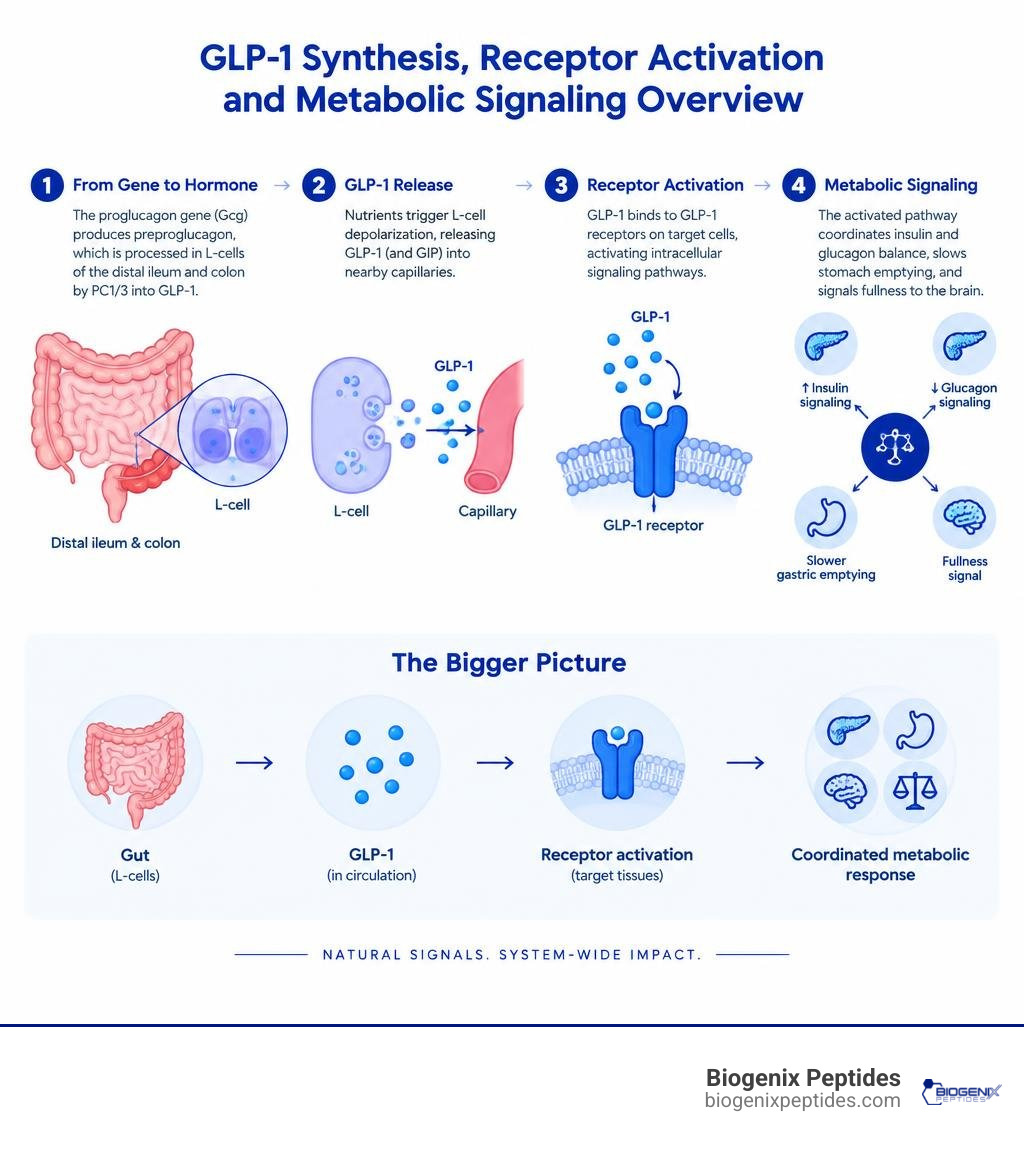
GLP peptides are molecules related to glucagon-like peptide-1 (GLP-1), a natural gut hormone involved in glucose signaling, appetite regulation, and digestion. In research, GLP-1 helps explain how the body increases insulin signaling when glucose is present, reduces glucagon signaling, slows stomach emptying, and communicates fullness to the brain.
Native GLP-1 is short-lived. It is rapidly broken down by enzymes such as DPP-4, with a half-life of about 1 to 2 minutes. This limitation has led researchers to study longer-lasting synthetic analogs and multi-receptor peptides, including semaglutide, tirzepatide, retatrutide, and cagrilintide.
This guide examines the science behind GLP peptides, how natural and synthetic forms differ, and why quality, storage, and regulatory status matter in peptide research. It is an educational overview, not guidance for medical decision-making.
I am Jay Daniel, Founder and CEO of BioGenix Peptides, with hands-on experience in peptide development, sourcing, purity validation, and laboratory quality processes involving GLP peptides. My focus is helping research professionals interpret peptide science with precision, transparency, and responsible research standards.
Understanding the Science Behind GLP Peptides
To appreciate why glp peptides have become the center of modern metabolic research, we have to look at the digestive tract. The proglucagon gene (Gcg) produces preproglucagon, a precursor protein that undergoes tissue-specific post-translational processing. In specialized enteroendocrine L-cells located primarily in the distal ileum and colon, prohormone convertase 1/3 (PC1/3) cleaves proglucagon into bioactive incretin hormones.
The primary active biological product is a 30-amino-acid hormone that coordinates nutrient response throughout the organism. When exploring how GLP-1 incretin pathways function, scientists observe a coordinated cascade: nutrient ingestion triggers L-cell depolarization, releasing incretins into local capillaries (Müller et al., 2019). Alongside glucose-dependent insulinotropic polypeptide (GIP), these hormones drive postprandial insulin secretion in direct proportion to circulating blood glucose levels while simultaneously suppressing inappropriate glucagon release from pancreatic alpha cells.
Examining the native GLP-1 molecular structure reveals a specific alpha-helical conformation required to bind its cognate class B G-protein-coupled receptor (GLP-1R).

Physiological Roles in Glucose and Satiety Regulation
The physiological scope of GLP-1 extends beyond glycemic control. GLP-1 receptors are distributed across the central nervous system, including the area postrema and the arcuate nucleus of the hypothalamus. Activation of these central pathways downregulates appetite and modulates reward signaling associated with food intake.
In the gastrointestinal tract, endogenous GLP-1 acts as an “ileal brake,” delaying gastric emptying and slowing nutrient absorption into the bloodstream. This deceleration prevents sharp postprandial glucose spikes. At the cellular level, GLP-1 signaling promotes beta-cell survival and stimulates gene expression for proinsulin biosynthesis. These actions illustrate the role of the body’s natural hunger hormone mechanism in maintaining systemic glycemic homeostasis.
Native GLP-1 Breakdown and Pharmacokinetics
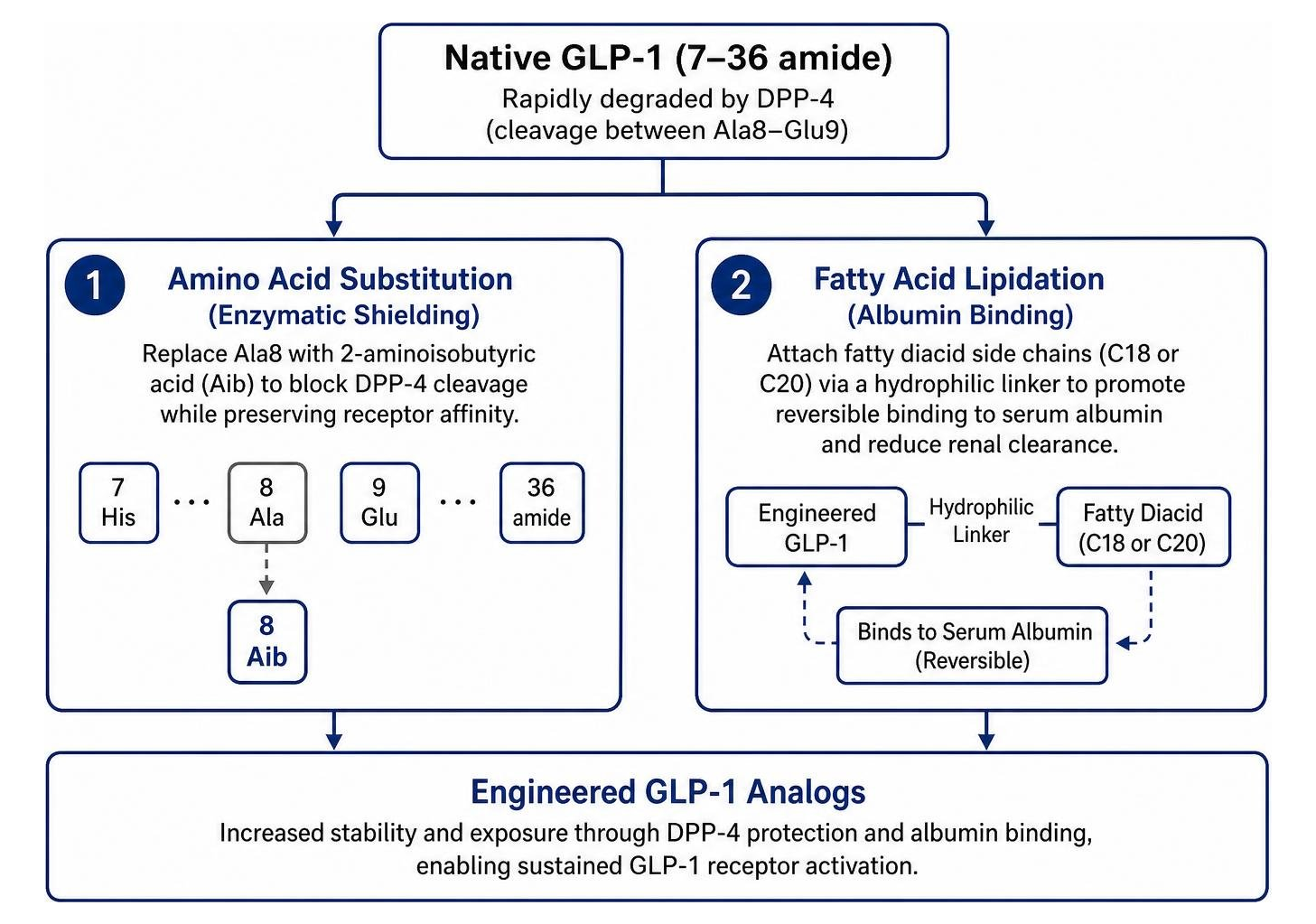
Despite its biological potency, endogenous GLP-1 is poorly suited for direct therapeutic application due to its rapid metabolic breakdown. The enzyme dipeptidyl peptidase-4 (DPP-4) cleaves the peptide at the N-terminus between Alanine-8 and Glutamic acid-9 within seconds of its release. A secondary enzyme, neutral endopeptidase 24.11 (NEP 24.11), along with renal clearance mechanisms, further accelerates its degradation.
A review of endogenous GLP-1 biological characteristics shows that:
- Native GLP-1 possesses an elimination half-life of roughly 1 to 2 minutes in vivo.
- Fasting systemic concentrations of total GLP-1 range between 5 and 10 pmol/L, rising to approximately 40 pmol/L postprandially.
- Biologically intact GLP-1 concentrations are far lower, sitting below 2 pmol/L during fasting and reaching only 5 to 10 pmol/L post-meal.
- Roughly 80% of circulating immunoreactivity corresponds to the truncated GLP-1(7-36)amide isoform, with the remaining ~20% represented by glycine-extended GLP-1(7-37).
- Only 10% to 15% of intact, active GLP-1 secreted by the gut reaches the systemic circulation and pancreas.
Because native GLP-1 is degraded so rapidly, researchers focused their efforts on developing stable, synthetic analogs capable of sustained receptor activation.
The Evolution from Natural Incretins to Synthetic Analogs
Overcoming rapid enzymatic degradation required targeted engineering within the incretin mimetic drug class. Early approaches utilized structural analogs such as exendin-4, a peptide naturally resistant to DPP-4 cleavage.
Modern rational peptide design uses specific amino acid substitutions and lipidation strategies:
- Enzymatic Shielding: Substituting the native L-alanine at position 8 with 2-aminoisobutyric acid (Aib) creates steric hindrance, blocking DPP-4 binding while preserving receptor affinity.
- Lipidation for Albumin Binding: Conjugating synthetic fatty diacid side chains (such as C18 or C20 diacids) via hydrophilic linkers promotes reversible binding to endogenous serum albumin. This reversible depot protects the peptide from rapid renal filtration.
- Advanced Computational Discovery: Modern workflows leverage machine-learning peptide discovery to screen mutational libraries, optimize isoelectric points, and eliminate aggregation-prone residues.
How Synthetic GLP Peptides Mimic Natural Incretins
Synthetic peptides engage the extracellular domain of GLP-1R to trigger intracellular cyclic adenosine monophosphate (cAMP) production, replicating endogenous signaling pathways. Over time, engineering advances have enabled the development of multi-incretin mimetics. Exploring dual and triple agonist peptides has allowed researchers to assess the synergistic effects of co-activating related metabolic receptors.
| Characteristic | Native GLP-1 (7-36 amide) | Synthetic Mono-Agonist (e.g., Semaglutide) | Synthetic Dual-Agonist (e.g., Tirzepatide) |
|---|---|---|---|
| Primary Targets | GLP-1R | GLP-1R | GLP-1R / GIPR |
| In Vivo Half-Life | 1–2 minutes | ~165 hours (approx. 1 week) | ~120 hours (approx. 5 days) |
| DPP-4 Resistance | Highly susceptible | Resistant (Aib8 modification) | Resistant (Aib substitutions) |
| Clearance Route | Rapid enzymatic cleavage / Renal | Albumin-bound / Slow metabolic breakdown | Albumin-bound / Slow metabolic breakdown |
| Primary Structure | 30 amino acids | 31 amino acids + C18 diacid spacer | 39 amino acids + C20 diacid spacer |
Next-Generation Multi-Agonists and Novel Combinations
Research into metabolic signaling has expanded into unimolecular multi-agonists and complementary peptide combinations. Triple agonists such as retatrutide co-activate GLP-1, GIP, and glucagon (GCGR) receptors simultaneously, allowing investigation into combined glycemic regulation, lipid oxidation, and energy expenditure pathways.
Concurrently, evaluating cagrilintide peptide interactions highlights the potential of combining long-acting amylin receptor agonism with GLP-1 pathways. Amylin signaling acts through distinct neurochemical pathways in the area postrema, offering an independent, complementary mechanism for satiety regulation.
Safety, Quality Standards, and Compounding Risks
As interest in incretin mimetics has grown, significant safety, regulatory, and quality challenges have emerged surrounding unapproved or improperly compounded peptides. The physiological effects of these compounds carry inherent side effects—such as nausea, vomiting, delayed gastric transit, and gallbladder complications—as detailed in analyses of common GLP-1 side effects.
When unregulated compounding and counterfeit production enter the supply chain, these risks increase substantially.
The U.S. Food and Drug Administration has issued explicit alerts regarding unapproved compounded formulations, as documented in the FDA warnings on unapproved GLP formulations. Unapproved compounded versions do not undergo the rigorous pre-market evaluations for safety, efficacy, purity, and pharmacokinetic consistency that commercial products receive.
The scale of these safety concerns is reflected in regulatory monitoring data. As of May 31, 2026, the FDA received 990 adverse event reports associated with compounded semaglutide and more than 730 adverse event reports linked to compounded tirzepatide. Reported issues stem from incorrect active pharmaceutical ingredient (API) sourcing, concentration miscalculations, improper multiple-use vial handling, and product contamination.
Salt Forms and Unapproved Chemical Variants
A major quality and regulatory issue in the compounding space is the use of unapproved salt forms, such as semaglutide sodium or semaglutide acetate, instead of the approved base peptide.
- Regulatory Status: Under federal law, salt forms of semaglutide do not meet the criteria for compounding active pharmaceutical ingredients because they are not the active ingredients of an approved product, nor do they appear on an applicable United States Pharmacopeia (USP) compounding monograph.
- Pharmacokinetic Differences: Salt forms have different molecular weights, solubility profiles, and chemical stability compared to the base peptide. These alterations can lead to unpredictable absorption rates, aggregation tendencies, or rapid precipitation in solution.
- Investigational Agents: Newer compounds like retatrutide and cagrilintide remain under investigational development. Because neither has received FDA approval or an official USP monograph, compounding either peptide is prohibited under federal regulatory standards.
Evaluating Research Safety Standards for GLP Peptides
Maintaining product stability and structural integrity requires strict laboratory handling standards:
- Cold-Chain Management: GLP peptides are heat-sensitive and prone to denaturation if exposed to temperature variations during shipping or storage. Lyophilized peptides require consistent low-temperature storage, while liquid solutions require uninterrupted refrigeration at 2°C to 8°C.
- Sterility and the 28-Day Guideline: The FDA recommends that multiple-use vials of sterile solutions be discarded within 28 days of initial puncture. Repeated vial access introduces environmental micro-contaminants, and chemical preservatives degrade over time.
- Identifying Sourcing Red Flags: In research environments, verifying compound legitimacy requires reviewing full Analytical Certificates of Analysis (CoA) with confirmed High-Performance Liquid Chromatography (HPLC) purity ratings above 98% and Mass Spectrometry (MS) identification. Suspicious online platforms often feature deep discounts, missing lot tracking, lack of verifiable physical business addresses, and unlabeled or improperly packaged vials.
Frequently Asked Questions About GLP Peptides
What is the primary difference between endogenous GLP-1 and GLP receptor agonists?
The primary difference lies in their molecular stability and biological duration. Endogenous GLP-1 is rapidly degraded by the enzyme DPP-4, resulting in an in vivo half-life of only 1 to 2 minutes. Synthetic GLP receptor agonists are engineered with specific amino acid modifications (such as Aib at position 8) and fatty acid chains that resist DPP-4 degradation and bind to serum albumin. This engineering extends their active presence in laboratory models from minutes to several days.
Why are unapproved salt forms like semaglutide sodium considered risky?
Unapproved salt forms (such as semaglutide sodium or semaglutide acetate) are chemically distinct from the purified base peptide. These variants have not undergone formal clinical safety or bioavailability assessments. Their altered molecular weight and ionic composition can alter solubility, stability, and cellular uptake profiles, introducing unpredictable experimental variables and potential safety risks.
How should reconstituted GLP peptides be stored to prevent degradation?
Reconstituted peptide solutions should be kept under continuous refrigeration between 2°C and 8°C (36°F to 46°F) and shielded from direct light and mechanical agitation. To maintain sterility and prevent degradation, multiple-use vials should adhere to the standard 28-day puncture limit, after which remaining contents should be discarded.
Conclusion: The Future of Incretin and Metabolic Research
The evolution of incretin science—from the discovery of native proglucagon processing to modern multi-receptor co-agonists—represents a major milestone in peptide engineering. As research moves toward evaluating triple agonists, amylin analogs, and machine-learning-optimized sequences, understanding molecular purity, structural stability, and regulatory boundaries remains essential.
At BioGenix Peptides, our focus is supporting the scientific community with reliable data, rigorous verification protocols, and high-grade research materials. Exploring authentic advanced GLP-1 research peptides allows investigators to study metabolic pathways with analytical confidence, reproducible standards, and verified chemical integrity.
Scientific References
Müller TD, Finan B, Bloom SR, D’Alessio D, Drucker DJ, Flatt PR, Fritsche A, Gribble F, Grill HJ, Habener JF, Holst JJ, Langhans W, Meier JJ, Nauck MA, Perez-Tilve D, Pocai A, Reimann F, Sandoval DA, Schwartz TW, Seeley RJ, Stemmer K, Tang-Christensen M, Woods SC, DiMarchi RD, Tschöp MH. “Glucagon-like peptide 1 (GLP-1)..” Molecular metabolism, 2019. PMCID PMC6812410.