The Ultimate Guide to Buying GLP-1 Peptides Online
Disclaimer: The information provided in this article is for educational and informational purposes only. It is not intended as medical advice, diagnosis, or treatment. Products and compounds referenced are for research use only and are not approved for human or veterinary consumption. Always consult a qualified professional regarding health or medical decisions.
How to Make a GLP-1 Peptide Buy for Research
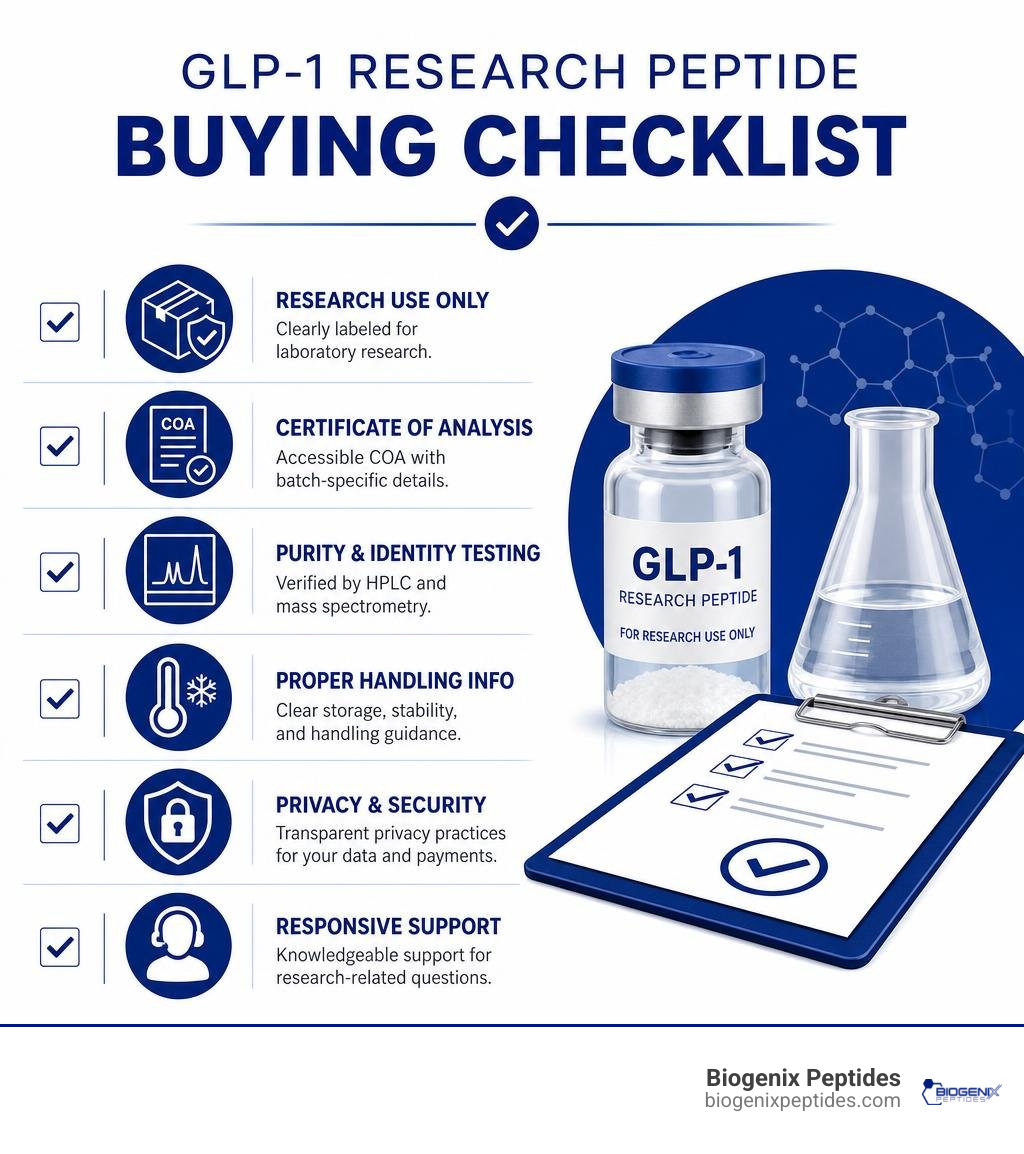
For a GLP-1 peptide buy intended for legitimate laboratory research, choose suppliers that clearly label products as research-use only and provide batch-specific testing records. Check for an accessible Certificate of Analysis, identity and purity testing such as HPLC and mass spectrometry, transparent handling information, and clear privacy practices before sharing any personal or payment data.
Research peptides are not interchangeable with FDA-approved prescription medicines. GLP-1-related compounds are studied for their role in incretin signaling, including glucose-dependent insulin activity, glucagon regulation, gastric motility, and appetite-related pathways. Any discussion here reflects research context and opinion only, not guidance for human use.
I’m Jay Daniel, founder and CEO of BioGenix Peptides, with experience in peptide sourcing, purity validation, quality-control processes, and research-focused education relevant to a GLP-1 peptide buy. In the sections ahead, I’ll explain how to assess research-grade GLP-1 materials with a focus on documentation, scientific transparency, and responsible laboratory standards.
Overview of Incretin Mimetics and Research Mechanisms
Incretin mimetics have fundamentally transformed metabolic biology investigations over the past decade. Natural incretin hormones, primarily glucagon-like peptide-1 (GLP-1) and glucose-dependent insulinotropic polypeptide (GIP), are synthesized in the gut in response to nutrient intake. In laboratory settings, researchers examine these synthetic analogs to understand how binding to specific G-protein coupled receptors alters intracellular signaling cascades.
When exploring how GLP-1 incretin pathways explained function in cellular models, the primary cascade involves adenylyl cyclase activation, elevated cyclic adenosine monophosphate (cAMP), and subsequent protein kinase A signaling. This cascade promotes glucose-dependent insulin secretion from pancreatic beta cells while attenuating inappropriate glucagon secretion from alpha cells during hyperglycemic states.

Beyond pancreatic actions, incretin mimetics profoundly influence gastric motility and central nervous system appetite centers in experimental models. By slowing gastric emptying rates, these peptides regulate nutrient absorption velocity. Concurrently, activation of central receptors within the hypothalamus and area postrema triggers satiety pathways, leading to notable reductions in voluntary caloric intake across metabolic study cohorts.
Comparing Single, Dual, and Triple Agonists
The evolution of metabolic peptide synthesis has progressed from single-receptor targets to multi-agonist engineering. While early experimental designs centered entirely on selective GLP-1 receptor activation, contemporary investigations focus on multi-receptor synergy to maximize metabolic flux and lipid clearance.
Our understanding of multi-target dynamics has expanded through examining GLP-1 dual and triple agonist peptides semaglutide tirzepatide and retatrutide in research. Combining GLP-1 with GIP receptor agonism offers complementary insulinotropic and adipocyte lipid-buffering effects. Furthermore, the incorporation of glucagon receptor activation introduces thermogenic energy expenditure and enhanced hepatic lipid oxidation.
| Peptide Compound | Target Receptor Profile | Primary Metabolic Focus in Research | Observed Weight Reduction Benchmark in Literature |
|---|---|---|---|
| Semaglutide | GLP-1 Selective | Glycemic regulation, gastric transit deceleration | ~15% over 1 to 1.5 years |
| Tirzepatide | GLP-1 / GIP Dual Agonist | Insulinotropic amplification, metabolic flexibility | ~16% in published trials |
| Foundayo (Orforglipron) | Non-peptide GLP-1 Agonist | Oral bioavailability, central satiety signaling | ~12.4% in early trials |
| Saxenda (Liraglutide) | GLP-1 Selective (Daily) | Baseline incretin study comparison | ~5% in benchmark studies |
| Retatrutide | GLP-1 / GIP / GCG Triple Agonist | Thermogenesis, hepatic lipid mobilization | Ongoing investigative evaluation |
Navigating Quality and Verification for a GLP-1 Peptide Buy
Acquiring compounds for laboratory research requires uncompromising standards. When sourcing these synthetic sequences, researchers must evaluate raw material specifications, synthetic methodologies (such as solid-phase peptide synthesis), and subsequent purification stages.
Working with a the complete guide to finding a reliable peptide shop ensures that research facilities receive authentic, lyophilized material free from synthesis byproducts. Pure peptides must arrive in stable, sealed vials with verifiable batch traceability, protected against temperature degradation through monitored cold-chain shipping protocols.
Best Practices for Your First GLP-1 Peptide Buy
Conducting your initial procurement requires structured verification to prevent experimental inconsistency. We recommend referencing our GLP-1 Peptides Complete Guide 2026 to establish a standardized evaluation framework before purchasing materials.
- Review manufacturer transparency and ensure products are strictly categorized for laboratory research applications.
- Verify third-party analytical documentation linked directly to the specific batch number on the vial.
- Confirm that the chemical identity matches the exact theoretical molecular weight via electrospray ionization mass spectrometry.
- Inspect sterile handling protocols and ensure vials contain stable lyophilized cakes rather than loose, degraded powder.
- Plan sterile reconstitution procedures in the laboratory using bacteriostatic water or designated analytical buffers.
Evaluating Purity Protocols Before a GLP-1 Peptide Buy
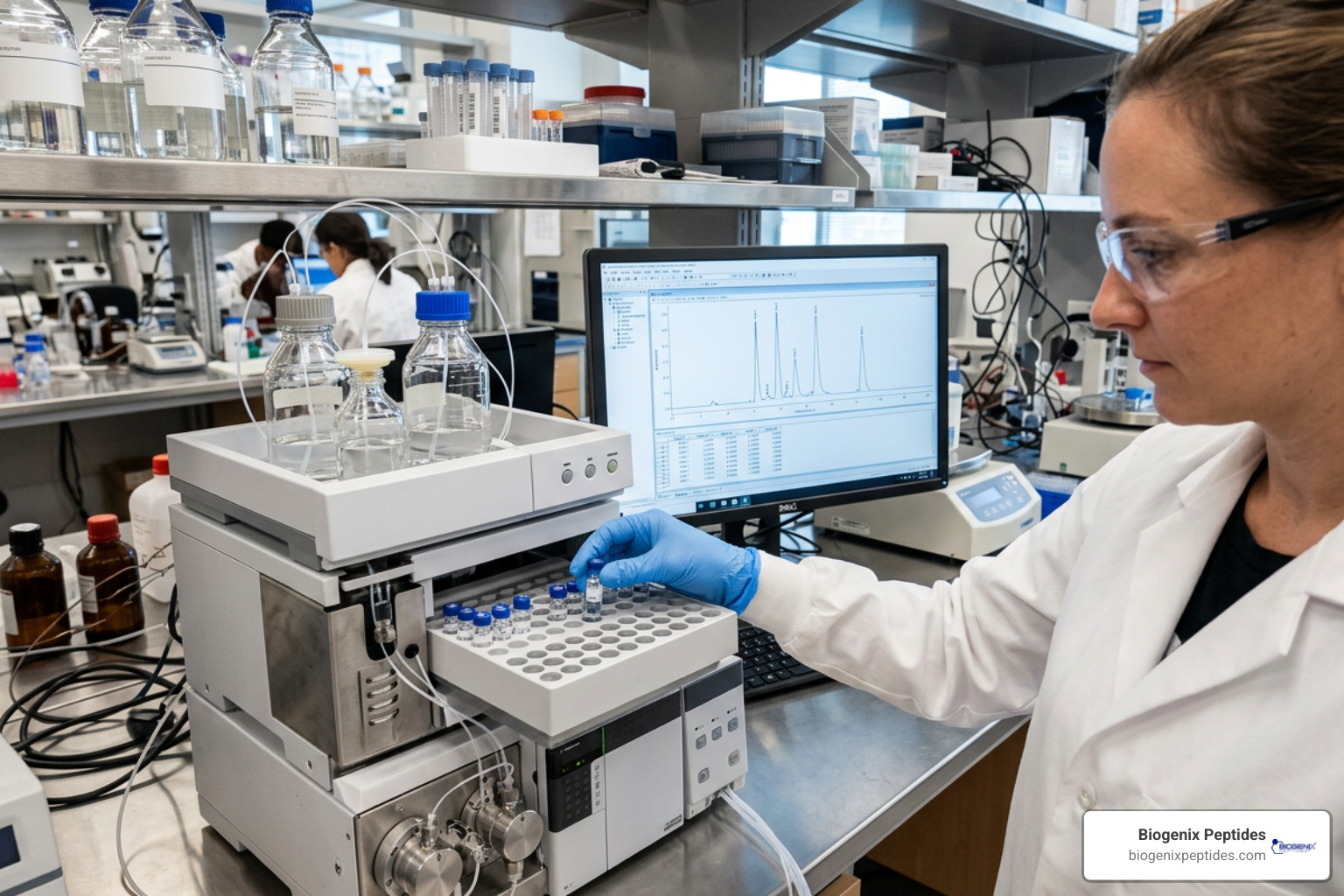
Analytical verification must always precede experimental introduction. High-Performance Liquid Chromatography (HPLC) is the gold standard for assessing chromatographic purity, ensuring that the primary target sequence represents 98% or more of the total peptide content.
Facilities exploring single-target sequences often evaluate Semaglutitde GLP-1 10mg for baseline incretin models. For dual-pathway investigations, researchers frequently acquire Tirzepatide GLP-2 10mg, whereas next-generation metabolic expenditure studies incorporate triple-agonist candidates like Retatrutide GLP-3 10mg. Across all variations, residual counter-ions, particularly trifluoroacetic acid (TFA), should be quantified and minimized to prevent cellular toxicity in sensitive assays.
Research Pharmacology, Safety Profiles, and Experimental Interactions
Understanding incretin pharmacology requires careful observation of biological reactions across test subjects and cellular lines. In non-human animal models, common observations center on gastrointestinal transit changes, reduced gastric acid output, and altered transit times through the colon.

Investigating experimental literature reveals critical physiological considerations. Prior to running experimental protocols, reviewing 10 GLP-1 side effects you should know about provides helpful context on gastrointestinal responses, acute pancreatic enzyme shifts, and renal filtration markers. Rodent models have notably demonstrated thyroid C-cell hyperplasia following extended incretin exposure, establishing an essential area of study regarding Multiple Endocrine Neoplasia syndrome type 2 (MEN 2) and medullary thyroid carcinoma pathways.
Pharmacokinetic parameters also dictate significant interaction considerations. Because incretin mimetics decelerate gastric emptying, the absorption kinetics of concurrently administered oral compounds can be substantially delayed. In experimental research, oral agents with narrow therapeutic windows require strict monitoring due to altered peak concentration timelines.
Research Screening and Laboratory Biomarker Monitoring
In metabolic research frameworks, establishing rigorous baseline parameters is vital for tracking physiological changes accurately. Standard evaluation protocols in metabolic animal studies include:
- Glycated Hemoglobin (HbA1c): Evaluated at baseline to track long-term glycemic modulation.
- Comprehensive Metabolic Panel: Assesses hepatic transaminases, electrolyte balance, and alkaline phosphatase.
- Renal Function Biomarkers: Blood urea nitrogen (BUN) and serum creatinine to observe hydration-related filtration impacts.
- Pancreatic Enzyme Assays: Serum amylase and lipase screening to monitor for subclinical pancreatic irritation.
- Thyroid Biomarker Panels: Evaluation of baseline calcitonin levels to identify any abnormal neuroendocrine proliferation.
Research Sourcing, Pricing, and Market Landscapes in 2026
As of August 2026, the global landscape for metabolic research compounds has evolved significantly. While commercial clinical formulations face complex insurance environments—where only 19% of large employer health plans in 2025 offered coverage for obesity pharmacotherapy, and newer programs like the Medicare GLP-1 Bridge program establish $50/month access for select eligible patients—the non-human research supply sector operates on distinct analytical standards.
In the pure scientific supply market, institutions focus on cost-per-milligram efficiency, bulk batch homogeneity, and verified purity tiers. Research facilities procuring materials for non-human testing frequently leverage tiered bulk purchasing, ensuring consistent synthetic quality across multi-month experimental protocols without clinical supply-chain volatility.
Frequently Asked Questions About GLP-1 Peptides
What is the difference between single and multi-target incretin agonists?
Single agonists, such as semaglutide, selectively activate the GLP-1 receptor to modulate glucose and gastric emptying. Dual agonists (like tirzepatide) target both GLP-1 and GIP receptors, enhancing insulin response and adipocyte handling. Triple agonists (such as retatrutide) incorporate glucagon receptor binding, stimulating hepatic lipid clearance and energy expenditure in metabolic models.
How does delayed gastric emptying affect oral compound absorption in studies?
Delayed gastric emptying alters transit time from the stomach to the small intestine. In experimental pharmacokinetics, this can broaden the absorption curve and delay peak plasma concentrations of co-administered oral substances without necessarily reducing total bioavailability over time.
What laboratory tests are evaluated in GLP-1 research studies?
Standard research protocols evaluate baseline HbA1c, fasting glucose, comprehensive metabolic panels (hepatic and renal markers), lipid profiles, and pancreatic enzymes such as amylase and lipase to measure systemic responses.
Conclusion
Understanding the structural design, synthetic verification, and receptor kinetics of incretin mimetics is essential for advancing metabolic research. High-purity sourcing, rigorous HPLC verification, and detailed analytical documentation ensure that experimental outcomes remain precise and reproducible.
At BioGenix Peptides, we provide research-grade compounds dedicated strictly to in vitro and non-human laboratory research applications. Explore our comprehensive collection of verified GLP-1 Research Peptides to support your scientific testing and laboratory evaluations.
Disclaimer: All content provided is for research and educational purposes only, representing opinion, and is not intended for human or veterinary use or as medical advice.