Get the Real Deal When You Buy Fragment 176-191 Online
Disclaimer: The information provided in this article is for educational and informational purposes only. It is not intended as medical advice, diagnosis, or treatment. Products and compounds referenced are for research use only and are not approved for human or veterinary consumption. Always consult a qualified professional regarding health or medical decisions.
Key Considerations Before You Buy Fragment 176 191 for Research
When preparing to buy fragment 176 191 for laboratory research, authentic chemical verification is the most critical step. HGH Fragment 176–191 is a synthetic 16-amino acid sequence representing the C-terminus of human growth hormone. Unlike its modified relative AOD-9604, raw Fragment 176–191 has never been studied in human clinical trials and serves strictly as an investigational research reagent.
To secure genuine, research-grade material for in vitro studies, ensure your supplier meets these core standards:
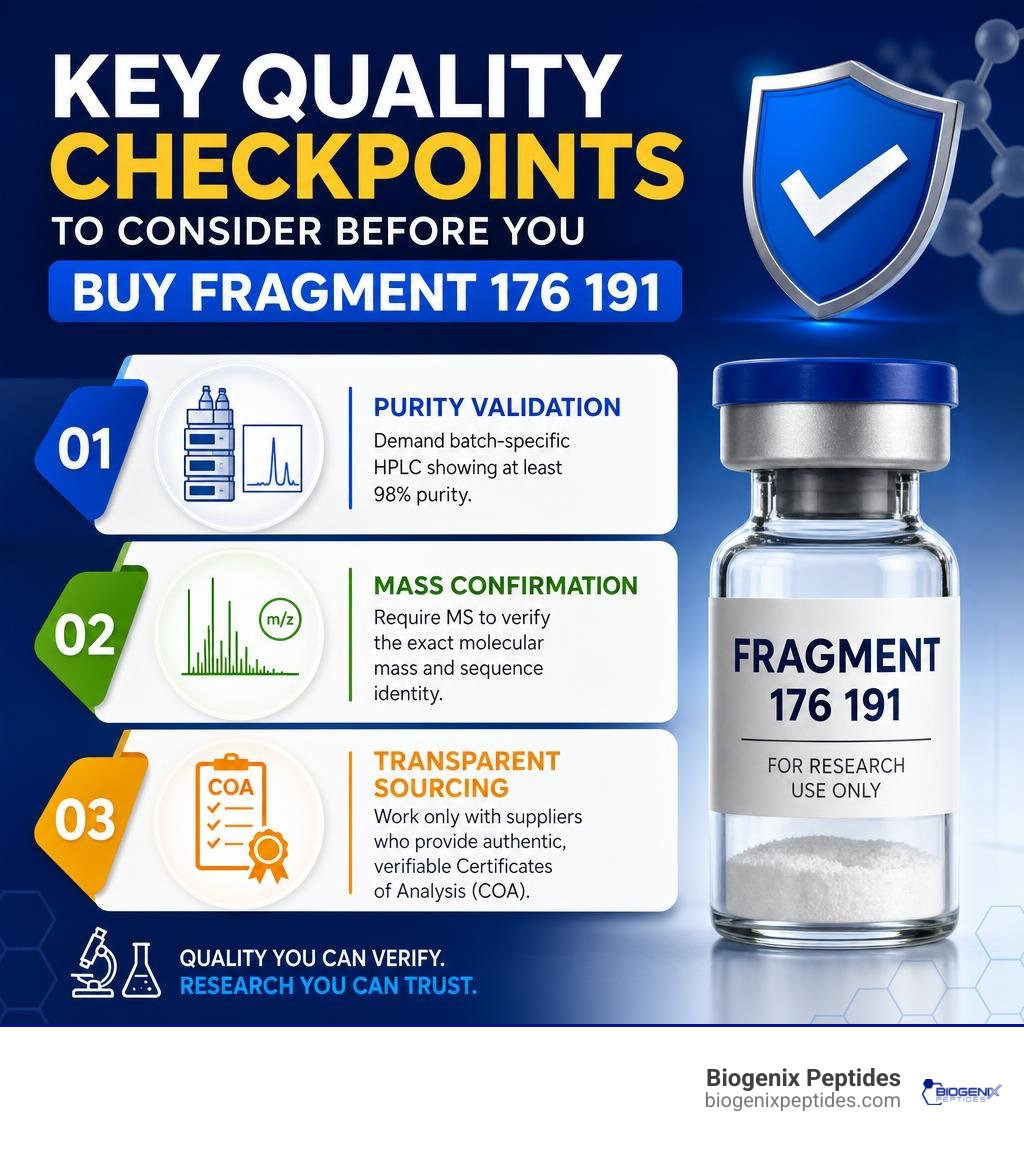
- Purity Validation: Demand batch-specific High-Performance Liquid Chromatography (HPLC) showing at least 98% purity.
- Mass Confirmation: Require Mass Spectrometry (MS) to verify the exact molecular mass and sequence identity.
- Transparent Sourcing: Work only with suppliers who provide authentic, verifiable Certificates of Analysis (COA).
I am Jay Daniel, Founder and CEO of BioGenix Peptides, with years of laboratory experience evaluating peptide synthesis, analytical testing, and quality control. My goal is to help researchers cut through marketing confusion and obtain verified compounds whenever they buy fragment 176 191 for experimental work.
Buy fragment 176 191 terms to know:
Introduction
In the modern peptide chemistry landscape of August 2026, synthetic growth hormone derivatives remain a major focus of investigational work. Among these laboratory targets, human growth hormone (hGH) Fragment 176–191 holds a prominent position. Originally synthesized to isolate specific metabolic characteristics of the parent 191-amino acid somatotropin molecule, this isolated segment has generated significant academic discussion.
However, as researchers delve into non-clinical context evaluations and exploratory in vitro studies, critical scientific distinctions are frequently overlooked. A large volume of marketing claims incorrectly conflates raw Fragment 176–191 with its chemically modified analog, AOD-9604. To maintain methodological integrity, scientists must understand the exact molecular profile, physical limitations, and evidence boundaries governing this peptide before incorporating it into experimental models.
Understanding HGH Fragment 176-191: Chemical Structure and Mechanisms

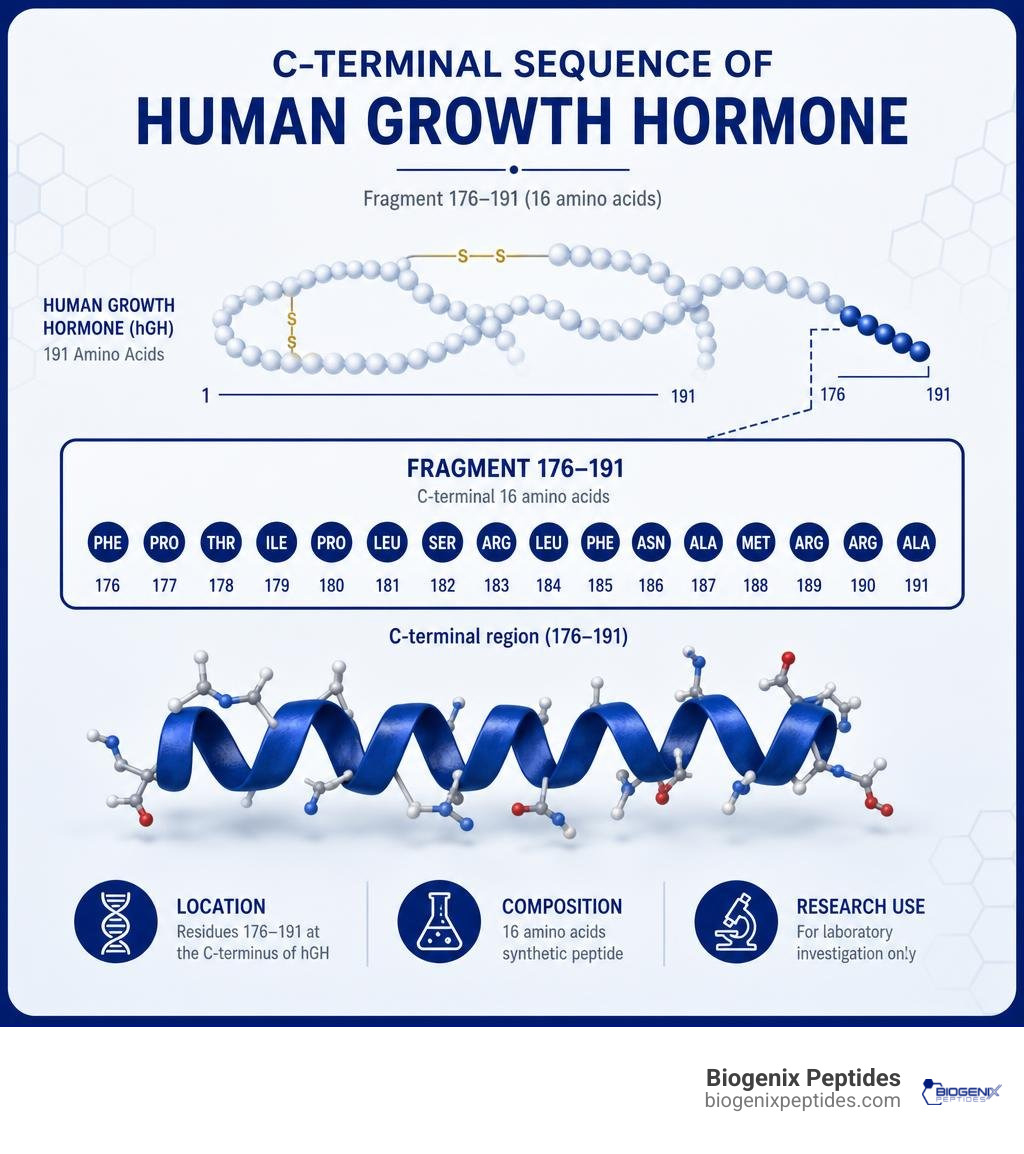
To appreciate how this molecule operates in cell culture models, we must examine its precise chemical architecture. Full-length human growth hormone is a single-chain polypeptide composed of 191 amino acids with two intramolecular disulfide bridges. Fragment 176–191 represents a truncated synthetic analog corresponding strictly to the extreme C-terminal region of that protein.
The primary structure consists of the following 16-amino acid sequence:
H-Phe-Leu-Arg-Ile-Val-Gln-Cys-Arg-Ser-Val-Glu-Gly-Ser-Cys-Gly-Phe-OH
A defining characteristic of this sequence is the internal disulfide bridge formed between the cysteine residues at positions 182 and 189 (corresponding to Cys7 and Cys14 within the truncated sequence). This cyclic loop is vital for maintaining tertiary conformation and stability during binding interactions. For an exhaustive foundation on synthetic chains and molecular modeling, consult The Complete Guide to Peptides in Scientific Research.
Amino Acid Profile and In Vitro Studies
Beyond traditional endocrine models, synthetic Fragment 176–191 has been investigated in innovative drug-delivery systems. Notably, researchers have evaluated its capacity to functionalize carrier vehicles, such as doxorubicin-loaded chitosan nanoparticles. In these models, investigators tested cellular uptake assays and synergy dynamics using the MCF-7 breast cancer cell line.
The hypothesis centered on whether the terminal peptide motif could alter nanoparticle internalisation or membrane interaction, modulating intracellular drug delivery without exerting full-length somatogenic effects. These explorations highlight the broad biochemical relevance of short signaling sequences. To explore the broader mechanisms of peptide-based signaling cascades, review What Are Peptides? The Complete Science-Backed Guide to Cell Signaling, Metabolism, Hormones & Longevity.
Mechanism of Action and Cellular Pathways
In metabolic research models, Fragment 176–191 is primarily evaluated for its pathway-selective behavior. In vitro assays demonstrate that the C-terminal region interacts with adipocyte beta-3 adrenergic receptor pathways to stimulate lipolytic signaling without engaging the growth hormone receptor’s somatogenic domain.
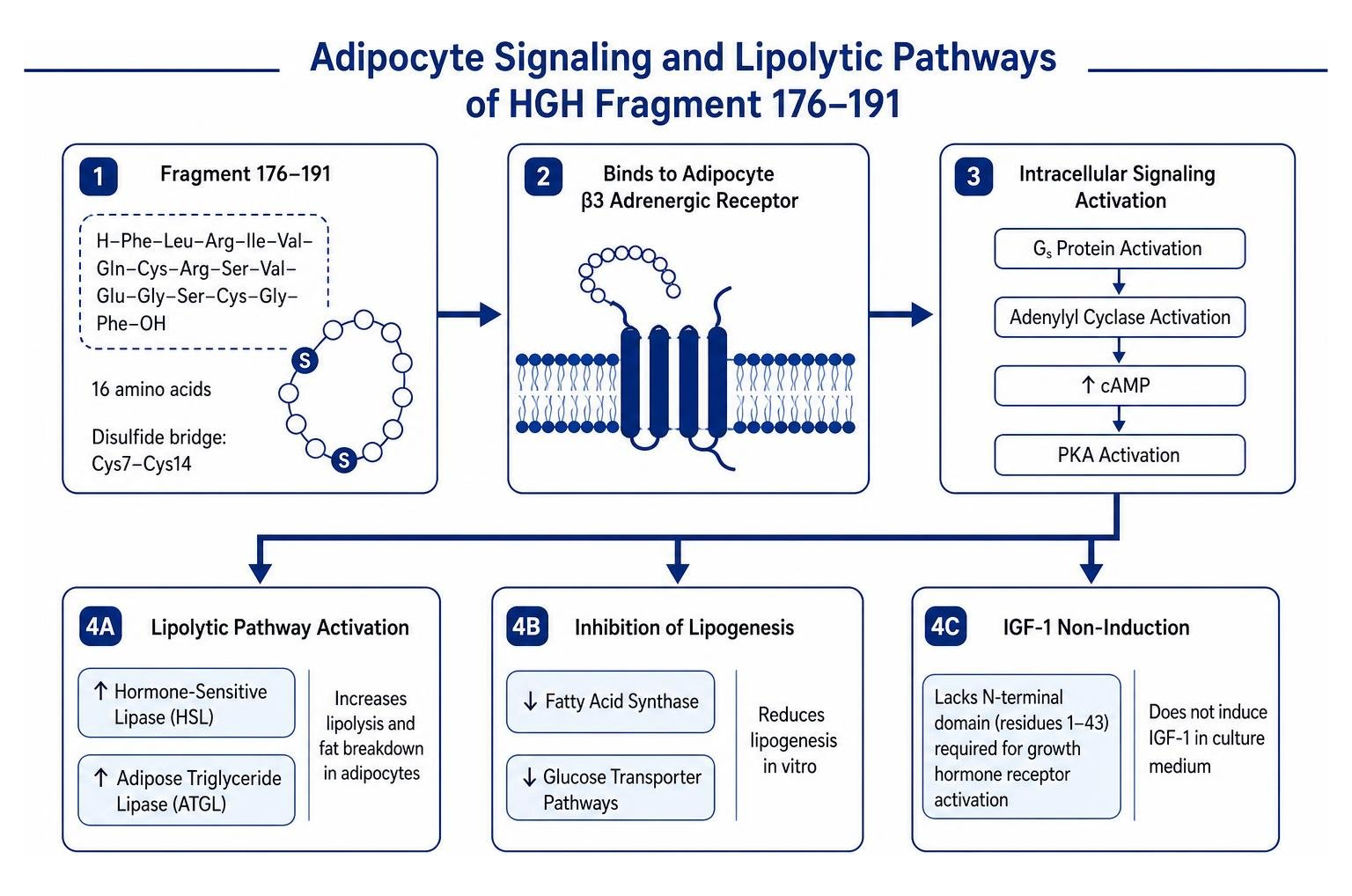
Key pathways observed in benchtop experiments include:
- Lipolytic Pathway Activation: Upregulation of hormone-sensitive lipase (HSL) and adipose triglyceride lipase (ATGL) transcription in isolated adipocytes.
- Inhibition of Lipogenesis: Decreased expression of fatty acid synthase and glucose transporter pathways in vitro.
- IGF-1 Non-Induction: Because the sequence lacks the N-terminal functional domain (residues 1–43) required to trigger hepatic growth hormone receptors, it does not induce circulating or culture-medium elevations in Insulin-like Growth Factor 1 (IGF-1).
- Non-Glycemic Impact: Laboratory observations indicate no binding interaction with receptors regulating pancreatic insulin secretion or systemic glucose uptake.
For further reading on laboratory investigations into metabolic pathways, see our breakdown on Metabolic Weight Management Peptides.
HGH Fragment 176-191 vs. AOD-9604: The Clinical Evidence Gap
One of the most widespread errors in published commentary and commercial descriptions is treating Fragment 176–191 and AOD-9604 as identical chemical entities. While they are close structural relatives, they are distinct molecules with entirely separate research histories.
| Parameter | HGH Fragment 176–191 | AOD-9604 |
|---|---|---|
| Peptide Sequence | H-Phe-Leu-Arg-Ile-Val-Gln-Cys-Arg-Ser-Val-Glu-Gly-Ser-Cys-Gly-Phe-OH | Tyr-Leu-Arg-Ile-Val-Gln-Cys-Arg-Ser-Val-Glu-Gly-Ser-Cys-Gly-Phe |
| N-Terminal Modification | Unmodified Phenylalanine (Phe176) | Tyrosine (Tyr) substitution/addition at N-terminus |
| Human Clinical Trials | Zero (0) human studies published | Multiple Phase I, Phase IIa, and Phase IIb trials completed |
| Primary Research Scope | In vitro cellular and nanoparticle assays | Human clinical investigation & animal translational models |
| Structural Stability | Standard linear/cyclic peptide stability | Enhanced enzymatic resistance from N-terminal modification |
To review a thorough breakdown of the modified variant’s clinical trajectory, explore AOD-9604 in Research: The Science Behind the Fat-Selective Growth Hormone Fragment.
Why Human Clinical Data Belongs to AOD-9604
The scientific literature is clear: HGH Fragment 176–191 has never been studied in human clinical trials. Every published human safety profile, metabolic rate study, and clinical trial endpoint often cited online was conducted exclusively using AOD-9604.
When Australian researchers modified the peptide by adding an N-terminal tyrosine residue, their primary objective was to improve enzymatic stability and oral bioavailability in translational models. Because unmodified Fragment 176–191 lacks this structural modification, it degrades more rapidly in the presence of proteolytic enzymes. Extrapolating clinical safety or metabolic outcomes from AOD-9604 to raw Fragment 176–191 represents a profound methodological error.
Key Differences Before You Buy Fragment 176 191
Understanding these structural differences is crucial before ordering reagents for benchtop experiments. When planning to Shop Metabolic: HGH Frag 176-191 5mg, principal investigators must verify whether their analytical equipment is calibrated for raw Fragment 176–191 or its modified relative.
Key chemical considerations include:
- Counter-Ion Content: Research peptides are typically isolated as trifluoroacetate (TFA) or acetate salts. TFA salts can influence cell viability in sensitive in vitro models if not accounted for during assay design.
- Net Peptide Content: A 5 mg lyophilized vial contains both active peptide and counter-ions/moisture. Authentic suppliers specify the net peptide fraction (often 80–85%) alongside overall purity.
- Reagent Integrity: True research-grade material must reflect strict monomeric purity without high-molecular-weight aggregates formed during cyclic disulfide bridging.
Quality and Purity Criteria When You Buy Fragment 176 191
Analytical chemistry is the sole reliable baseline for peptide verification. Unscrupulous suppliers frequently exploit the structural similarities among growth hormone fragments to distribute substandard or degraded sequences.
Assessing COAs and Analytical Testing
Before incorporating any peptide batch into a laboratory protocol, researchers should independently audit the vendor’s Certificate of Analysis (COA). Standard procurement guidelines, as outlined in our Buying Guide, require two non-negotiable analytical tests:
- High-Performance Liquid Chromatography (HPLC): This technique determines chromatographic purity by separating the primary peptide from synthesis truncation products, deleted sequences, and oxidation artifacts. The primary target peak should demonstrate greater than 98.0% analytical purity.
- Mass Spectrometry (MS): While HPLC measures purity, MS proves molecular identity. Electrospray Ionization (ESI-MS) or MALDI-TOF must yield an exact mass matching the theoretical molecular weight of the 16-amino acid sequence (approx. 1815.1 Da).
For practical steps on identifying authentic analytical documentation and avoiding vendor pitfalls, review Where to Buy Peptides Without Losing Your Gains (or Your Shirt).
How to Safely Buy Fragment 176 191 for Laboratory Use
Securing reliable investigational compounds requires a systematic vendor evaluation process. The research community relies on strict criteria to ensure batch-to-batch reproducibility:
- Batch-Specific Testing: Verify that COAs represent the specific batch number received, rather than generic historical data.
- Domestic Cold-Chain Synthesis: Peptide synthesis conducted under strict temperature controls minimizes thermal degradation and early deamidation.
- Sterile Lyophilization: Material should arrive as a clean, uniform lyophilized cake sealed in glass vials with inert nitrogen headspace to prevent oxidation.
For broader procurement protocols across investigational peptides, refer to The Ultimate Guide to Buying GLP-1 Research Peptides Online.
Laboratory Handling: Reconstitution, Storage, and Research Protocols
Synthetic peptides containing internal disulfide bonds require precise physical handling to maintain structural integrity in solution. Improper mechanical agitation or temperature spikes can precipitate the peptide or rupture the cyclic bridge.
When preparing solutions for laboratory models, refer to our standard protocol How to Reconstitute Peptides in 5 Easy Steps or review Reconstituting Lyophilized Peptides Step by Step.
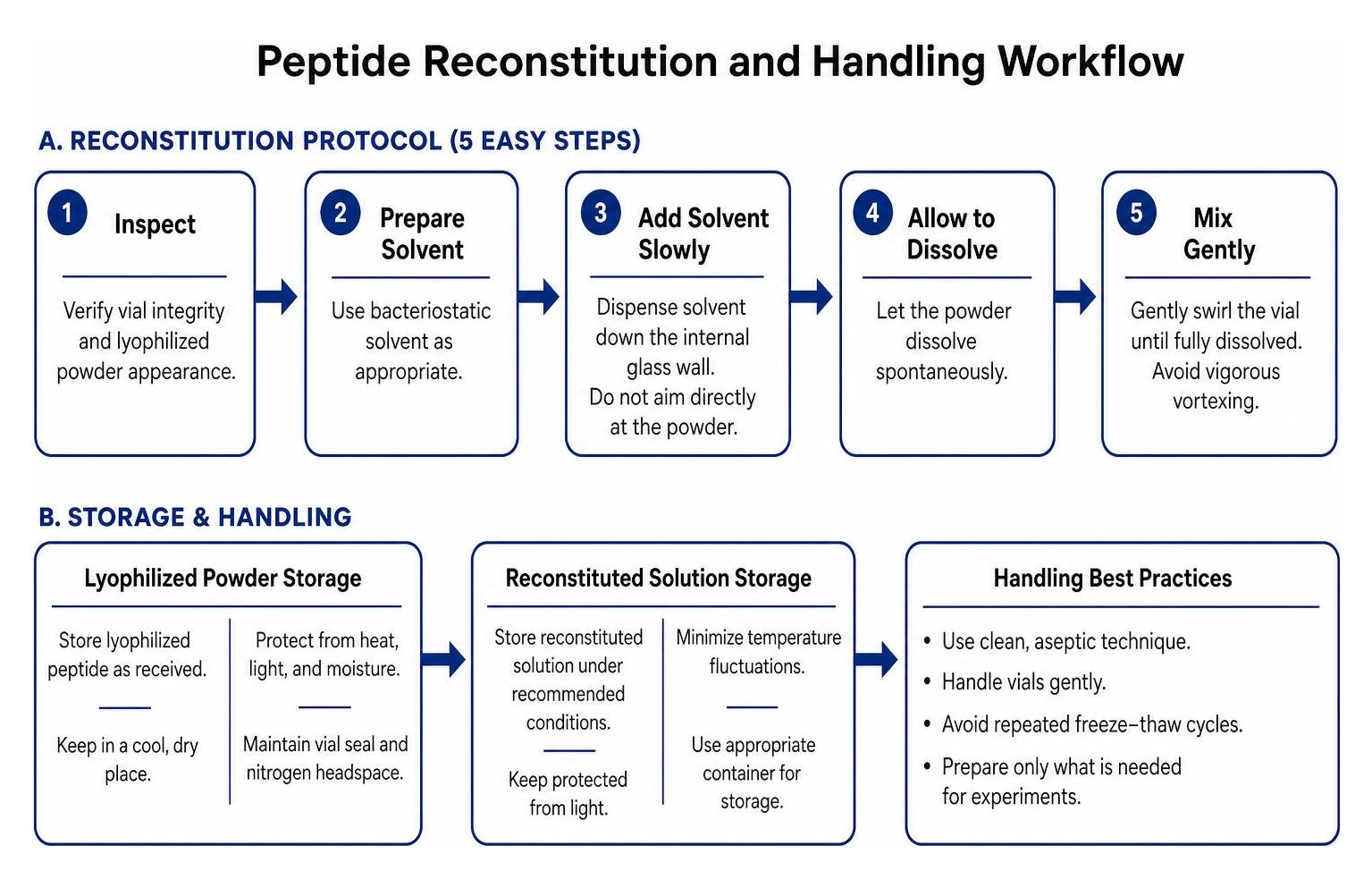
Best practices for liquid handling include:
- Introducing the bacteriostatic solvent slowly down the internal glass wall rather than directly onto the lyophilized cake.
- Allowing the powder to dissolve spontaneously, followed by gentle swirling rather than vigorous vortexing.
Lyophilized Powder Storage and Shelf Life
To maximize stability over extended experimental timelines, laboratories must adhere to strict environmental parameters:
- Long-Term Storage (Lyophilized): Store solid powder at -20°C in a manual defrost freezer. Under these conditions, stability is preserved for up to 24 months.
- Short-Term Storage (Reconstituted): Maintain liquid solutions at 2°C to 8°C. Because aqueous peptide bonds undergo gradual hydrolysis, working solutions should generally be analyzed within 21 to 28 days.
- Desiccation and Light Protection: Store vials inside sealed containers containing active desiccant packs, shielded from direct UV light exposure.
For a comprehensive review of degradation curves and thermal parameters, consult our Peptide Storage Stability Guidelines and Best Practices for Peptide Storage & Handling.
Laboratory Safety and Handling Standards
All benchtop experiments involving synthetic peptides must strictly adhere to Good Laboratory Practice (GLP) standards. For complete safety guidelines and experimental controls, consult The Complete Guide to Safe Peptide Protocols and refer to our Mastering Peptide Research Guidelines.
Key laboratory safety standards include:
- Wearing appropriate personal protective equipment (PPE), including nitrile gloves, eye protection, and lab coats.
- Conducting all solution preparations within a certified laminar flow hood or biosafety cabinet to prevent particulate and microbial contamination.
- Documenting all solvent lot numbers, reconstitution timestamps, and storage temperatures to maintain reliable experimental records.
Frequently Asked Questions About Fragment 176-191
For additional scientific and regulatory information regarding investigational compounds, visit our dedicated FAQ hub.
What is the legal status when acquiring HGH Fragment 176-191?
Within the United States as of August 2026, HGH Fragment 176–191 is classified as a research chemical. It is legal to purchase, possess, and distribute solely for laboratory, in vitro, and non-clinical scientific research. It has not been approved by the U.S. Food and Drug Administration (FDA) for diagnostic, therapeutic, or clinical administration.
Has HGH Fragment 176-191 undergone clinical human trials?
No. There are zero published human clinical trials examining unmodified HGH Fragment 176–191. All widely reported clinical trial data—including safety and metabolic endpoints—belong exclusively to the modified peptide AOD-9604. Extrapolating those findings to the unmodified fragment is scientifically inaccurate.
How does Fragment 176-191 differ chemically from full-length hGH?
Full-length hGH is a 191-amino acid protein that activates systemic growth hormone receptors, stimulating hepatic IGF-1 synthesis and linear growth. Fragment 176–191 contains only the 16 amino acids at the C-terminus. It completely lacks the somatogenic binding domain, meaning it cannot activate somatic growth pathways or stimulate IGF-1 production in experimental models.
Conclusion
HGH Fragment 176–191 remains a distinctive investigational tool in peptide chemistry and metabolic research. Its unique cyclic structure and isolated C-terminal sequence provide a focused mechanism for studying receptor-specific pathway interactions and innovative nanoparticle delivery systems in vitro.
However, rigorous science demands strict adherence to empirical data. Researchers must reject marketing claims that confuse this raw 16-amino acid sequence with clinically evaluated analogs like AOD-9604. By verifying analytical purity via HPLC and Mass Spectrometry, maintaining strict laboratory cold-chain standards, and sourcing verified materials, research teams can ensure reproducible experimental outcomes.
To view verified analytical documentation and high-purity laboratory reagents, explore premium research peptides from BioGenix Peptides.