Where to Secure a High-Purity PT-141 Peptide Purchase Today
How to Make a High-Purity PT-141 Peptide Purchase
Disclaimer: The information provided in this article is for educational and informational purposes only. It is not intended as medical advice, diagnosis, or treatment. Products and compounds referenced are for research use only and are not approved for human or veterinary consumption. Always consult a qualified professional regarding health or medical decisions.
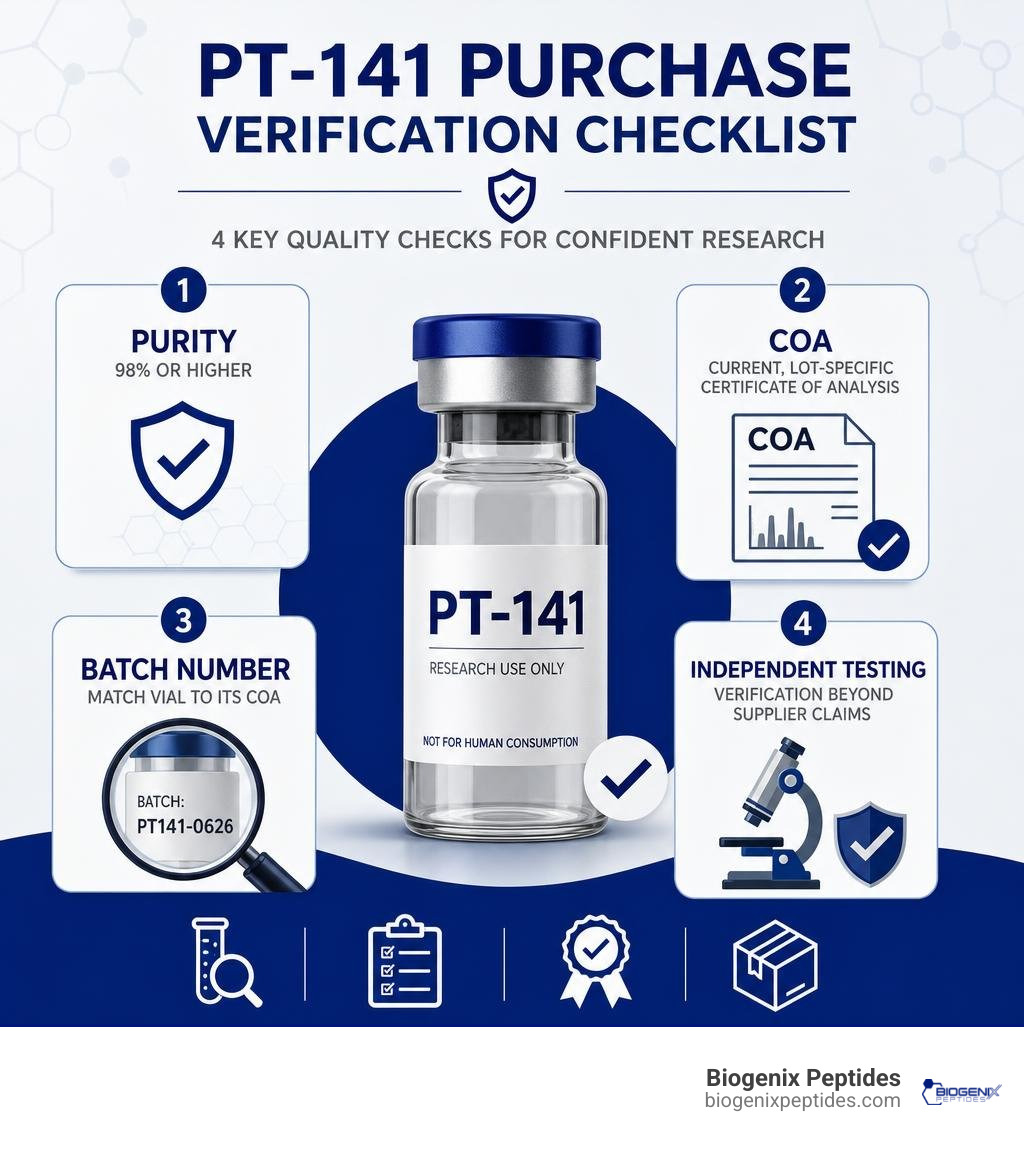
A PT-141 peptide purchase for laboratory research should start with a supplier that provides a current, lot-specific certificate of analysis (COA), clear purity data, and independent test verification.
| What to verify | Why it matters |
|---|---|
| Purity of 98% or higher | Helps limit unwanted synthesis-related impurities |
| HPLC and mass spectrometry data | Confirms identity and measured purity |
| Lot or batch number | Lets researchers match the vial to its COA |
| Independent testing | Adds a useful check beyond a supplier’s own claims |
| Research-use labeling and compliant shipping | Supports proper laboratory procurement and handling |
PT-141, also known as bremelanotide, is a synthetic melanocortin peptide studied for its activity at MC3R and MC4R receptors. Unlike compounds that focus on peripheral vascular pathways, PT-141 research centers on melanocortin signaling and central nervous system pathways. It should be evaluated only within lawful, appropriately equipped laboratory research programs.
I am Jay Daniel, Founder and CEO of BioGenix Peptides, with experience in peptide sourcing, quality-control review, and research-focused laboratory standards relevant to a PT-141 peptide purchase. In this guide, I will outline the practical signals that can help researchers assess quality, documentation, and sourcing transparency.
Quick pt 141 peptide purchase terms:
Scientific Overview and Mechanisms of PT-141
When exploring central nervous system pathways, investigators frequently evaluate how synthetic peptide analogues interact with specialized receptor populations in hypothalamic tissue. PT-141 has gained substantial attention in cellular and preclinical models due to its distinct mode of action within the central melanocortin system.
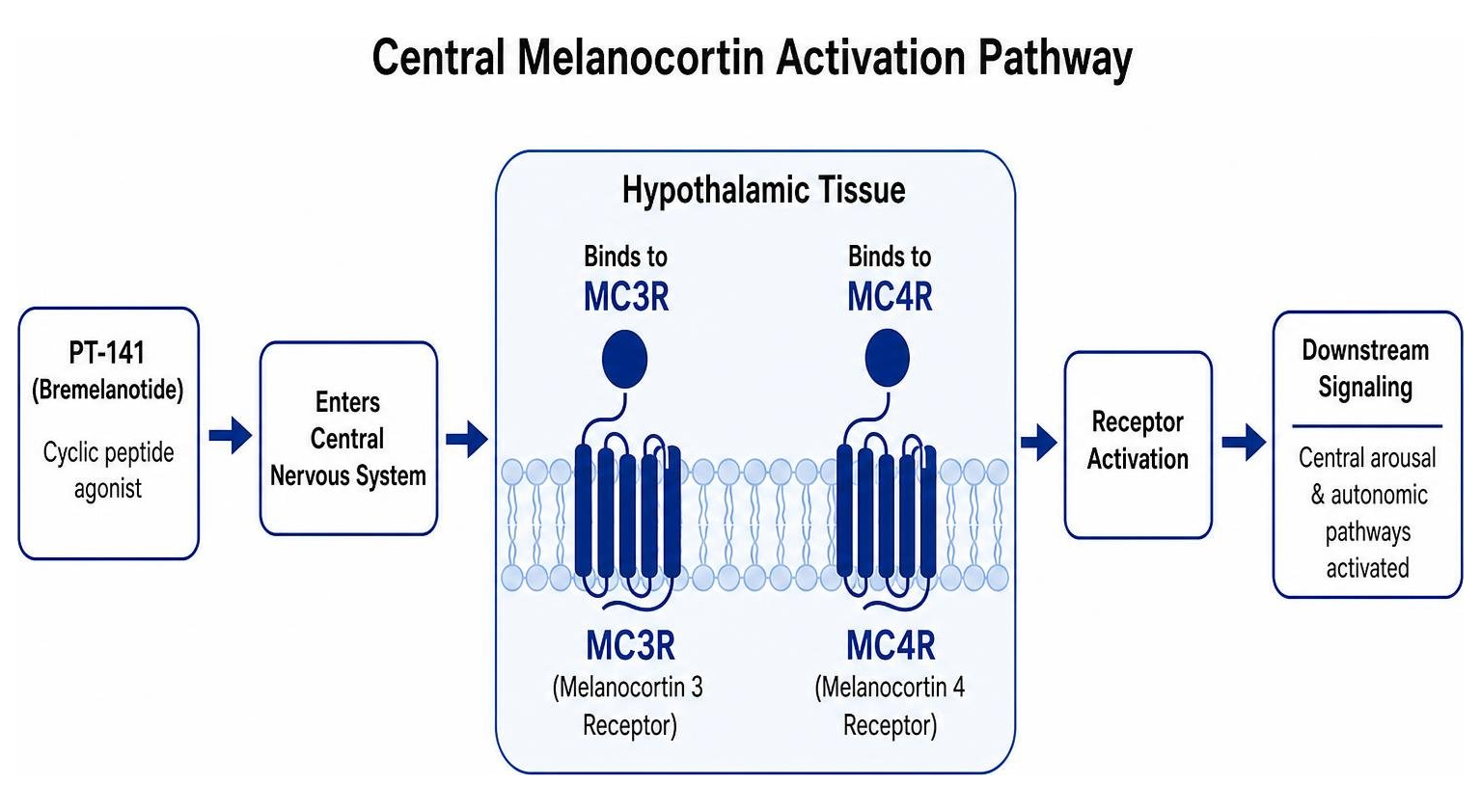
Unlike classical vasodialatory research chemicals that act locally on peripheral endothelial vascular beds, PT-141 operates upstream. It acts primarily as a cyclic peptide agonist that targets central melanocortin receptors—specifically sub-types MC3R and MC4R—located within the hypothalamus. By binding to these central receptors, researchers observe downstream activation of central arousal circuitry and autonomic signaling pathways. You can learn more about how synthetic compounds interact with central pathways in our detailed overview of Research on peptide mechanisms.
Molecular Differences Between PT-141, Bremelanotide, and Melanotan II
To ensure precise laboratory documentation, it is essential to clarify the nomenclature and structural chemistry surrounding PT-141. In scientific literature, PT-141 and bremelanotide refer to the exact same molecular entity. Bremelanotide is the non-proprietary international name, whereas PT-141 was the initial developmental code designated during early investigative trials.
Structurally, PT-141 possesses a molecular weight of 1,025.2 Da and a CAS registry number of 189691-06-3. It is a synthetic cyclic heptapeptide derivative originally engineered from Melanotan II (MT-2). While MT-2 non-selectively stimulates a broad spectrum of melanocortin receptors (MC1R through MC5R)—resulting in heavy skin pigmentation via melanogenesis alongside systemic physiological effects—PT-141 was refined to narrow receptor selectivity.
In research settings, this refinement isolates activity predominantly to MC3R and MC4R, significantly reducing MC1R-driven melanogenic responses. For broader structural context on melanocortin derivatives, review our Guide on Melanotan sequence research.
Comparing Research Formats: Lyophilized Powder vs. Nasal Formulations
When planning a pt 141 peptide purchase, principal investigators usually choose between two primary handling formats: lyophilized cake powder or pre-formulated intranasal solutions.
- Lyophilized Powder: Freeze-dried vacuum-sealed vials represent the industry gold standard for shelf stability, purity preservation, and exact concentration control in controlled trial environments. In solid state, the peptide chain resists thermal degradation and peptide bond cleavage over extended timeframes.
- Nasal Formulations: Intranasal spray options offer pre-mixed experimental convenience, but liquid peptide solutions inherently exhibit shorter shelf life and increased vulnerability to structural breakdown at ambient temperatures. Furthermore, variable absorption across mucosal membranes introduces potential confounding factors in strict quantitative research.
For rigorous trial replication, solid-state lyophilized powder remains the preferred format because it allows precise target concentrations to be established immediately prior to experimental application.
Essential Criteria for a High-Purity PT-141 Peptide Purchase
Securing high-grade reagents requires verifying production compliance and analytical purity before placing an order. Because minor synthesis residual compounds can skew baseline trial metrics, establishing rigorous standards before completing a pt 141 peptide purchase is crucial.
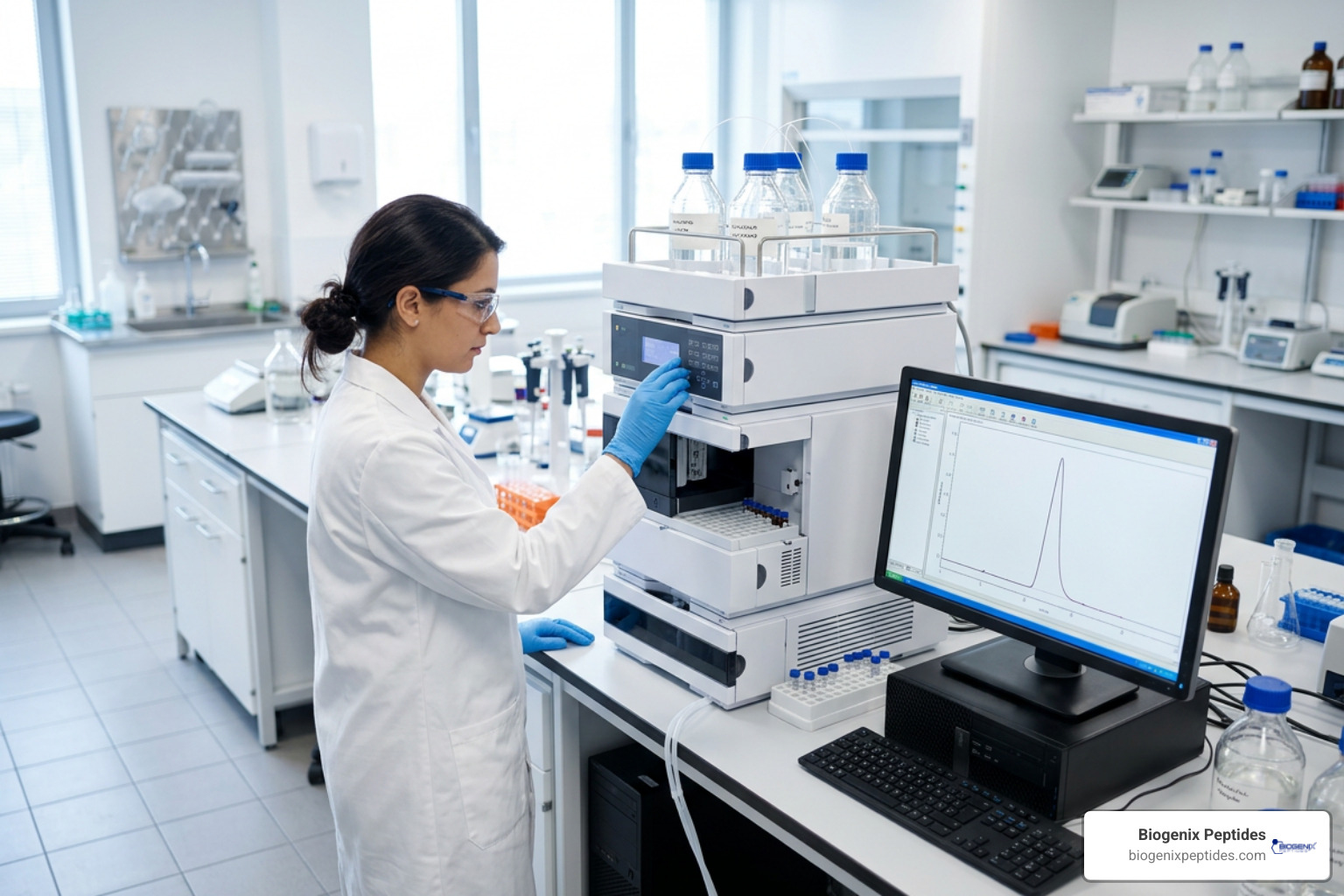
High-purity research materials should exhibit a purity threshold of at least 98% (≥98%). Achieving this standard requires meticulous solid-phase peptide synthesis (SPPS), multi-step high-performance liquid chromatography (HPLC) purification, and efficient freeze-drying protocols. Understanding how target structural integrity translates to experimental performance is covered in our analysis of Understanding peptide purity and bioavailability.
Independent COA Verification and Third-Party Analytical Testing
Never rely solely on a vendor’s internal purity assertions. Reputable suppliers provide comprehensive Certificates of Analysis (COAs) generated by independent, ISO-accredited third-party analytical laboratories.
A complete analytical report must feature two critical laboratory assays:
- High-Performance Liquid Chromatography (HPLC): Measures precise chromatographic purity percentage by isolating the primary compound peak from trace synthesis side-products or truncated sequences.
- Mass Spectrometry (MS): Confirms correct molecular mass and structural identity (verifying the 1,025.2 Da molecular weight) to guarantee the absent substitution of cheaper sequence fragments.
Verify that the batch identification number listed on the COA directly matches the batch printed on your vial. For step-by-step guidance on reading these technical reports, consult our guide on How to analyze HPLC and MS reports.
How to Avoid Counterfeits During a PT-141 Peptide Purchase
The online marketplace contains unverified distributors selling under-poured, degraded, or mislabeled peptide products. Protecting research integrity requires identifying critical red flags prior to purchasing:
- Lack of Public Third-Party Testing: Suppliers that refuse to publish full, verifiable COAs with active batch tracking numbers.
- Unrealistic Price Offsets: Quotes significantly below standard market production costs often signal compromised synthesis standards or raw material dilution.
- Vague Material Safety Data: Inadequate labeling that fails to specify exact freeze-dried peptide mass, molecular formula, or CAS number.
To protect your budget and preserve sample consistency, review our strategic resource on Avoiding fake research peptides online.
Laboratory Protocols, Pricing Models, and Sourcing Guidelines
When structuring laboratory budgets for a pt 141 peptide purchase, pricing usually varies based on unit volume, purity verification tiers, and overall order quantity. Most academic and private research facilities leverage tier-based volume discounts to reduce single-unit costs.
Below is a technical comparison of standard supply formats evaluated in laboratory environments:
| Format Specification | Lyophilized Powder Vials | Pre-Formulated Nasal Sprays |
|---|---|---|
| Primary State | Freeze-dried solid cake | Liquid solution |
| Typical Quantity | 10mg per vial | 20mg per spray unit |
| Purity Standard | ≥98% (verified HPLC/MS) | Varies widely (90–95%) |
| Long-Term Storage | Freezes (-20°C) up to 24 months | Refrigerates short-term |
| Precision Control | Ultra-high (exact diluent ratio) | Variable per spray pump |
| Primary Laboratory Application | Quantitative cellular/animal studies | Qualitative observational trials |
Reconstitution Mechanics and Storage Conditions
Lyophilized PT-141 requires meticulous reconstitution protocols using sterile diluents prior to liquid application in bench experiments.
- Diluent Choice: Reconstitute using pure, laboratory-grade Bacteriostatic water reconstitution supplies, which contains 0.9% benzyl alcohol to prevent microbial contamination.
- Reconstitution Method: Slowly introduce the liquid diluent along the inner glass wall of the vial to minimize structural shearing of the cyclic peptide structure. Gently swirl until completely dissolved; never shake vigorously.
- Temperature Storage: Store un-reconstituted lyophilized vials in sub-zero freezers (-20°C) for long-term stability. Once reconstituted into liquid solution, preserve the vial under strict refrigeration at 2°C to 8°C (36°F to 46°F) and complete experimental applications within 28 days to prevent hydrolysis.
For comprehensive liquid calculations, see our step-by-step tutorial on How To Reconstitute Peptides In 5 Easy Steps.
Shipping, Customs, and Logistics for a PT-141 Peptide Purchase

Logistics management is vital for maintaining peptide viability during transit. Unreconstituted freeze-dried cakes demonstrate short-term stability at ambient temperatures, but extended exposure to extreme summer heat can accelerate sequence degradation.
At BioGenix Peptides, we utilize protective, temperature-conscious packaging and expedited shipping protocols to ensure product stability across all domestic United States delivery destinations. Researchers acquiring materials should confirm that shipments include trackable transit logs and sealed climate protective insulation.
Frequently Asked Questions About PT-141 Peptide Sourcing
What is the difference between PT-141 and bremelanotide in research?
There is no molecular difference. Bremelanotide is the official scientific and generic name, while PT-141 is the historic developmental code assigned during early research trials. Both terms describe the exact same cyclic heptapeptide targeting central MC3R and MC4R melanocortin receptors.
What purity level should be verified before ordering PT-141 for laboratory study?
Research facilities should mandate a minimum analytical purity threshold of 98% (≥98%). Confirming this standard via third-party HPLC and Mass Spectrometry documentation protects experiments from confounding synthesis impurities or un-coupled amino acid chains.
How should lyophilized and reconstituted PT-141 be stored?
Un-reconstituted freeze-dried powder should be kept frozen at -20°C for long-term storage up to two years. Once reconstituted with bacteriostatic water, the resulting liquid solution must be stored in a lab refrigerator between 2°C and 8°C and utilized within 28 days.
Conclusion
Executing a successful pt 141 peptide purchase requires prioritizing verified molecular purity, robust analytical testing, and transparent vendor documentation. By demanding independent HPLC and mass spectrometry verification, maintaining proper cold-chain storage, and following strict reconstitution standards, research teams can maintain consistent experimental reproducibility.
We at BioGenix Peptides remain dedicated to supporting scientific integrity by supplying meticulously tested, high-purity research materials for compliant laboratory applications. To review full analytical testing documentation or source research-grade supplies, Explore research-grade peptides for laboratory study.