The Lazy Person’s Fasting Hack or Just Science? Everything About MOTS-c
What the MOTS-c Peptide Fasting Mimic Research Actually Shows
Disclaimer: The information provided in this article is for educational and informational purposes only. It is not intended as medical advice, diagnosis, or treatment. Products and compounds referenced are for research purposes only and are not approved for human or veterinary consumption. Always consult a qualified professional regarding health or medical decisions.
The MOTS-c peptide fasting mimic concept is grounded in real molecular biology — not marketing hype. Here is a quick summary of what the research shows:
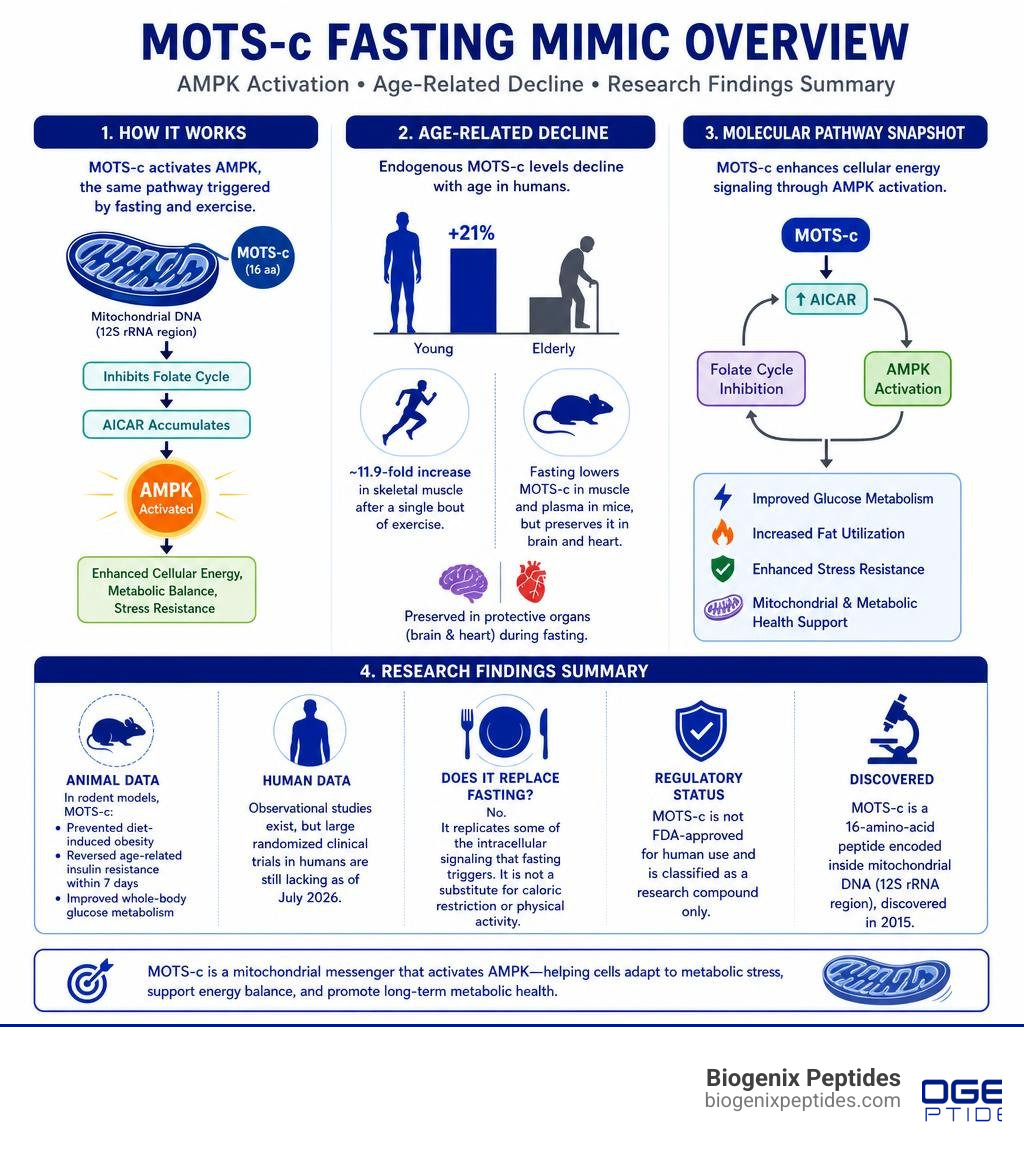
- What it is: MOTS-c is a 16-amino-acid peptide encoded inside mitochondrial DNA (specifically the 12S rRNA region), discovered in 2015.
- How it mimics fasting: It activates AMPK — the same cellular energy-sensing pathway triggered by caloric restriction and exercise — by inhibiting the folate cycle and causing AICAR to accumulate naturally.
- What the animal data shows: In rodent models, MOTS-c prevented diet-induced obesity, reversed age-related insulin resistance within 7 days, and improved whole-body glucose metabolism.
- Does it replace fasting? No. It replicates some of the intracellular signaling that fasting triggers. It is not a substitute for caloric restriction or physical activity.
- Human data: Observational studies exist, but large randomized clinical trials in humans are still lacking as of July 2026.
- Regulatory status: MOTS-c is not FDA-approved for human consumption and is classified as a research compound only.
Mitochondria have long been called the powerhouses of the cell. But it turns out they are also messengers — quietly encoding signaling peptides that communicate with the rest of the body during times of metabolic stress.
MOTS-c is one of those messengers. And it has caught serious scientific attention because of what it appears to do: activate the same molecular pathways that fasting and exercise switch on, without requiring either.
That is a bold claim. So it is worth slowing down and looking at what the science actually supports — and where the gaps still are.
Endogenous MOTS-c levels in skeletal muscle rise roughly 11.9-fold following a single bout of exercise. They also decline with age — blood levels in young people are approximately 21% higher than in elderly individuals. Those two facts alone tell a compelling story about this peptide’s role in metabolic health.
But the picture gets more nuanced when you look at fasting. Interestingly, fasting lowers endogenous MOTS-c in metabolically active tissues like skeletal muscle and plasma in mice — while preserving levels in protective organs like the brain and heart. That tissue-specific pattern suggests MOTS-c is not simply a fasting byproduct. It plays a more sophisticated regulatory role than that.
I’m Jay Daniel, Founder and CEO of BioGenix Peptides, with years of hands-on experience in peptide research, quality validation, and emerging developments in the MOTS-c peptide fasting mimic space. In this guide, we break down the molecular mechanisms, the real-world research data, and the open questions that still need answering.
Mots c peptide fasting mimic definitions:
Exploring the Science of the Mots C Peptide Fasting Mimic
To understand why researchers are so excited about the mots c peptide fasting mimic concept, we have to look directly at where this molecule comes from. Historically, science textbooks taught us that mitochondria were simply passive energy factories. We believed they had a tiny, autonomous mitochondrial genome that only encoded 13 proteins, 22 tRNAs, and 2 rRNAs.
That view changed dramatically with the discovery of short open reading frames (sORFs) hidden inside what was once dismissed as “non-coding” mitochondrial RNA.
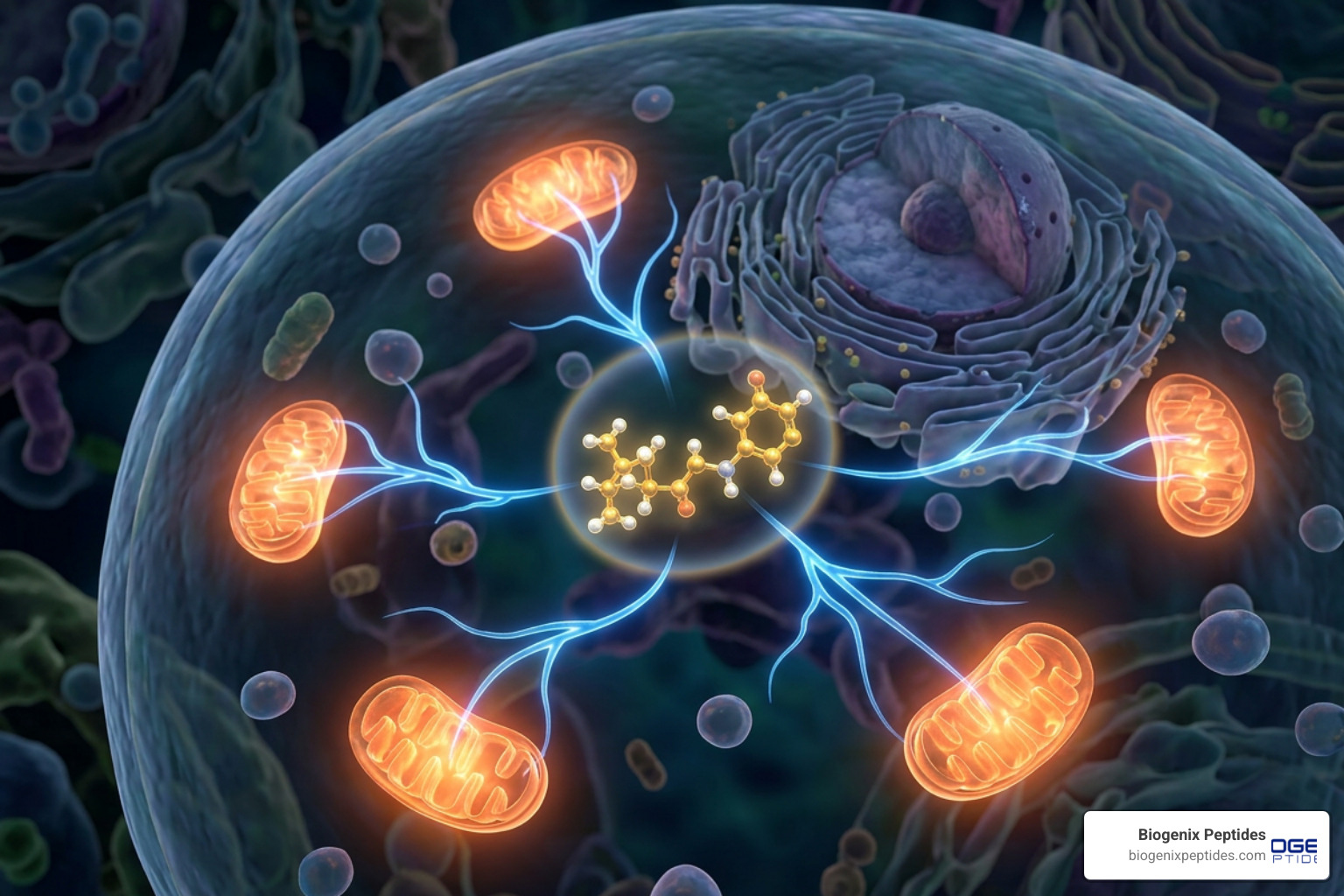
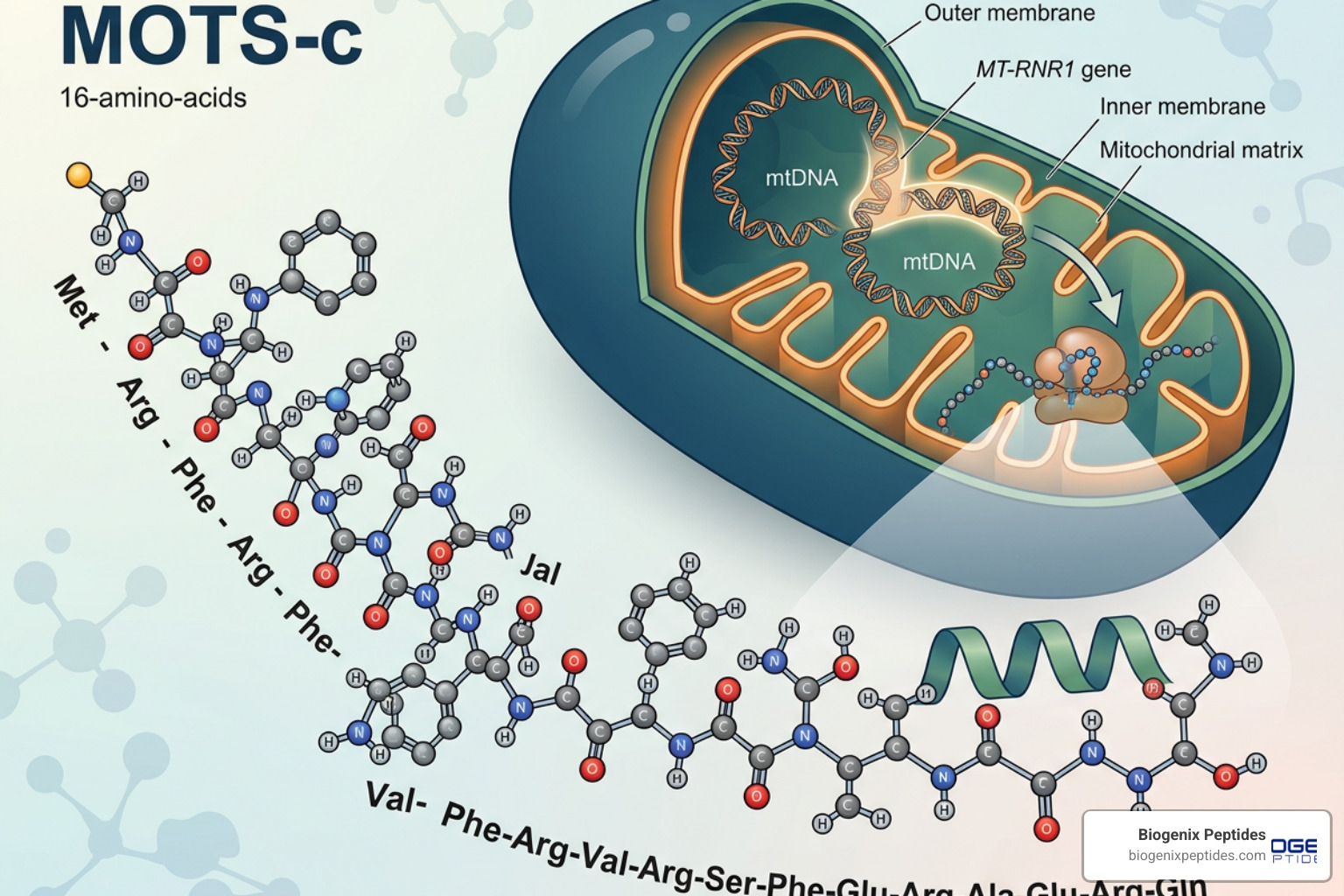
MOTS-c (Mitochondrial Open Reading Frame of the 12S rRNA Type-C) is a 16-amino-acid peptide encoded within the mitochondrial 12S ribosomal RNA gene. Because it originates in the mitochondria but travels to other parts of the cell to exert its effects, it acts as a retrograde signaling molecule. This means it communicates mitochondrial health and energy status directly back to the cell nucleus, coordinating systemic metabolic responses.
Unlike nuclear-encoded peptides, MOTS-c represents a unique class of mitochondrial-derived peptides that cross cellular boundaries to act as hormones.
Cellular Energy and the Mots C Peptide Fasting Mimic Pathway
At the heart of cellular energy regulation is adenosine monophosphate-activated protein kinase (AMPK). Often called the “metabolic master switch,” AMPK is activated during periods of metabolic stress—such as nutrient deprivation, fasting, or vigorous physical exertion—when cellular ATP levels fall.
When we look at how the mots c peptide fasting mimic operates, its primary mechanism is the rapid and robust activation of the AMPK pathway. In skeletal muscle, which is responsible for up to 80% of insulin-stimulated glucose disposal, this activation triggers a cascade of beneficial effects. It promotes the translocation of glucose transporter type 4 (GLUT4) to the cell membrane, facilitating rapid glucose clearance from the bloodstream independently of insulin signaling.
By initiating this survival response under non-stress conditions, exogenous administration of the peptide allows researchers to study MOTS-c and AMPK activation as a method to support metabolic homeostasis without dietary deprivation.
Mitochondrial-Nuclear Communication under Metabolic Stress
One of the most fascinating aspects of MOTS-c biology is its dual-location lifestyle. Under normal, resting conditions, MOTS-c resides comfortably within the mitochondria. However, when the cell experiences metabolic stress—such as glucose deprivation or oxidative load—MOTS-c undergoes nuclear translocation. It physically migrates from the mitochondria into the nucleus.
Once inside the nucleus, MOTS-c acts as a transcriptional regulator. It binds directly to promoter regions containing antioxidant response elements (AREs) and interacts with transcription factors like Nrf2. This interaction upregulates a suite of cytoprotective and antioxidant genes, boosting the cell’s defense mechanisms against oxidative damage.
This mitochondria-to-nucleus retrograde signaling highlights the deep symbiotic relationship inside the mitochondria, showing how these ancient organelles actively manage cellular stress adaptation and survival.
Molecular Mechanisms: Folate, AICAR, and AMPK Activation
How does a simple 16-amino-acid peptide trigger such a massive metabolic shift? The answer lies in its elegant manipulation of cellular metabolic pathways, specifically targetting the folate-methionine cycle.
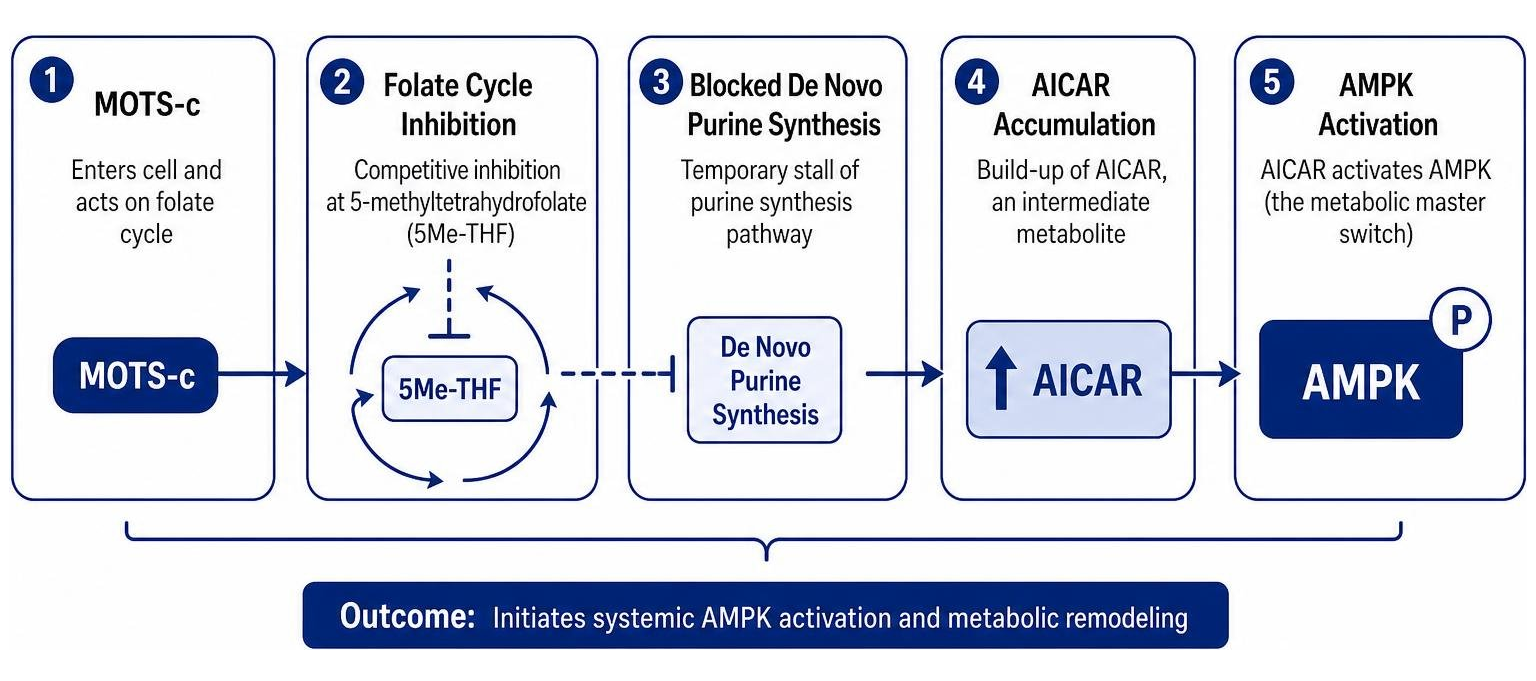
When introduced to cells, MOTS-c acts as a competitive inhibitor within the folate cycle, specifically at the level of 5-methyltetrahydrofolate (5Me-THF). By temporarily stalling this cycle, it selectively blocks de novo purine biosynthesis.
This metabolic bottleneck causes a rapid accumulation of 5-aminoimidazole-4-carboxamide ribonucleotide (AICAR), an intermediate metabolite in the purine pathway. AICAR is a natural, potent activator of AMPK. By driving up internal AICAR levels, MOTS-c indirectly throws the AMPK switch into the “on” position, initiating systemic AMPK activation and metabolic remodeling.
The Folate-AICAR-AMPK Cascade
The precise biochemical steps of this cascade are highly coordinated:
- Folate Cycle Inhibition: MOTS-c limits the availability of folate cofactors, restricting the enzyme AICAR transformylase.
- AICAR Accumulation: Because AICAR cannot be converted further down the purine pathway, intracellular levels spike dramatically, demonstrating an approximately 5-fold to 20-fold increase in endogenous AICAR.
- AMPK Activation: The accumulated AICAR binds to the gamma subunit of AMPK, mimicking the cellular state of high AMP-to-ATP ratio, which triggers conformational changes that activate the kinase.
- Glucose Routing: Once AMPK is active, it alters cellular fuel preferences. Instead of routing all glucose through standard glycolysis, it directs a portion of glucose toward the pentose phosphate pathway (PPP), generating NADPH to support cellular antioxidant systems and maintain metabolic flexibility.
Synergistic Effects with Exercise and PGC-1alpha
Because MOTS-c levels naturally surge during exercise—showing up to an 11.9-fold increase in skeletal muscle that persists for up to 4 hours post-workout—it is widely categorized as an exercise mimetic. When exogenous MOTS-c is studied alongside physical activity, researchers observe a powerful synergistic effect.
This combination strongly stimulates the expression of Peroxisome proliferator-activated receptor-gamma coactivator 1-alpha (PGC-1alpha), the master regulator of mitochondrial biogenesis. The upregulation of PGC-1alpha signals the cell to build more mitochondria, effectively increasing cellular energy capacity.
This feedback loop—where exercise stimulates MOTS-c, which activates AMPK, which in turn drives PGC-1alpha to produce more mitochondria containing their own MOTS-c DNA—is a cornerstone of research into exercise mimicry.
Replicating Caloric Restriction and Intermittent Fasting
Caloric restriction and intermittent fasting are among the most robust non-pharmacological interventions known for extending healthspan and improving insulin sensitivity. However, maintaining strict dietary restriction is notoriously difficult. This has led researchers to investigate whether a mots c peptide fasting mimic can reproduce these systemic benefits without altering dietary intake.

In animal models, administration of MOTS-c successfully replicates key systemic markers of fasting. It improves whole-body insulin sensitivity, enhances glucose tolerance, and reduces systemic inflammation.
By activating the same downstream targets as caloric restriction—namely AMPK activation and the inhibition of the mTORC1 pathway—MOTS-c shifts the body toward fat oxidation and cellular repair. This metabolic reprogramming suggests that researchers can explore metabolic weight management strategies that target the root causes of metabolic dysfunction directly at the cellular level.
Reversing Age-Related Decline with a Mots C Peptide Fasting Mimic
As organisms age, endogenous MOTS-c levels decline. In humans, circulating levels in middle-aged and elderly individuals are significantly lower than those in young adults. This age-dependent decline strongly correlates with the onset of age-related insulin resistance, mitochondrial decay, and sarcopenia.
Remarkably, preclinical studies show that restoring these levels exogenously can reverse these age-related changes. When middle-aged mice (12 months old) were treated with MOTS-c for just 7 days, their insulin sensitivity was restored to levels comparable to young, healthy controls (3 months old).
Furthermore, the peptide prevented diet-induced obesity in mice fed a high-fat diet without reducing their caloric intake, supporting its potential in Mitochondrial-encoded peptide research aimed at extending healthspan.
Preserving Muscle Mass and Metabolic Rate during Weight Loss
One of the greatest challenges of rapid weight loss—whether achieved through caloric restriction or aggressive therapies like GLP-1 receptor agonists—is the concomitant loss of lean muscle mass. Typically, 20% to 40% of the weight lost on these regimens comes from skeletal muscle, which can permanently lower the basal metabolic rate.
MOTS-c acts as a metabolic safety net during these catabolic states. Because its primary target tissue is skeletal muscle, it promotes muscle preservation by maintaining mitochondrial protein synthesis and reducing inflammatory cytokines that drive muscle wasting.
Simultaneously, it upregulates Carnitine Palmitoyltransferase 1 (CPT1), the rate-limiting enzyme that transports long-chain fatty acids into the mitochondria for beta-oxidation. This ensures that the body continues to burn fat for fuel while protecting precious muscle tissue from degradation.
MOTS-c vs. Traditional Metabolic Regulators
To understand where MOTS-c fits into metabolic research, it is helpful to compare its mechanisms and tissue targets with other well-known metabolic regulators and fasting mimetics, such as Metformin and Resveratrol.
| Feature | MOTS-c | Metformin | Resveratrol |
|---|---|---|---|
| Primary Source | Mitochondrial Genome (12S rRNA) | Synthetic Biguanide | Plant-derived Polyphenol |
| Primary Target | Skeletal Muscle, Liver, Adipose | Liver, Gut | Systemic, Vascular |
| AMPK Activation Mechanism | Folate cycle inhibition -> AICAR accumulation | Mitochondrial Complex I inhibition | Sirtuin-1 (SIRT1) activation, PDE inhibition |
| Nuclear Actions | Translocates to nucleus; binds AREs via Nrf2 | Indirect transcriptional changes via AMPK | Direct SIRT1-mediated histone deacetylation |
| Main Research Focus | Muscle preservation, insulin sensitivity, exercise mimicry | Glycemic control, longevity, diabetes management | Antioxidant defense, cardiovascular health |
These distinct pathways highlight how different compounds approach energy homeostasis. While metformin acts downstream by restricting mitochondrial respiratory chain Complex I, MOTS-c works as an endogenous coordinator, communicating via the entero-mitochondrial loop to balance energy output across various organ systems.
Tissue-Specific Targets and Signaling Differences
While traditional fasting mimetics often have broad, systemic, and sometimes non-specific targets, MOTS-c exhibits clear tissue-specific preferences:
- Skeletal Muscle: This is the primary site of MOTS-c action. It directly enhances GLUT4 translocation, increases glucose uptake, promotes mitochondrial biogenesis, and preserves muscle fiber integrity.
- Liver Tissue: In the liver, MOTS-c inhibits de novo lipogenesis and activates the Keap1-Nrf2 antioxidative pathway, which helps reduce liver fat accumulation and protects against hepatic fibrosis.
- Adipose Tissue: It promotes “browning” of white adipose tissue, increasing thermogenesis and metabolic rate.
These tissue-specific actions are mediated through highly localized, AMPK-dependent pathways, as detailed in extensive Scientific research on MOTS-c.
Therapeutic Challenges and the Future of Synthetic Biology
Despite its immense promise in laboratory settings, developing MOTS-c into a stable, reliable therapeutic research model presents several hurdles. Like most natural peptides, wild-type MOTS-c has a very short half-life in circulation due to rapid enzymatic degradation by proteases.
To overcome these limitations, researchers are looking toward synthetic biology. One approach involves encapsulating the peptide in extracellular vesicles or liposomal nanoparticles to shield it from degradation.
Another cutting-edge strategy involves using genetically engineered probiotics—such as clinically safe strains of Lactobacillus or Escherichia coli Nissle 1917—as living factory chassis. These engineered bacteria could theoretically colonize the gut and provide controlled, localized, and continuous delivery of the peptide directly to the intestinal mucosa, bypassing the need for frequent administration.
Delivery Methods and Biosafety Concerns
The primary biological challenge with MOTS-c is its near-zero oral bioavailability; if ingested, stomach acid and intestinal enzymes instantly break it down into basic amino acids. Consequently, laboratory research relies on subcutaneous delivery to bypass the digestive tract.
As synthetic biology progresses toward engineered bacterial delivery systems, several biosafety concerns must be addressed:
- Controlled Expression: Ensuring the engineered bacteria only produce the peptide under specific chemical triggers (promoters) to avoid overproduction.
- Immune Response: Mitigating potential host immune reactions against the engineered bacterial carrier.
- Genetic Stability: Preventing the engineered plasmids from mutating or transferring resistance genes to wild gut flora.
Developing strict containment and biosafety protocols is paramount before these advanced delivery models can transition from benchtop theory to clinical reality.
Frequently Asked Questions about MOTS-c
As mitochondrial medicine continues to evolve, researchers and enthusiasts frequently raise questions about how these experimental compounds operate.
What is MOTS-c and where does it originate?
MOTS-c is a 16-amino-acid peptide that originates directly within the mitochondrial genome, specifically encoded by a short open reading frame (sORF) in the 12S ribosomal RNA gene. Unlike standard mitochondrial proteins that are translated inside the organelle, the MOTS-c transcript is exported and translated in the cellular cytoplasm using the standard genetic code.
How does MOTS-c act as an exercise or fasting mimetic?
It acts as a mimetic by temporarily inhibiting the folate cycle, which leads to a substantial accumulation of intracellular AICAR. This accumulation tricks the cell into activating the AMPK pathway—the exact same energy-sensing survival cascade that is triggered by actual physical exercise, calorie restriction, or fasting.
What are the safety challenges of using engineered bacteria for peptide delivery?
The primary challenges include preventing uncontrollable systemic immune responses to the bacteria, ensuring the genetic stability of the modified strain over multiple generations, and establishing fail-safe mechanisms to eliminate the bacteria from the host if necessary.
Conclusion
The exploration of the mots c peptide fasting mimic pathway represents a paradigm shift in metabolic research. By demonstrating that mitochondria actively communicate with the cell nucleus to coordinate systemic energy adaptation, MOTS-c has opened new horizons in mitochondrial-derived therapeutics.
While there are still significant delivery and regulatory hurdles to clear, the science behind this tiny 16-amino-acid peptide continues to offer profound insights into how we might one day combat age-related metabolic decline, insulin resistance, and muscle wasting.
For researchers looking to explore these cellular pathways in laboratory settings, obtaining high-purity materials is essential. You can learn more about sourcing options by visiting the Biogenix Peptides MOTS-c research compound page.