
The Lazy Athlete’s Guide to MOTS-c Exercise Mimicry
Research Use Only Disclaimer
MOTS-c and related compounds referenced on this page are offered strictly for laboratory and analytical research purposes only. They are not approved by the FDA or any regulatory authority for human or veterinary use.
These materials are not drugs, dietary supplements, cosmetics, or medical devices. They are not intended to diagnose, treat, cure, or prevent any disease. Any discussion of mechanisms, biological pathways, or preclinical findings is provided solely for educational review of published research.
BioGenix Peptides does not provide medical advice, dosing guidance, administration instructions, or recommendations for personal use. Purchasers are responsible for ensuring compliance with all applicable laws and regulations regarding research materials.
The Lazy Athlete’s Guide to MOTS-c Exercise Mimicry
What Is the MOTS-c Peptide Exercise Mimic — and Why Does It Matter?
The mots c peptide exercise mimic is one of the most surprising discoveries in modern metabolic science: a tiny molecule your own mitochondria produce that triggers many of the same cellular responses as physical exercise — without you moving a muscle.
Here’s the quick answer:
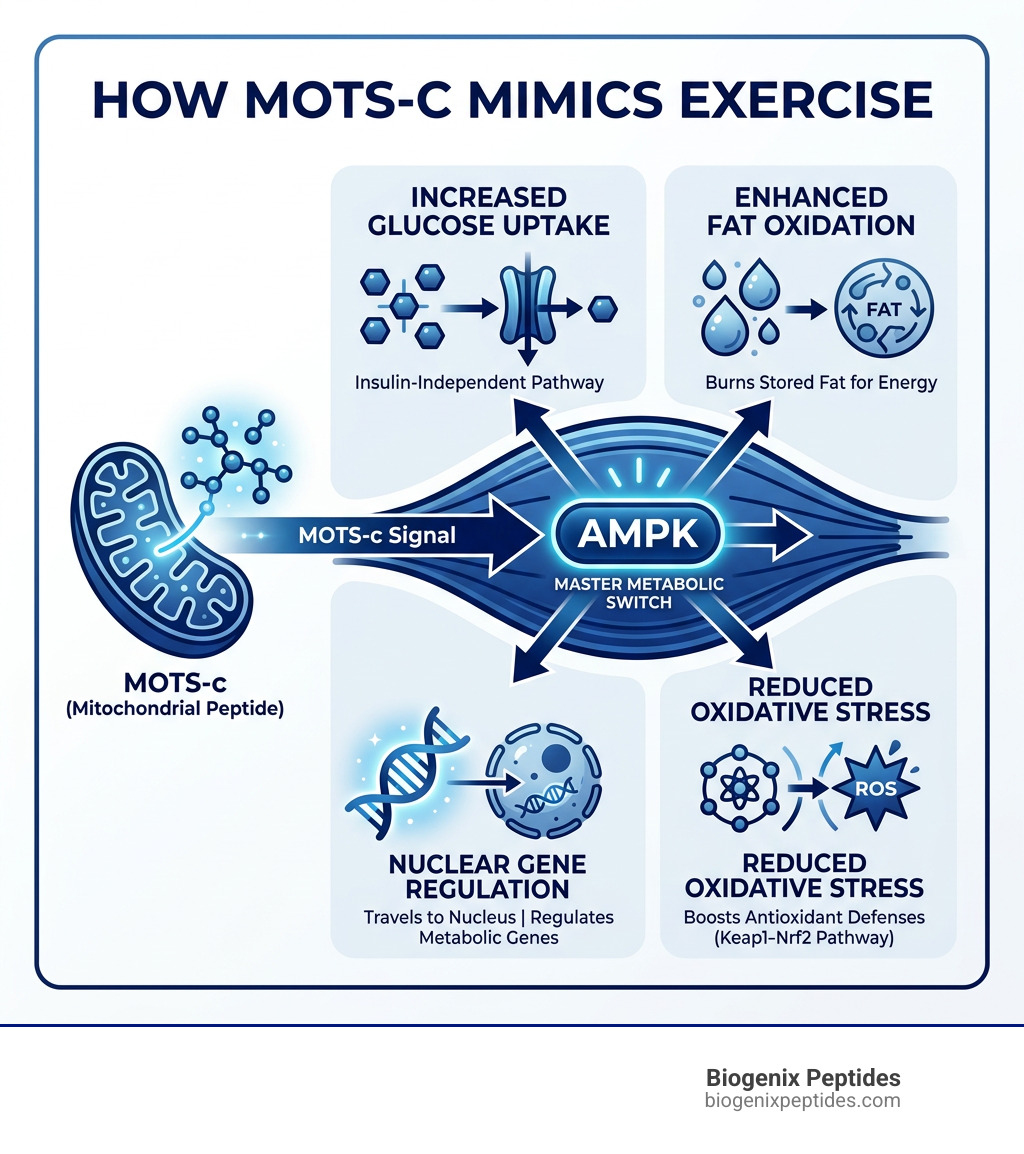
MOTS-c mimics exercise by:
- Activating AMPK, the master metabolic switch your body flips during physical activity
- Boosting glucose uptake into muscle cells without requiring insulin
- Increasing fat oxidation and energy expenditure
- Reducing oxidative stress through the Keap1-Nrf2 antioxidant pathway
- Traveling from mitochondria to the cell nucleus to regulate metabolic genes
And the numbers back it up. Exercise causes MOTS-c levels in skeletal muscle to spike nearly 12-fold. Circulating blood levels rise by about 50% during and after a workout. In mouse studies, older animals treated with MOTS-c doubled their running capacity and outperformed untreated middle-aged peers on the treadmill.
The catch? MOTS-c levels naturally decline with age — young adults have 11–21% higher circulating levels than middle-aged and older individuals. Obesity compounds the drop further.
That gap between what your mitochondria should be producing and what they actually produce as you age is precisely where MOTS-c research gets interesting.
I’m Jay Daniel, Founder and CEO of BioGenix Peptides and a peptide research specialist who has spent years studying mitochondrial-derived peptides including the mots c peptide exercise mimic and its role in metabolic signaling and healthspan research. In this guide, I’ll walk you through the science, the evidence, and what current research tells us about MOTS-c’s real-world potential.
The Biological Mechanisms of the MOTS-c Peptide Exercise Mimic
To understand why we call it an “exercise mimic,” we have to look at where it comes from. For decades, we believed the mitochondrial genome was only responsible for a few basic functions related to energy (ATP) production. However, in 2015, researchers at the USC Leonard Davis School of Gerontology turned this world upside down.
They discovered that mitochondria encode small bioactive peptides that act as hormones. MOTS-c (Mitochondrial Open Reading Frame of the 12S rRNA-type-c) was the standout. Unlike almost every other hormone, which is encoded in the large genome of the cell’s nucleus, MOTS-c is born in the mitochondria.
This discovery highlighted a process called “retrograde signaling.” Essentially, your mitochondria aren’t just power plants; they are the “command center” that sends instructions to the rest of the cell to handle metabolic stress. You can read more about this groundbreaking Scientific research on MOTS-c discovery to see how it changed our view of cellular communication.
How the MOTS-c Peptide Exercise Mimic Influences Cellular Metabolism
When you exercise, your body demands energy. To meet this demand, it activates an enzyme called AMPK (AMP-activated protein kinase). AMPK is often called the “master metabolic switch” because it tells the body to stop storing fat and start burning it, while also pulling sugar out of the bloodstream.
The mots c peptide exercise mimic activates this exact pathway. Research shows that MOTS-c increases levels of AICAR, a natural activator of AMPK. This leads to several exercise-like effects:
- Glucose Uptake: It triggers the translocation of GLUT4 (glucose transporter type 4) to the cell surface, allowing muscle cells to take in sugar even if insulin levels are low.
- Fatty Acid Oxidation: It encourages the mitochondria to burn fat for fuel more efficiently.
- Mitochondrial Biogenesis: It signals the cell to create more mitochondria, increasing overall metabolic capacity.
According to Research on mitochondrial-encoded regulators, MOTS-c acts as an exercise-induced regulator that maintains muscle homeostasis and prevents age-dependent physical decline. This makes it a primary candidate for peptides for mitochondrial resilience under stress.
The Role of the Keap1-Nrf2 Pathway
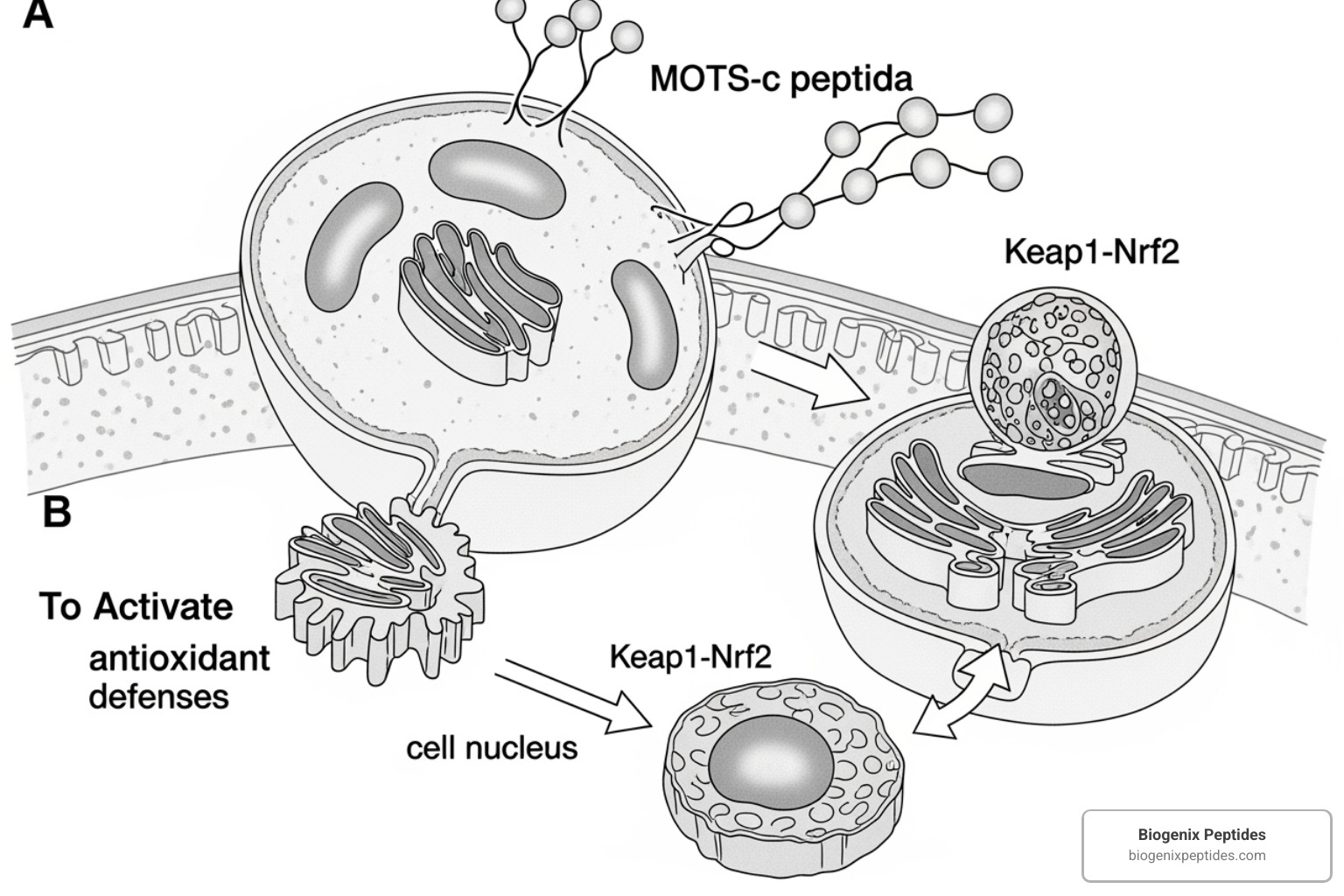
One of the most exciting recent findings is that MOTS-c doesn’t just work on energy; it’s a powerful protector against cellular stress. Under metabolic strain, MOTS-c moves from the mitochondria into the nucleus.
Once there, it interacts with the Keap1-Nrf2 pathway. This is the body’s primary defense against oxidative stress. By promoting Nrf2 signaling, MOTS-c helps the cell produce its own antioxidants, neutralizing the “rust” (reactive oxygen species) that accumulates during aging and metabolic disease. This protein-protein interaction is a key reason MOTS-c shows promise in treating conditions like liver fibrosis.
Key Health Benefits: From Physical Performance to Longevity
While we often use the term “lazy athlete,” the reality is that the mots c peptide exercise mimic is being studied for its ability to help those who cannot exercise due to age, injury, or disease.
| Feature | Traditional Aerobic Exercise | MOTS-c Supplementation |
|---|---|---|
| AMPK Activation | High | High |
| Muscle Fiber Composition | Improves Type I & II | Promotes “Younger” Composition |
| Glucose Disposal | Increases | Increases (Insulin-Independent) |
| Fat Mass Reduction | Variable (Diet Dependent) | Significant (Preclinical Data) |
| Endurance Capacity | Built over months | Significant increase in 2 weeks (Mice) |
Enhancing Athletic Capacity and Muscle Strength
In our research, we’ve seen that the “12-fold increase” in muscle MOTS-c after intense exercise isn’t just a byproduct—it’s a requirement for performance.
When researchers treated mice with MOTS-c, the results were staggering. Older mice (the human equivalent of 65+ years old) were given the peptide and then tested on a treadmill. These “senior” mice doubled their running capacity. Not only did they outperform their age-matched peers, but they also outran untreated middle-aged mice.
This suggests that MOTS-c helps maintain myofiber composition—the actual structure of the muscle—which typically degrades as we age. For those interested in physical optimization, MOTS-c – the mitochondrial peptide turning heads in metabolic research provides a deeper dive into these performance metrics.
Metabolic Regulation and Weight Management
One of the greatest challenges in modern health is “metabolic flexibility”—the ability of your body to switch between burning carbs and burning fat. As we gain weight or age, we lose this flexibility.
Preclinical studies have shown that MOTS-c can prevent obesity even when subjects are fed a high-fat, high-sugar diet. It appears to “trick” the adipose (fat) tissue into staying metabolically active.
Interestingly, a study on obese male children (ages 5–14) found they had 20.3% lower circulating MOTS-c levels than their healthy-weight peers. This suggests that low MOTS-c isn’t just a result of weight gain, but a potential driver of metabolic dysfunction. You can explore the data in this Study on MOTS-c and metabolic homeostasis.
For researchers looking into weight management, we offer several options, including MOTS-c 10mg and the higher-concentration MOTS-c 40mg.
Therapeutic Potential in Age-Related and Metabolic Diseases
The mots c peptide exercise mimic isn’t just for gym-goers; it’s a potent therapeutic candidate for the “Big Three” of aging: Type 2 Diabetes, Cardiovascular Disease, and Non-Alcoholic Fatty Liver Disease (NAFLD).
Combating Insulin Resistance and Diabetes Complications
Skeletal muscle is responsible for about 85% of insulin-stimulated glucose disposal. When muscle cells become “deaf” to insulin, blood sugar skyrockets. MOTS-c helps restore this hearing.
By activating AMPK, MOTS-c allows the body to process sugar through a “back door,” bypassing the need for high insulin levels. This is particularly relevant for:
- Pancreatic Health: It has been shown to prevent the destruction of pancreatic islets in autoimmune models.
- Gestational Diabetes: Research suggests it may help relieve hyperglycemia during pregnancy.
- Peripheral Neuropathy: By improving glucose metabolism, it addresses one of the main metabolic drivers of nerve damage.
The incidence of NAFLD in Type 2 Diabetes patients is as high as 63.7%. MOTS-c’s ability to reduce liver fat makes it a dual-threat against diabetic complications.
Protecting the Heart and Liver with the MOTS-c Peptide Exercise Mimic
The heart is the most mitochondria-dense organ in the body. It makes sense, then, that a mitochondrial peptide would be its best friend.
Research on MOTS-c and cardiac function has shown that MOTS-c restores cardiac function in diabetic models by activating NRG1-ErbB signaling. This pathway is crucial for repairing myocardial damage and improving the “pump” (systolic and diastolic function) of the heart.
In the liver, MOTS-c works by inhibiting the TGF-β1/Smad pathway. This is the “scarring” pathway that leads to fibrosis. By blocking this, MOTS-c prevents the liver from turning into tough, non-functional scar tissue—a common result of long-term metabolic neglect. This makes it a fascinating comparison to other PPAR-δ activation exercise mimetic signaling interventions.
Understanding MOTS-c Levels: Age, Obesity, and Exercise
Why do some people seem naturally fit while others struggle? The answer might lie in their endogenous (naturally occurring) MOTS-c levels.
Why MOTS-c Declines with Age and Weight Gain
Aging is characterized by a breakdown in communication between our genomes. As we get older, our mitochondria produce less MOTS-c. This 21% decline in the elderly compared to the young creates a state of “mitohormetic failure.”
Without enough MOTS-c, our cells don’t handle stress as well, and our metabolism slows down. This decline is even more pronounced in sedentary populations. According to the Latest research on mitochondrial peptides, maintaining these levels is essential for “mitohormesis”—the process where small amounts of stress (like exercise) actually make the cell stronger.
We also see synergy between exercise and the peptide. While MOTS-c can mimic exercise, it works even better with it. Exercise increases endogenous MOTS-c, and adding exogenous MOTS-c creates a “metabolic loop” that enhances the benefits of every mile run or weight lifted. For those looking for broader mitochondrial support, SS-31 (Elamipretide) is another researcher favorite for stabilizing the mitochondrial membrane.
Administration, Safety, and the Future of Exercise Mimetic Research
In research settings, the mots c peptide exercise mimic is typically administered via subcutaneous injection. This is because, like most peptides, it is a string of amino acids that would be destroyed by digestive enzymes if taken orally.
Current Dosing Protocols in Research:
- Frequency: Often administered 2–3 times per week or daily in acute studies.
- Cycle Length: Most research protocols last 4–6 weeks, followed by a washout period.
- Human Equivalent Doses: While most data is in mice (using 5–15 mg/kg), researchers often extrapolate these values for investigational human studies.
Safety Profile: MOTS-c is generally considered to have a high safety profile in preclinical models because it is a “bio-identical” peptide—meaning it is a sequence already found in the human body. Unlike synthetic drugs like Metformin, which can cause gastrointestinal distress or liver strain in some users, MOTS-c leverages the body’s natural signaling pathways.
However, it is important to note that MOTS-c is currently prohibited by the World Anti-Doping Agency (WADA) under the category of “Metabolic Modulators.” This is a testament to its potency in enhancing physical performance.
Frequently Asked Questions about MOTS-c
Can MOTS-c replace actual physical exercise?
While we call it an “exercise mimic” because it activates similar cellular pathways (like AMPK), it cannot replicate every benefit of exercise. Exercise provides mechanical loading for bone health, improves cardiovascular “plumbing” through shear stress on blood vessels, and has unique neurological benefits. MOTS-c is best viewed as a way to capture the metabolic benefits of exercise, especially for those with physical limitations.
Is MOTS-c safe for human use?
MOTS-c is currently in the investigational stage. While it is naturally produced in the human body, exogenous supplementation is still being studied in clinical trials (such as those by CohBar, Inc. using MOTS-c analogs like CB4211). Preclinical data is very promising, showing minimal side effects, but large-scale human safety data is still being compiled.
How long does it take to see results from MOTS-c?
In animal studies, metabolic changes (like improved glucose disposal) were seen in as little as 7 days. Physical performance improvements (like treadmill endurance) were typically measured after 2 weeks of consistent administration. In humans, anecdotal research reports suggest metabolic shifts are often noticed within the first 4 weeks of a cycle.
Conclusion
The mots c peptide exercise mimic represents a paradigm shift in how we approach metabolic health and longevity. By tapping into the “command center” of the cell—the mitochondria—we are finding ways to restore the vitality and metabolic flexibility of youth.
Whether the goal is weight management, enhancing athletic endurance, or researching the future of age-related disease prevention, MOTS-c is at the forefront of mitochondrial medicine. At BioGenix Peptides, we are committed to providing the highest quality research materials to help scientists and researchers unlock these cellular secrets.
Ready to explore the next generation of metabolic research? Browse our Metabolic & Weight Loss category or check out our full range of Metabolic Peptides to find the right tools for your next study. The future of medicine isn’t just about living longer—it’s about living better, one mitochondrion at a time.
MOTS-c 40mg
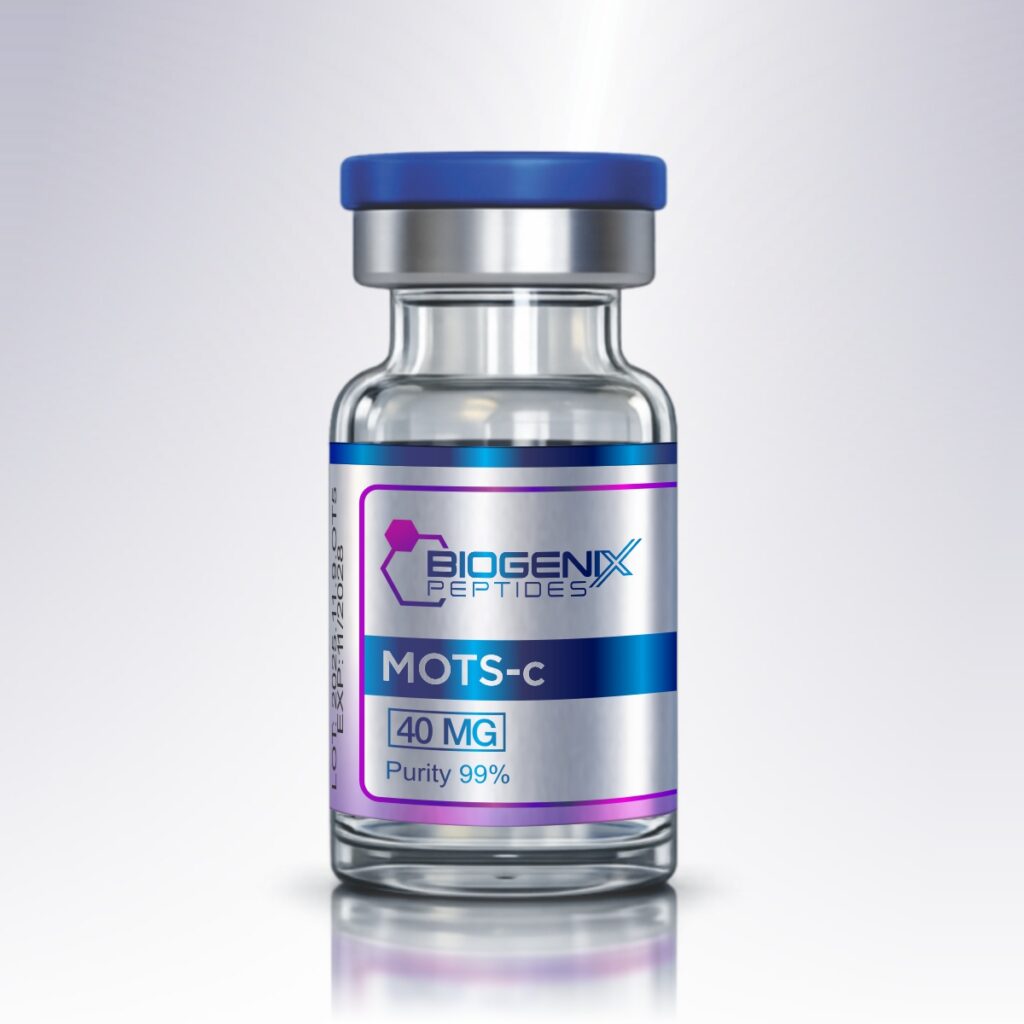
MOTS-c (Mitochondrial Open Reading Frame of the 12S rRNA-c) is a 16–amino-acid peptide encoded within the mitochondrial 12S rRNA gene region. It belongs to the family of mitochondrial-derived peptides (MDPs) that function as retrograde signals, coordinating communication between mitochondria and the nucleus to influence metabolic and stress-response pathways. Under metabolic stress—such as glucose restriction or elevated oxidative load—MOTS-c has been observed to translocate to the nucleus, where it can modulate gene expression and support adaptive metabolic regulation.