
C-Peptide 101: Meaning Explained
Disclaimer: The information provided in this article is for educational and informational purposes only. It is not intended as medical advice, diagnosis, or treatment. Products and compounds referenced are for research use only and are not approved for human or veterinary consumption. Always consult a qualified professional regarding health or medical decisions.
What the MOTS-c Peptide Is — and Why Researchers Are Paying Attention

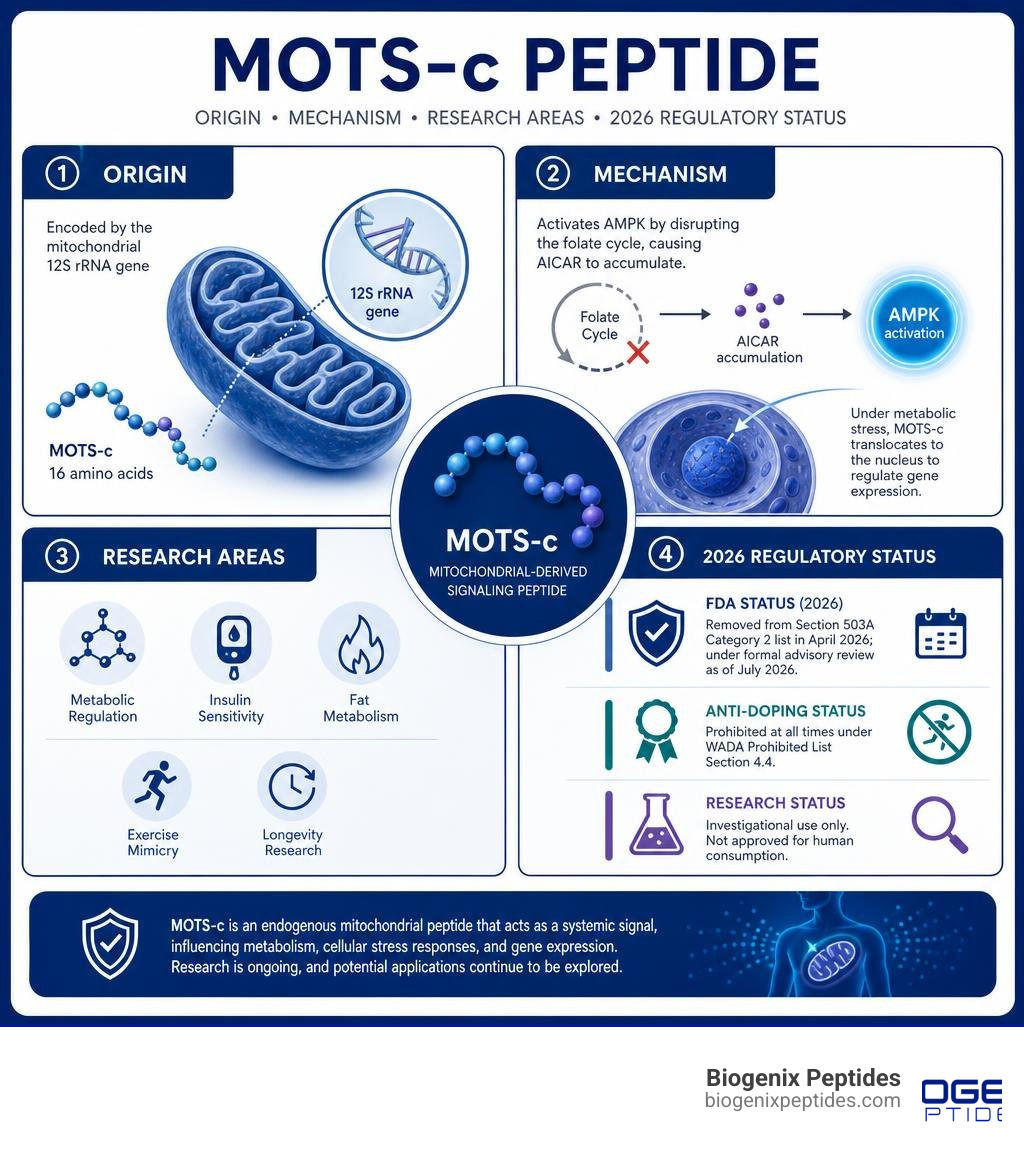
The MOTS-c peptide is a 16-amino-acid signaling molecule with a highly unusual origin: it is encoded not by the cell’s nuclear DNA, but by the mitochondrial genome itself — specifically within the 12S rRNA gene.
Here is a quick overview of what research tells us:
- What it is: A mitochondrial-derived peptide (MDP) that acts as a systemic signaling molecule
- How it works: Activates the AMPK pathway by disrupting the folate cycle, causing AICAR to accumulate inside cells
- What it is studied for: Metabolic regulation, insulin sensitivity, fat metabolism, exercise mimicry, and longevity
- How it behaves: Under metabolic stress, it physically moves from the cytoplasm into the cell nucleus to regulate gene expression
- Regulatory status (2026): Removed from the FDA’s Section 503A Category 2 list in April 2026; under formal advisory review as of July 2026
- Anti-doping status: Prohibited at all times under WADA Prohibited List Section 4.4
What makes this peptide stand out from virtually every other compound studied in metabolic research is where it comes from. Mitochondria have long been described as the cell’s power generators. But MOTS-c reveals something deeper — that mitochondria also function as active signaling hubs, encoding molecules that travel outward to regulate the rest of the cell and even the body at a systemic level.
Preclinical research has shown that circulating MOTS-c levels are naturally higher in younger individuals and decline with age. Remarkably, centenarians — people who live past 100 — tend to have plasma MOTS-c levels that resemble those of people decades younger, suggesting that preserved mitochondrial signaling may be a feature of exceptional longevity.
The research landscape is still developing. Most findings to date come from animal models and early observational studies in humans. But the signals are compelling enough that this peptide has attracted serious attention from metabolic researchers, longevity scientists, and anti-doping authorities alike.
I’m Jay Daniel, Founder and CEO of Biogenix Peptides, and my work in peptide research and quality validation has given me an in-depth understanding of mitochondrial-derived compounds like the MOTS-c peptide. In this guide, we’ll break down what the current science actually says — clearly and without hype.
Understanding the mots c peptide: Origin and Cellular Signaling
To understand the mots c peptide, we must first look at the unique evolutionary history of our cells. Billions of years ago, mitochondria were independent oxygen-breathing bacteria. Eventually, they were absorbed by early eukaryotic cells in a symbiotic relationship. Over time, these ancient bacteria transferred most of their genetic material to the cell’s nucleus, leaving behind a tiny, circular loop of DNA known as the mitochondrial genome.
For decades, textbook biology taught us that mitochondrial DNA was a simple blueprint containing only 13 energy-producing proteins. However, modern research has shattered this view. We now know that the mitochondrial genome contains short open reading frames (sORFs) that encode active, biological messengers called mitochondrial-derived peptides (MDPs).
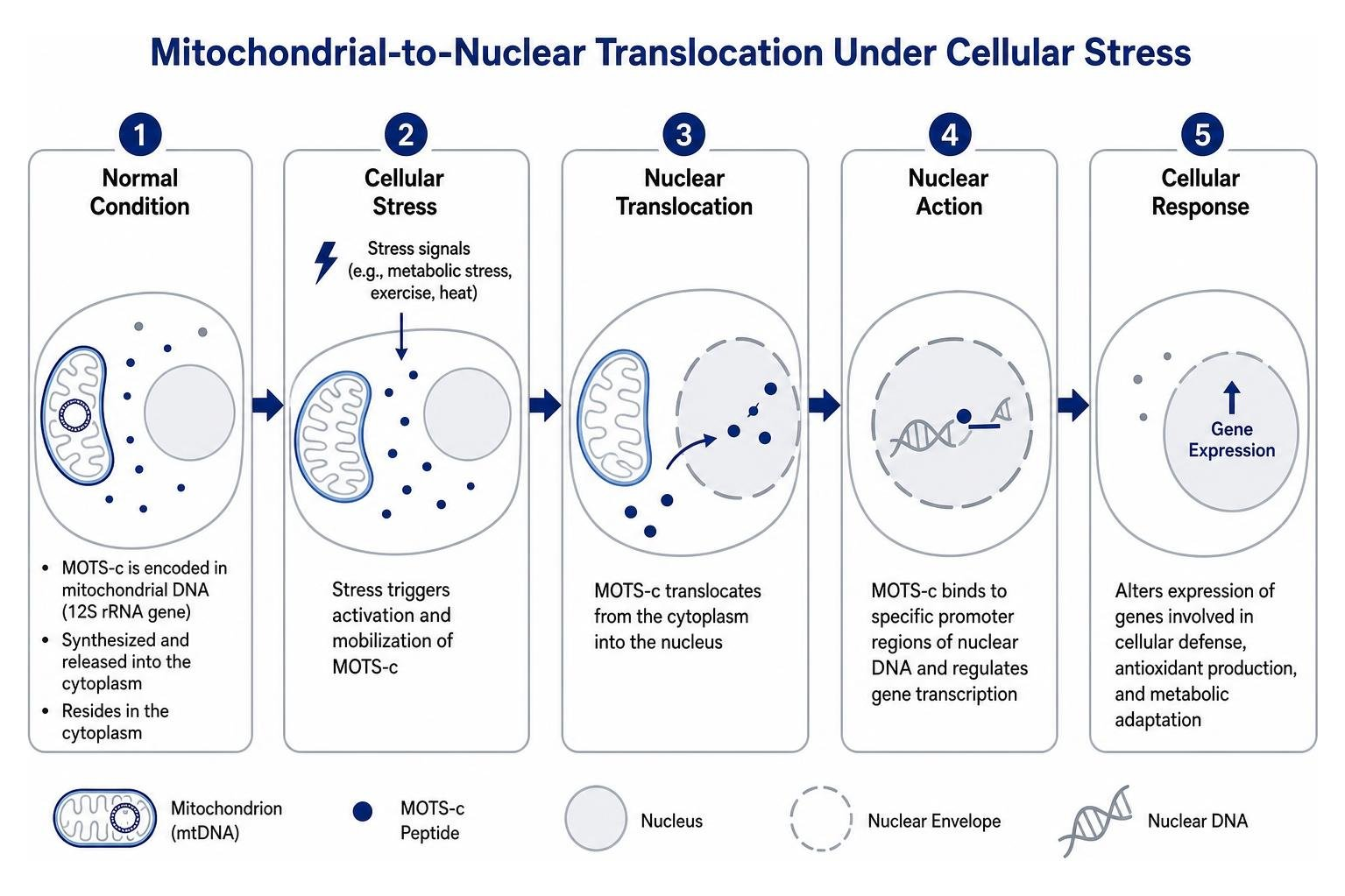
Under normal, unstressed conditions, the mots c peptide is synthesized and resides in the cytoplasm. But when the cell experiences metabolic stress—such as nutrient deprivation, heat, or physical exertion—it triggers a remarkable survival mechanism. The peptide undergoes nuclear translocation, physically crossing from the cytoplasm into the cell nucleus.
Once inside the nucleus, it acts as a retrograde signaling molecule. It binds directly to specific promoter regions of the nuclear DNA, altering the transcription of genes involved in cellular defense, antioxidant production, and metabolic adaptation. This mitochondrial-to-nuclear communication pathway allows the mitochondria to actively direct how the cell responds to stress, serving as a critical bridge of cellular communication.
The Discovery and Structure of the mots c peptide
The mots c peptide (Mitochondrial Open Reading Frame of the 12S rRNA Type-C) was discovered in 2015 by Dr. Changhan David Lee and his research team at the University of Southern California. It was identified as a highly conserved 16-amino-acid chain with a molecular weight of approximately 2,174.6 g/mol.
Interestingly, while mitochondrial translation typically utilizes a unique mitochondrial genetic code, the translation of this peptide occurs in the cytoplasm using the standard genetic code. This is because translation within the mitochondria itself would result in tandem stop codons, preventing the peptide from forming.
The sequence of the peptide is exceptionally well-preserved across species. The first 11 amino acids are identical in 14 different mammalian species, including humans and mice. This evolutionary conservation strongly indicates that the biological functions of this peptide are fundamental to mammalian survival.
To explore how these signaling pathways fit into the broader context of peptide science, you can read our guide on What Are Peptides? The Complete Science-Backed Guide to Cell Signaling, Metabolism, Hormones & Longevity. For a deeper dive into how this specific molecule became a major focus of scientific inquiry, explore MOTS-c: The Mitochondrial Peptide Turning Heads in Metabolic Research.
How the mots c peptide Activates the AMPK Pathway
At the molecular level, the primary mechanism of action for the mots c peptide is the activation of Adenosine Monophosphate-Activated Protein Kinase (AMPK), often referred to as the body’s master metabolic switch.
Unlike other compounds that activate AMPK by draining cellular energy (ATP), this peptide achieves activation through a subtle metabolic detour. It targets and inhibits the folate-methionine cycle, specifically blocking the enzyme AICAR transformylase (MTHFD2).
This inhibition leads to a temporary shortage of purines, which causes a substantial accumulation of an intermediate metabolite called AICAR (5-aminoimidazole-4-carboxamide ribonucleotide). Because AICAR is a potent, natural activator of AMPK, its accumulation triggers a powerful signaling cascade.
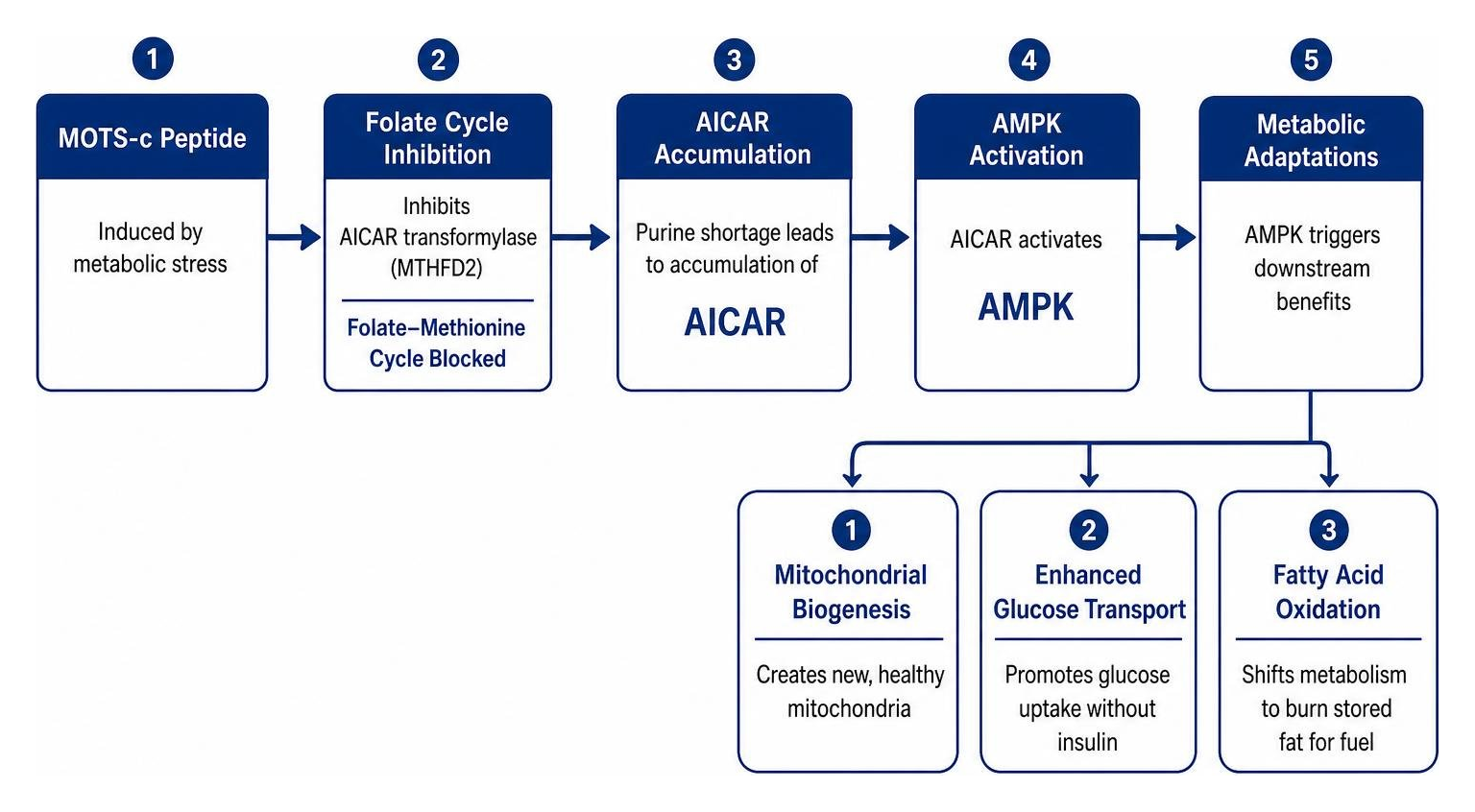
Once AMPK is activated, it initiates a series of downstream metabolic adaptations, including:
- Mitochondrial Biogenesis: It signals the cell to create new, healthy mitochondria, improving overall metabolic capacity.
- Enhanced Glucose Transport: It promotes the movement of glucose transporters to the cell membrane, allowing cells to clear glucose from the bloodstream without relying on insulin.
- Fatty Acid Oxidation: It shifts cellular metabolism toward burning stored fatty acids for fuel.
For a comprehensive breakdown of this energy-sensing mechanism, read our research overview on AMPK Activation & Mitochondrial Metabolic Control. To examine the primary academic literature detailing these molecular pathways, you can review MOTS-c: A promising mitochondrial-derived peptide for … – PMC.
Key Research Areas: Metabolic Regulation, Longevity, and Exercise Mimicry
Because of its unique ability to remodel cellular metabolism, the mots c peptide has become a primary subject of study in three major areas: metabolic disorders, aging, and physical endurance.
In healthy, young organisms, endogenous levels of this peptide rise sharply during physical exertion. This natural increase helps coordinate the metabolic shift required to sustain muscle activity. Researchers are studying whether administering synthetic versions of the peptide can recreate these beneficial adaptations in models of metabolic dysfunction or physical limitation.
Insulin Sensitivity and Glucose Uptake in Skeletal Muscle
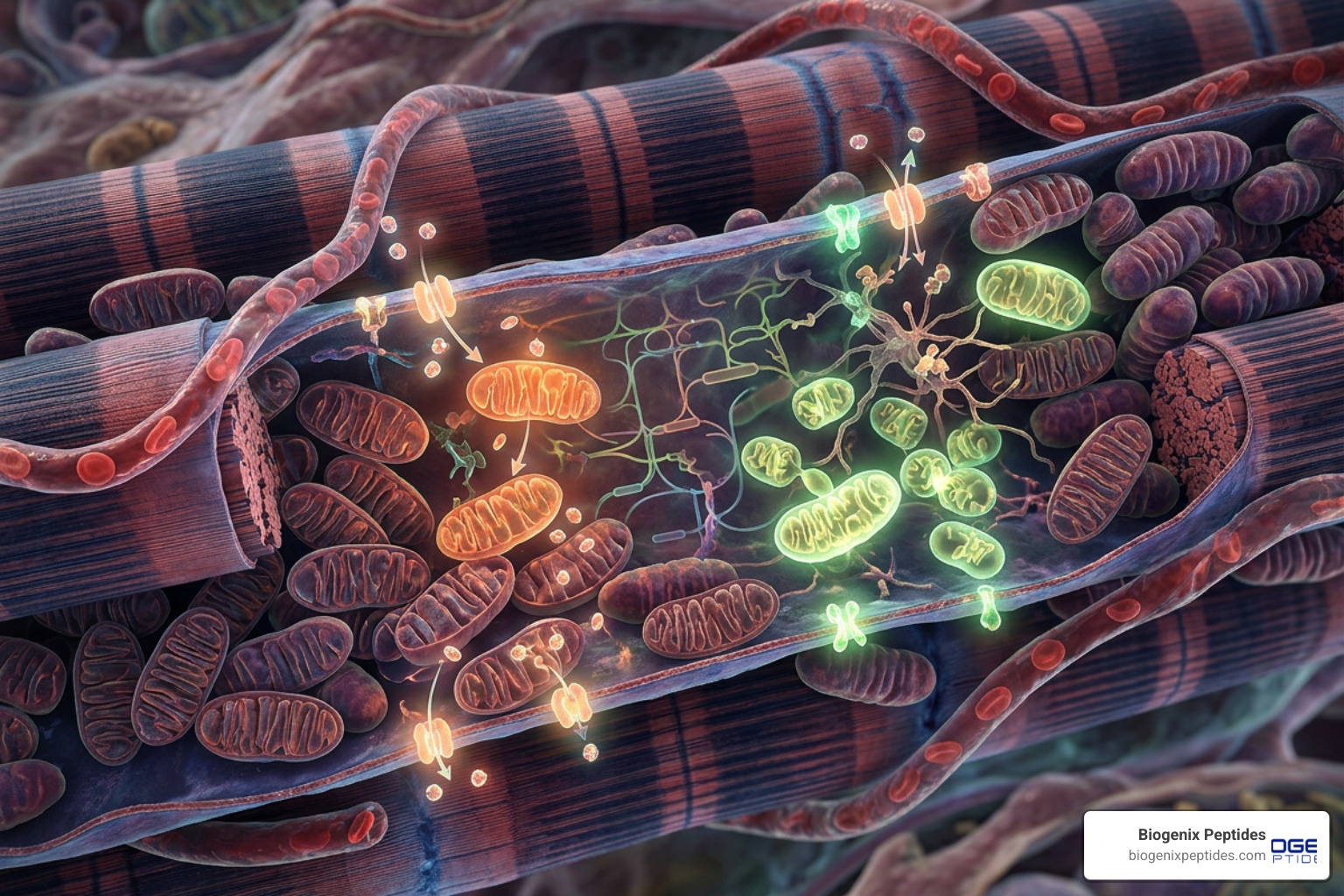
Skeletal muscle is the largest consumer of glucose in the body, making it the front line in the battle against insulin resistance. Preclinical studies have shown that the mots c peptide targets skeletal muscle tissue to restore metabolic flexibility.
In animal models of diet-induced obesity, treatment with the peptide prevented the development of insulin resistance and hyperinsulinemia. It achieved this by promoting the translocation of GLUT4 glucose transporters directly to the cell membrane of muscle cells, bypassing dysfunctional insulin receptors entirely.
Additionally, the peptide increases the expression of genes involved in beta-oxidation, helping muscles burn lipid accumulation that otherwise clogs cellular machinery and worsens insulin resistance.
To understand how these metabolic signaling pathways communicate with fat tissue, read our article on Peptides That Talk to Fat Cells. To explore how these pathways can act as a substitute for physical activity in research models, check out The Lazy Athlete’s Guide to MOTS-c: Exercise Mimicry.
Cellular Longevity and Mitochondrial Resilience
As organisms age, mitochondrial function naturally declines. This decline is accompanied by a steady drop in endogenous peptide signaling. Research indicates that plasma levels of the mots c peptide in middle-aged and older individuals are 11% and 21% lower, respectively, than those found in youth.
In animal longevity studies, restoring these levels has yielded promising results. In a landmark study published in Nature Aging (2021), researchers administered the peptide to mice starting at 23.5 months of age (equivalent to roughly 70 human years). The treated mice demonstrated a 6.4% increase in median lifespan and a 7% increase in maximum lifespan. More importantly, they showed significant improvements in physical performance, grip strength, and metabolic resilience.
Furthermore, a specific genetic variant of the peptide (the m.1382A>C polymorphism, resulting in a glutamate-to-lysine substitution at position 14) is found almost exclusively in Northeast Asian populations. This variant is strongly associated with exceptional longevity, suggesting that variations in mitochondrial signaling play a direct role in human lifespan.
To learn more about the biology of aging and how mitochondrial health influences healthspan, read our review on Advances in Longevity: Exploring the Science of Biological Aging. For a look at how this peptide can be paired with other mitochondrial stabilizers to maximize cellular resilience, see MOTS-c and SS-31: A Symbiotic Relationship Inside the Mitochondria.
Research Protocols, Regulatory Status, and Safety in 2026
In laboratory and preclinical settings, researchers follow strict protocols to study the effects of the mots c peptide. Because the peptide is completely broken down by digestive enzymes if swallowed, oral administration is ineffective. Instead, researchers utilize subcutaneous administration routes to ensure systemic bioavailability.
The table below compares the key characteristics of MOTS-c with other prominent metabolic and longevity peptides currently studied in laboratory settings:
| Peptide | Primary Mechanism | Primary Target Tissue | Common Research Focus | Reconstitution Fluid |
|---|---|---|---|---|
| MOTS-c | Folate cycle inhibition, AMPK activation | Skeletal muscle, adipose tissue | Metabolic flexibility, exercise mimicry, longevity | Bacteriostatic water |
| SS-31 | Cardiolipin binding, inner membrane stabilization | Mitochondria-rich organs (heart, kidneys) | Oxidative stress reduction, ATP production | Sterile saline or bacteriostatic water |
| 5-Amino-1MQ | NNMT enzyme inhibition | White adipose tissue | Fat cell remodeling, energy expenditure | Oral/Subcutaneous (analog dependent) |
| GLP-1 Agonists | Incretin receptor activation | Pancreas, brain, gut | Appetite regulation, glucose-dependent insulin secretion | Bacteriostatic water |
Reconstitution, Storage, and Biomarker Tracking
For laboratory researchers preparing the peptide for study, maintaining stability is critical. The peptide is typically supplied as a lyophilized (freeze-dried) powder in a sealed vial.
To prepare the solution, researchers slowly add bacteriostatic water (containing 0.9% benzyl alcohol) along the inner wall of the vial to avoid damaging the delicate peptide structure. Shaking or vortexing the vial can cause the peptide to denature; instead, a gentle swirling motion is used to dissolve the powder.
Once reconstituted, the peptide is highly sensitive to temperature and light. It must be stored in a refrigerator at 2–8°C (36–46°F) and used within 28 to 30 days. For long-term storage of the dry powder, temperatures below -18°C are required.
To track the metabolic impact of the peptide in animal models, researchers monitor several key blood biomarkers at baseline and throughout the study cycle:
- Fasting Insulin & Glucose: To calculate the HOMA-IR (Homeostatic Model Assessment of Insulin Resistance) score.
- HbA1c: To observe long-term glucose regulation.
- Inflammatory Markers (hs-CRP): To evaluate systemic inflammation.
- Lipid Panel: To track changes in fatty acid clearance and lipid metabolism.
For step-by-step instructions on preparing lyophilized compounds, read our guide on Reconstituting Lyophilized Peptides Step by Step. For comprehensive storage and handling parameters, see our Peptide Storage Stability Guidelines.
WADA Anti-Doping Rules and FDA Regulatory Updates
Because of its potent exercise-mimetic properties and ability to enhance physical performance, the mots c peptide is strictly regulated in competitive sports. The World Anti-Doping Agency (WADA) has classified it as a prohibited substance at all times. It falls under Section 4.4 of the WADA Prohibited List as a metabolic modulator, specifically categorized as an activator of AMP-activated protein kinase (AMPK).
To protect athletic integrity, anti-doping laboratories utilize advanced liquid chromatography-mass spectrometry (LC/MS) testing to detect synthetic administration by tracking specific oxidation products and metabolites that differ from endogenous levels.
In the United States, the regulatory status of the peptide experienced a major shift in 2026. On April 15, 2026, the FDA removed the peptide from its Section 503A Category 2 list. This list previously allowed compounding pharmacies to prepare the peptide under certain conditions.
Following this removal, the compound was placed under formal advisory review by the Pharmacy Compounding Advisory Committee in July 2026. This means compounding pharmacies in the U.S. can no longer legally prepare or distribute the peptide for human use. Consequently, any products containing the peptide sold online are classified strictly “for research use only” and are not approved for human consumption.
For detailed information regarding anti-doping regulations and enforcement, you can consult the official resource What is the MOTS-c peptide? | USADA. To read more about the 2026 legal landscape and regulatory updates, see MOTS-c Peptide: Benefits, Protocols & 2026 Legal Status.
Frequently Asked Questions about Mitochondrial Peptides
What is the difference between pancreatic C-peptide and mitochondrial MOTS-c?
Despite the similar names, pancreatic C-peptide and the mots c peptide are entirely different molecules with distinct biological origins and functions:
- Pancreatic C-Peptide: This is a 31-amino-acid peptide created in the pancreas as a byproduct of insulin production. When proinsulin is cleaved to create active insulin, C-peptide is released into the bloodstream in equal amounts. Doctors measure pancreatic C-peptide levels in blood tests to determine how much natural insulin a patient’s pancreas is producing (particularly to distinguish between Type 1 and Type 2 diabetes).
- Mitochondrial MOTS-c: This is a 16-amino-acid peptide encoded by the mitochondrial 12S rRNA gene. It is not related to insulin production in the pancreas. Instead, it acts as a cellular stress signal and metabolic regulator that works primarily by activating the AMPK pathway in skeletal muscle and other tissues.
Can MOTS-c be administered orally in research models?
No, the peptide cannot be administered orally in research models. Like most peptides, it is highly susceptible to enzymatic degradation in the gastrointestinal tract. If swallowed, the stomach’s highly acidic environment and digestive enzymes (such as pepsin) will rapidly break the 16-amino-acid chain down into individual amino acids before it can be absorbed into the bloodstream.
To achieve systemic bioavailability in laboratory research, the peptide must be administered via subcutaneous routes, which allow it to bypass the digestive system and enter circulation intact.
What are the primary side effects observed in preclinical studies?
Because there are no completed large-scale human clinical trials, the full safety profile of synthetic administration remains unknown. However, researchers monitoring animal models and observing informal community research have noted several potential side effects:
- Localized Skin Reactions: The most common issue reported is mild irritation, redness, or a warm sensation at the subcutaneous application site. This is typically temporary and can be minimized by rotating the application sites.
- Glucose Fluctuations: Because the peptide significantly enhances glucose uptake in skeletal muscle, it can cause rapid shifts in blood sugar levels. In animal models, this requires close monitoring of blood glucose to prevent hypoglycemia.
- Elevated Heart Rate: Some researchers have noted a transient increase in heart rate immediately following administration, which is believed to be linked to the rapid activation of metabolic pathways.
Conclusion
The discovery of the mots c peptide has fundamentally changed how scientists view mitochondria. These organelles are no longer seen as passive power generators; they are recognized as active, genetic signaling hubs that communicate directly with the cell nucleus to coordinate systemic metabolism, stress responses, and longevity.
From reversing insulin resistance in skeletal muscle to extending the lifespan of aging mice, the preclinical evidence surrounding this mitochondrial-derived peptide is highly compelling. However, because human clinical data is still emerging and the regulatory landscape in 2026 has restricted compounding pharmacy access, the compound remains strictly a research tool.
At Biogenix Peptides, we are dedicated to supporting the scientific community by providing high-purity, laboratory-grade compounds for in-vitro and preclinical research. If you are conducting research into metabolic signaling, mitochondrial resilience, or longevity, you can explore our certified MOTS-c 40mg research vials, backed by independent HPLC and mass spectrometry testing to ensure the highest standards of quality and stability.