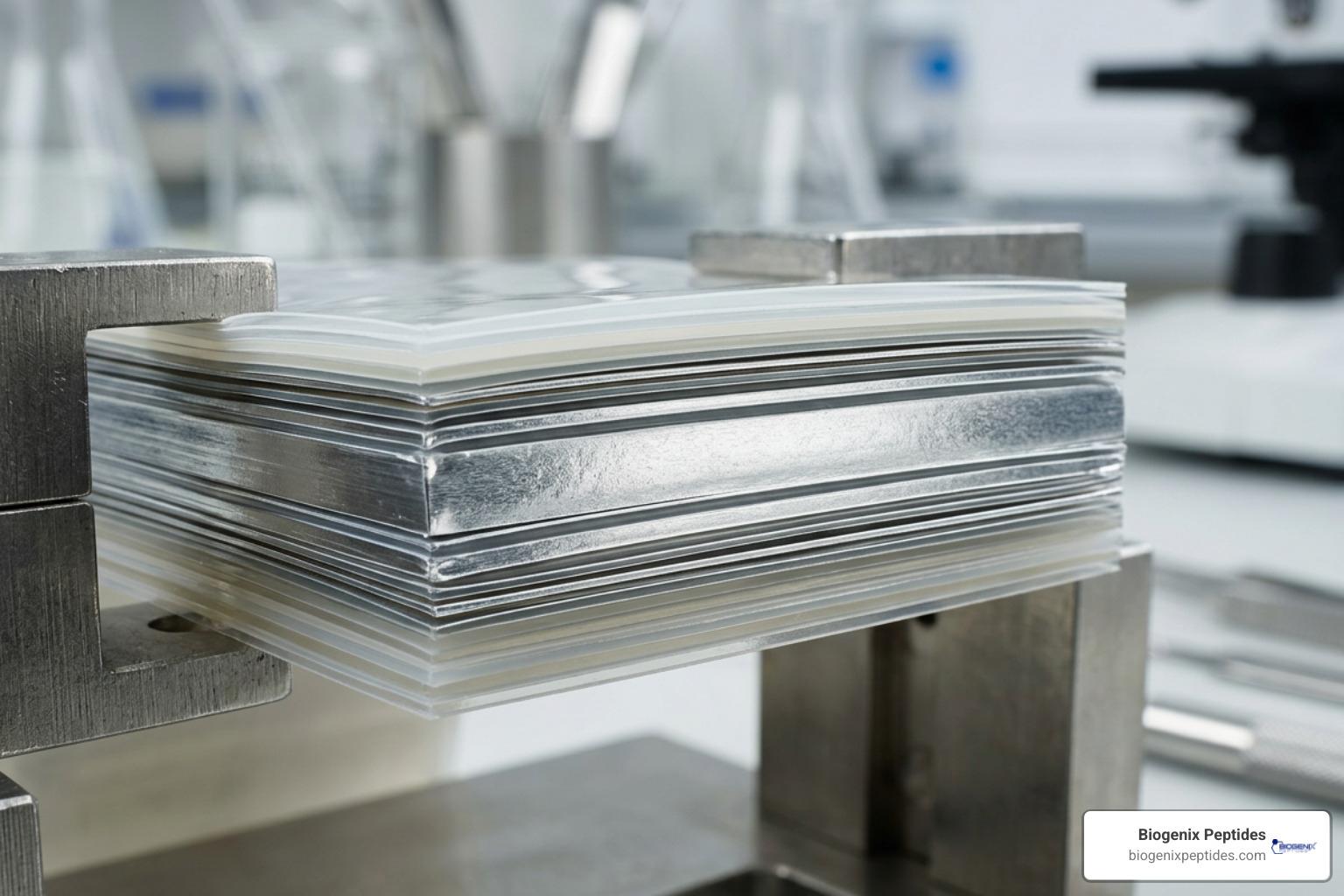
Keep It Fresh: Why Your Peptide Powder Needs an Oxygen Barrier
Disclaimer: The information provided in this article is for educational and informational purposes only. It is not intended as medical advice, diagnosis, or treatment. Products and compounds referenced are for research use only and are not approved for human or veterinary consumption. Always consult a qualified professional regarding health or medical decisions.
Why Research Peptides Require Advanced Oxidation Protection
When handling sensitive biochemical reagents, maintaining molecular stability is paramount. Amino acid chains contain functional groups highly susceptible to oxidative modification when exposed to ambient atmospheric gases. In laboratory environments, even minor degradation alters experimental baselines, making the protection of solid-phase reagents critical. Understanding why research peptides are typically lyophilized and how this benefits research highlights that removing water creates a porous, high-surface-area cake—a structure inherently vulnerable to ambient air exposure.
Oxidation alters the chemical profile of research compounds, resulting in mass shifts, altered charge states, and conformational changes. Protecting these reagents requires specialized barrier containment to prevent premature loss of experimental fidelity. By stopping peptide denaturation in its tracks, researchers protect fragile sequences from rapid atmospheric decomposition. Please note that all compounds discussed are strictly for laboratory research and analytical applications, never for human or animal consumption.
Chemical Pathways of Atmospheric Degradation
Atmospheric oxidation targets specific amino acid side chains within peptide sequences. The primary residues vulnerable to oxygen-mediated degradation include:
- Methionine (Met): Readily oxidizes into methionine sulfoxide and subsequently into methionine sulfone via interaction with ambient reactive oxygen species.
- Cysteine (Cys): Unpaired thiol groups oxidize rapidly to form undesirable inter- or intra-molecular disulfide bridges, causing peptide cross-linking and aggregation.
- Tryptophan (Trp) and Histidine (His): Aromatic side chains undergo oxidative ring-opening reactions when exposed to ambient light and molecular oxygen, generating complex degradation products.
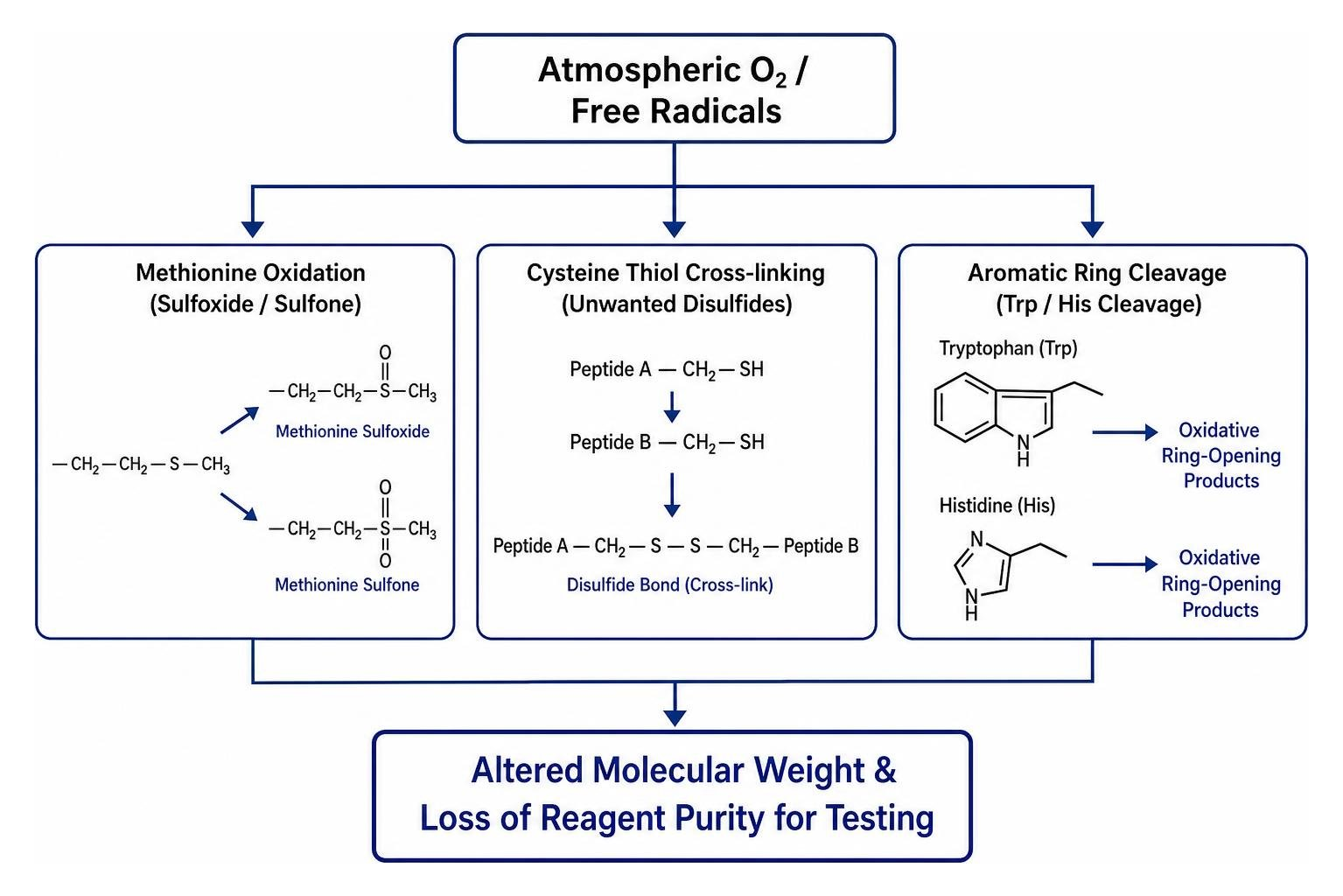
These chemical reactions lead to altered retention times during high-performance liquid chromatography (HPLC) and yield unexpected peaks in mass spectrometry. Adhering to strict powder storage handbook principles helps eliminate these variables before assays begin.
Moisture and Gas Synergy in Powder Spoilage
Gas permeation rarely occurs in isolation; it operates synergistically with moisture ingress. Lyophilized powders are hygroscopic, drawing ambient humidity through permeable packaging walls. As water vapor enters, it acts as a molecular plasticizer, lowering the glass transition temperature of the amorphous powder matrix.
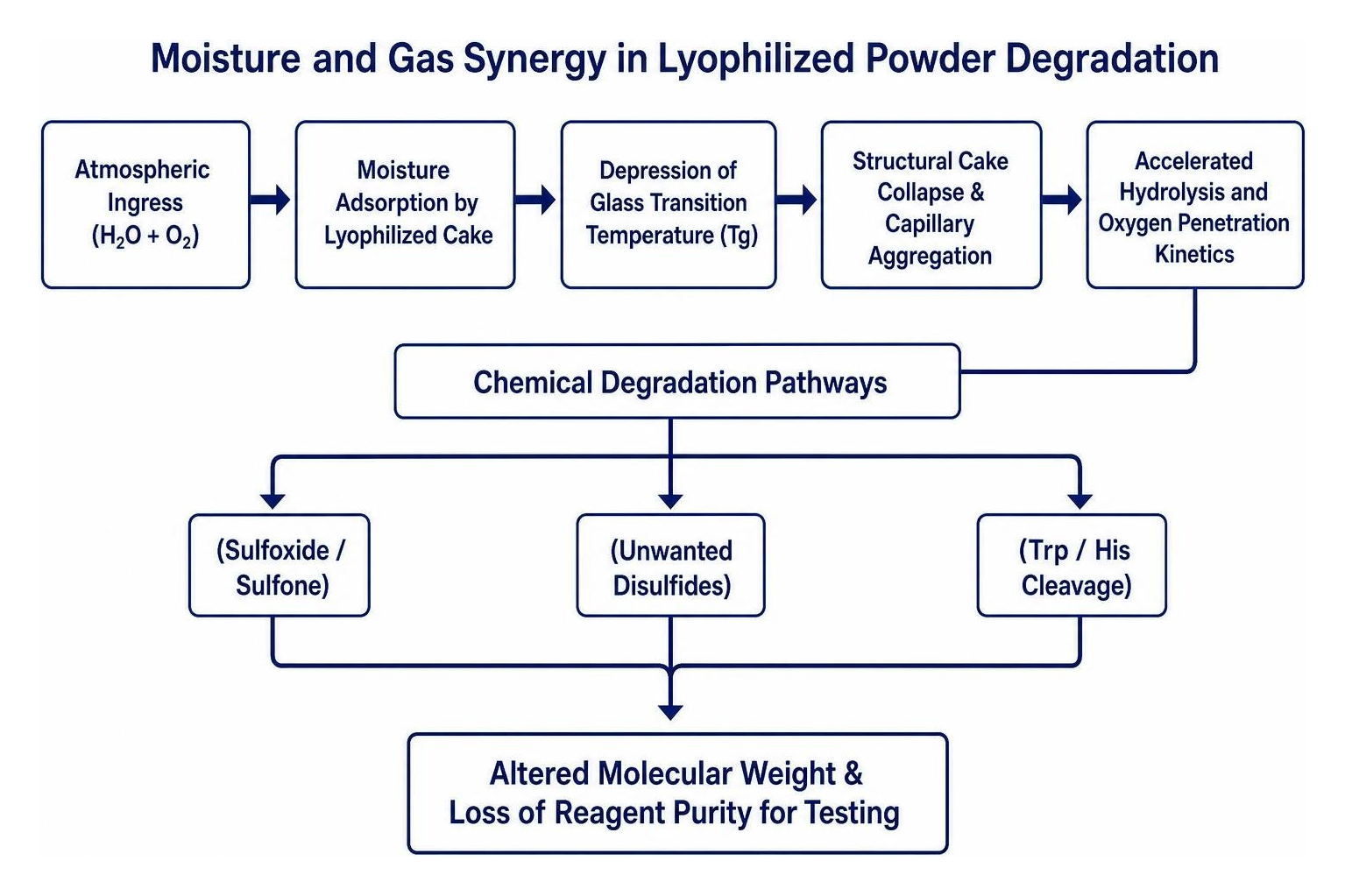
When the glass transition temperature drops below the ambient storage temperature, the cake collapses. This structural collapse traps condensed water, accelerating hydrolytic cleavage along the peptide backbone while creating localized microenvironments where dissolved oxygen rapidly degrades susceptible residues. Following established peptide storage stability guidelines ensures that both ambient humidity and reactive atmospheric gases are effectively excluded.
Engineering the Ultimate Peptide Powder Oxygen Barrier: Multi-Layer Film Architecture
Preserving delicate research reagents demands specialized materials beyond standard polyolefin packaging. Monolayer plastics like low-density polyethylene (LDPE) or polypropylene (PP) contain microscopic intermolecular voids that allow oxygen molecules to diffuse readily. To achieve true atmospheric isolation, packaging engineers utilize multi-layer co-extrusion technology.
By combining distinct polymers into a single laminated web, each layer provides targeted mechanical or barrier capabilities:
| Material Type | OTR (cm³/m²·day·atm) | MVTR (g/m²/day) | Puncture Resistance | Flex-Crack Susceptibility | Recyclability Stream |
|---|---|---|---|---|---|
| Standard LDPE Monolayer (70 µm) | ~2,500 – 4,000 | ~15.0 – 20.0 | Moderate | Very Low | Polyethylene (#4) |
| EVOH Multi-Layer Co-Extrusion | ≤0.5 | ≤0.5 | High (≥3 J/mm) | Extremely Low | Polyolefin Recyclable / RIC 4 |
| Aluminum Foil Laminate (PET/Al/PE) | <0.05 (unflexed) | <0.05 (unflexed) | Moderate | High (Pinholing risk) | Non-recyclable composite |
| Metallized Film (VMPET/LDPE) | ~1.0 – 5.0 | ~1.0 – 2.0 | Moderate | Moderate | Mixed laminate |
How Multi-Layer Co-Extrusion Creates an Effective Peptide Powder Oxygen Barrier
A premier multi-layer co-extruded packaging film features a balanced 3-layer architecture with an overall thickness ranging from 70 to 135 µm:
- Outer Structural Layer (PET, 12–25 µm): Biaxially oriented Polyethylene Terephthalate provides superior tensile strength, thermal resistance during sealing, dimensional stability, and printability for laboratory labeling.
- Core Gas Barrier Layer (EVOH, 6–9 µm): Ethylene Vinyl Alcohol acts as the primary gas defense. Its tightly packed, semi-crystalline polymer chain network creates an impassable maze for diatomic oxygen, achieving an Oxygen Transmission Rate (OTR) of ≤0.5 cm³/m²·day·atm when tested in accordance with ASTM D3985 standards.
- Inner Sealant Layer (LDPE, 50–100 µm): Pure low-density polyethylene ensures broad-spectrum hermetic sealing, chemical inertness, and direct contact compatibility for dry biochemical reagents.
Implementing these multi-layer films alongside validated handling and storage best practices ensures sensitive research powders remain chemically intact between manufacturing and laboratory reconstitution.
Integrating Anti-Static and Moisture Protection into the Peptide Powder Oxygen Barrier
A critical challenge during automated and manual powder filling is electrostatic accumulation. Ultra-fine lyophilized particles readily pick up triboelectric charges, causing powders to cling to pouch walls, drift from target containers, or contaminate sealing zones.
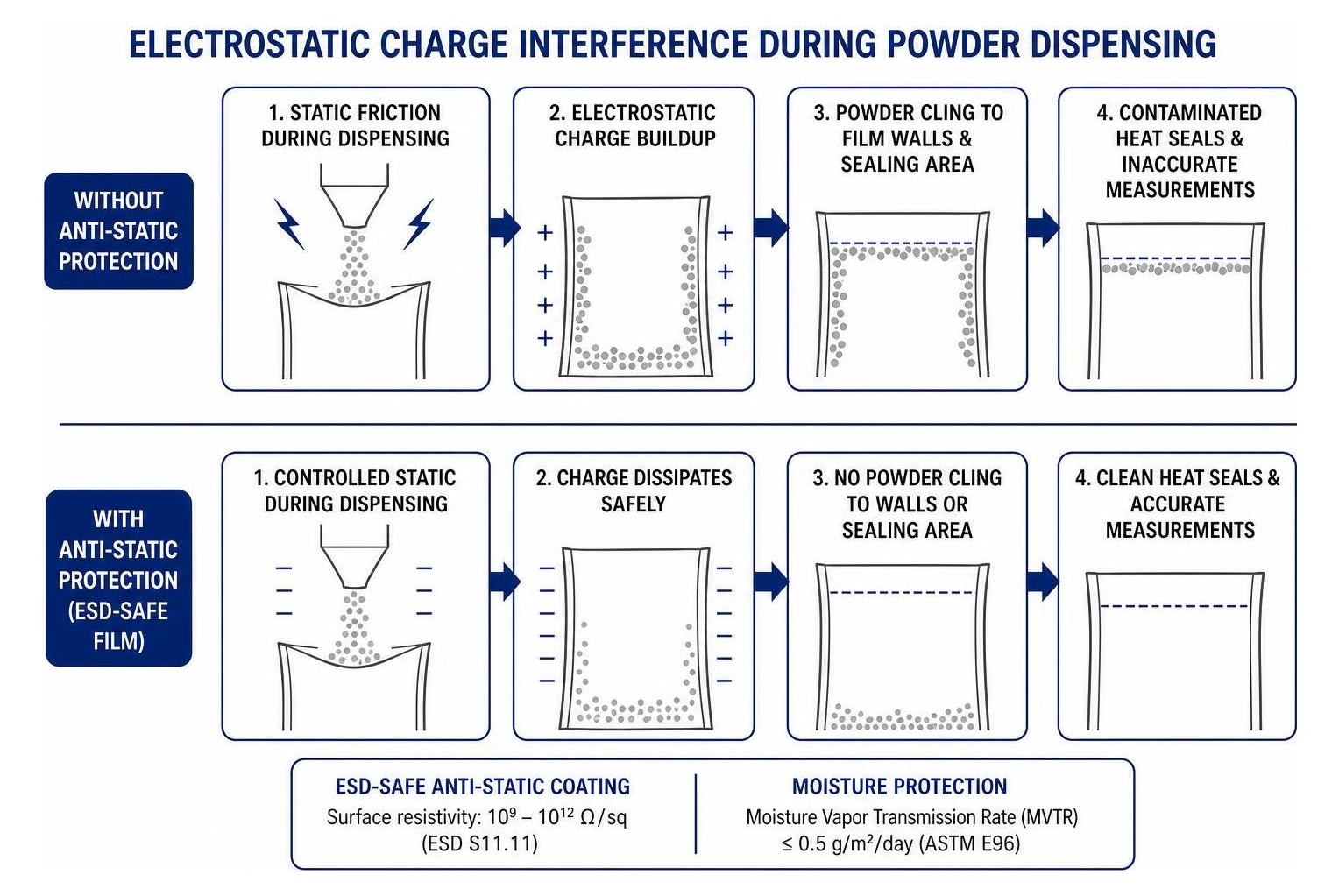
High-grade barrier films resolve this by integrating an Electrostatic Discharge (ESD)-safe anti-static coating, maintaining a surface resistivity between 10⁹ and 10¹² ohms per square according to ESD S11.11 testing. This controlled dissipation prevents particle clinging and guarantees clean seal surfaces. Simultaneously, the inner LDPE matrix delivers a Moisture Vapor Transmission Rate (MVTR) of ≤0.5 g/m²/day under ASTM E96 standards, shielding hygroscopic cakes from ambient humidity.
Packaging Mechanics, Regulatory Standards, and Durability
A barrier film is only as reliable as its physical resilience. In research environments, packaged reagents endure mechanical stress during transport, vacuum cycling, and extreme sub-zero freezing.

Mechanical Strength, Sealing Parameters, and Cold Storage
To guarantee true hermetic isolation, the film must maintain structural integrity under rigorous physical testing:
- Heat-Seal Integrity: Formulated for thermal sealing between 120°C and 160°C, producing hermetic seal strengths of ≥5 N/15mm (at 150°C). This robust bond resists pressure differentials during air transit and laboratory vacuum manipulation.
- Puncture Resistance: Rated at ≥3 J/mm, the multi-layer web resists physical punctures from sharp crystal fragments, secondary lab tools, or handling stress.
- Cryogenic and Thermal Tolerance: Engineered for a broad thermal operating range from -40°C to 50°C, preventing delamination, embrittlement, or micro-cracking during long-term storage in deep-freeze laboratory conditions.
Industry Certifications and Compliance Standards
Packaging materials for research substances must comply with recognized global quality standards to eliminate contaminants, plasticizer leaching, or volatile organic compound (VOC) outgassing:
- FDA 21 CFR 177.1520: Certifies polyolefin contact layers meet purity requirements for direct reagent containment without extractables.
- BRCGS Packaging Materials (Grade A): Confirms manufacturing hygiene, foreign body prevention, and structural traceability.
- ISO 22000 & ISO 9001: Validates quality management systems and environmental controls during extrusion and lamination.
- ASTM D3985 & ASTM E96: Standardized analytical procedures validating gas (OTR) and moisture (MVTR) barrier thresholds.
- Global Recycled Standard (GRS): Verifies supply-chain compliance when incorporating post-consumer recycled substrates.
Format Customization and Sustainable Materials
Modern flexible packaging adapts to diverse laboratory workflows. Common physical configurations include 3-side seal flat sachets for micro-quantities, stand-up zip pouches for bulk dry materials, and automated roll-stock film for high-throughput dispensing. Customization options encompass barcode and 2D DataMatrix printing, custom research labeling, and Amazon FBA-compliant FNSKU coding.
Addressing modern environmental priorities, advanced barrier films offer sustainable configurations. These include GRS-certified recycled PET (rPET) outer structural plies and mono-material LDPE architectures compatible with polyolefin recycling streams (RIC 4), eliminating unrecyclable composite waste without compromising barrier performance.
Bio-Based and Protein Barrier Innovations in Flexible Packaging
Driven by sustainable materials science, academic and industrial researchers are developing renewable, bio-derived oxygen barrier alternatives. Remarkably, non-target proteins themselves provide functional barrier mechanics.
Whey and Pea Protein Isolate Barrier Coatings
Peer-reviewed packaging studies demonstrate that bio-based protein coatings can match or exceed synthetic gas barriers. When formulated and laminated correctly, biopolymers provide exceptional resistance to non-polar gas diffusion:
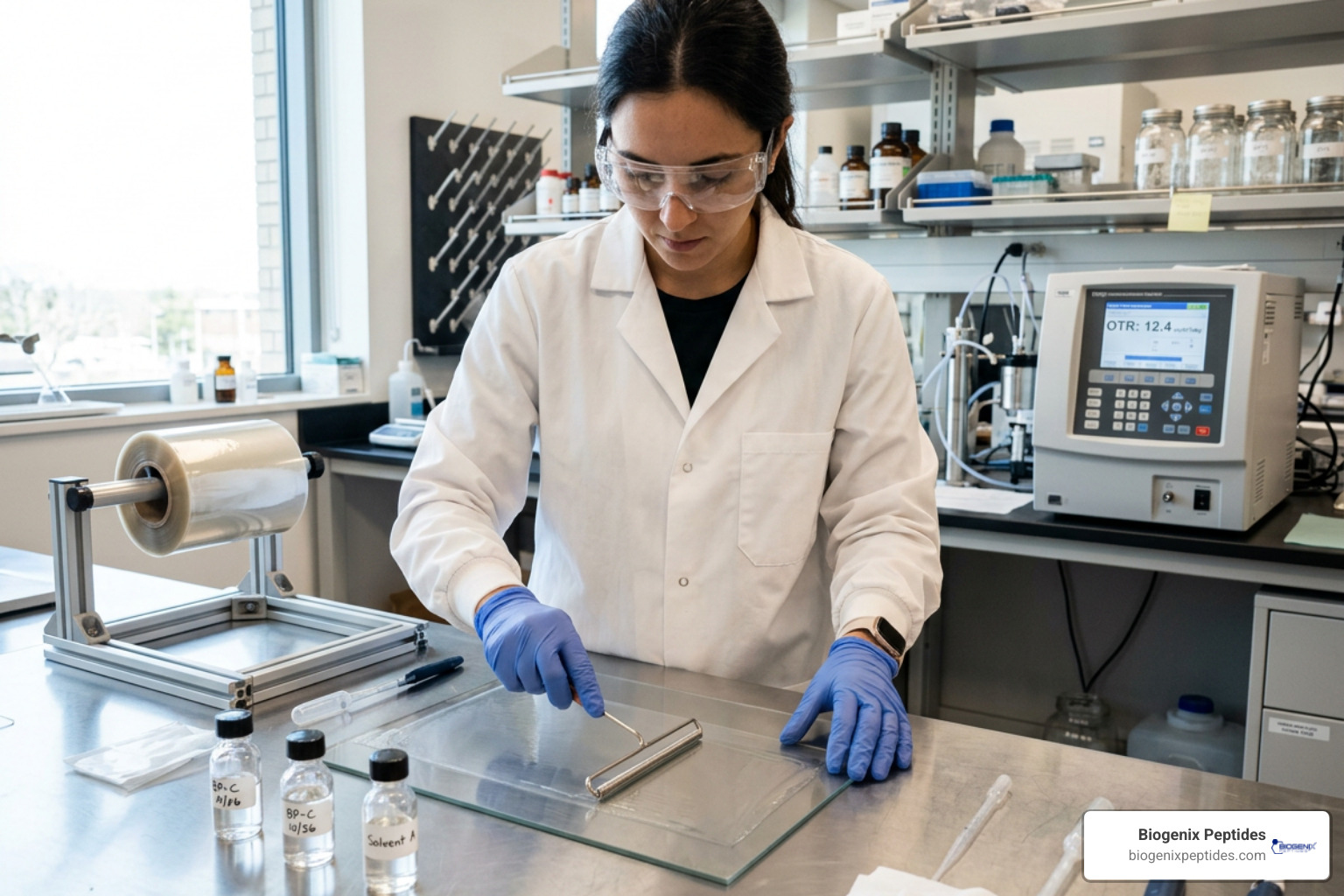
- Whey Protein Isolate (WPI) & Pea Protein Isolate (PPI): Industrial roll-to-roll coating facilities have produced PET/WPI/Nylon/LDPE multi-layer films exhibiting oxygen barrier properties comparable to EVOH and commercial aluminum foil copolymer laminates.
- Activation Energy and Arrhenius Kinetics: Research on whey protein isolate coating research on LDPE films reveals an activation energy for oxygen permeability of 50.26 kJ/mol. The dense intermolecular hydrogen bonding and folded tertiary structures of heat-denatured globular proteins create an effective obstacle against oxygen migration.
- Surface Corona Treatment: Applying corona discharge treatments to base polymer films improves surface energy and wettability, ensuring robust mechanical adhesion of water-based protein coatings during industrial lamination.
For comprehensive technical analysis on bio-derived high-barrier films, refer to the published study on protein-based high-oxygen barrier film development.
Relative Humidity Dynamics and Hydrogel Enzyme Protection
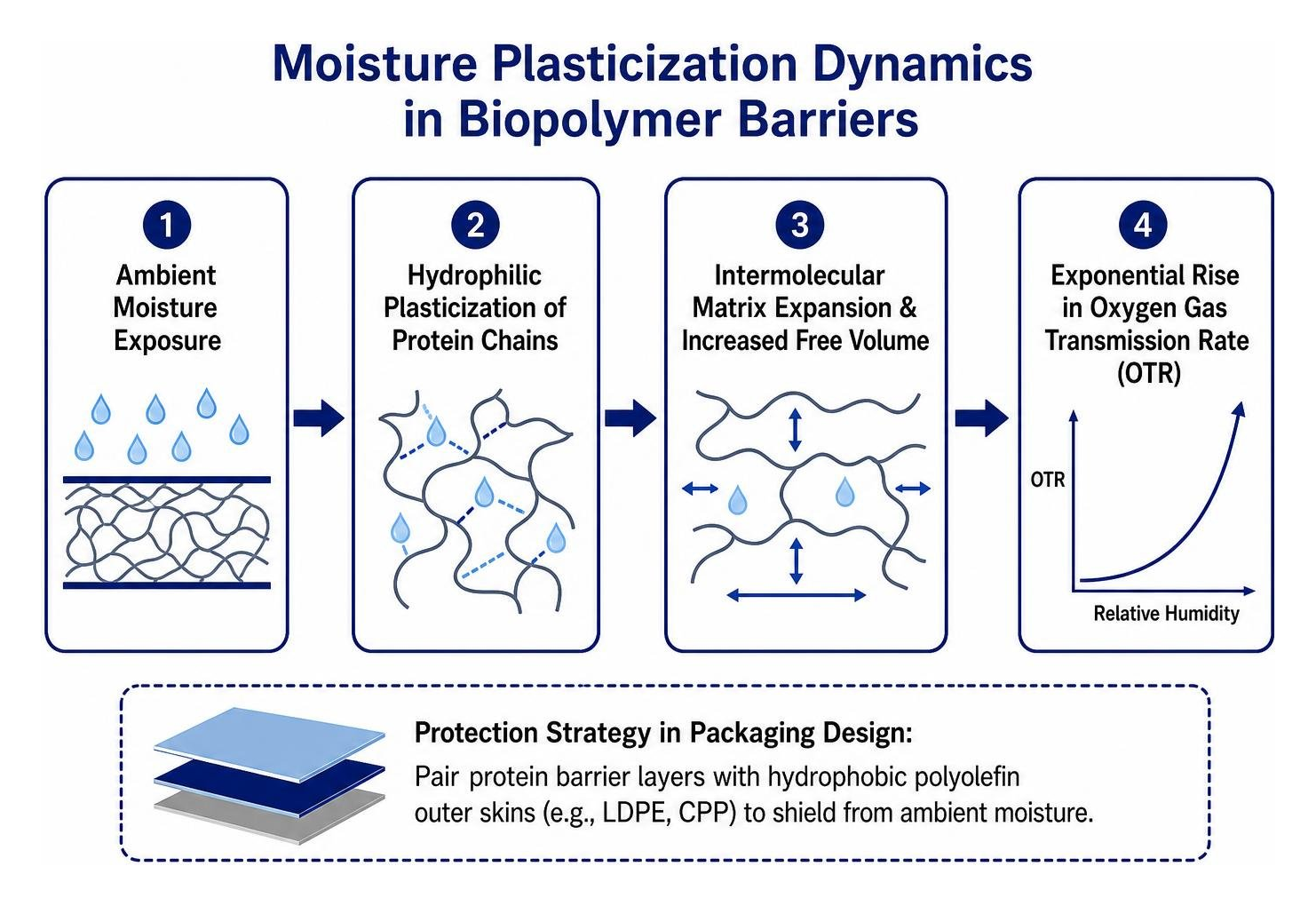
A key consideration with protein-based barrier layers is their sensitivity to moisture. Because protein coatings are hydrophilic, their oxygen transmission rate rises exponentially with increasing relative humidity due to water-induced plasticization of the protein matrix. Consequently, industrial designs pair protein barrier layers with hydrophobic polyolefin outer skins (like LDPE or CPP) to shield the inner barrier from ambient moisture.
In parallel biomaterial studies, researchers explore the enzyme protection by peptide hydrogels, showing that dense supramolecular peptide networks can physically encapsulate and protect oxygen-sensitive biological enzymes from oxidative denaturation.
Frequently Asked Questions About Peptide Powder Packaging
What OTR and MVTR levels are required for peptide powder stability?
For oxidation-sensitive research reagents, packaging should maintain an Oxygen Transmission Rate (OTR) of ≤0.5 cm³/m²·day·atm (tested via ASTM D3985) and a Moisture Vapor Transmission Rate (MVTR) of ≤0.5 g/m²/day (tested via ASTM E96). These thresholds prevent atmospheric gas exchange and moisture absorption that trigger hydrolysis, cake collapse, or amino acid side-chain oxidation.
Why is anti-static performance necessary during peptide powder filling?
Fine, lyophilized research powders are vulnerable to triboelectric static charging. Without static dissipation, powders cling electrostatically to packaging walls, causing inaccurate dispensing, material loss, and seal-area dusting. Dust trapped in the sealing zone compromises hermetic integrity. Films with surface resistivity between 10⁹ and 10¹² ohms per square safely dissipate static charges for clean, precise handling.
Can high-barrier polymer films replace aluminum foil pouches?
Yes. While aluminum foil offers excellent absolute barrier properties, thin foil plies are susceptible to flex-cracking, pinholing from repeated bending, and complete opacity that blocks visual inspection. Co-extruded EVOH multi-layer polymer films (such as PET/EVOH/LDPE) deliver comparable oxygen barrier performance (OTR ≤0.5 cm³/m²·day·atm), robust puncture resistance (≥3 J/mm), transparency options for reagent inspection, and compatibility with modern recycling streams.
Conclusion
Preserving the analytical purity and molecular stability of research peptides requires disciplined packaging engineering. Atmospheric oxygen and ambient humidity can rapidly degrade sensitive amino acid sequences through methionine oxidation, unwanted cysteine cross-linking, and moisture-induced cake collapse. Incorporating a verified peptide powder oxygen barrier within a multi-layer co-extruded architecture (PET/EVOH/LDPE) maintains an OTR of ≤0.5 cm³/m²·day·atm and an MVTR of ≤0.5 g/m²/day, ensuring essential environmental isolation.
Combined with ESD-safe anti-static coatings (10⁹–10¹² ohms per square) and high-integrity thermal seals (≥5 N/15mm), these advanced barrier materials ensure consistent experimental reproducibility from synthesis through final assay.
For comprehensive guidelines on managing your laboratory reagents, explore our complete manual on how to keep your powder dry and your freezer cold.
Disclaimer: All content and products referenced by BioGenix Peptides are intended exclusively for in vitro laboratory research, analytical testing, and scientific evaluation. Nothing herein constitutes medical advice or endorses human or animal administration.