
The ultimate guide to retatrutide dosing and safety
Disclaimer: The information provided in this article is for educational and informational purposes only. It is not intended as medical advice, diagnosis, or treatment. Products and compounds referenced are for research use only and are not approved for human or veterinary consumption. Always consult a qualified professional regarding health or medical decisions.
Why Retatrutide Administration Levels Matter for Metabolic Research
Disclaimer: The information provided in this article is for educational and informational purposes only. It is not intended as medical advice, diagnosis, or treatment. Products and compounds referenced are for research use only and are not approved for human or veterinary consumption. Always consult a qualified professional regarding health or medical decisions.
Disclaimer: The information provided in this article is for educational and informational purposes only. It is not intended as medical advice, diagnosis, or treatment. Products and compounds referenced are for research use only and are not approved for human or veterinary consumption. Always consult a qualified professional regarding health or medical decisions.
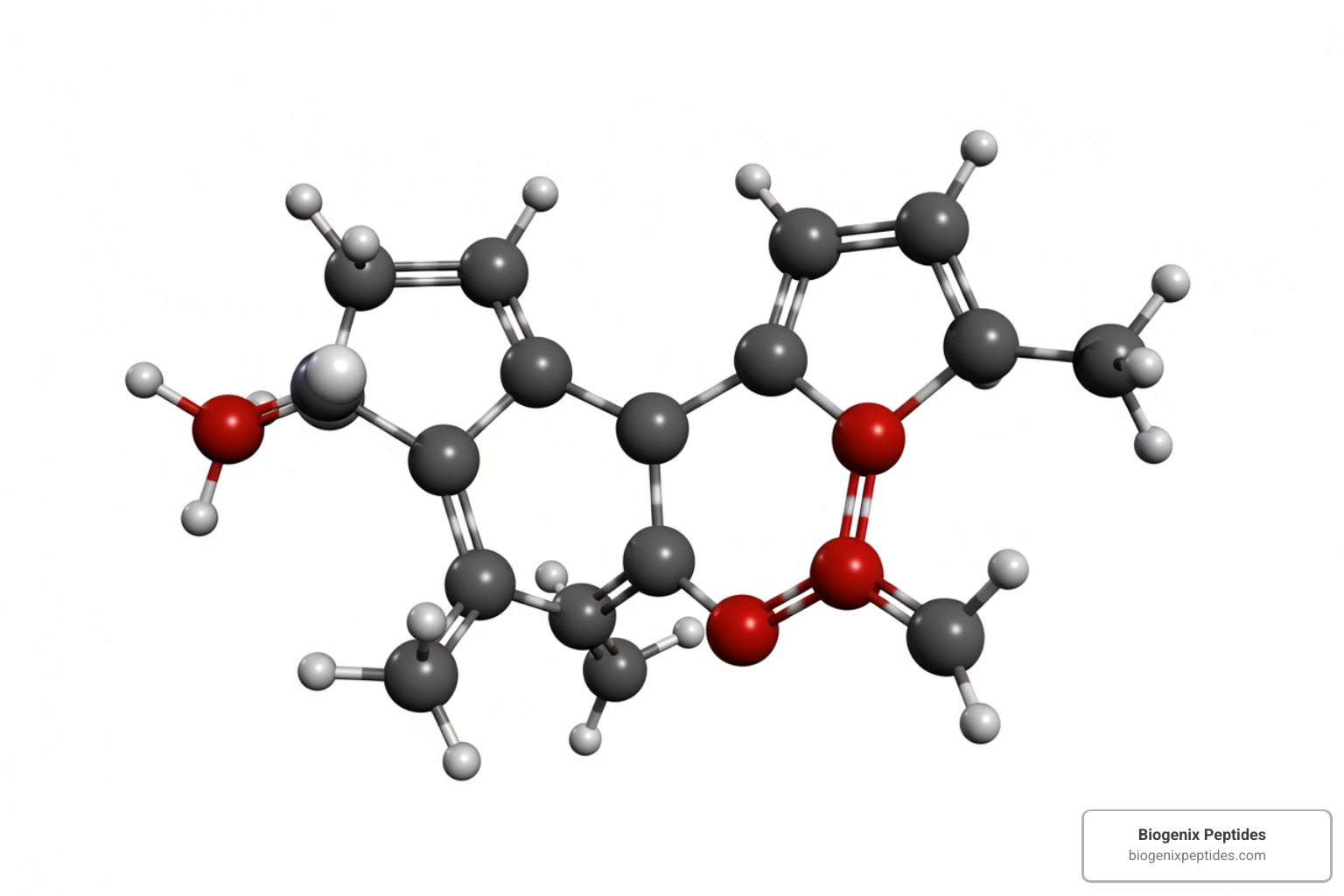
Retatrutide administration levels in clinical research have followed a gradual escalation protocol based on Phase 2 and Phase 3 trial data. Here is a quick reference for research-observed administration levels:
| Research Phase | Weekly Quantity | Observed Outcome |
|---|---|---|
| Weeks 1-4 | 2 mg | Baseline tolerance assessment |
| Weeks 5-8 | 4 mg | Early appetite suppression signals |
| Weeks 9-12 | 8 mg | Significant metabolic activity (~22.8% weight reduction at 48 weeks) |
| Week 13+ | 12 mg | Maximum studied level (~24.2% weight reduction at 48 weeks) |
Note: These figures come from Phase 2 clinical trial data and are for informational and research purposes only. This is not a prescription, recommendation, or medical protocol.
Retatrutide (LY3437943) is one of the most closely watched investigational compounds in metabolic research today. It is the first compound reported in clinical development to simultaneously target three hormone receptors – GLP-1, GIP, and glucagon – in a single molecule.
That triple-receptor approach sets it apart within this research category.
Phase 2 trials published in the New England Journal of Medicine showed weight reductions of up to 24.2% at 48 weeks at the highest studied level. Phase 3 data from the TRIUMPH-4 trial pushed that figure even further – to 28.7% over 68 weeks. Those are unusually strong outcomes for an investigational metabolic compound observed in research settings.
But the results only tell part of the story. How the compound is administered in research – the starting point, the escalation pace, the maintenance level – is just as important as what it appears to do. Advancing too quickly may increase adverse events. Moving too slowly may alter observed research outcomes. The titration protocol is not a minor detail. It is the backbone of the entire research model.
This guide breaks down what researchers may want to understand from the available literature: the full escalation pathway, the safety signals observed in trials, how this compound compares within its research class, and what the TRIUMPH trial program suggests about long-term metabolic effects.
I’m Jay Daniel, Founder and CEO of BioGenix Peptides and a researcher with years of hands-on experience in peptide science and quality validation – including close study of retatrutide administration level protocols emerging from clinical trial literature. The discussion below reflects research-focused analysis and opinion only, not medical advice or guidance for human or veterinary use.
The Triple Agonist Mechanism: GLP-1, GIP, and Glucagon
To understand why the retatrutide administration level structure appears the way it does in published literature, we have to look at the metabolic coordination it influences. While older research often focused on one or two pathways, retatrutide acts as a triple agonist. It mimics three different gut hormones, each playing a specific role in energy regulation and body composition science.
- GLP-1 (Glucagon-Like Peptide-1): This is the well-known pathway that slows gastric emptying and signals the brain to feel full. It is a core pathway in modern metabolic research.
- GIP (Glucose-Dependent Insulinotropic Polypeptide): This receptor helps stabilize blood glucose and may play a role in how the body stores fat. Retatrutide appears to show strong activity at the human GIP receptor alongside its other targets.
- Glucagon: This is a distinctive part of retatrutide’s profile. In traditional biology, glucagon raises blood sugar. However, when combined with GLP-1 and GIP, the glucagon component may also contribute to increased energy expenditure and fat oxidation.
By activating all three, retatrutide does not just reduce “calories in” via satiety; it may also increase “calories out” by influencing energy expenditure. This multi-pathway activity is why many researchers view it as an especially notable metabolic tri-agonist and why findings in the Triple-Hormone-Receptor Agonist Retatrutide for… : New England Journal of Medicine have drawn so much attention in the scientific community. This discussion is presented for research context only and should not be interpreted as guidance for human use.
Retatrutide administration level protocols in clinical research
In laboratory science, the goal is often to find the “sweet spot” where efficacy is maximized and adverse reactions are minimized. The clinical trials for retatrutide have provided a very clear roadmap for this research question.
The Phase 2 data, which involved 338 non-diabetic adults, showed a direct correlation between the quantity administered and the weight reduction achieved. At 48 weeks, the results were as follows:
- 1 mg weekly: 8.7% reduction
- 4 mg weekly: 17.1% reduction
- 8 mg weekly: 22.8% reduction
- 12 mg weekly: 24.2% reduction
As we move into 2026, the TRIUMPH program has further validated these findings. We have seen that 100% of participants on the 12 mg level achieved at least a 5% weight loss, with a staggering 83% achieving a reduction of 15% or more. You can read more about these specific milestones in our analysis of What did we learn from the TRIUMPH-4 Phase 3 study on retatrutide?.

Understanding the starting retatrutide administration level for research subjects
The starting point is critical. In the early trials, researchers tested starting at 2 mg versus 4 mg. The data was conclusive: beginning at the 2 mg level significantly reduced the frequency and severity of gastrointestinal events.
Think of it like acclimating to a hot bath; you don’t just jump into boiling water. You start at a lower level to allow the research subject’s metabolic pathways to adjust. This initial 4-week period at 2 mg is strictly for tolerance assessment in research, helping determine whether the subject can handle the triple-agonist activity before moving up the ladder. This is not a treatment recommendation and should be viewed only as a summary of published research.
Titration schedules and escalation pathways
Titration is the process of gradually increasing the quantity of a compound to reach a maintenance level. For retatrutide research, this usually happens in 4-week blocks. This “start low, go slow” approach is important for maintaining the integrity of the research.
| Duration | Weekly Research Quantity | Focus Area |
|---|---|---|
| Weeks 1-4 | 2 mg | Safety and initial acclimation |
| Weeks 5-8 | 4 mg | Research threshold |
| Weeks 9-12 | 8 mg | High-efficacy metabolic signaling |
| Week 13+ | 12 mg | Maximum research maintenance |
Before any administration begins in a research setting, the compound must be prepared correctly. Most retatrutide for research comes as a lyophilized (freeze-dried) powder that requires careful mixing with bacteriostatic water. For a detailed guide on this process, see our resource on Reconstituting lyophilized peptides step-by-step.
Escalating to the maximum retatrutide administration level in TRIUMPH trials
The 12 mg level is currently the highest quantity studied in the TRIUMPH trials. This is the level associated with the most dramatic published results. However, research suggests that the 8 mg level may be a practical target for some subjects, as it offers nearly 23% weight reduction with a somewhat lower side-effect profile than the 12 mg maximum.
It is important to note that titration is not just about reaching the highest number. If a research subject experiences significant distress at 8 mg, the protocol may support remaining at that level rather than forcing escalation to 12 mg. The goal in research is the maximum tolerated quantity, not simply the maximum possible quantity. Nothing in this section should be interpreted as guidance for human or veterinary application.
Safety profiles and side effect management in research
No investigational compound with this much metabolic activity comes without side effects. In retatrutide research, the most common observations are gastrointestinal. This includes:
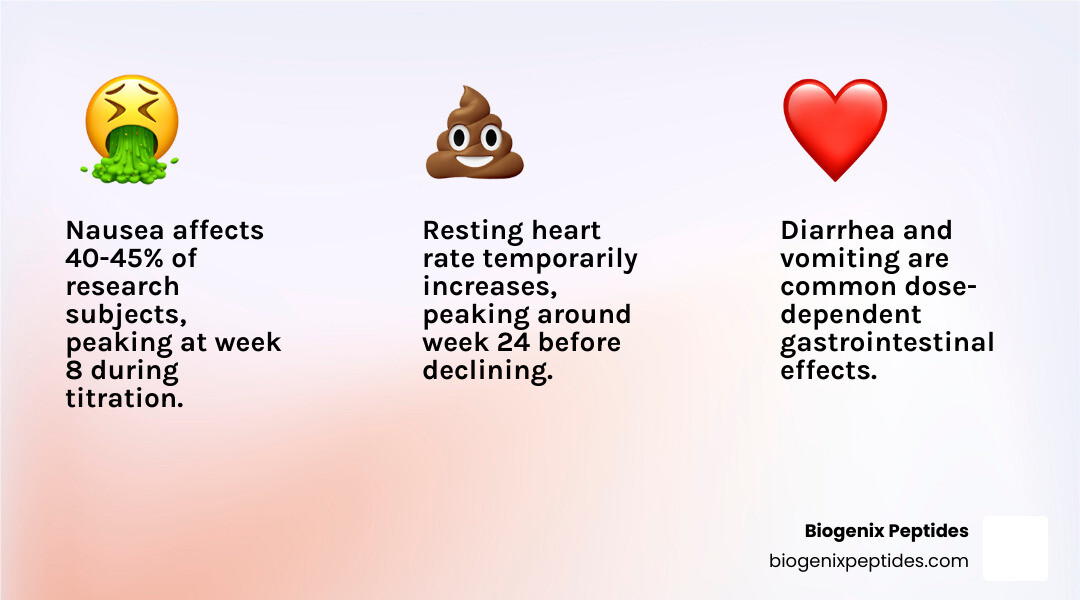
- Nausea (affecting roughly 40-45% of subjects, typically peaking at week 8)
- Diarrhea and vomiting
- Constipation
These effects are almost always quantity-dependent, meaning they tend to increase as the administered amount increases. To manage these during research, common supportive measures include smaller, more frequent meals and attention to hydration.
Beyond the gut, researchers have noted a temporary increase in resting heart rate, which typically peaks around week 24 before gradually declining. There are also standard warnings regarding pancreatitis and gallbladder issues, which are commonly monitored across this research category. For a deep dive into the specific safety data from the original trials, you can consult the Phase 2 Obesity Trial of Retatrutide (NCT04881706).
Comparative efficacy within incretin-based metabolic research
How does retatrutide compare within the broader field of incretin-based metabolic research? Published trial data suggests that the triple-agonist profile may offer stronger average weight-reduction outcomes than earlier single- or dual-pathway approaches.
- Earlier GLP-1-focused research programs have reported average weight reduction around 15% over roughly 68 weeks.
- Dual-pathway incretin research has reported average weight reduction around 22.5% over roughly 72 weeks.
- Retatrutide has reported average weight reduction of 24.2% to 28.7% over 48-68 weeks.
The addition of glucagon-receptor activity may provide added metabolic momentum beyond appetite suppression alone. While dual-pathway compounds can be highly effective for satiety-related effects, retatrutide’s potential to also increase energy expenditure through glucagon signaling represents a meaningful development in this area of research. We explore these differences in depth in our guide on GLP-1 dual and triple agonist peptides: semaglutide, tirzepatide, and retatrutide in research.
Frequently Asked Questions about retatrutide research
What happens if a scheduled administration is missed?
In a research setting, if a weekly administration is missed by more than 3 days, the standard protocol is typically to skip that week and resume at the next scheduled time. Doubling up on the quantity is generally avoided because it can cause extreme gastrointestinal distress and skew the safety data of the study.
Is retatrutide currently approved for clinical application?
As of May 2026, retatrutide remains an investigational compound. While Phase 3 trials are nearing completion, it has not yet received final FDA approval for public use. It is strictly for laboratory and clinical research purposes at this time.
How does the glucagon component affect energy expenditure?
Unlike the other two receptors, the glucagon receptor specifically targets the liver and adipose tissue to stimulate lipolysis (the breakdown of fats) and thermogenesis. This means the body may burn more energy even at rest, which helps offset the metabolic slowdown that usually happens when a subject loses a significant amount of weight. This explanation is included for research discussion only, not as medical guidance.
Conclusion
Retatrutide represents an important development in metabolic science. By understanding retatrutide administration levels and titration pathways, researchers can better evaluate the full potential of this triple-agonist compound while maintaining strong safety standards. The data from the TRIUMPH trials suggests that this investigational compound can produce unusually robust outcomes through once-weekly administration in research settings.
At Biogenix Peptides, we are committed to providing high-purity compounds to support metabolic research. Whether you are studying energy regulation, body composition, or liver fat reduction, retatrutide offers a unique multi-pathway approach within this research category.
If you are ready to support your next study, you can Explore Retatrutide for Research in our catalog today. The future of metabolic science is not just about reduced intake – it is about understanding the complex signaling pathways that shape metabolism. All content here is offered as research-focused opinion and information only, not medical advice and not for human or veterinary consumption.