The Hard Science Behind Soft Skin: A Review of Collagen Peptide Studies
What the Science Actually Says About Collagen Peptides
Disclaimer: The information provided in this article is for educational and informational purposes only. It is not intended as medical advice, diagnosis, or treatment. Products and compounds referenced are for research use only and are not approved for human or veterinary consumption. Always consult a qualified professional regarding health or medical decisions.
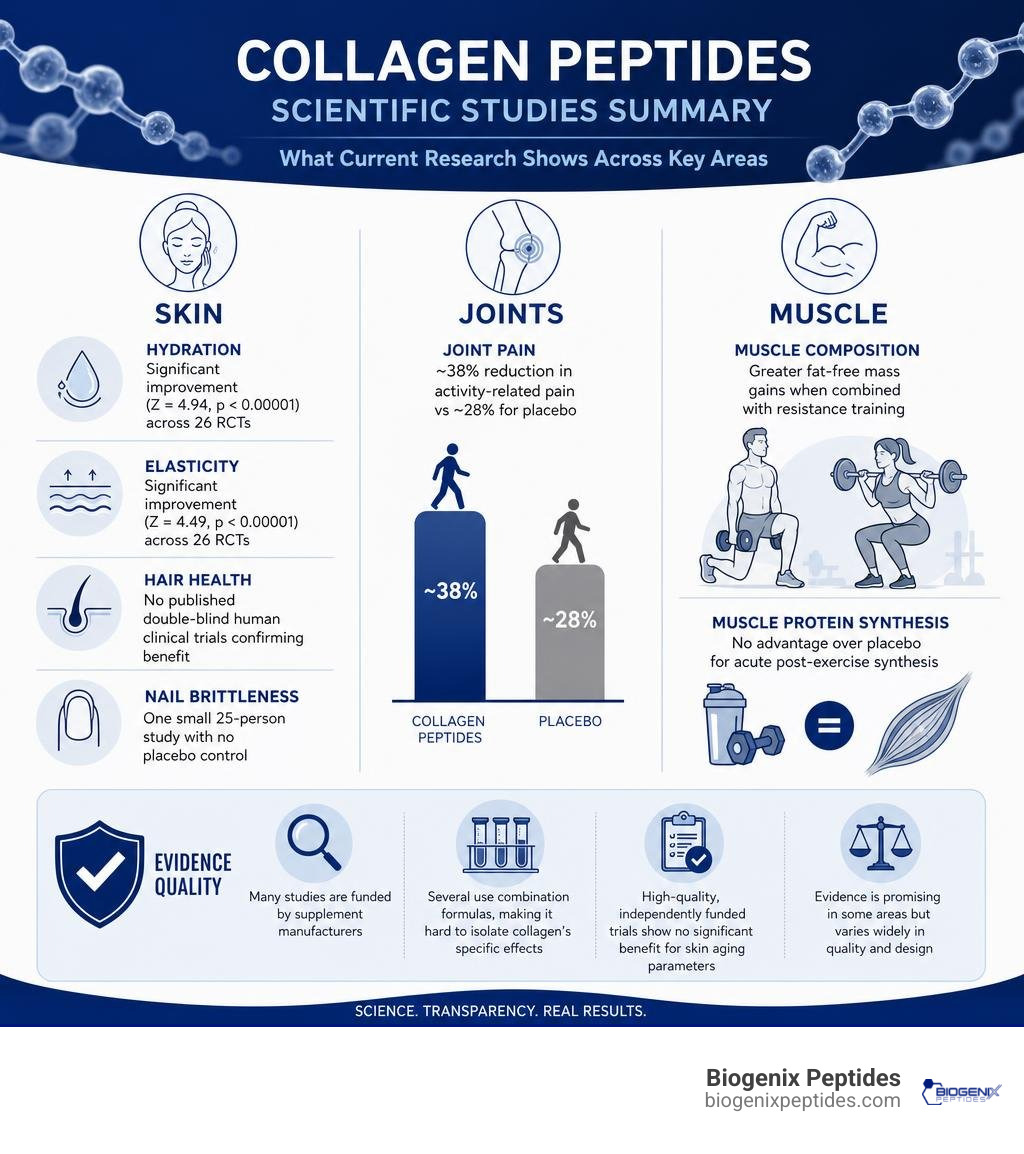
Collagen peptides scientific studies have grown dramatically in number over the past decade — and so has the confusion about what they actually prove. Here is a quick summary of what the current research shows:
Key findings at a glance:
| Research Area | What Studies Show |
|---|---|
| Skin hydration | Significant improvement (Z = 4.94, p < 0.00001) across 26 RCTs |
| Skin elasticity | Significant improvement (Z = 4.49, p < 0.00001) across 26 RCTs |
| Joint pain | ~38% reduction in activity-related pain vs ~28% for placebo |
| Muscle composition | Greater fat-free mass gains when combined with resistance training |
| Hair health | No published double-blind human clinical trials confirming benefit |
| Nail brittleness | One small 25-person study with no placebo control |
| Muscle protein synthesis | No advantage over placebo for acute post-exercise synthesis |
The evidence is promising in some areas. But it is far from uniform in quality.
Many widely cited studies were funded by supplement manufacturers. Several used combination formulas with added vitamins, hyaluronic acid, and antioxidants — making it nearly impossible to isolate collagen’s specific contribution. And a critical review of high-quality, independently funded trials found no statistically significant benefit for skin aging parameters.
That does not mean collagen peptides are useless. It means the research deserves careful reading.
Collagen is the most abundant protein in the human body, making up roughly 30% of total body protein and approximately 80% of the dry weight of skin. Its natural decline — at a rate of around 1% to 1.5% per year with age — is well established. What is less established is whether oral supplementation meaningfully reverses that decline in targeted tissues.
I’m Jay Daniel, Founder and CEO of BioGenix Peptides, and my work in peptide science and research innovation has given me extensive exposure to collagen peptides scientific studies across dermatology, musculoskeletal research, and bioavailability pharmacokinetics. I’ll walk through what the most rigorous available evidence actually supports — and where the science still has significant gaps to fill.
Key Biological Mechanisms Revealed in Collagen Peptides Scientific Studies
When native collagen is ingested in its raw form, it exists as a massive, tightly coiled triple-helix protein structure. The digestive system cannot transport intact whole collagen across the intestinal epithelial barrier. Instead, enzymatic hydrolysis breaks this dense extracellular matrix framework down into short-chain amino acid sequences known as hydrolyzed collagen peptides.
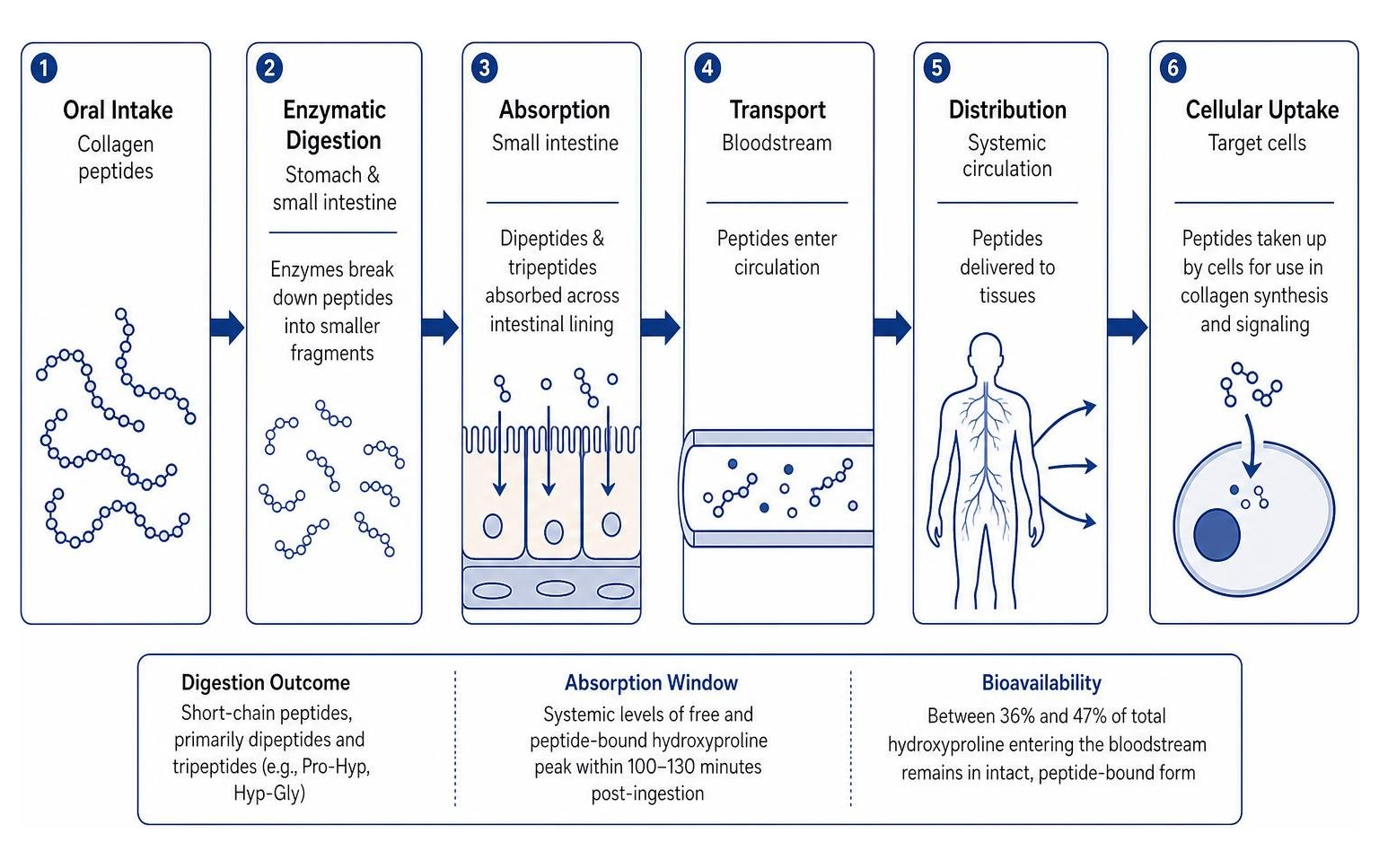
A critical factor in peptide bioavailability is molecular mass. Native collagen fibers possess molecular weights upwards of 300,000 Daltons (Da). In contrast, hydrolyzed formulations are enzymatically cleaved into low-molecular-weight fragments typically ranging between 2,000 Da and 5,000 Da. Pharmacokinetic research demonstrates that lower molecular weight hydrolysate profiles—specifically around the 2,000 Da threshold—yield a 1.2-fold higher overall systemic absorption rate of total hydroxyproline compared to heavier 5,000 Da profiles.
Hydroxyproline serves as a unique biochemical fingerprint for tracking collagen peptide absorption because it is virtually absent in other dietary animal proteins. Following oral administration, enzymatic digestion breaks down these short chains into dipeptides and tripeptides, primarily proline-hydroxyproline (Pro-Hyp) and hydroxyprolylglycine (Hyp-Gly).
Human trial data published in a randomized crossover trial evaluating peptide absorption found that systemic levels of free and peptide-bound hydroxyproline peak within 100 to 130 minutes post-ingestion. Between 36% and 47% of total hydroxyproline crossing into the bloodstream remains in intact, peptide-bound form. To learn more about cellular signaling cascades, explore What Are Peptides? The Complete Science-Backed Guide to Cell Signaling, Metabolism, Hormones & Longevity.
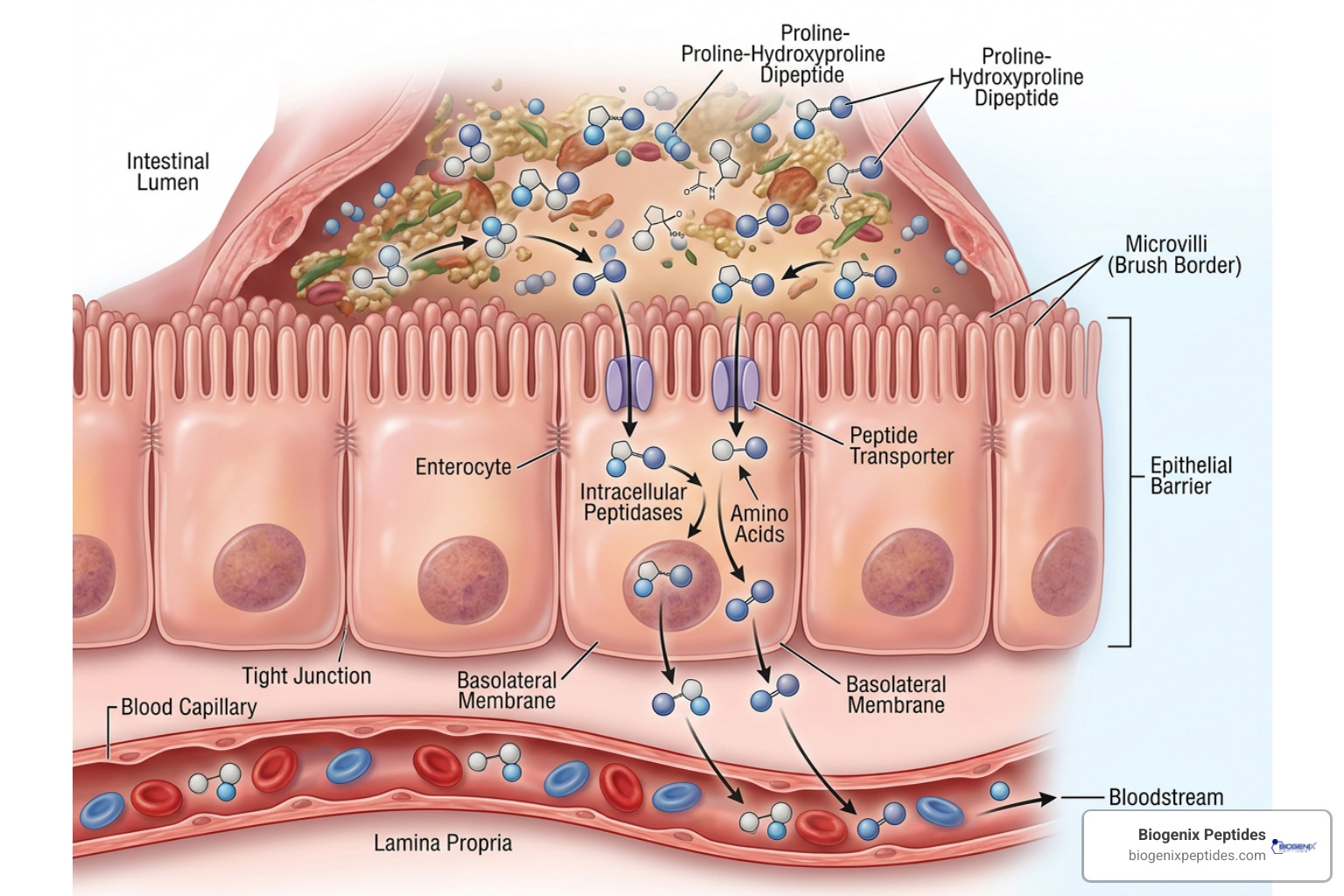
Once present in circulation, these bioactive fragments act as cell-signaling messengers rather than mere raw metabolic fuel. According to findings in Frontiers | Absorption of bioactive peptides following collagen hydrolysate intake, these blood-borne dipeptides interact directly with dermal fibroblasts and synovial chondrocytes. Mechanically, when Pro-Hyp and Hyp-Gly dock onto specific cell membrane receptors, they trigger a mechano-transduction signaling cascade. This intracellular signaling stimulates target fibroblasts to upregulate the endogenous synthesis of Type I and Type III collagen, hyaluronic acid, and elastin within the extracellular matrix framework.
Dermatological Findings Across Clinical Literature
Evaluating Skin Hydration and Elasticity in Collagen Peptides Scientific Studies
The application of collagen peptides scientific studies within aesthetic dermatology has garnered significant attention. To evaluate whether oral peptide ingestion translates to quantifiable structural changes in human dermal layers, researchers rely on objective biophysical measuring devices: Corneometers (which measure stratum corneum hydration via electrical capacitance) and Cutometers (which quantify elastic resistance and viscoelastic recoil under suction pressure).
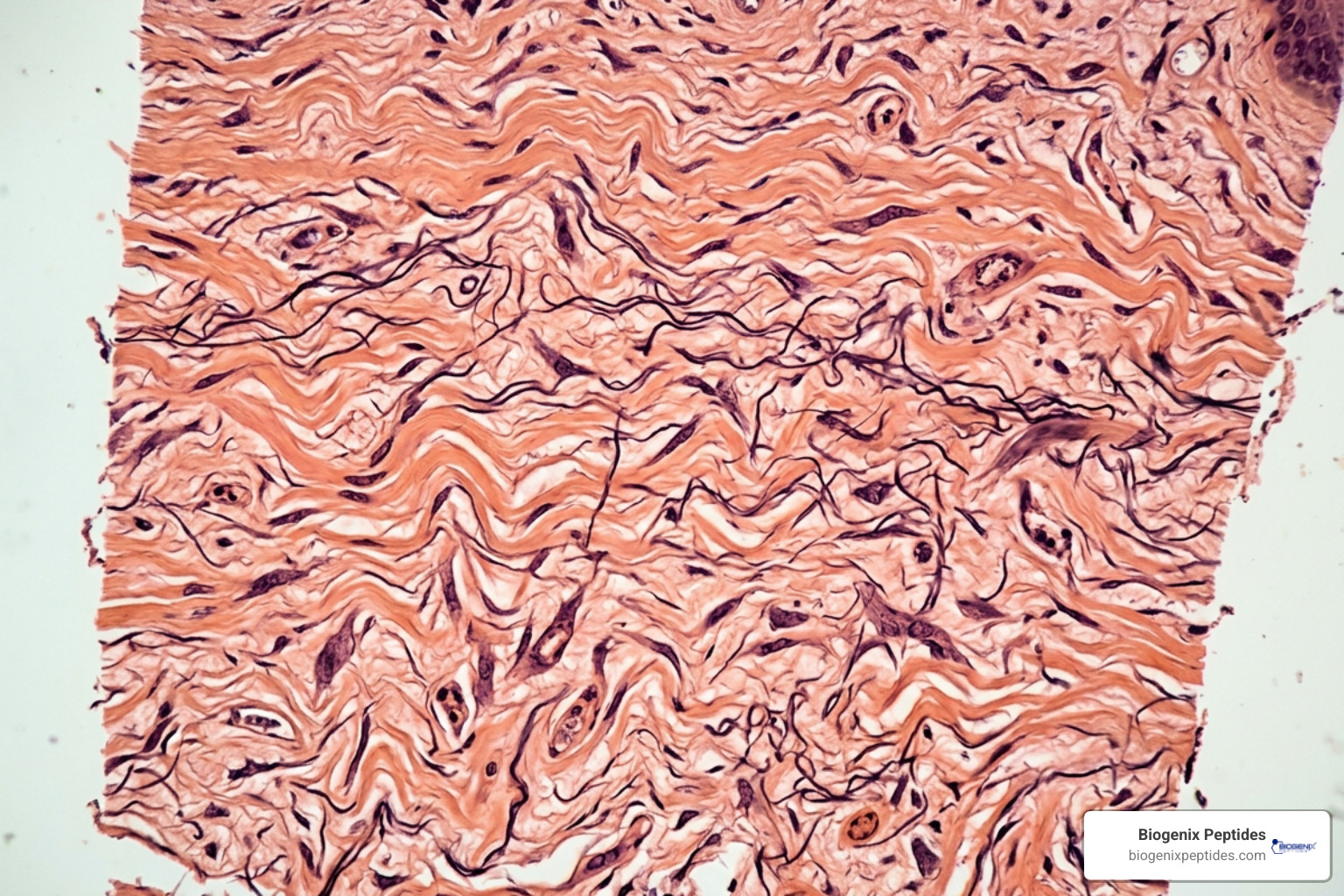
A comprehensive meta-analysis evaluating 26 randomized controlled trials (RCTs) involving 1,721 subjects revealed statistically significant improvements in skin hydration (Z = 4.94, p < 0.00001, effect size 0.63) and skin elasticity (Z = 4.49, p < 0.00001, effect size 0.72) compared to placebo control groups. Further subgroup analysis demonstrated that study duration plays a determining role in clinical outcomes:
- Short-Term Administration (<8 weeks): Yielded an overall hydration effect size of 0.39 (95% CI 0.15–0.63).
- Long-Term Administration (>8 weeks): Achieved an expanded hydration effect size of 0.59 (95% CI 0.35–0.83) alongside superior skin elasticity values (0.73 vs 0.67).
Subgroup comparative analyses also reveal that marine/fish-derived collagen hydrolysates consistently demonstrate higher hydration responsiveness compared to avian or chicken sternum cartilage extracts, likely due to a higher concentration of distinct dipeptide motifs and lower molecular weights.
However, interpreting dermatological literature requires caution regarding methodological confounding factors. A systematic investigation published in the journal literature, detailed in Effects of Collagen Supplements on Skin Aging: A Systematic Review, highlighted that a vast majority of positive clinical trials evaluated multi-ingredient nutricosmetic blends containing co-ingested vitamins (such as Vitamin C), Coenzyme Q10, zinc, and hyaluronic acid. Isolating the therapeutic impact of collagen peptides apart from these synergistic antioxidants remains a key challenge. Researchers interested in tissue-specific cutaneous repair mechanisms can review our analysis on Aesthetic Skin & Anti-Aging Peptides.
Hair and Nail Health Evidence in Research Models
While promotional marketing frequently links oral collagen peptides to enhanced hair density and nail strength, peer-reviewed clinical validation in these areas is markedly less robust than for skin mechanics.
Regarding nail pathology, scientific literature remains limited. One pilot clinical study investigated 25 human subjects presenting with brittle nail syndrome who received 2.5 grams of bioactive collagen peptides daily over a 24-week period. The authors reported a 12% increase in nail growth rates and a 42% reduction in the frequency of broken nails. However, the study suffered from a major methodological limitation: it lacked a double-blind, randomized placebo control arm, preventing researchers from ruling out seasonal variation or placebo effects.
When examining hair follicle physiology, there are currently no published double-blind human clinical trials demonstrating that oral collagen peptides directly enhance hair volume, follicle shaft thickness, or growth rates. While collagen hydrolysate provides foundational amino acids such as proline and glycine (which are utilized in keratin synthesis), claims that oral peptides directly activate dermal papilla signaling pathways are unproven in human subjects. For research focused on cellular signaling pathways regulating follicular microenvironments, consult our guide on GHK-Cu Copper Peptide: The Cellular Repair Foreman That Helps Coordinate Healing.
Musculoskeletal Adaptations and Connective Tissue Recovery
Joint Health and Connective Tissue Recovery in Collagen Peptides Scientific Studies
Connective tissues, including articular cartilage, ligaments, and tendons, are composed primarily of Type I and Type II collagen networks. Unlike skeletal muscle, these white tissue structures suffer from poor vascularization, resulting in slow metabolic recovery following mechanical strain or micro-trauma.
In a systematic review analyzing 15 randomized controlled trials encompassing 656 physical subjects, daily supplementation with 5g to 15g of collagen peptides over 12 to 24 weeks led to a 38.4% reduction in activity-related joint discomfort, compared to a 27.9% reduction observed in placebo groups.
A critical biological mechanism involves co-ingestion with Vitamin C (ascorbic acid). Ascorbic acid acts as an essential enzymatic cofactor for prolyl hydroxylase and lysyl hydroxylase, which drive the hydroxylation of proline and lysine residues required to stabilize the collagen triple-helix architecture. Clinical models assessing human collagen synthesis rates showed that ingesting 15g of gelatin or collagen enriched with Vitamin C one hour prior to intermittent mechanical loading (e.g., rope skipping) increased circulating N-terminal peptide of procollagen (PINP)—a biomarker of Type I collagen synthesis—by 153% over baseline, compared to just 53.9% in placebo trials.
Furthermore, studies published in Frontiers | Specific collagen peptides supplementation increases collagen type I content in skeletal muscle demonstrate that 12 weeks of high-load resistance training paired with daily 15g specific collagen peptide supplementation produced a 29.8% increase in intramuscular Type I collagen content within skeletal muscle extracellular matrix tissue, compared to only 9.9% in resistance training combined with placebo. Researchers exploring structural tissue regeneration models can review details within our resource on Tissue Repair & Regeneration Peptides.
Muscle ECM Remodeling, Sarcopenia, and Athletic Performance
A frequent subject of investigation in sports physiology is whether collagen peptides directly induce skeletal muscle hypertrophy or accelerate post-exercise recovery.
When evaluated against high-quality complete proteins like whey or lactalbumin, collagen peptides are relatively inefficient at stimulating acute myofibrillar muscle protein synthesis (MPS). Collagen exhibits an incomplete essential amino acid profile, containing low levels of branched-chain amino acids (BCAAs), particularly leucine (~0.4g per 15g serving), which serves as the primary molecular trigger for mTORC1 activation. A trial indexed in Medicine & Science in Sports & Exercise confirmed that ingesting 30g of collagen post-exercise elevated systemic amino acid levels but failed to increase acute myofibrillar or connective protein synthesis rates beyond those achieved by exercise alone.
| Protein Source | Leucine Content per 15g | Essential Amino Acid Profile | Primary Physiological Target |
|---|---|---|---|
| Collagen Peptides | ~0.4 g | Low / Incomplete | Extracellular Matrix & Connective Tissue |
| Whey Protein Isolate | ~1.6 to 2.0 g | High / Complete | Myofibrillar Muscle Protein Synthesis |
However, collagen peptides demonstrate utility in supporting the structural extracellular matrix (ECM) of muscle and aiding mechanical recovery:
- Sarcopenic Adaptations: In a 12-week study of 53 elderly sarcopenic male subjects, daily intake of 15g collagen peptides combined with guided resistance training increased fat-free mass by 4.2 kg (versus 2.9 kg in the placebo group) and reduced body fat mass by 5.4 kg (versus 3.5 kg in placebo).
- Exercise-Induced Muscle Damage (EIMD): A double-blind trial involving 24 active male subjects demonstrated that daily administration of 20g collagen peptides significantly mitigated delayed onset muscle soreness (DOMS) at 48 hours post-strenuous exercise (ES = 2.64) and preserved countermovement jump height performance recovery compared to control groups.
Research Limitations, Methodological Bias, and Safety Parameters
While the body of literature surrounding collagen peptides scientific studies continues to expand, rigorous critical analysis highlights several recurring methodological limitations across published clinical trials.
A key issue involves commercial funding bias. Independent systematic reviews analyzing trial quality have documented that study outcomes correlate strongly with financial sponsorship. When meta-analyses isolate non-pharmaceutical and non-industry-funded trials, the statistical significance of skin anti-aging benefits frequently declines or disappears entirely. Low-quality trial designs featuring small sample cohorts, absent double-blinding, or unblinded subjective assessments often skew published summary conclusions.
To navigate these variables objectively, researchers should evaluate trial methodologies across key structural characteristics:
| Collagen Source Origin | Average Molecular Mass | Key Biochemical Characteristics | Research Primary Application Areas |
|---|---|---|---|
| Bovine (Cow Hide) | 2,000 – 5,000 Da | Rich in Type I & Type III; high hydroxyproline content | Joint cartilage, ECM structural muscle remodeling |
| Porcine (Pig Skin) | 2,000 – 3,000 Da | High biocompatibility; similar profile to mammalian skin | Dermal tissue hydration, wound healing models |
| Marine (Fish Scales/Skin) | 1,000 – 2,000 Da | Superior intestinal absorption; low molecular mass profile | Cutaneous elasticity, fine wrinkle volume research |
In comparative evaluations against established dermatological protocols, oral collagen peptides display lower therapeutic potency than standard topical therapies. As emphasized in clinical reviews by institutions such as Harvard Health in Considering collagen drinks and supplements?, individuals seeking robust skin structural improvements obtain more consistent, clinically validated results through daily broad-spectrum sun protection (SPF 30+) and topical retinoids. Retinoids act directly on nuclear retinoic acid receptors to stimulate procollagen gene transcription within dermal fibroblasts.
From a safety and metabolic perspective, hydrolyzed collagen peptides display a favorable safety profile with minimal reported adverse events in healthy subjects. However, specific physiological factors warrant consideration in experimental designs:
- Gout and Hyperuricemia: Collagen hydrolysate contains high levels of specific amino acids that convert into metabolic intermediates. Individuals with underlying purine handling defects or gout should exercise caution, as rapid increases in dietary amino acid loads can trigger hyperuricemic flares.
- Renal Protein Restrictions: Subjects with chronic kidney disease (CKD) or impaired glomerular filtration rates must carefully manage total dietary nitrogen intake to avoid renal hyperfiltration strain.
- Contamination & Regulatory Oversight: Because dietary supplements are not subjected to mandatory pre-market approval protocols under strict FDA drug frameworks, unverified commercial preparations present risks of heavy metal contamination (such as cadmium, lead, or arsenic) acquired from animal feed or aquatic sources.
Frequently Asked Questions About Collagen Peptide Studies
Can oral collagen peptides directly target damaged skin or cartilage tissue?
No. Ingested collagen peptides cannot be directed to specific biological tissues. Upon entering the gastrointestinal tract, hydrolysates are enzymatically broken down into free amino acids, dipeptides, and tripeptides. These constituent molecules enter the generalized systemic amino acid pool and are distributed throughout the circulatory system based on systemic metabolic demand. While circulating dipeptides like Pro-Hyp serve as signaling molecules that stimulate local fibroblast activity, the body utilizes absorbed amino acids wherever metabolic synthesis requires them.
How do collagen peptides compare to whey protein for muscle protein synthesis?
Collagen peptides are poorly suited as a primary driver of acute post-workout muscle protein synthesis (MPS) compared to whey protein isolate. Whey protein contains a complete essential amino acid profile with high leucine content (~11%), which is required to activate the mTOR pathway that triggers myofibrillar muscle protein synthesis. Collagen peptides contain low leucine levels (~2.7%) and lack tryptophan entirely. Consequently, while whey protein excels at driving muscle fiber hypertrophy, collagen peptides specifically support extracellular matrix remodeling, connective tissue repair, and tendon adaptations.
What timeframe do research models demonstrate for measurable skin hydration improvements?
Clinical research trial protocols indicate that statistically significant shifts in corneometer-measured skin hydration and cutometer-measured elasticity require a minimum exposure window of 8 to 12 consecutive weeks. Short-term study models (<8 weeks) consistently demonstrate lower effect sizes (0.39) compared to extended research timelines (>8 weeks, effect size 0.59). Observable physiological changes depend on the multi-week turnover cycle of dermal fibroblasts and the gradual accumulation of newly synthesized matrix proteins.
Conclusion
The scientific literature surrounding collagen peptides scientific studies reveals a nuanced picture. While marketing claims frequently overestimate the speed and magnitude of oral peptide benefits, peer-reviewed clinical research confirms genuine physiological effects under specific experimental conditions.
Hydrolyzed collagen hydrolysates—particularly low-molecular-weight marine and bovine preparations (~2,000 Da)—are reliably absorbed as bioactive dipeptides (Pro-Hyp and Hyp-Gly). These circulating messengers interact directly with target cells via mechano-transduction pathways. Rigorous trials support their utility in reducing activity-related joint pain, accelerating connective tissue recovery, and improving dermal hydration over extended 8-to-12-week periods. However, claims regarding hair restoration, acute muscle protein synthesis, and rapid anti-aging transformations lack robust evidence from high-quality, independent trials.
At BioGenix Peptides, we remain committed to advancing rigorous scientific communication, transparent methodology, and evidence-based analysis across the expanding peptide field. To explore deeper technical analyses of cellular repair mechanisms, signaling dynamics, and peptide research protocols, visit The Complete Guide to Peptides in Scientific Research.