Navigating the Wild West of US Peptide Blends
Disclaimer: The information provided in this article is for educational and informational purposes only. It is not intended as medical advice, diagnosis, or treatment. Products and compounds referenced are for research use only and are not approved for human or veterinary consumption. Always consult a qualified professional regarding health or medical decisions.
Why Peptide Blends in the US Are Harder to Navigate Than You Think
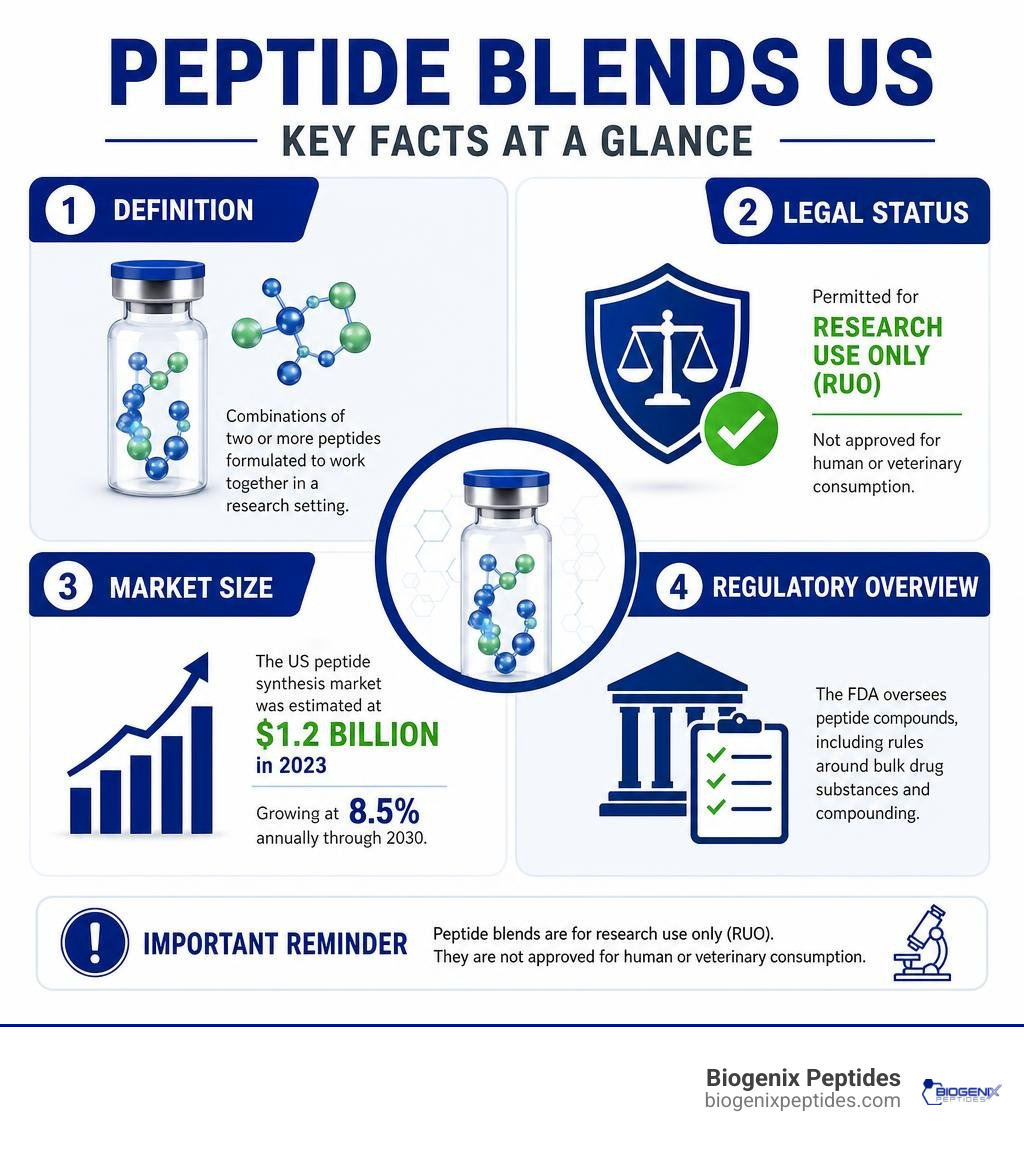
Peptide blends in the US exist in a complex space — sitting at the crossroads of cutting-edge science, evolving FDA policy, and a rapidly growing research market. Here is a quick snapshot of what you need to know:
- What they are: Combinations of two or more peptides formulated to work together in a research setting
- Legal status: Permitted for research use only (RUO) — not approved for human or veterinary consumption
- Who regulates them: The FDA oversees peptide compounds, including rules around bulk drug substances and compounding
- Market size: The US peptide synthesis market was estimated at $1.2 billion in 2023, growing at 8.5% annually through 2030
- Key risk: Buying from suppliers who do not verify purity or comply with US research standards
The peptide research landscape in the US is expanding fast. The global peptide therapeutics market was valued at around $40.5 billion in 2022 and is projected to reach $66.6 billion by 2030 — with the US driving a significant share of that growth. Yet despite that momentum, regulatory clarity has not kept pace with demand. For researchers, that gap creates real challenges around sourcing, compliance, and quality assurance.
This guide cuts through the noise. Whether you are new to peptide research or looking to better understand how US regulations apply to blended compounds, you will find clear, research-backed answers here.
I am Jay Daniel, Founder and CEO of BioGenix Peptides, and I have spent years working directly in the peptide industry — sourcing, quality-testing, and supplying peptide blends in the US to research professionals who need reliable, well-documented compounds. That hands-on experience shapes everything covered in this guide.
Understanding Peptide Blends US Regulatory Landscape
Navigating the legal framework surrounding peptide blends US research requires a firm understanding of how federal agencies categorize these compounds. In the United States, the Food and Drug Administration (FDA) is the primary governing body overseeing peptide regulations. However, the rules differ drastically depending on whether a substance is intended for clinical compounding or strict laboratory research.
For compounding pharmacies, the FDA maintains strict oversight on what raw materials can be utilized. This is largely governed by the FDA guidance on bulk drug substances. Under these rules, substances must meet specific compounding criteria, such as being components of FDA-approved drugs or appearing on highly regulated compound lists (such as the 503A or 503B bulk drug substances lists). Over the last few years leading into 2026, the FDA has significantly tightened restrictions on compounding peptides, placing many popular single peptides and blends into categories that compounding pharmacies can no longer legally prepare for clinical prescriptions.
This regulatory tightening has shifted the primary focus of the peptide industry toward the Research Use Only (RUO) sector.
Under US law, chemical compounds synthesized strictly for laboratory research, in vitro testing, or animal studies are classified as RUO. These compounds do not require FDA pre-market approval because they are not intended, marketed, or sold for human or veterinary consumption.
To maintain market compliance in 2026, US-based research laboratories and distributors must adhere to clear boundaries:
- All materials must be explicitly labeled and sold as research chemicals.
- No instructions regarding human administration, protocols, or therapeutic claims may accompany the products.
- Sourcing must be fully transparent, utilizing verified synthesis standards to ensure that research integrity is not compromised by impurities.
Scientific Synergy: How Peptide Blends Compare to Single Peptides
When designing laboratory experiments, researchers often face a choice: study a single isolated peptide or investigate a formulated blend. Historically, single-peptide research was the standard because it isolated a single variable. However, modern research increasingly focuses on the scientific synergy that occurs when multiple peptides are combined.
Synergy refers to a biological interaction where the combined effect of two or more peptides is greater than the sum of their individual effects. In laboratory models, this is often achieved through complementary pathways or dual receptor affinity. For example, while one peptide might stimulate a specific cellular receptor, a second peptide in the blend might inhibit the enzyme that degrades the first, or activate a downstream signaling pathway that amplifies the initial cellular response.
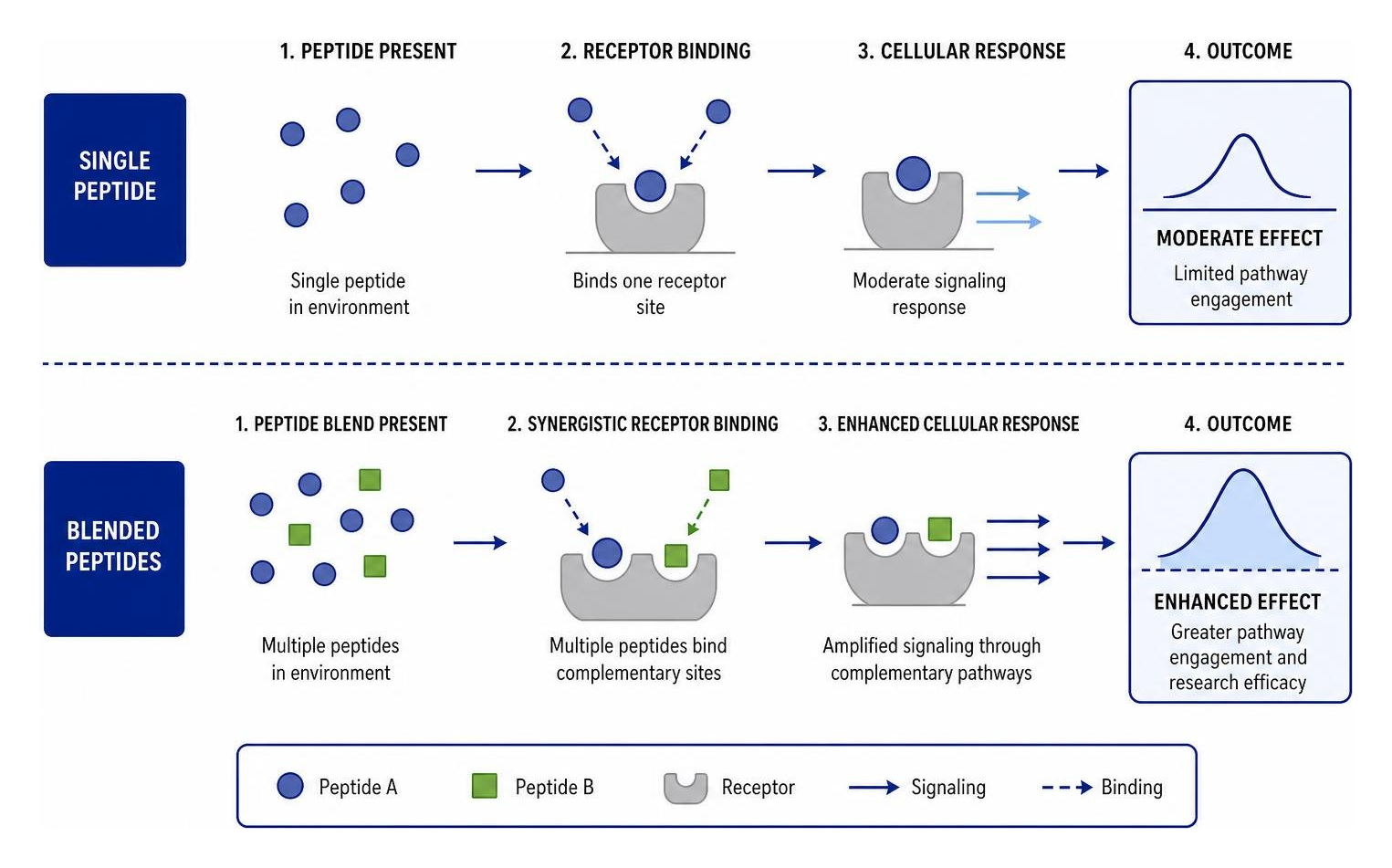
This multi-targeted approach can lead to enhanced research efficacy. By engaging multiple physiological mechanisms simultaneously, a blend can potentially yield more robust experimental outcomes than a single peptide alone.
However, stacking compounds is not always beneficial. In some cases, combining peptides without rigorous research-backed ratios can lead to receptor saturation or competitive antagonism, where one peptide blocks the receptor site of another. This is why understanding the science behind ratios is crucial. To explore this dynamic further, researchers often consult guides like When Stacking Peptides Works Against You: Why Less Could Be More to understand when simpler approaches are superior.
To illustrate the key differences observed in laboratory settings, consider this comparison:
| Metric | Single Peptides | Peptide Blends |
|---|---|---|
| Mechanistic Target | Single receptor or pathway | Multiple complementary pathways |
| Research Complexity | Lower (fewer variables to track) | Higher (requires careful ratio optimization) |
| Efficacy Potential | Linear, predictable response | Synergistic, potentially amplified response |
| Receptor Affinity | Focused on one target site | Broadened or dual-receptor engagement |
| Risk of Antagonism | None | Possible if ratios are poorly formulated |
The underlying science of these interactions is supported by a growing body of literature, including an extensive NCBI study on peptide synergy, which highlights how multi-peptide systems can overcome the therapeutic limitations of single-target agents in complex biological systems.
Common Formulations in Laboratory Research
Formulating peptide blends US researchers can rely on is a highly technical science. Because peptides are chains of amino acids, they are inherently sensitive to environmental factors such as temperature, pH, and light. When two or more peptides are combined in a single vial, formulation scientists must ensure that the compounds do not react with one another or degrade prematurely.
Achieving peptide stability requires precise lyophilization (freeze-drying) protocols, which preserve the molecular structure of the peptides in a stable, powdered form. Reconstitution protocols must also be carefully established in the lab, typically utilizing sterile bacteriostatic water to ensure the blend remains stable throughout the testing period. For an exhaustive breakdown of how these formulations are developed and structured, researchers can refer to The Complete Guide to Peptide Blends.
Below, we examine the primary categories of peptide blends utilized in US laboratory research today.
Evaluating Tissue Repair with Recovery Peptide Blends US
In the field of regenerative medicine and cellular repair, recovery peptide blends are highly sought after for in vitro and animal research models. The most prominent combination in this category is the pairing of BPC-157 and TB-500.
BPC-157 (Body Protection Compound 157) is a pentadecapeptide known in research settings for its cytoprotective and angiogenic properties. Angiogenesis — the formation of new blood vessels from pre-existing ones — is a fundamental process in tissue healing. TB-500, a synthetic fraction of the naturally occurring protein Thymosin Beta-4, promotes cellular migration, wound healing, and actin regulation.
When combined, these two peptides exhibit a powerful dual-action mechanism:
- BPC-157 acts as an organizer of the healing response, upregulating growth factors and promoting vascular endothelial growth factor (VEGF) expression.
- TB-500 facilitates the physical migration of cells (such as fibroblasts and keratinocytes) to the site of tissue injury, accelerating the reconstruction of damaged extracellular matrix.
Researchers studying these regenerative pathways frequently utilize pre-formulated, high-purity research blends such as the BPC-157 TB-500 20mg Blend or the BPC-157 TB-500 10mg Blend to ensure consistent ratios in their experimental designs.
Investigating Metabolic Pathways with Weight Management Peptide Blends US
Metabolic research represents one of the largest and most rapidly growing sectors in the peptide field. Approximately 60% of all peptide-based clinical trials in the US focus on metabolic diseases, including obesity and diabetes. In the laboratory, researchers are heavily focused on investigating the synergistic potential of combining different metabolic receptor agonists.
A prime example of this is the co-formulation of Cagrilintide and Semaglutide. Semaglutide is a well-known Glucagon-Like Peptide-1 (GLP-1) receptor agonist that regulates appetite and glucose metabolism. Cagrilintide is a long-acting amylin analogue that acts on amylin receptors to promote satiety through a distinct, complementary pathway in the brain. Research models suggest that combining these two mechanisms yields a significantly more pronounced metabolic response than utilizing either compound in isolation. This interaction is actively studied using high-grade research materials like the Cagrilintide / Semaglutide 10mg Blend.
Another highly studied metabolic pathway involves Growth Hormone Secretagogues (GHS). Combining a Growth Hormone Releasing Hormone (GHRH) mimetic with a Growth Hormone Secretagogue Receptor (GHSR) agonist is a classic example of peptide synergy.
For instance, the pairing of CJC-1295 (without DAC) and Ipamorelin mimics the natural pulsatile release of growth hormone. While CJC-1295 triggers the release of growth hormone from the pituitary gland, Ipamorelin simultaneously suppresses somatostatin (the hormone that inhibits growth hormone release) and stimulates the pituitary directly. This dual action maximizes the amplitude of the growth hormone pulse without desensitizing the receptors. Researchers can explore this pathway using specialized compounds like CJC-1295 No DAC / Ipamorelin or the Tesamorelin / Ipamorelin 10mg Blend to study cellular growth, lipid metabolism, and body composition changes in animal subjects.
Cellular Longevity and Aesthetic Research Formulations
Beyond recovery and metabolism, peptide blends are widely researched for their potential to influence cellular longevity, collagen synthesis, and dermatological pathways. In the US, the market segment for cosmetic and skincare peptide research is growing at over 7% annually, driven by demands to understand anti-aging and tissue-strengthening mechanisms.
In laboratory models, peptides like GHK-Cu (copper peptide) are studied for their ability to stimulate collagen and elastin production while acting as a potent antioxidant. When paired with other longevity-focused peptides, these blends are designed to investigate cellular repair, mitochondrial function, and the reduction of oxidative stress.
Research formulations such as the GLOW Blend and the Klow Blend 80mg are specifically designed to help laboratories study these aesthetic and cellular longevity pathways. For researchers looking to understand how these blends fit into broader performance and cellular optimization studies, resources like How to Outrun Your Limits with the Right Peptide Blends provide valuable context on maximizing research outcomes.
Quality Control and Manufacturing Standards in the United States
As the US peptide synthesis market continues its rapid expansion — projected to maintain an 8.5% compound annual growth rate through 2030 — maintaining rigorous quality control (QC) is paramount. Because research-grade peptides are synthesized chemically rather than extracted from natural sources, the potential for impurities, truncated sequences, or residual solvents is a constant concern for laboratory professionals.
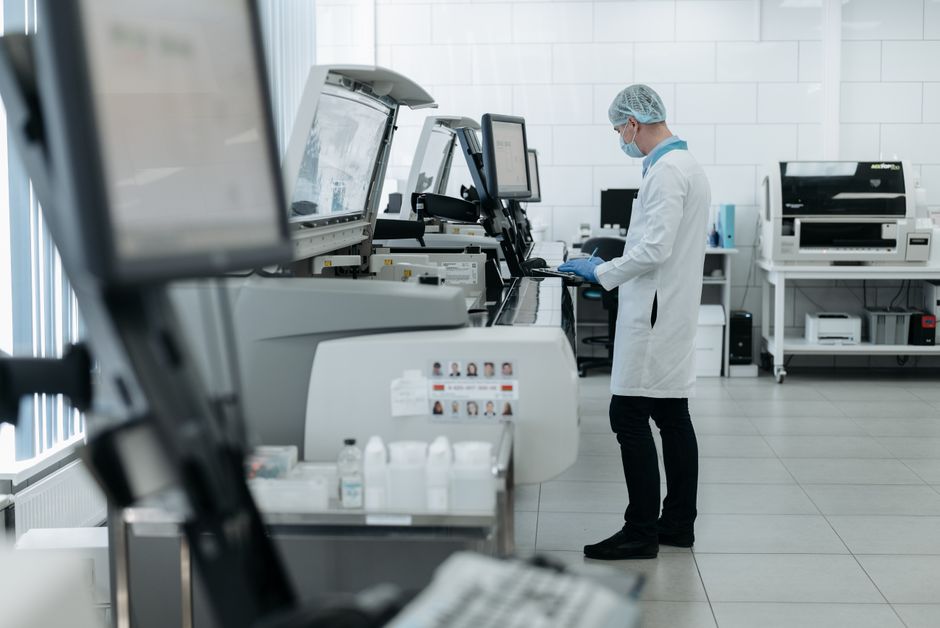
High-quality manufacturing of peptide blends US relies on two primary analytical techniques to verify compound integrity:
- High-Performance Liquid Chromatography (HPLC): This technique separates the components of a peptide mixture to determine its exact purity level. For reliable laboratory research, a minimum purity threshold of 98% is typically required.
- Mass Spectrometry (MS): While HPLC determines purity, Mass Spectrometry confirms identity. It measures the molecular mass of the synthesized peptide to ensure that the amino acid sequence matches the target design exactly, with no missing links or structural defects.
Once a batch of peptides is synthesized and verified via HPLC and MS, it undergoes lyophilization. This process removes all moisture from the compound under a vacuum, turning it into a stable, dry powder. Lyophilization is critical for preserving the shelf-life of the peptides and preventing degradation during shipping and storage. For researchers, purchasing from suppliers who provide independent, third-party Certificate of Analysis (COA) documentation for every batch is the only way to guarantee that their experimental data is not skewed by sub-par compounds.
Frequently Asked Questions about Peptide Blends
Are peptide blends legal for research in the US?
Yes. Peptide blends are legal to purchase, possess, and utilize in the United States, provided they are classified and used strictly as Research Use Only (RUO) compounds. They are intended solely for laboratory experimentation, in vitro assays, and animal studies. They are not approved by the FDA for human consumption, clinical use, or medical prescriptions.
What is the difference between research-grade and clinical-grade peptides?
The primary differences lie in the manufacturing environment, regulatory oversight, and intended application:
- Research-Grade Peptides: Manufactured for laboratory use only. They are held to exceptionally high chemical purity standards (typically >98% purity verified by HPLC/MS) but are not produced under the strict Current Good Manufacturing Practice (cGMP) guidelines required for human clinical trials or commercial drug products.
- Clinical-Grade Peptides: Manufactured under strict cGMP regulations, requiring extensive sterile processing, clinical-phase testing, and FDA approval for human administration.
How should peptide blends be stored in a laboratory setting?
To maintain long-term stability, lyophilized (dry powder) peptide blends should be stored in a freezer at -20°C or below, away from direct light and moisture. Once reconstituted with a bacteriostatic solvent, the liquid blend should be stored in a refrigerator at 2°C to 8°C and utilized within the specific stability window of the weakest peptide in the blend (typically 3 to 4 weeks) to prevent degradation.
Conclusion
The landscape of peptide blends US research is evolving at a breakneck pace in 2026. Driven by a massive surge in metabolic, regenerative, and longevity science, these multi-peptide formulations offer researchers unprecedented opportunities to study cellular synergy and complex biological pathways.
However, navigating this space successfully requires a commitment to scientific integrity and regulatory compliance. Because the FDA has tightened restrictions on compounding pharmacies and bulk drug substances, the responsibility falls on researchers to source their compounds from trusted, transparent suppliers who specialize in high-purity, research-only materials.
At Biogenix Peptides, we are dedicated to supporting the scientific community by providing peerless quality, rigorous third-party testing, and the clear documentation required to drive modern research forward. If you are ready to deepen your understanding of these advanced chemical formulations, explore our comprehensive resource, The Complete Guide to Peptide Blends, and ensure your laboratory is equipped with the highest caliber compounds available.