An Essential Guide to GHK-Cu for Acne
Disclaimer: The information provided in this article is for educational and informational purposes only. It is not intended as medical advice, diagnosis, or treatment. Products and compounds referenced are for research use only and are not approved for human or veterinary consumption. Always consult a qualified professional regarding health or medical decisions.
What is GHK-Cu and How Does it Interact with Skin?
GHK-Cu, or Glycyl-Histidyl-Lysine-Copper, is a naturally occurring copper peptide that has become a focal point in skin research. Discovered in 1973 by Dr. Loren Pickart, this small protein fragment is found in human plasma, saliva, and urine, playing a crucial role in various biological processes. Scientific understanding, particularly in the context of new gene data, indicates its profound regenerative and protective actions.
How Does GHK-Cu Function as a Copper Peptide?
At its core, GHK-Cu is a tripeptide, meaning it’s composed of three amino acids-glycine, histidine, and lysine-bound to a copper ion. This unique structure allows it to act as a signaling molecule, carrying copper to cells and influencing their behavior. Research shows that GHK-Cu can modulate the expression of over 4,000 human genes involved in tissue repair and anti-inflammatory processes, essentially helping to reset gene expression to a healthier, more youthful state.
As we age, the natural levels of GHK-Cu in the body decline significantly, dropping by more than half after age 60. This decline coincides with reduced regenerative capacity, prompting researchers to investigate its potential for supporting skin health. Research suggests this peptide acts as a cellular repair foreman, coordinating healing processes within the skin. For a deeper dive into its fundamental role, explore our research on GHK-Cu Copper Peptide: The Cellular Repair Foreman That Helps Coordinate Healing.
What are the Observed Biological Actions of GHK-Cu?
The observed biological actions of GHK-Cu are extensive and highly relevant to skin health. Research indicates its ability to:
- Stimulate Collagen and Elastin Production: These essential proteins are crucial for skin structure, firmness, and elasticity.
- Exhibit Antioxidant Properties: GHK-Cu helps neutralize free radicals, protecting skin cells from oxidative damage.
- Provide Anti-inflammatory Effects: Studies show it can reduce pro-inflammatory cytokines like IL-6 and TNF-α, which are key players in inflammatory skin conditions.
- Promote Wound Healing: It accelerates the remodeling of damaged tissue and supports the formation of new, healthy skin.
- Modulate Metalloproteinases (MMPs): GHK-Cu helps regulate the enzymes involved in the breakdown and remodeling of the extracellular matrix, ensuring a balanced repair process.
These multifaceted actions underscore GHK-Cu’s potential as a valuable compound in aesthetic skin anti-aging research, as further detailed in our insights on Aesthetic Skin Anti-Aging Peptides.
Can GHK-Cu Effectively Address Acne-Prone Skin Concerns?
In our research, we’ve observed that GHK-Cu offers several potential benefits for acne-prone skin, primarily through its role in reducing inflammation, promoting wound healing, and improving the appearance of acne scars through skin remodeling. While not a direct antibacterial agent, its regenerative properties make it an interesting subject for investigation into comprehensive skin health strategies. We explore the systemic implications of GHK-Cu for skin health in our article, GHK-Cu for Systemic Acne: What the Research Really Suggests About Healing From Within.
Does GHK-Cu Reduce Acne Inflammation and Promote Wound Healing?
Acne is fundamentally an inflammatory condition. The anti-inflammatory properties of GHK-Cu, as observed in various studies, are particularly relevant here. It helps to calm skin irritation by reducing the levels of pro-inflammatory cytokines, which are chemical messengers that contribute to redness and swelling.
Furthermore, GHK-Cu has been extensively studied for its ability to accelerate wound healing. In research settings, it has been shown to support faster wound closure and improve the quality of tissue repair. This is crucial for acne-prone skin, where lesions can leave behind lingering inflammation and damage. By supporting the skin’s natural repair mechanisms and strengthening the skin barrier function, GHK-Cu may help reduce the severity and duration of inflammatory acne lesions. It is also generally considered non-comedogenic, meaning it is unlikely to clog pores, which is a key concern for subjects with acne-prone skin.
Anti-Inflammatory Mechanisms Observed in GHK-Cu Research:
- Suppression of pro-inflammatory cytokines (e.g., IL-6, TNF-α)
- Activation of antioxidant defense systems
- Modulation of immune cell activity
- Support for a healthy skin barrier
- Reduction of oxidative stress
Can GHK-Cu Improve Acne Scars Through Collagen Production and Skin Remodeling?
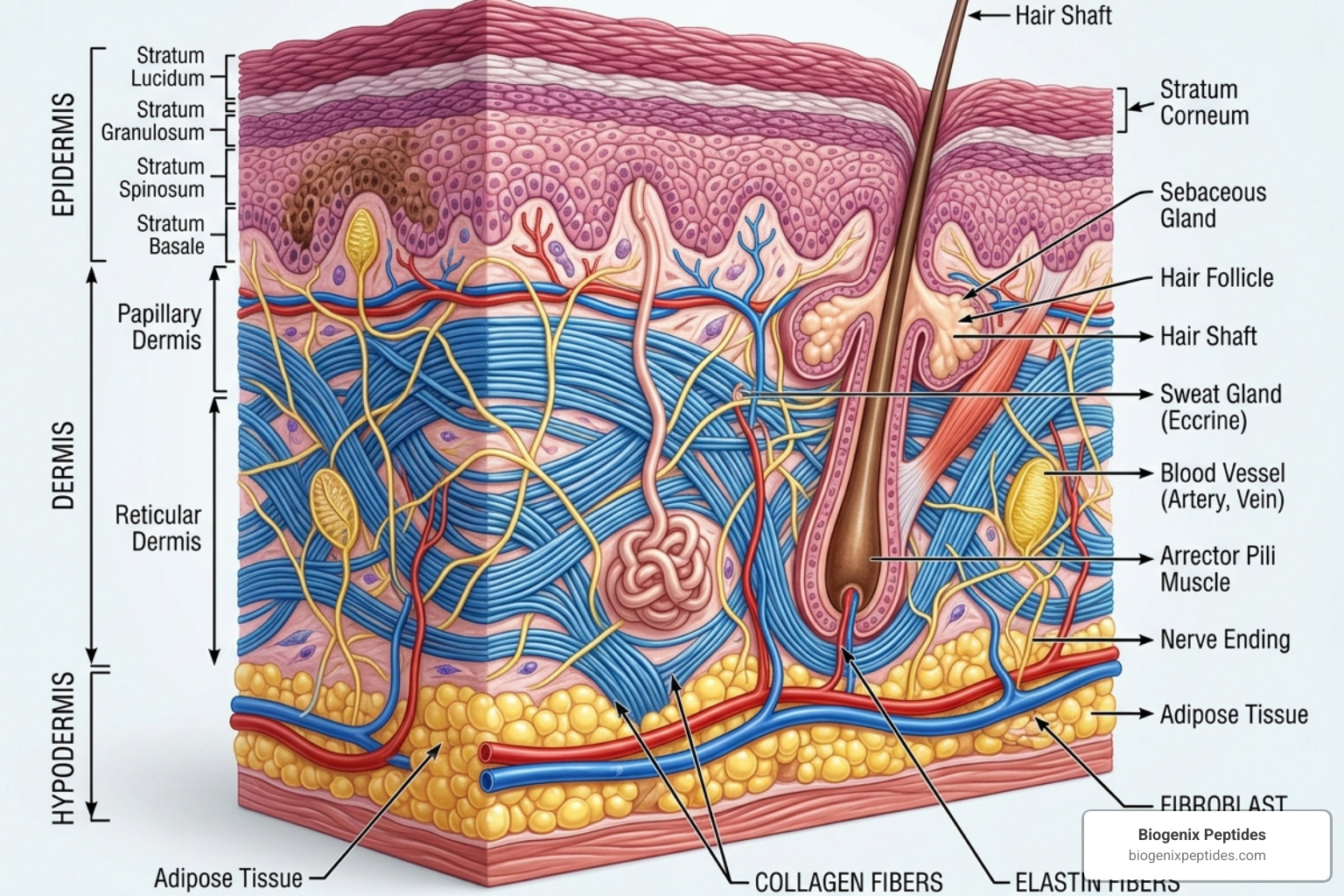
One of the most compelling areas of GHK-Cu research for acne-prone skin lies in its potential to improve acne scars. Acne scars result from abnormal wound healing, often involving either a deficit or an excess of collagen. GHK-Cu actively stimulates the synthesis of crucial skin components, including Type I and Type III collagen, as well as elastin. Studies have shown that GHK-Cu at concentrations of 0.01, 1, and 100 nM significantly increased the production of elastin and collagen in human dermal fibroblasts, which are the cells responsible for building skin structure.
Beyond simply increasing collagen, GHK-Cu plays a vital role in organizing it. It regulates the production of decorin protein, which is essential for proper collagen fiber arrangement, leading to smoother, more even skin texture. This skin remodeling capability is supported by observations in anti-aging research. For instance, studies have observed a significant reduction of wrinkle volume, with some research indicating reductions of over 30% compared to other active compounds and over 50% compared to control serum. In a 12-week clinical study involving 71 women, GHK-Cu cream was observed to increase skin density and thickness while reducing fine lines. These findings suggest a powerful capacity for dermal thickening and structural improvement, which is highly relevant for softening the appearance of acne scars.
The ability of GHK-Cu to promote organized collagen synthesis and enhance skin density positions it as a fascinating compound for exploring scar revision. Some researchers even suggest its potential role in skin rejuvenation could quietly replace more invasive cosmetic procedures. Learn more about this perspective in our article, How GHK-Cu Glow Klow Are Quietly Replacing Botox.
What Does Scientific Research Indicate About GHK-Cu’s Effectiveness for Acne?
While the broader scientific literature extensively documents GHK-Cu’s benefits for wound healing, anti-aging, and scar improvement, direct studies specifically targeting active acne vulgaris are limited. Most research focuses on its ability to support the skin’s regenerative processes, reduce inflammation, and remodel the extracellular matrix, which are all beneficial for post-acne recovery and overall skin health.
Researchers are particularly interested in GHK-Cu’s gene expression modulation capabilities, which allow it to influence a vast array of biological pathways involved in tissue repair. It’s important for researchers to note that during initial phases of exploring GHK-Cu, an observed phenomenon sometimes referred to as “purging” or a temporary worsening of skin condition may occur. This is not necessarily a negative side effect but rather an indication of accelerated cell turnover, where underlying congestion is brought to the surface as the skin rapidly sheds old cells and regenerates new ones. This observed process, lasting typically 4-8 weeks in some research, is an important consideration when evaluating its effects.
Is GHK-Cu a Safe Option for Individuals with Acne-Prone Skin?
In general, GHK-Cu has demonstrated good tolerability in research settings, particularly in topical applications. Its natural presence in the body contributes to its perceived safety profile. However, as with any research compound, potential for temporary skin reactions exists, and careful observation is always recommended. Dermatological perspectives in research often highlight the growing trend of copper peptides in skincare, acknowledging their benefits while also urging a balanced, evidence-based approach.
Does GHK-Cu Cause Breakouts or Clog Pores in Research?
GHK-Cu is generally considered non-comedogenic, meaning it is unlikely to clog pores. This is a significant advantage for subjects with acne-prone skin, as many skincare ingredients can exacerbate breakouts by blocking follicles.
However, as mentioned, researchers exploring GHK-Cu might observe an initial “purging” phase. This is an observed phenomenon where the peptide’s ability to accelerate cell turnover brings underlying congestion (such as microcomedones or trapped sebum) to the surface more quickly. This can temporarily manifest as new breakouts in typical problem areas. This phase is usually temporary, often resolving within 4-8 weeks as the skin completes its accelerated renewal cycle. It’s crucial for researchers to differentiate this temporary, regenerative response from a true adverse reaction or comedogenic effect.
What are the Potential Side Effects or Risks Observed in GHK-Cu Research?
While generally well-tolerated, some potential side effects or risks have been observed in GHK-Cu research, particularly with higher concentrations or in subjects with sensitive skin. These can include:
- Mild irritation, redness, or tingling: These are typically transient and may subside as the skin adjusts.
- Rare observations of “copper uglies”: This term, sometimes used in research communities, refers to a potential temporary accelerated aging appearance. It is hypothesized to be linked to excessive MMP-1 activity, which could temporarily break down existing collagen faster than new collagen is built. However, this is a mixed observation, and careful monitoring in research protocols is key.
- Copper accumulation: While copper is essential, excessive accumulation from multiple sources could theoretically lead to oxidative stress and uniform inflammation, distinct from localized purging.
These are observed phenomena in research and not definitive clinical outcomes for human application. For systemic research, certain contraindications exist, such as pregnancy, breastfeeding, active cancer, or conditions like Wilson’s disease (a genetic disorder causing copper accumulation). For topical research, patch testing remains a vital step to assess individual skin compatibility.
How Can GHK-Cu Be Integrated into a Skincare Research Protocol for Acne?
Integrating GHK-Cu into a skincare research protocol for acne-related concerns requires careful consideration of application methods, concentrations, and potential interactions with other compounds. The goal is to maximize its regenerative and reparative benefits while minimizing any temporary adverse observations.
What are Best Practices for Topical Application in Research?
When designing research protocols for topical GHK-Cu, we recommend the following best practices:
- Application to Clean Skin: Ensure the skin is clean and dry before application to facilitate optimal absorption.
- Gradual Introduction: Start with lower concentrations (e.g., 0.05% to 1%) and less frequent application (e.g., every other day) to allow the skin to acclimate, especially for sensitive skin types.
- Monitoring Skin Response: Closely observe the skin for any signs of irritation, redness, or unusual reactions, and adjust the protocol as needed.
- Timing of Application: Many researchers find applying GHK-Cu in the evening beneficial, aligning with the skin’s natural repair cycles during sleep.
- Layering Considerations: If combining with other research compounds, consider alternating application times (e.g., GHK-Cu in the morning, retinoids at night) or alternating days to avoid overwhelming the skin.
Application Considerations in Research:
- Start with a low concentration and frequency.
- Apply to clean, dry skin.
- Monitor for any signs of irritation.
- Consider evening application for optimal repair.
- Separate from strong acids or high-strength vitamin C.
Can GHK-Cu Be Combined with Other Acne Therapies in Research?
GHK-Cu’s reparative properties make it a compelling candidate for combination therapies in research, particularly for addressing acne scars and overall skin health.
- Microneedling: Research suggests a strong synergistic effect when GHK-Cu is combined with microneedling. Microneedling creates micro-channels in the skin, enhancing the penetration of GHK-Cu and potentially amplifying its ability to stimulate collagen production and remodel scar tissue. Researchers often apply GHK-Cu after microneedling, once the skin has scabbed over, to support the healing process.
- Topical Research Compounds: GHK-Cu can be explored alongside other topical compounds commonly used in acne research, such as retinoids or salicylic acid. However, careful consideration of timing and skin sensitivity is crucial. Some researchers suggest alternating nights for GHK-Cu and retinoids, or using them at different times of the day, to prevent potential irritation or reduce the efficacy of certain compounds. Professional guidance in designing these complex research protocols is highly recommended.
How Does GHK-Cu Compare to Established Acne Research Compounds?
When considering GHK-Cu in the context of acne research, it’s helpful to understand its distinct mechanisms of action compared to more established compounds like retinoids or salicylic acid. GHK-Cu primarily focuses on skin regeneration, repair, and remodeling, offering a different approach than direct acne treatments.
What are the Distinct Advantages of GHK-Cu in Research?
GHK-Cu presents several unique advantages for researchers investigating skin health and post-acne conditions:
- Focus on Skin Regeneration and Repair: Unlike compounds that primarily target acne-causing bacteria or exfoliation, GHK-Cu actively promotes the rebuilding of healthy skin tissue.
- Wound Healing and Scar Improvement: Its proven ability to accelerate healing and stimulate organized collagen production makes it particularly valuable for addressing existing acne scars.
- Generally Well-Tolerated: In topical applications, GHK-Cu is often perceived as gentler than some harsher acne treatments, making it suitable for exploring in sensitive skin types.
- Long-Term Skin Health Support: Its gene-modulating properties suggest a potential for supporting overall skin vitality and resilience over time, beyond just addressing immediate concerns.
What are the Limitations Compared to Traditional Acne Treatments?
Despite its advantages, it’s important to acknowledge GHK-Cu’s limitations when compared to traditional acne treatments in a research context:
- Limited Direct Evidence for Active Acne Vulgaris: While it has anti-inflammatory properties, there is currently limited direct clinical evidence specifically demonstrating GHK-Cu as a primary treatment for active acne breakouts (e.g., reducing papules, pustules, or cysts).
- Not a Primary Treatment for Bacterial Overgrowth or Excessive Sebum Production: GHK-Cu does not directly target P. acnes bacteria or regulate sebum production, which are key pathological factors in acne development.
- Adjunctive or Supportive Role: In many research scenarios, GHK-Cu is considered an adjunctive or supportive compound, best explored in combination with other therapies rather than as a standalone solution for active breakouts.
| Feature | GHK-Cu (Copper Peptide) | Retinoids (e.g., Tretinoin, Adapalene) | Salicylic Acid (BHA) |
|---|---|---|---|
| Primary Mechanism | Collagen remodeling, anti-inflammatory, wound healing | Cell turnover regulation, anti-inflammatory | Exfoliation, pore clearing, anti-inflammatory |
| Acne Target | Scar improvement, inflammation, skin regeneration | Comedones, inflammation, hyperpigmentation | Clogged pores, blackheads, mild inflammation |
| Benefits | Improved skin texture, scar reduction, healing | Reduced breakouts, fine lines, improved tone | Exfoliates inside pores, reduces oiliness |
| Observed Effects | Increased collagen/elastin, reduced inflammation | Increased cell turnover, reduced lesion formation | Dissolves sebum, clears pores |
| Role in Research | Adjunctive, post-acne care, skin health | Primary treatment for active acne, anti-aging | Mild to moderate acne, exfoliation |
Who Might Benefit Most from Exploring GHK-Cu in Acne Research?
GHK-Cu holds particular promise for researchers investigating specific aspects of acne management and skin health. Research suggests it is best suited for those exploring novel approaches to address the aftermath of acne and support overall skin resilience.
- Subjects Researching Novel Approaches to Acne Scar Management: Given its robust effects on collagen synthesis and skin remodeling, GHK-Cu is highly relevant for studies focused on improving the appearance of atrophic or hypertrophic acne scars.
- Those with Compromised Skin Barriers in Research Settings: Its anti-inflammatory and wound-healing properties make it valuable for investigating skin barrier repair and recovery.
- Subjects Exploring Alternatives or Complementary Compounds to Traditional Acne Treatments: For those seeking compounds that can work synergistically with or offer a different pathway than conventional treatments, GHK-Cu provides an intriguing avenue.
For researchers interested in exploring GHK-Cu’s potential, we offer high-quality research-grade materials. You can find more information on our GHK-Cu 100mg product page.
Are There Specific Contraindications for GHK-Cu Research?
While GHK-Cu is generally well-tolerated in topical research, certain contraindications or precautions should be considered, especially for systemic research or in specific populations:
- Systemic Research: For systemic applications, GHK-Cu is generally not recommended for subjects who are pregnant, breastfeeding, have active cancer, or suffer from Wilson’s disease (a condition involving copper accumulation).
- Copper Sensitivities: Researchers should exercise caution with subjects known to have copper sensitivities, as some mild irritation could occur.
- Patch Testing: For topical research, conducting a patch test on a small, inconspicuous area of skin (e.g., the inner forearm) is always a recommended step to assess individual skin compatibility before broader application.
What Real-World Results or Clinical Evidence Exist for GHK-Cu in Acne Care?
The existing body of evidence for GHK-Cu primarily focuses on its profound effects in wound healing, anti-aging, and scar reduction. While direct clinical trials specifically on active acne vulgaris are limited, the observed benefits are highly relevant to acne-prone skin:
- Improved Skin Density and Thickness: Clinical studies have shown GHK-Cu’s ability to increase skin density and thickness, which can contribute to a plumper appearance and potentially reduce the visibility of shallow scars.
- Reduced Fine Lines and Wrinkles: Its collagen-boosting effects have led to observed reductions in fine lines and wrinkles, indicating its capacity for overall skin rejuvenation and remodeling.
- Anecdotal Reports and Research Observations: Within research communities, there are numerous anecdotal reports and observations suggesting that subjects exploring GHK-Cu for anti-aging or general skin health often experience improvements in overall skin texture, reduced redness, and enhanced post-acne recovery. These observations, while not formal clinical trials for acne, highlight its potential for broader skin health benefits.
Frequently Asked Questions about GHK-Cu and Acne Research
Can GHK-Cu be used for active acne breakouts in research?
While GHK-Cu has anti-inflammatory and wound-healing properties, direct clinical evidence for treating active acne breakouts is limited. Its primary observed benefits in research relate to skin regeneration, scar remodeling, and overall skin health, making it more suited for post-acne care or as a supportive compound.
How long does it take to observe effects of GHK-Cu on acne-related concerns in research?
Observations in research suggest that significant changes in skin density, texture, and scar appearance can take 8-12 weeks or longer, consistent with the natural skin remodeling cycle. Initial “purging” or temporary worsening may be observed in the first few weeks as the skin undergoes accelerated cell turnover.
Where can researchers find high-quality GHK-Cu for their studies?
Researchers seeking GHK-Cu for their studies can explore reputable suppliers specializing in research-grade peptides. Biogenix Peptides offers high-quality GHK-Cu for research purposes, ensuring purity and reliability for scientific investigations.
Conclusion
GHK-Cu represents a fascinating area of research for its multifaceted effects on skin health, particularly its potential in wound healing, inflammation reduction, and scar remodeling. While direct evidence for treating active acne vulgaris remains an area for further investigation, its observed benefits in supporting skin regeneration and improving post-acne scarring make it a compelling compound for researchers. As with any research compound, careful protocol design, observation, and adherence to ethical guidelines are paramount. For researchers interested in exploring the potential of GHK-Cu, high-quality research materials are essential.