The Ultimate Semax Nasal Spray Guide for Brain Fog
Disclaimer: The information provided in this article is for educational and informational purposes only. It is not intended as medical advice, diagnosis, or treatment. Products and compounds referenced are for research use only and are not approved for human or veterinary consumption. Always consult a qualified professional regarding health or medical decisions.
How to Evaluate Semax Nasal Spray for Research
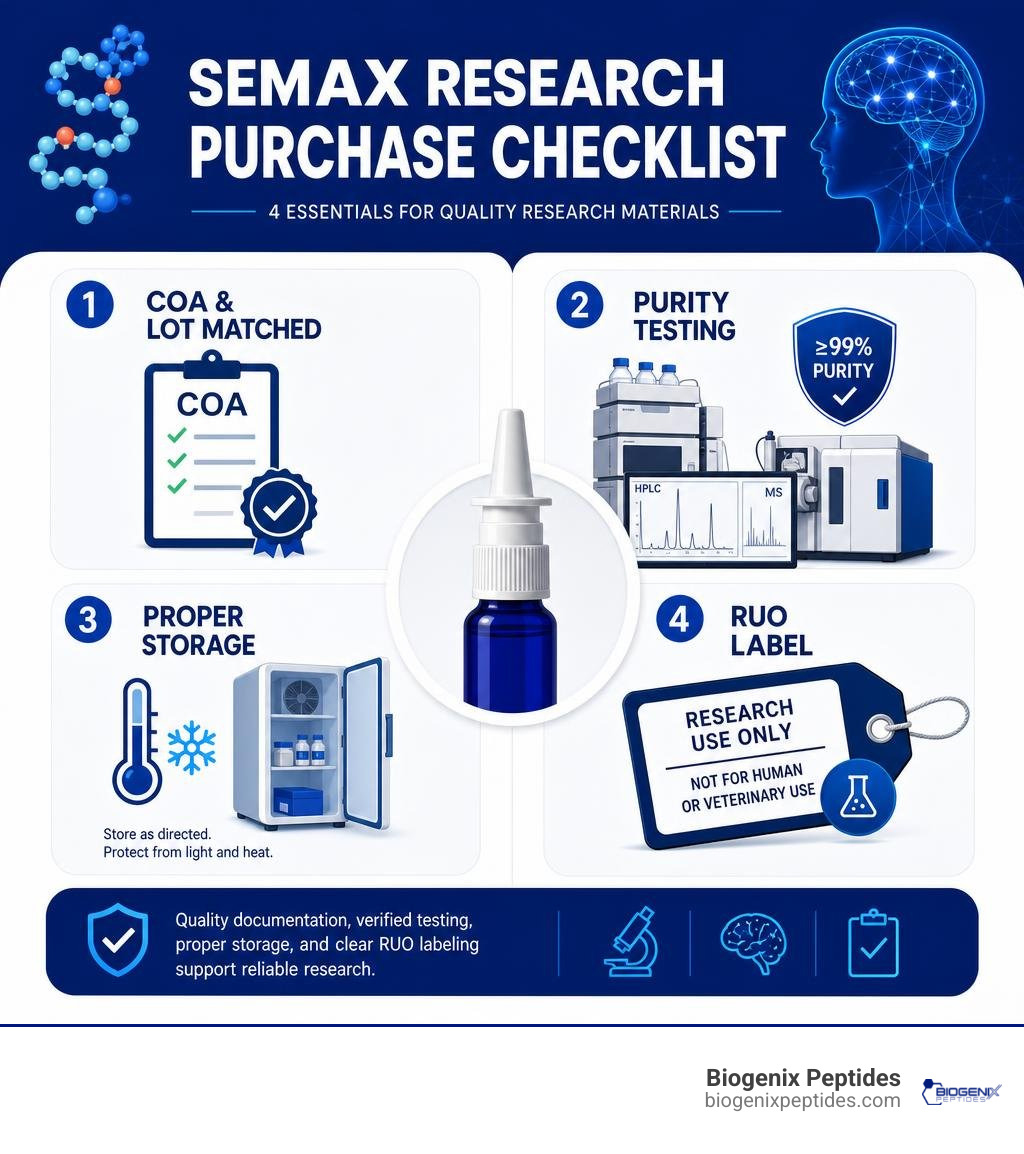
If you plan to buy Semax nasal spray for laboratory research, look for a research supplier that provides a lot-matched Certificate of Analysis, third-party HPLC and mass-spectrometry testing, clear storage instructions, and a stated purity standard of at least 99%. Products labeled research use only are not approved medicines and should never be represented or treated as products for human or veterinary consumption.
Semax is a synthetic heptapeptide based on an ACTH fragment. Researchers study it for its potential roles in neurobiology, including pathways related to cognition, stress response, and neuroprotection. Its nasal-spray format is also distinct from a lyophilized peptide: the formulation, concentration, container, and stability controls all matter when evaluating research materials.
This guide explains what separates standard Semax from NA-Semax Amidate, how to review analytical records, and why storage and regulatory context should be checked before purchasing.
I am Jay Daniel, Founder and CEO of BioGenix Peptides, with years of experience in peptide sourcing, quality-control practices, and helping research professionals assess materials when they buy Semax nasal spray. Next, we will break down the peptide itself and the research features that make Semax distinct.
What Is Semax Nasal Spray and How Does It Work in Research Models?
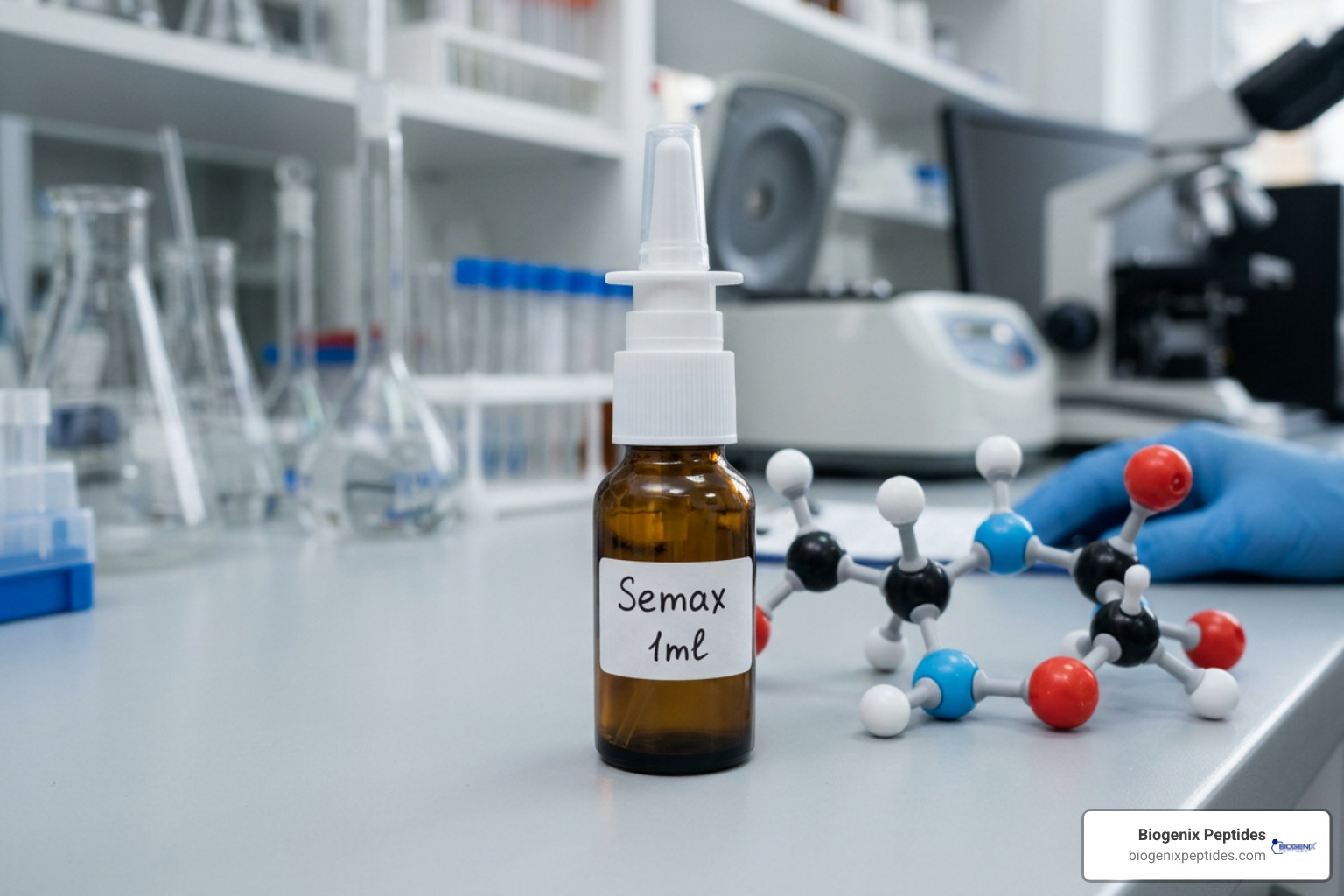
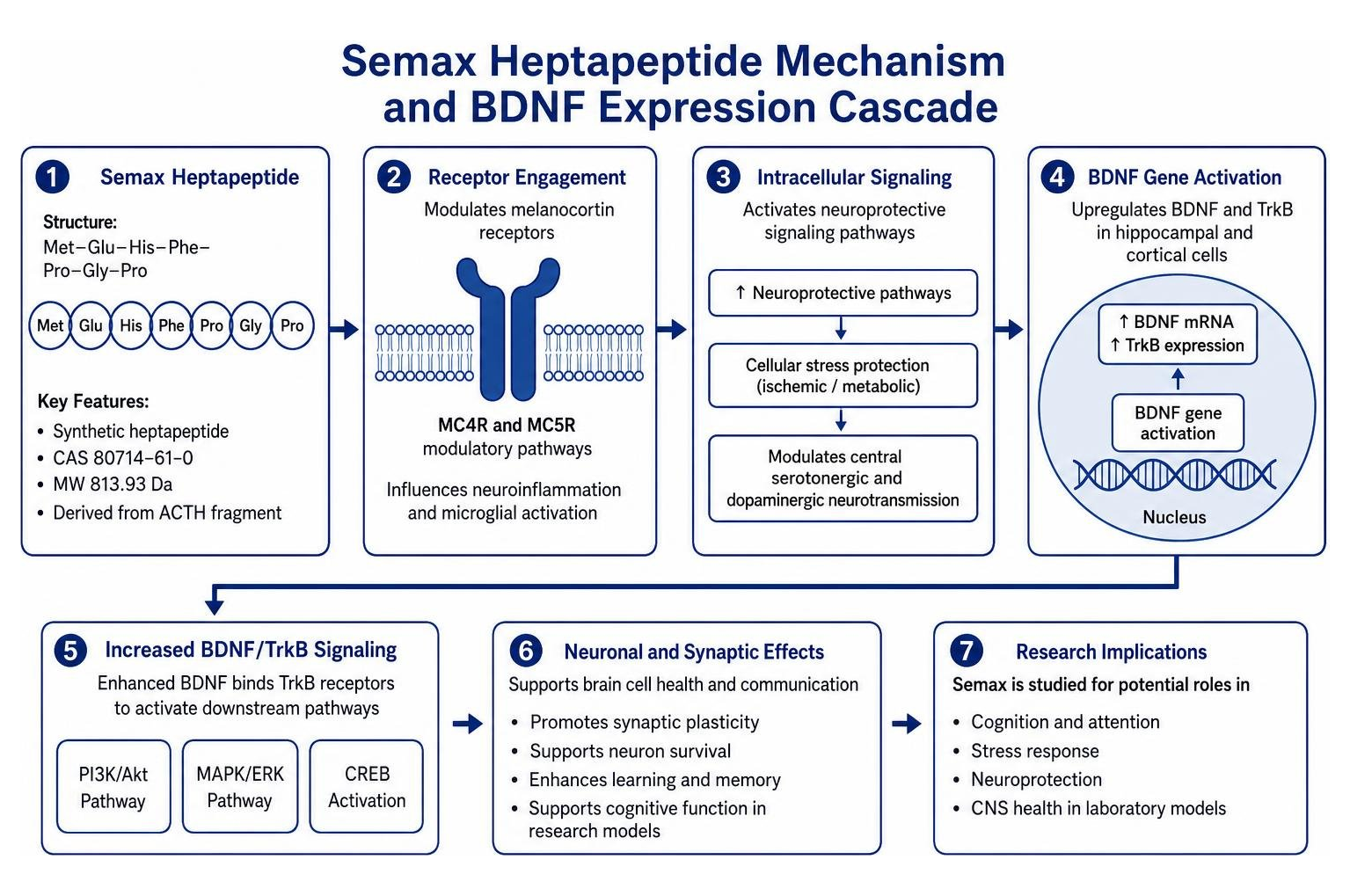
Semax is a synthetic regulatory heptapeptide that has captured the attention of neurobiology investigators worldwide. Structurally, it consists of a specific seven-amino-acid sequence: Met-Glu-His-Phe-Pro-Gly-Pro. It carries the Chemical Abstracts Service registry number CAS 80714-61-0, a molecular formula of C37H51N9O10S, and an exact molecular weight of 813.93 Da.
Originally synthesized in the 1980s and 1990s through Russian academic programs studying adrenocorticotropic hormone (ACTH) biology, the primary goal was to isolate the nootropic, attention-modulating elements of the hormone without stimulating the adrenal cortex or triggering peripheral steroidogenesis.
In preclinical laboratory settings, Semax serves as a valuable tool to study central nervous system (CNS) dynamics. Rather than binding directly to classic monoamine transporters, its primary biochemical actions involve:
- Rapid upregulation of Brain-Derived Neurotrophic Factor (BDNF) and its high-affinity receptor, TrkB, in hippocampal and cortical tissue cultures.
- Stimulation of neuroprotective signaling pathways under ischemic or metabolic cellular stress.
- Modulation of central serotonergic and dopaminergic neurotransmission without triggering systemic endocrine cascades.
- Activation of melanocortin receptor subtypes (specifically MC4R and MC5R modulatory pathways), influencing neuroinflammation and microglial activation.
Standard Semax vs. NA-Semax Amidate
As peptide chemistry techniques advanced, researchers developed modified analogues to overcome the inherent enzymatic instability of linear peptides. The two primary variants encountered in modern research protocols are Standard Semax and N-Acetyl Semax Amidate (NA-Semax Amidate).
The differences between these two synthetic molecules center on terminal protection:
- N-Terminal Acetylation (Ac-): Adding an acetyl group to the N-terminal methionine protects the peptide against aminopeptidase degradation, slowing the breakdown of the vital N-terminal region in enzymatic environments.
- C-Terminal Amidation (-NH2): Replacing the free carboxyl group at the C-terminus with an amide group protects against carboxypeptidase activity and alters the overall electrostatic charge of the peptide chain.
These chemical modifications increase the molecular weight to approximately 855 g/mol. In experimental assays, NA-Semax Amidate shows an extended half-life in biological fluids and improved resistance to cellular proteases. In standardized laboratory solutions, atomized formats typically deliver a concentration of 1 mg/mL, dispensing calibrated 100 mcg aliquots per actuation for consistent experimental protocols.
Preclinical Mechanisms and Cognitive Research Signals
A comprehensive review of the peer-reviewed literature, including extensive historical data from Eastern European neurological centers, reveals a broad profile of preclinical neurovascular activity. In animal stroke and cerebral hypoxia models, Semax administration within therapeutic research windows demonstrated marked preservation of neuronal density, attenuation of cellular edema, and suppression of inflammatory cytokines (such as IL-6 and TNF-alpha).
When examining cognitive endpoints and experimental “brain fog” models—frequently induced via neurotoxic exposure, chronic intermittent hypoxia, or neuroinflammatory challenges—the peptide’s ability to trigger neurotrophin synthesis has shown measurable benefits:
- Synaptic Plasticity: In vitro assays demonstrate increased dendritic spine density and long-term potentiation (LTP) enhancement in hippocampal slices.
- Neuroprotection Against Oxidative Stress: Downregulation of inducible nitric oxide synthase (iNOS) and reduction of lipid peroxidation products in challenged neural cultures.
- Cerebrovascular Flow Modulation: Preclinical models show positive changes in local cerebral blood flow dynamics during localized hypoperfusion.
While human clinical trials from Russia have examined the compound for ischemic stroke rehabilitation and optic nerve atrophy since the late 1990s, the compound has not completed standard FDA-supervised randomized controlled trials (RCTs) in the United States. Consequently, all observed benefits remain classified within scientific literature as preclinical signals and investigational data.
Where and How to Buy Semax Nasal Spray for Laboratory Research
Acquiring neuropeptides for institutional or private laboratory use requires a clear understanding of regulatory classifications, chain-of-custody protocols, and analytical verification standards. Sourcing through unauthorized gray-market channels presents significant risks, as research shows independent testing of random gray-market peptide batches reveals contamination and degradation rates between 20% and 60%.
When sourcing materials to buy Semax nasal spray, researchers must prioritize suppliers operating under strict analytical oversight, providing transparent lot-level data rather than generic marketing claims.
What Analytical Criteria to Check Before You Buy Semax Nasal Spray
Quality control in solid-phase peptide synthesis requires orthogonal analytical validation. When assessing a vendor or distributor, research teams should require documentation verifying the following parameters:
- High-Performance Liquid Chromatography (HPLC): Purity must meet or exceed ≥99.0%. The HPLC chromatogram must show a single sharp peak with minimal baseline drift, demonstrating the absence of truncated sequences, deletion peptides, or synthesis byproducts.
- Mass Spectrometry (ESI-MS or MALDI-TOF): Mass spectrometry must confirm the exact molecular weight (813.93 Da for standard Semax; ~855 Da for NA-Semax Amidate) to ensure the target peptide was correctly synthesized.
- Lot-Matched Certificate of Analysis (COA): Every batch must be accompanied by a dedicated COA displaying the exact batch number matching the product container, analytical testing dates, and laboratory technician sign-offs.
- Sterility and Endotoxin Testing: Because nasal mucosal membranes are vulnerable to microbial exposure, solutions must undergo testing for bioburden, bacterial endotoxins (LAL testing), and particulate contamination.
Key Regulatory Factors When You Buy Semax Nasal Spray Online
The legal status of peptide compounding and research distribution in the United States has undergone substantial development in 2026:
- FDA Category 2 Actions (April 15, 2026): The U.S. Food and Drug Administration removed Semax from the Category 2 bulk drug substances restriction list. This regulatory shift recognized the compound’s demonstrated safety profile in foreign markets, permitting licensed 503A compounding pharmacies to fulfill valid practitioner orders under state pharmacy laws.
- Pharmacy Compounding Advisory Committee (PCAC) Review: Following the July 23–24, 2026 PCAC proceedings, federal and state regulators established clearer standard operating procedures for specialized peptide formulations.
- State-Level Nuances: While federal regulations permit licensed compounding, several states maintain independent compounding restrictions or non-resident pharmacy permit standards that govern how these materials are shipped across state lines.
- Research Use Only (RUO) Distinction: For laboratories purchasing outside of a licensed compounding pharmacy, products labeled strictly as “Research Use Only” are governed under chemical distribution laws. These substances are strictly non-clinical, non-human, and restricted to in vitro or animal experimentation.
Sourcing Standards for Research-Chemical Suppliers
To evaluate research-grade suppliers versus commercial distributors, laboratories should use a systematic evaluation framework:
| Evaluation Criteria | High-Standard Research Supplier | Substandard / Gray-Market Vendor |
|---|---|---|
| Analytical Verification | Lot-specific HPLC & MS (≥99% purity) | Generic, recycled, or missing COAs |
| Formulation Transparency | Exact concentration (e.g., 1 mg/mL) | Unspecified concentrations or vague “drops” |
| Packaging Quality | Sealed, amber/opaque vials with metered pumps | Clear glass, uncalibrated droppers |
| Cold-Chain Logistics | Temperature-controlled shipping options | Standard ambient envelope shipping |
| Regulatory Compliance | Strict Research Use Only (RUO) framing | Unsubstantiated consumer-use claims |
Quality, Analytical Standards, and Proper Storage Protocols
Peptides are delicate biological polymers held together by amide bonds. Without proper handling, environmental factors can quickly degrade a high-purity research sample into inactive peptide fragments.
Handling, Reconstitution, and Methionine Oxidation Prevention
One of the primary vulnerabilities of Semax is its N-terminal methionine (Met) residue. Methionine is highly susceptible to oxidation when exposed to dissolved oxygen, ultraviolet light, or elevated temperatures, converting the residue into methionine sulfoxide and reducing the peptide’s biological activity.
To maintain compound integrity during laboratory handling:
- Solvent Selection: When reconstituting lyophilized Semax, use sterile bacteriostatic water or sterile isotonic saline (0.9% sodium chloride) specifically formulated for analytical consistency.
- Gentle Dissolution: Introduce the diluent slowly down the inside wall of the vial. Never shake or agitate the solution vigorously, as mechanical shear stress can disrupt peptide conformations. Gently swirl until the lyophilized cake is fully dissolved.
- Oxidation Mitigation: Minimize the headspace air volume in the storage container, and use amber or UV-opaque glass containers to shield the solution from light-induced free radical formation.
Temperature Guidelines and Stability Management
Peptide stability is strictly temperature-dependent:
- Lyophilized Form (Dry Powder): Store long-term at -20°C or colder in a desiccated environment protected from light and moisture. Under these conditions, the dry peptide remains stable for 24 to 36 months.
- Reconstituted Liquid Solution: Store at 2°C to 8°C (refrigerated). Reconstituted solutions should generally be used within 30 to 45 days. Avoid repeated freeze-thaw cycles, which cause structural degradation; aliquot the reconstituted volume into smaller research vessels if extended storage is required.
Comparative Analysis: Semax and Related ACTH Fragments in Preclinical Models
To properly place Semax within the broader landscape of neurochemical research, it is helpful to examine how it compares to parent fragments and other nootropic peptides.
Semax vs. ACTH(4-10)
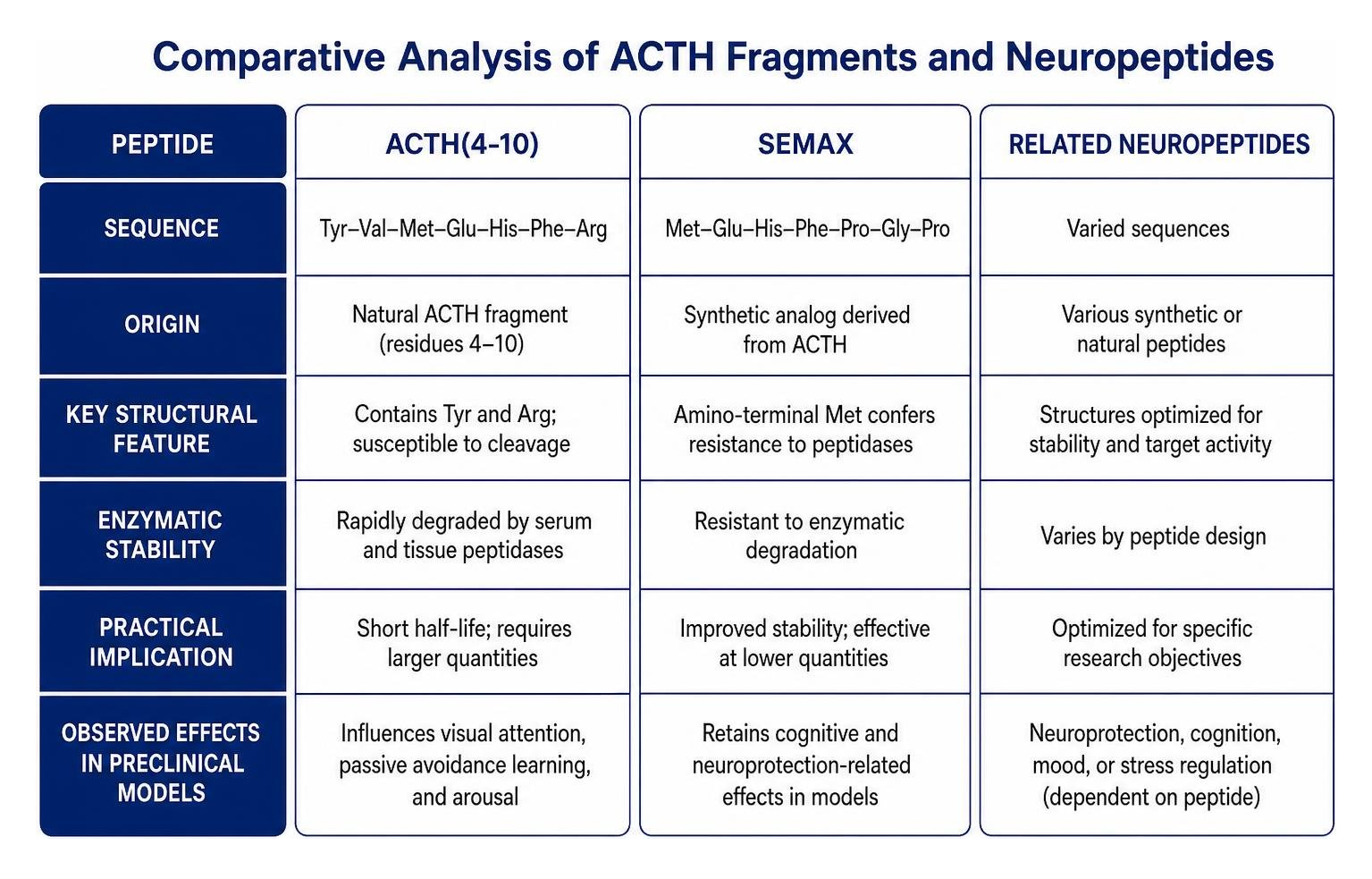
The original natural fragment studied by neurochemists was ACTH(4-10), a sequence known to influence visual attention, passive avoidance learning, and arousal in rodent models. However, natural ACTH(4-10) has a major practical limitation: enzymatic degradation.
- Enzymatic Half-Life: Native ACTH(4-10) is broken down by serum and tissue peptidases within minutes, requiring large quantities to demonstrate measurable central effects.
- The Pro-Gly-Pro Stabilization: Semax solves this limitation by extending the ACTH(4-7) core (Met-Glu-His-Phe) with a C-terminal tripeptide (Pro-Gly-Pro). This structural modification increases resistance to enzymatic cleavage, extending its biological half-life by more than an order of magnitude compared to the native sequence.
Semax vs. Endogenous Neuropeptides
When evaluated alongside other experimental peptides such as Selank or synthetic agents like Noopept, key functional distinctions emerge:
- Melanocortin Activity vs. GABAergic Signaling: Semax acts primarily through melanocortin receptors (MC4R/MC5R) and neurotrophin release (BDNF/TrkB). In contrast, peptides like Selank (derived from the immunomodulatory peptide Tuftsin) modulate the GABAA system and enkephalin degradation, showing more pronounced effects on anxiety-like behavioral models.
- Receptor Specificity: Unlike full-length ACTH(1-39), Semax lacks the steroidogenic sequence (ACTH 11-24), meaning it does not stimulate the adrenal cortex, elevate plasma cortisol levels, or cause systemic glucocorticoid side effects.
- Mechanistic Diversity: While dipeptide-derived compounds (like Noopept) target prolyl endopeptidase and acetylcholine pathways, Semax exhibits a broader neurovascular and neurotrophin-modulating profile in preclinical assays.
Frequently Asked Questions About Semax Research
Is Semax nasal spray approved for human clinical use by the FDA?
No. Semax is not approved by the U.S. FDA as a finished prescription pharmaceutical product. While it has been registered and prescribed in Russia since the 1990s for stroke rehabilitation and cognitive disorders, its status in the United States remains divided between state-licensed 503A compounding pharmacies (under physician prescription) and Research Use Only (RUO) distribution for scientific investigation.
How does Semax differ structurally from endogenous ACTH?
Endogenous adrenocorticotropic hormone (ACTH) is a 39-amino-acid peptide produced by the anterior pituitary gland. Semax contains only the first four functional amino acids of the active central fragment, ACTH(4-7), combined with a stabilizing synthetic tripeptide extension: Pro-Gly-Pro. This design prevents adrenal stimulation while optimizing neurotrophic signaling and metabolic stability.
What purity verification is standard for Semax research materials?
Standard research protocols require an analytical purity of ≥99.0% determined via reversed-phase HPLC, alongside identity validation via electrospray ionization mass spectrometry (ESI-MS). Batches should always have an accompanying, lot-matched Certificate of Analysis verifying these parameters before use in experimental workflows.
Conclusion
Understanding the structural, analytical, and biochemical profile of Semax is essential for running reliable, reproducible experiments. From the molecular stabilization provided by the Pro-Gly-Pro sequence to advanced modifications like NA-Semax Amidate, this heptapeptide remains one of the most intriguing compounds in modern neurochemical research.
When acquiring peptides for laboratory evaluation, always ensure full regulatory compliance, verify analytical purity via lot-matched third-party testing, and adhere to strict storage protocols to prevent oxidation and degradation.
To explore certified, analytically verified compounds for your laboratory, browse our complete catalog of laboratory research peptides today.