
Strong to the Bone: A Guide to Density Peptides
Why Bone Density Research Is Turning to Peptides in 2026
Disclaimer: The information provided in this article is for educational and informational purposes only. It is not intended as medical advice, diagnosis, or treatment. Products and compounds referenced are for research use only and are not approved for human or veterinary consumption. Always consult a qualified professional regarding health or medical decisions.

Peptides for bone density improvement are among the most actively researched compounds in musculoskeletal science right now — and for good reason.
Here is a quick overview of the top peptides studied for bone density, based on current research:
| Peptide | Research Focus | Key Finding |
|---|---|---|
| Collagen Peptides (SCP) | BMD in postmenopausal women | +3.0% spine, +6.7% femoral neck BMD after 12 months |
| Teriparatide (PTH 1-34) | Anabolic bone building | ~8% spine BMD increase; 65% reduction in vertebral fractures |
| Abaloparatide | Bone growth and fracture reduction | FDA-approved; promotes new bone formation |
| BPC-157 | Bone and tissue repair | Experimental; shows systemic healing effects in preclinical models |
| PEPITEM | Dual anabolic/anti-catabolic action | Stimulates osteoblasts, inhibits osteoclasts via NCAM-1 pathway |
| OGP (Osteogenic Growth Peptide) | Bone remodeling | Promotes bone formation in preclinical studies |
| IGFBP-2 Peptide (PEG-HBD-1) | Estrogen-deficient bone loss | Comparable to PTH in OVX rat models |
Bone is not a static structure. It is constantly being broken down by cells called osteoclasts and rebuilt by cells called osteoblasts. When this balance tips toward breakdown — as it often does after menopause or with age — bone mineral density (BMD) falls, fracture risk rises, and options become limited.
The scale of the problem is significant. Research shows that every third woman and one in five men over age 50 will sustain an osteoporotic fracture in their lifetime. At the same time, widely used treatments like bisphosphonates face a real adherence problem — studies show up to 75% of patients discontinue within five years due to side effects or inconvenience.
That gap in long-term solutions is exactly where peptide research has started to gain traction.
Peptides — short chains of amino acids, typically fewer than 50 units long — act as signaling molecules in the body. Unlike longer proteins, they can bind directly to receptors on bone-forming cells, triggering pathways that stimulate collagen synthesis, osteoblast activation, and calcium absorption. This is fundamentally different from simply taking a protein supplement.
Research published in peer-reviewed journals, including a randomized controlled trial showing measurable BMD gains after 12 months of specific collagen peptide supplementation, has moved this area well beyond theoretical interest.
I’m Jay Daniel, Founder and CEO of BioGenix Peptides, and my work in peptide science — including close study of emerging research on peptides for bone density improvement — has given me a front-row seat to how rapidly this field is evolving. In this guide, I’ll walk you through what the current research actually says, which compounds are showing the most promise, and what the science tells us about how they work.
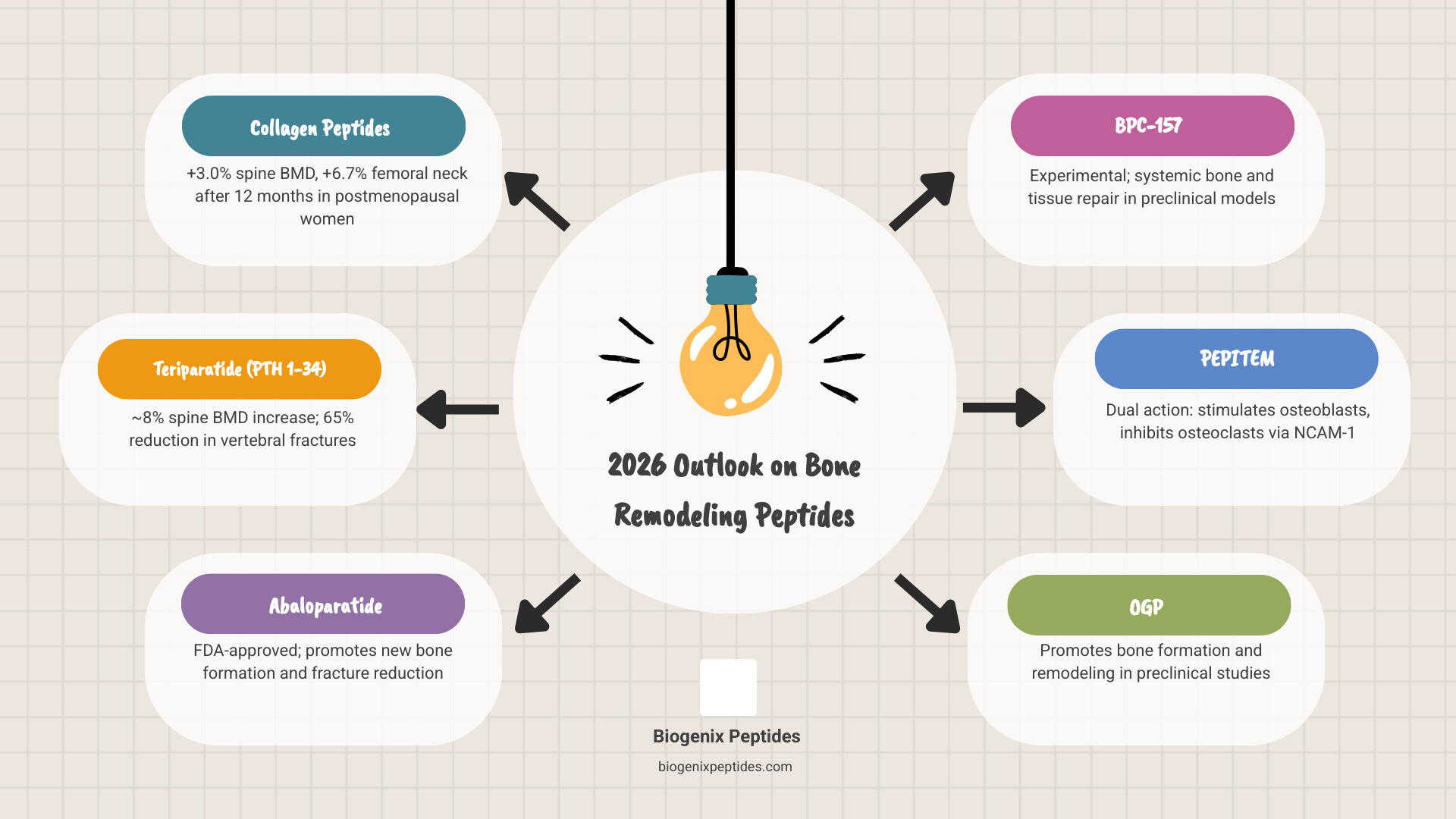
Peptides for bone density improvement word guide:
The Science of Peptides for Bone Density Improvement
To understand how peptides for bone density improvement function, we have to look at the microscopic “construction site” inside our skeletal system. Bone is a living tissue governed by two primary cell types: osteoblasts (the builders) and osteoclasts (the demolition crew).
In a healthy state, these cells work in harmony to replace about 10% of the human skeleton every year. However, conditions like osteoporosis disrupt this balance, leading to a net loss of Bone Mineral Density (BMD). Research into peptides focuses on shifting this balance back toward anabolism—or bone building.
A groundbreaking area of study involves PEPITEM and its tripeptide pharmacophores. PEPITEM is a naturally occurring 14-amino acid peptide that has shown a unique “dual action” in preclinical models. Unlike many existing options that only stop bone loss, PEPITEM appears to actively stimulate osteoblasts while simultaneously inhibiting osteoclast activity. This is achieved through the NCAM-1 receptor pathway, which triggers the translocation of β-catenin—a key signal for bone cell growth.

Mechanisms of Action
Peptides don’t just provide the “bricks” for bone; they act as the “foremen” giving orders. One of the primary pathways identified in research is the ERK/MAPK pathway. When specific peptides bind to receptors on the surface of bone cells, they trigger a cascade of internal signals that upregulate the synthesis of Type I collagen—the primary organic component of the bone matrix.
Furthermore, Research on IGFBP-2 and bone mass has uncovered fascinating insights into how peptides interact with growth factors. A 13-amino acid peptide derived from the heparin-binding domain of IGFBP-2 has been shown to bind to the RPTPβ receptor. This action inactivates PTEN, an enzyme that usually “brakes” bone growth, enhancing IGF-I signaling. In ovariectomized (OVX) rat models—which mimic postmenopausal bone loss—this peptide increased femoral BMD by up to 6.2%, a result comparable to established parathyroid hormone treatments.
Bone Mineral Density Statistics
The efficacy of peptides for bone density improvement is often measured via T-scores, which compare an individual’s BMD to that of a healthy young adult. The data from recent 12-month outcomes is compelling:
- Spine BMD: Specific collagen peptides have shown a significant increase in spine T-scores (+0.1 ± 0.26) compared to a decrease in placebo groups (-0.03 ± 0.18).
- Femoral Neck: In postmenopausal subjects, research indicates a 6.7% increase in femoral neck BMD after one year of consistent peptide application.
- Fracture Risk: Clinical trials for parathyroid-based peptides like Teriparatide have demonstrated a 65% reduction in vertebral fractures and a 35% reduction in non-vertebral fractures.
- Bone Markers: Studies often see a rise in P1NP (a marker of bone formation) and a stabilization or decrease in CTX-1 (a marker of bone resorption), indicating a healthy anabolic environment.
Comparative Analysis of Bone-Building Peptides
When researching peptides for bone density improvement, it is helpful to categorize them based on their primary function: anabolic (building new bone) or antiresorptive (preventing bone breakdown). Some emerging research, such as Peptides Arthritis Research, suggests that some peptides may even offer protective benefits for the surrounding joint tissue.
| Feature | Collagen Peptides (SCP) | Teriparatide (PTH 1-34) | BPC-157 (Experimental) |
|---|---|---|---|
| Mechanism | Signaling/Matrix Support | Anabolic Window (PTH) | Angiogenesis/Tissue Repair |
| Primary Target | Osteoblasts/Collagen | Osteoblasts | Multi-tissue (Bone/Tendon) |
| Duration of Study | 12+ Months | Up to 24 Months | Short-term Preclinical |
| BMD Impact | Moderate/Consistent | High/Rapid | Under Investigation |
The concept of the “anabolic window” is particularly important in peptide research. For instance, with parathyroid-related peptides, intermittent exposure stimulates osteoblasts more than osteoclasts, creating a window where bone formation significantly exceeds resorption.
Collagen Peptides for Bone Density Improvement
While many people think of collagen as a beauty supplement for skin, specific bioactive collagen peptides are a major focus in bone health. A notable UCLA Health study on collagen highlights how these short-chain molecules are absorbed intact and act as signaling ligands.
In a randomized, double-blind, placebo-controlled trial involving 131 postmenopausal women, a daily 5g protocol of specific collagen peptides led to a 3% increase in BMD in the spine and a 6.7% increase in the femoral neck over 12 months. This research suggests that collagen peptides may be a highly compliant alternative for those looking to support bone health through nutritional signaling.
FDA-Approved Research Analogs
Several peptides have already transitioned from the lab to clinical use for high-risk patients. These include:
- Teriparatide (PTH 1-34): An anabolic agent that consists of the first 34 amino acids of the parathyroid hormone. It is known for its potent ability to build new bone on trabecular and cortical surfaces.
- Abaloparatide: Similar to Teriparatide, it targets the parathyroid hormone receptor but is designed to provide a more targeted anabolic response with potentially less risk of hypercalcemia.
- Calcitonin: A peptide that helps regulate calcium levels and inhibits osteoclast activity, often studied for its use in Paget’s disease and postmenopausal osteoporosis.
Emerging Peptides for Bone Density Improvement
Beyond the well-known analogs, several “next-generation” compounds are being explored for their potential in Tissue Repair Regeneration Peptides research.
- BPC-157: While primarily known for gut and tendon repair, preclinical research shows BPC-157 may accelerate the healing of bone fractures by promoting angiogenesis (the formation of new blood vessels) within the bone matrix.
- Osteogenic Growth Peptide (OGP): A naturally occurring 14-amino acid peptide found in high concentrations in regenerating bone marrow. It is studied for its ability to stimulate osteoblast proliferation.
- CGRP (Calcitonin Gene-Related Peptide): Found in sensory nerves within the bone, CGRP levels naturally spike during fracture healing, suggesting it plays a critical role in the inflammatory phase of bone repair.
Synergistic Effects and Research Protocols
One of the most exciting findings in recent years is that peptides for bone density improvement do not work in a vacuum. Their effects appear to be significantly amplified when combined with specific co-factors.
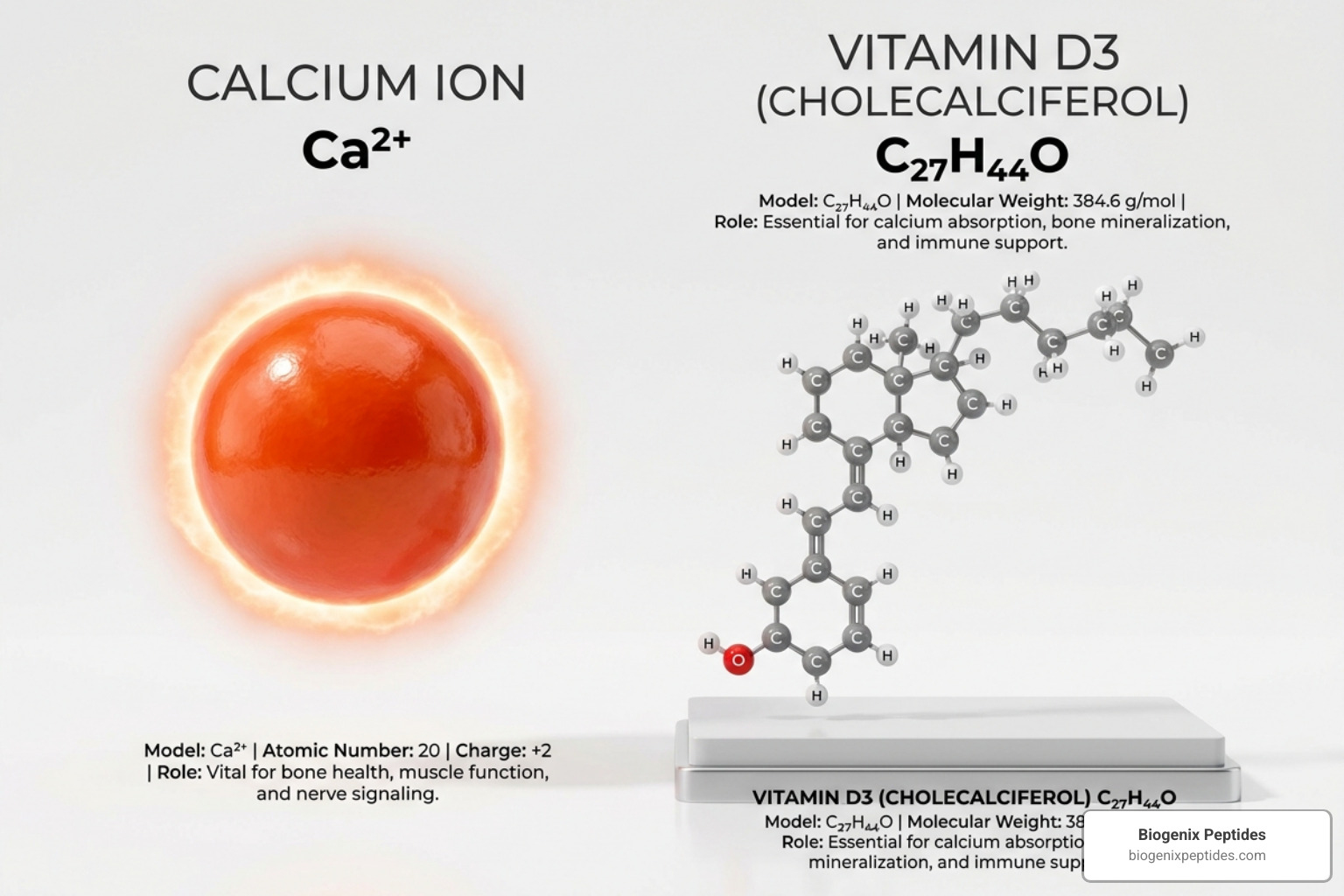
A meta-analysis of 20 studies revealed that when collagen peptides are combined with calcium and vitamin D, the BMD gains show a higher effect size (SMD 0.40–0.56) with remarkably low heterogeneity. This suggests a true synergistic effect where the peptides provide the signal, and the minerals provide the raw materials.
Furthermore, research published in Specific Collagen Peptides and BMD markers suggests that resistance training also acts synergistically with peptide protocols. In elderly subjects, the combination of peptides and strength training not only improved BMD but also enhanced muscle performance (SMD 0.60), which indirectly protects bones by reducing the risk of falls.
Administration Methods in Research
In research settings, the method of delivery is chosen based on the peptide’s stability and target.
- Subcutaneous Application: Often used for larger peptides like Teriparatide or BPC-157 to ensure high systemic bioavailability.
- Nasal Sprays: Studied for peptides like Calcitonin, allowing for rapid absorption through the nasal mucosa.
- Oral Bioavailability: While many peptides are broken down in the gut, “specific” bioactive collagen peptides are designed to survive digestion and enter the bloodstream as di-peptides or tri-peptides.
- Bioregulators: Research into Cartalax 20Mg research explores the use of very short, three-amino acid peptides that may have unique oral absorption characteristics and target specific tissue types like cartilage and bone.
Optimization Factors
To maximize the outcomes of peptide research, scientists often look at the following “optimization triad”:
- Mineral Support: Using calcium citrate (often better absorbed than carbonate) and Vitamin D3 to ensure the metabolic pathways activated by the peptides have sufficient resources.
- Protocol Duration: Bone remodeling is a slow process. Most significant research findings, such as those in the 2025 Frontiers in Nutrition meta-analysis, emphasize that protocols should last at least 6 to 12 months to see measurable changes in BMD.
- Hormonal Context: Since estrogen plays a vital role in bone health, research often focuses on postmenopausal models where the “estrogen-protective” effect has been lost, making the anabolic signal of the peptide even more critical.
Frequently Asked Questions about Bone Peptides
How do peptides differ from standard collagen supplements?
The difference lies in “bioactivity” and chain length. Standard collagen or gelatin is a large protein that the body must break down into individual amino acids. Once broken down, those amino acids are just “fuel.” In contrast, the specific peptides for bone density improvement used in research are already hydrolyzed into very short chains. These chains act as signaling molecules that “lock” into specific receptors on bone cells, instructing them to build matrix. You can find more about these distinctions in our Healing Recovery Category.
What are the primary safety considerations in peptide research?
While generally well-tolerated in clinical trials, research subjects are monitored for several factors:
- Hypercalcemia: Especially with parathyroid-related peptides, there is a risk of too much calcium entering the blood.
- Site Sensitivity: Subcutaneous applications can sometimes cause mild redness or irritation at the application site.
- Theoretical Risks: In high-concentration rat studies, long-term use of certain anabolic peptides showed a theoretical risk of osteosarcoma, which is why clinical research in humans is currently limited to a 2-year lifetime duration for those specific analogs.
Who are the primary subjects in bone peptide studies?
Most research focuses on three key groups:
- Postmenopausal Models: Due to the rapid decline in BMD following the loss of estrogen.
- Athletes: Research explores how peptides might speed up the healing of stress fractures or “non-union” breaks.
- Sarcopenia Research: Since bone and muscle health are linked, many studies look at how peptides can improve “musculoskeletal health” as a whole, helping subjects maintain strength and balance into old age.
Conclusion
The landscape of peptides for bone density improvement has shifted from experimental theory to evidence-based science. From the 12-month BMD gains seen with specific collagen peptides to the potent anabolic effects of PEPITEM and parathyroid analogs, these compounds offer a targeted way to influence the bone remodeling cycle.
As we move through 2026, the focus remains on refining these protocols and understanding the long-term synergistic effects of combining peptides with nutrition and exercise. For researchers and those interested in the cutting edge of musculoskeletal health, the future of bone regeneration is undoubtedly tied to the signaling power of peptides.
If you are looking to advance your own work in this field, we invite you to Explore the full range of research peptides and join the community of scientists pushing the boundaries of what is possible in bone health.