SLU-PP-332: A Deep Dive Into One of the Most Promising New Metabolic Research Compounds
SLU-PP-332: In-Depth Guide to Oral and Lyophilized SLU-PP-332 Metabolic Research
Understanding its mechanisms, structural properties, and the key differences between oral and lyophilized SLU-PP-332.
Research Use Only: SLU-PP-332 is not a drug, food, or cosmetic. It is not approved for human use or consumption. All information below is provided for educational and laboratory research discussion only.
Introduction
SLU-PP-332 has rapidly emerged as one of the most intriguing metabolic research compounds in circulation among modern laboratories. Unlike classical linear peptides or GLP-1 agonists, SLU-PP-332 is a peptidomimetic small molecule, engineered to interact with cellular pathways typically activated during exercise, caloric deficit, mitochondrial stress, and increased ATP turnover.
Preclinical and mechanistic studies suggest that SLU-PP-332 may influence several key metabolic and longevity-related pathways, including:
- AMPK (AMP-activated protein kinase)
- SIRT1 / SIRT3 (sirtuin family proteins involved in stress resistance and metabolic control)
- PGC-1α (master regulator of mitochondrial biogenesis)
- UCP-1 and other thermogenic genes
- Multiple fatty-acid oxidation regulators (e.g., CPT1 and ACC modulation)
This multifaceted interaction profile places SLU-PP-332 in a unique category: less a simple “fat-loss peptide” and more a systemic metabolic activator or “exercise-mimetic” research tool.
1. Structural Insight: Why SLU-PP-332 Is More Stable Than Classical Peptides
Though frequently grouped with peptides for convenience, SLU-PP-332 is structurally distinct. It is best described as a synthetically engineered peptidomimetic, meaning it is designed to mimic peptide-like biological interactions while solving key limitations of traditional peptides.
Classical peptides (such as BPC-157, TB-500, or epithalon) are made of simple amino-acid chains that:
- Are rapidly broken down by digestive enzymes when taken orally
- Have limited stability in solution or at room temperature
- Often require cold-chain handling and careful storage
SLU-PP-332 incorporates modified bonds, protected side chains, and non-classical structural elements that:
- Increase resistance to enzymatic degradation
- Enhance stability in a wider range of pH and temperature conditions
- Support meaningful systemic uptake in oral formulations
- Allow extended shelf life in properly lyophilized form
For researchers, this stability translates into more consistent absorption profiles, better batch-to-batch reproducibility, and greater flexibility in designing long-term metabolic studies.
2. Mechanistic Overview of SLU-PP-332
SLU-PP-332 is primarily of interest because of its apparent ability to activate pathways associated with exercise, mitochondrial optimization, and metabolic flexibility. Below is a more detailed breakdown of key mechanistic themes.
2.1 AMPK Activation: The Core Metabolic Switch
AMPK is often referred to as the cell’s “fuel gauge.” When activated, it triggers a shift away from energy storage and toward energy production and efficiency. AMPK activation is typically associated with:
- Increased fatty-acid oxidation (fat burning)
- Improved glucose uptake into cells
- Reduced lipogenesis (fat creation)
- Enhanced mitochondrial ATP efficiency
SLU-PP-332 appears to stimulate AMPK in a way that resembles states like:
- Intense or chronic exercise
- Caloric restriction or fasting
- Certain mitochondrial stressors (e.g., cold exposure)
This AMPK-centric activity is a key reason SLU-PP-332 is discussed as an exercise-mimetic research compound.
2.2 PGC-1α and Mitochondrial Biogenesis
PGC-1α is widely considered the “master controller” of mitochondrial biogenesis. Upregulation of PGC-1α can lead to:
- Increased number and function of mitochondria
- Higher baseline energy expenditure
- Improved metabolic efficiency and endurance capacity in research models
By promoting pathways associated with PGC-1α, SLU-PP-332 may help shift cells toward a more oxidative, high-capacity energy state, which is relevant in both metabolic and longevity-focused research.
2.3 UCP-1 Activation and Thermogenesis
UCP-1 (uncoupling protein 1) is a hallmark of metabolically active brown adipose tissue. It enables cells to dissipate energy as heat—known as non-shivering thermogenesis.
Early research suggests that SLU-PP-332 may:
- Increase expression of UCP-1 and related thermogenic markers
- Enhance basal metabolic rate in certain research models
- Support “wasting” of excess energy as heat rather than storing it as fat
2.4 Fatty-Acid Oxidation Pathways
SLU-PP-332’s downstream effects on lipid metabolism appear to overlap with:
- CPT1 activation, which facilitates fatty-acid transport into mitochondria
- ACC (acetyl-CoA carboxylase) modulation, leading to reduced malonyl-CoA and less inhibition of fat transport
Together, these mechanisms help shift cells into a more fat-fueled metabolic preference, increasing reliance on stored lipids as an energy source in appropriate experimental conditions.
2.5 Cellular Stress and Longevity-Relevant Signaling
Because SLU-PP-332 appears to influence AMPK, sirtuins, PGC-1α, and mitochondrial efficiency, it is also of interest in broader “healthspan” research models. These pathways are frequently discussed in the context of:
- Oxidative stress tolerance
- Metabolic flexibility
- Cellular stress adaptation
- Energy balance and resilience over time

3. Oral vs. Lyophilized SLU-PP-332: A Technical Comparison
One of the most practical advantages of SLU-PP-332 is that it can be offered in both oral (encapsulated) and lyophilized (freeze-dried powder) formats. Each format supports different types of research design.
3.1 Oral SLU-PP-332 (Encapsulated)
The oral form of SLU-PP-332 is formulated to leverage its inherent stability and enzymatic resistance. Encapsulated versions may incorporate:
- Protective excipients and carriers
- pH buffering systems
- Microencapsulation or similar delivery strategies
These features are intended to preserve compound integrity through the gastrointestinal tract and support systemic uptake in research models.
Oral SLU-PP-332 is typically used in studies that focus on:
- Chronic metabolic modulation
- Long-term energy-expenditure or body-composition models
- Appetite-independent weight-regulation research
- Endurance and mitochondrial efficiency over time
3.2 Lyophilized SLU-PP-332 (Freeze-Dried Powder)
The lyophilized format is a high-purity, freeze-dried powder that offers maximum stability and experimental control. When stored correctly, lyophilized SLU-PP-332:
- Shows excellent shelf stability
- Resists oxidation and degradation
- Can be precisely reconstituted to custom concentrations
Researchers often prefer lyophilized SLU-PP-332 for:
- Acute metabolic-response studies
- Pharmacokinetic and dose-response mapping
- Tissue-level mechanistic work (e.g., mitochondrial assays)
- Direct comparison of different concentrations and exposure windows
As with other lyophilized research compounds, reconstitution methods (e.g., sterile or bacteriostatic diluent) depend on the specific design of the research model.
4. SLU-PP-332 vs. GLP-1 Agonists (Semaglutide, Tirzepatide, Retatrutide)
SLU-PP-332 is frequently mentioned in the same conversations as GLP-1 agonists, but the mechanisms are fundamentally different.
| Mechanism / Effect | SLU-PP-332 | Typical GLP-1 Agonists |
|---|---|---|
| Primary mode of action | Exercise-mimetic metabolic activation | Appetite and insulin modulation |
| Appetite suppression | Minimal / indirect | Strong |
| Metabolic rate / energy expenditure | Strong focus | Limited direct effect |
| Thermogenesis / UCP-1 activity | Prominent research interest | Not a major target |
| Mitochondrial biogenesis | Key mechanistic pathway | Not primary |
| Insulin signaling | Mild, secondary | Primary |
In simple terms, GLP-1 agonists primarily help research subjects eat less in experimental models, while SLU-PP-332 is studied for how it may help cells burn more energy and improve metabolic efficiency. The two categories can be complementary in research but should not be conflated.
5. SLU-PP-332 in Layman’s Terms
For non-specialist readers, SLU-PP-332 can be thought of as a compound that researchers use to explore what happens when cells behave as if they are in a mild, sustained “exercise mode.”
In metabolic research models, SLU-PP-332 is investigated for how it may:
- Encourage cells to burn more fat as fuel
- Support the creation of more and better-functioning mitochondria
- Boost thermogenesis and energy output
- Promote energy efficiency without focusing on appetite suppression
The oral form is designed for convenient, stable, longer-term metabolic studies, while the lyophilized form is best for precision dosing and tightly controlled experimental conditions.
6. Why Researchers Are Paying Attention to SLU-PP-332
SLU-PP-332 stands out because it merges several highly desirable features into a single research tool:
- Exercise-mimetic signaling: Activation of AMPK and PGC-1α pathways
- Thermogenesis: Interest around UCP-1 and brown-fat metabolism
- Fat-oxidation support: Shifting metabolism toward using stored lipids
- Mitochondrial focus: Biogenesis and efficiency at the cellular power-plant level
- Dual-format flexibility: Oral SLU-PP-332 and lyophilized SLU-PP-332 for different study designs
- Enhanced stability: More robust than many traditional peptides
Few modern metabolic research compounds touch so many energy- and longevity-related pathways simultaneously, which explains the rapid growth of interest in SLU-PP-332 among laboratories and research institutions.
7. SLU-PP-332 FAQ (For Research Context)
What is SLU-PP-332 used for in research?
SLU-PP-332 is investigated in models exploring metabolic rate, mitochondrial function, fat oxidation, thermogenesis, and exercise-mimetic signaling. It is not approved to diagnose, treat, cure, or prevent any disease and is intended solely for controlled research use.
Is SLU-PP-332 a peptide?
SLU-PP-332 is more accurately described as a peptidomimetic small molecule. It interacts with some of the same pathways that classical peptides do, but its structure is engineered for higher stability and improved suitability for oral dosing in research models.
How do oral and lyophilized SLU-PP-332 differ for research design?
Oral SLU-PP-332 is best suited for long-term, systemic metabolic investigations, while lyophilized SLU-PP-332 offers precise control over concentration and is ideal for dose-response and acute mechanistic work.
8. Regulatory & Safety Disclaimer
All information above is intended for scientific, educational, and research-planning purposes only. SLU-PP-332 is supplied strictly as a research chemical. It is not a medication, supplement, or food product, and it is not approved for human use, injection, ingestion, or any other form of clinical application.
Researchers are responsible for ensuring that all local laws, regulations, and institutional guidelines are followed in the ordering, storage, handling, and experimental use of SLU-PP-332 and any related compounds.
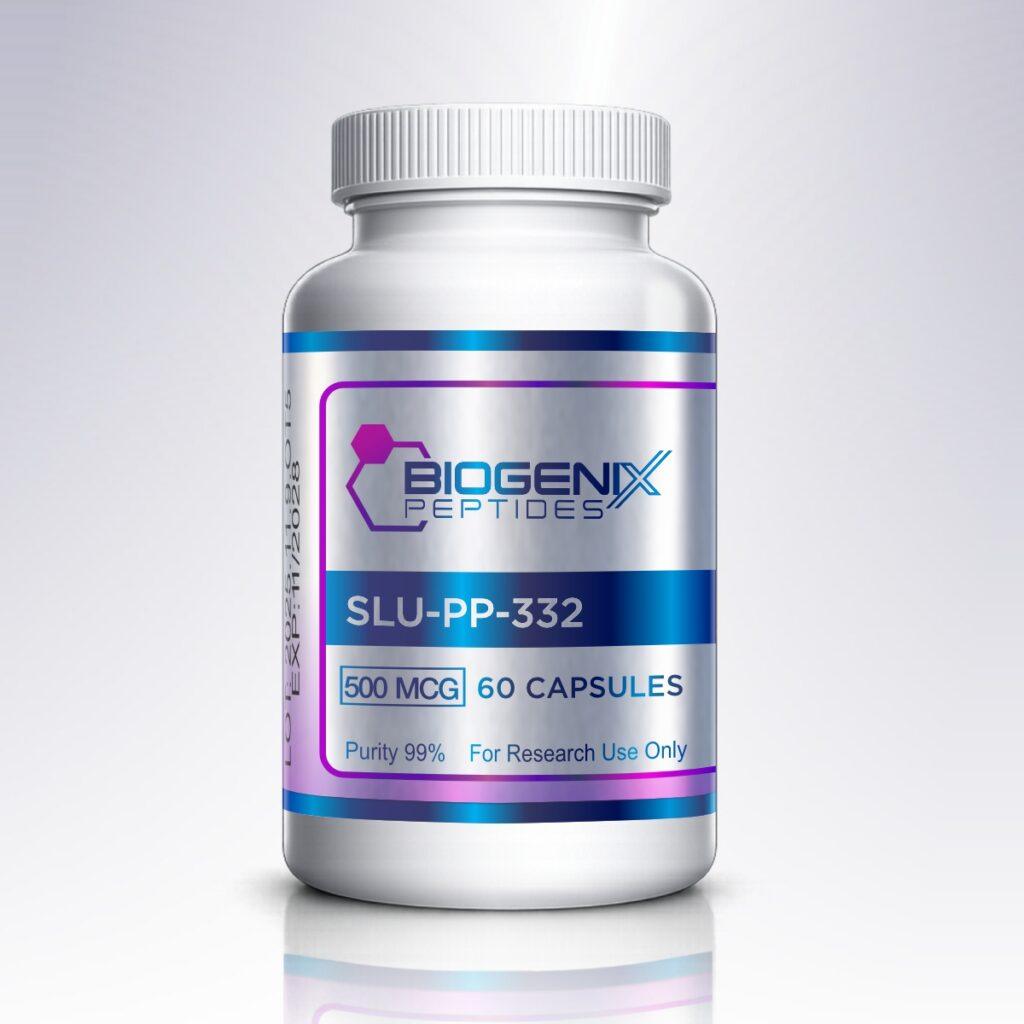
SLU-PP-332 500mcg x 60 Capsules
SLU-PP-332 is an experimental small-molecule peptide investigated for its ability to influence metabolic pathways tied to cellular energy production and healthy aging. Early research suggests activation of exercise-mimetic signaling via estrogen-related receptor (ERR) pathways, which regulate mitochondrial biogenesis and fatty-acid oxidation. As mitochondria serve as the cell’s primary energy generators, their decline is strongly associated with aging and metabolic dysregulation.
In preclinical studies, SLU-PP-332 has been shown to support mitochondrial resilience, enhance oxidative metabolism, improve energy expenditure, and promote overall metabolic efficiency. Research also indicates potential activity in modulating oxidative stress—a major driver of cellular aging. By influencing antioxidant pathways, SLU-PP-332 may help reduce reactive oxygen species–related damage and support cellular stability under metabolic strain.
Although these findings are encouraging, SLU-PP-332 remains an investigational compound with mechanisms, efficacy, and safety still under active study, and no human clinical trials completed to date.
In Stock
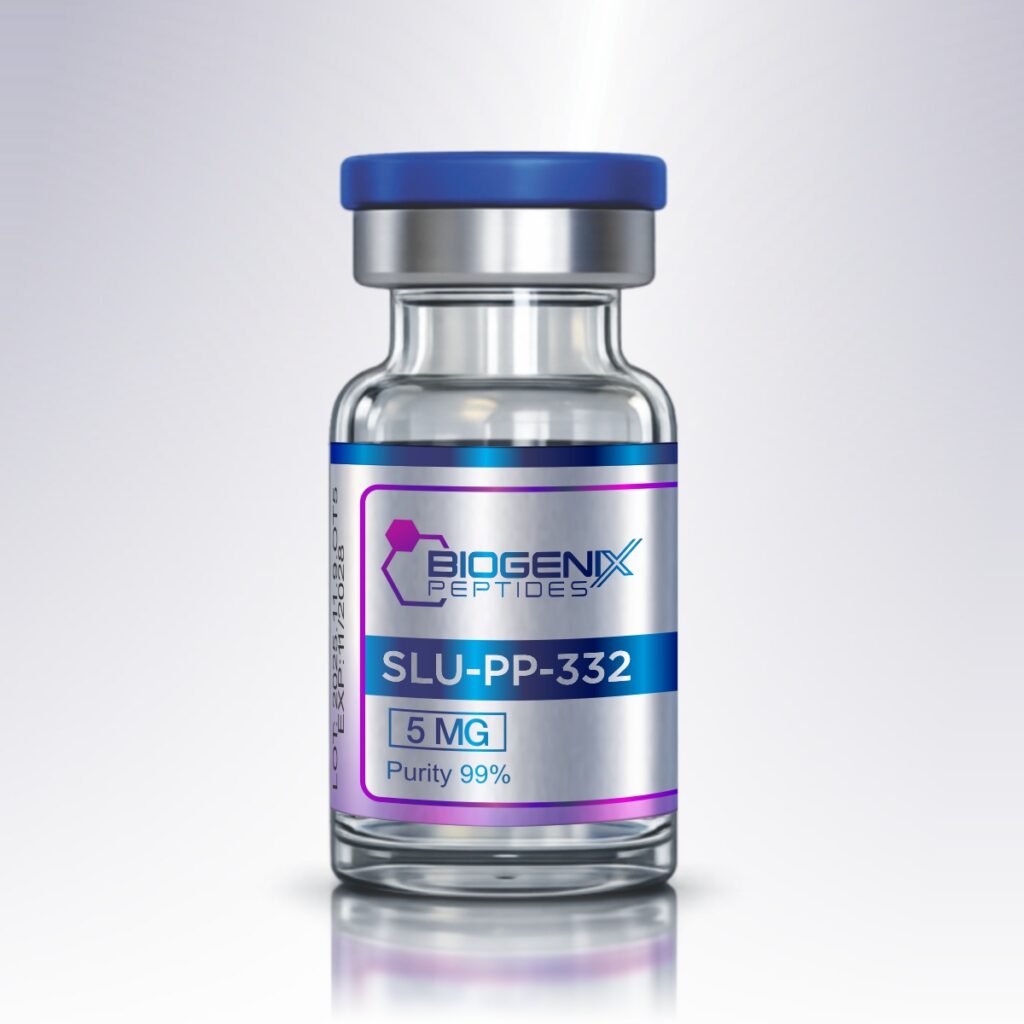
SLU-PP-332 5mg
SLU-PP-332 is an experimental small-molecule peptide investigated for its ability to influence metabolic pathways tied to cellular energy production and healthy aging. Early research suggests activation of exercise-mimetic signaling via estrogen-related receptor (ERR) pathways, which regulate mitochondrial biogenesis and fatty-acid oxidation. As mitochondria serve as the cell’s primary energy generators, their decline is strongly associated with aging and metabolic dysregulation.
In preclinical studies, SLU-PP-332 has been shown to support mitochondrial resilience, enhance oxidative metabolism, improve energy expenditure, and promote overall metabolic efficiency. Research also indicates potential activity in modulating oxidative stress—a major driver of cellular aging. By influencing antioxidant pathways, SLU-PP-332 may help reduce reactive oxygen species–related damage and support cellular stability under metabolic strain.
Although these findings are encouraging, SLU-PP-332 remains an investigational compound with mechanisms, efficacy, and safety still under active study, and no human clinical trials completed to date.
In Stock