Peptides That Influence Memory Reconsolidation:
The New Frontier of Cognitive Enhancement
For research and educational discussion only. Not medical advice. Not for human use.
Memory is not a static archive stored in the brain — it is a dynamic process. Every time a memory is retrieved, the brain briefly “reopens” it before storing it again. This process is called memory reconsolidation, and it is one of the most cutting-edge frontiers in cognitive neuroscience.
Recent research shows that certain peptides may influence how the brain edits, strengthens, or updates memories during this reconsolidation window. This opens theoretical avenues for studying learning speed, emotional memory attenuation, trauma research, and long-term neuroplasticity.
What Is Memory Reconsolidation?
When a memory is recalled, it becomes temporarily malleable — almost like reopening a computer file for editing. For a few hours, the brain can:
- Enhance the memory
- Weaken it
- Update it with new information
This is why reconsolidation is being explored in fields like PTSD research, addiction memory extinction, and performance learning.
Why Peptides Matter in This Field
Certain neuroactive peptides appear to interact with the pathways that govern:
- BDNF expression (critical for neuroplasticity)
- NMDA receptor signaling (memory encoding)
- Mitochondrial protection in neurons
- Catecholaminergic balance (focus, motivation)
These pathways are heavily involved in reconsolidation windows — making peptides uniquely positioned as research tools for studying memory dynamics.
Key Peptides Being Researched
1. Semax — The BDNF-Boosting Cognitive Peptide
Semax (a synthetic ACTH(4-10) analogue) is known for significantly increasing BDNF and modulating monoamine levels. Both mechanisms are central to synaptic remodeling — the biological foundation of reconsolidation.
Research Interest:
- Accelerated learning adaptation
- Improved reconsolidation during recall-based learning
- Potential modulation of emotional memory intensity
2. Pinealon — The Tripeptide Linked to Neuronal DNA Protection
Pinealon is being explored for its effects on neuronal protection, mitochondrial stability, and epigenetic modulation. Because reconsolidation demands metabolic energy and stable neuronal signaling, Pinealon is uniquely positioned for research interest in:
- Long-term memory stability
- Age-related memory decline models
- Enhancement of reconsolidation “re-storage” quality
3. Cerebrolysin Fragments — The Neurotrophic Peptide Mixture
Cerebrolysin is known for its neurotrophic-like effects, containing fragments that mimic nerve growth factor (NGF) and BDNF pathways. These pathways play a foundational role in:
- Synaptic modification
- Memory stabilization after recall
- Neurogenesis in hippocampal regions
Research suggests that neurotrophic peptides may help maintain healthier synaptic landscapes that support reconsolidation over time.
4. Dihexa Analogs — Theoretical Ultra-Potent HGF/MET Modulators
Dihexa and related analogs are purely theoretical research discussions in the peptide community. They are known for extraordinary affinity for HGF/MET signaling, a pathway deeply embedded in synaptic plasticity.
Theoretical interest includes:
- Strengthening memory traces during recall
- Enhancing long-term synaptic rewiring
- Rapid reconsolidation-based skill acquisition
While not available commercially and not for human use, Dihexa analog discussions remain central to the scientific future of reconsolidation research.
How Memory Reconsolidation Research May Shape the Future
The idea that memories can be edited — or even updated — has profound implications. Peptide-based research may one day help illuminate how to:
- Reprocess traumatic memories
- Enhance learning in high-performance fields
- Improve memory retention in aging research models
- Modify emotional intensity attached to certain memories
Reconsolidation research is still in its infancy, but peptides provide an exciting set of tools to explore these mechanisms at a molecular level.
Layman’s Summary
Every time you “remember” something, your brain temporarily unlocks the memory. During this time, the memory can be strengthened, weakened, or updated. Certain peptides — like Semax, Pinealon, and others — appear to influence the brain pathways that control this process. The result? A potential future where memory enhancement and emotional memory research becomes far more precise.

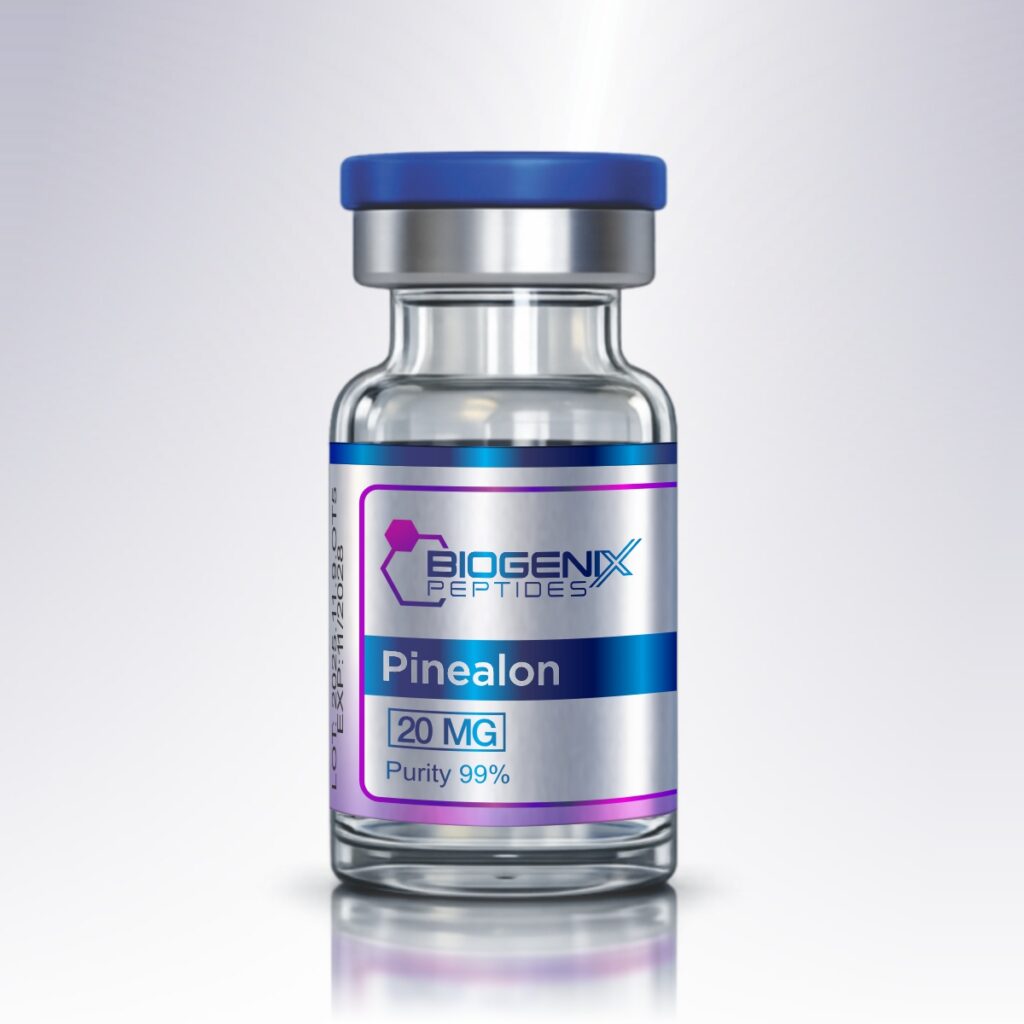
Pinealon 20mg
the brain’s ability to adapt during physical, emotional, or metabolic strain.Because it works at the cellular-regulation level, Pinealon is often explored in studies involving cognitive performance, stress resilience, and overall neural health, especially in age-related or high-demand conditions.
In Stock
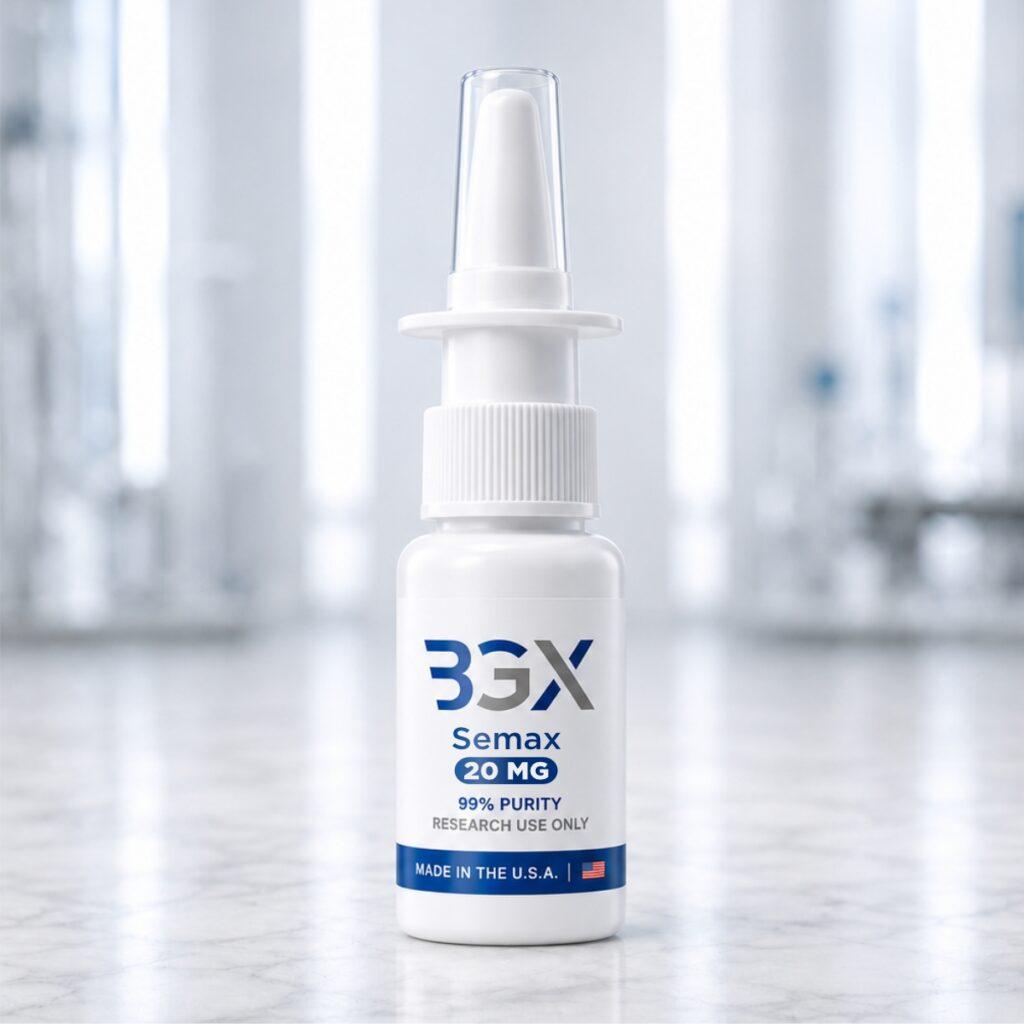
Semax 20mg Nasal Spray
Semax is a synthetic polypeptide derived from the ACTH(4–7) fragment, designed to retain central nervous system–related properties without the classical corticotropic effects of native ACTH. Research efforts have examined its potential influence on neuroadaptive processes, cognitive endpoints, and stress-response pathways. Semax incorporates the core Met-Glu-His-Phe (ACTH4–7) sequence extended with a C-terminal Pro-Gly-Pro (PGP) motif and is commonly produced in an acetylated form. The PGP addition is proposed to modify physicochemical behavior and may support passage across select biological barriers—such as the blood–brain barrier—through passive or carrier-assisted mechanisms, while acetylation may enhance resistance to proteolytic degradation.
In Stock