
The Complete Guide to Peptide Blends for Altitude Sickness
Disclaimer: The information provided in this article is for educational and informational purposes only. It is not intended as medical advice, diagnosis, or treatment. Products and compounds referenced are for research use only and are not approved for human or veterinary consumption. Always consult a qualified professional regarding health or medical decisions.
Why Peptide Blends for Altitude Sickness Are Gaining Attention in Research

Research into peptide blends for altitude sickness has grown significantly as scientists look for new ways to understand how the body responds to low-oxygen environments. If you’re here for a quick overview, here’s what current research suggests:
Top peptide blend research areas for altitude sickness support:
- Cellular energy support — Peptides studied for their role in ATP production and mitochondrial function under hypoxic (low-oxygen) conditions
- Oxidative stress reduction — Certain peptide sequences are being researched for their antioxidant signaling potential at altitude
- Neuroprotection — Peptides that may support blood-brain barrier integrity during rapid ascent
- Inflammation modulation — Amino acid chains studied for their role in managing the inflammatory response triggered by hypoxia
- Recovery acceleration — Peptide blends researched for tissue repair and faster physiological adaptation
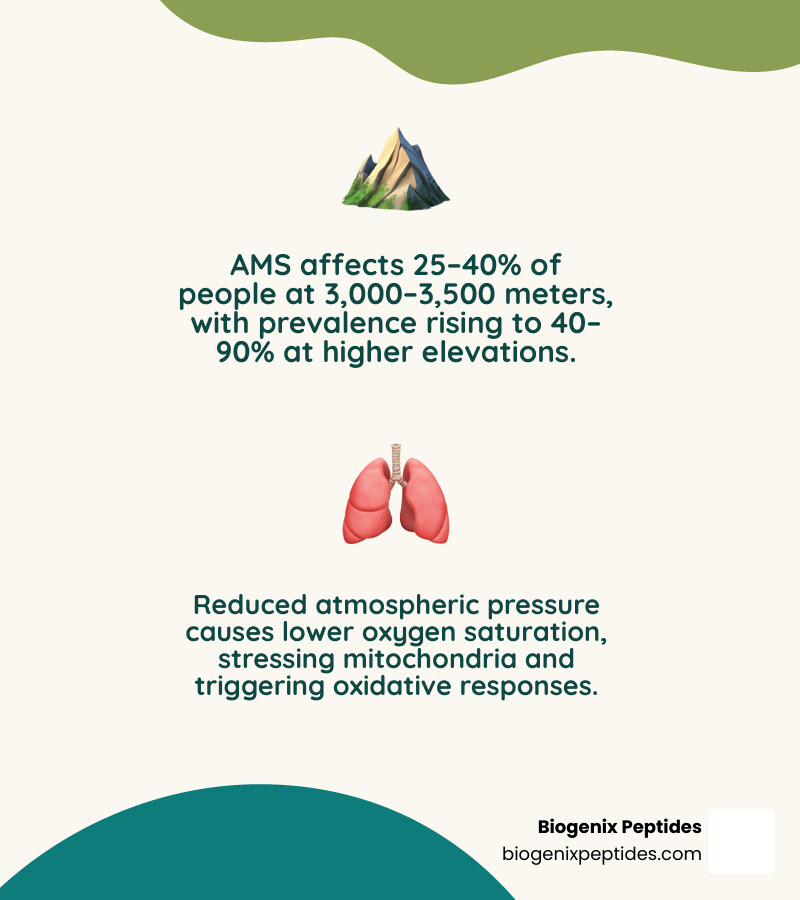
Altitude sickness — clinically called Acute Mountain Sickness (AMS) — is more common than most people realize. Research shows AMS affects 25–40% of people who ascend passively to elevations of 3,000–3,500 meters. At higher elevations, that number can climb to 40–90% among unacclimatized individuals.
Even popular destinations like Denver (1,609 m / 5,280 ft), Park City, or the Colorado Rockies can trigger early symptoms. Headache, fatigue, nausea, and brain fog can set in faster than expected — often before people realize altitude is the cause.
The body’s core problem at altitude is simple: less atmospheric pressure means less oxygen per breath. That oxygen deficit forces the body to work harder at a cellular level — stressing mitochondria, increasing oxidative load, and disrupting fluid balance.
This is exactly where peptide research becomes relevant. Scientists are investigating whether specific amino acid chains can support the body’s cellular response to these stressors — not by masking symptoms, but by targeting the underlying molecular mechanisms.
I’m Jay Daniel, Founder and CEO of BioGenix Peptides and a dedicated researcher in peptide science, with years of hands-on experience studying how peptide blends and altitude sickness intersect at the cellular and molecular level. In this guide, I’ll walk you through what the current research actually says — clearly and without hype.
Peptide blends altitude sickness definitions:
The Science of Hypoxia and Peptide Blends Altitude Sickness Research
When a subject travels from sea level to the high-altitude peaks of the Rockies, the physiological shift is immediate. Atmospheric pressure drops, and with it, the “partial pressure” of oxygen. As noted in the High-Altitude Travel and Altitude Illness | Yellow Book – CDC, this environmental hypoxia triggers a cascade of events.
At 3,000 meters (roughly 10,000 feet), the effective oxygen percentage drops from 20.9% at sea level to approximately 14.3%. This 32% reduction in oxygen availability forces the body to hyperventilate and increases the heart rate to maintain delivery to vital organs. However, the most critical changes happen at the microscopic level.
The Impact of Oxidative Stress
Hypoxia isn’t just about breathing harder; it’s about the surge in oxidative stress. When cells don’t have enough oxygen to process energy efficiently, they produce excess reactive oxygen species (ROS). This leads to cellular “rusting,” which can damage proteins, lipids, and DNA. Research into peptide blends altitude sickness focuses heavily on how specific amino acid chains might signal the body to ramp up its internal antioxidant defenses.
According to research on Peptides for Mitochondrial Resilience Under Stress, certain peptides may act as “mitochondrial chaperones,” helping these organelles maintain their structure even when oxygen is scarce. This is vital for avoiding the profound fatigue and “brain fog” often reported by visitors to Denver or Park City.
Cellular Resilience: How Peptides Support High-Elevation Recovery
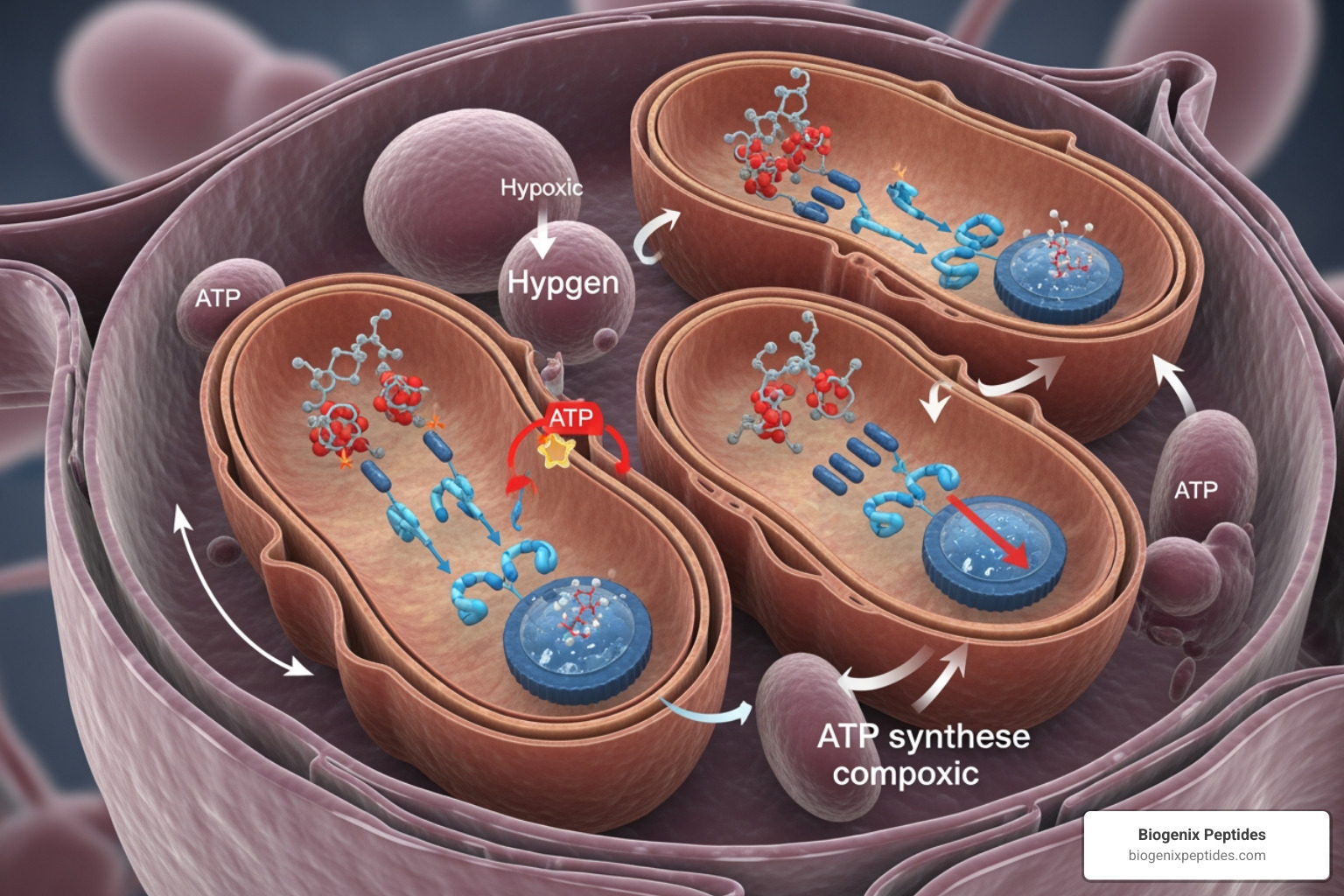
The primary goal of investigating peptide blends altitude sickness is to enhance cellular resilience. When the body encounters low-oxygen environments, the mitochondria (the power plants of our cells) struggle to produce Adenosine Triphosphate (ATP). Without sufficient ATP, cellular repair slows to a crawl, and the symptoms of AMS—headache, nausea, and lethargy—take hold.
Recent studies have looked toward traditional wisdom and modern science for answers. For example, research into the Frontiers | Tibetan Medicine Duoxuekang Capsule Ameliorates High-Altitude Polycythemia Accompanied by Brain Injury highlights how specific compounds can regulate signaling pathways like MAPK and RAS to protect the brain from hypoxic damage. In the peptide world, researchers are exploring similar mechanisms—using short chains of amino acids to trigger protective responses in the central nervous system.
Mechanisms of Action: How Peptide Blends for Altitude Sickness Support Cellular Recovery
One of the most dangerous aspects of rapid ascent is the potential for increased permeability in the blood-brain barrier (BBB). As oxygen levels drop, the “tight junctions” that keep the brain protected can weaken, leading to cerebral edema (swelling).
Research in Peptides Blood Brain Barrier Integrity: The Underexplored Frontier suggests that certain peptide sequences may support the structural integrity of the BBB. By reinforcing these barriers, these compounds are being studied for their potential to mitigate the neuro-inflammatory response that causes the characteristic “altitude headache.”
The Role of Mitochondrial Signaling in Hypoxic Environments
Energy output is the currency of survival at 12,000 feet. The body’s metabolic efficiency determines how well a researcher or athlete can perform. Interestingly, the gut plays a massive role in this energy regulation. As explored in The Entero Mitochondrial Loop: How Gut Peptides Control Cellular Energy Output, gut-derived peptides signal to the mitochondria throughout the body, influencing how much energy is produced and how efficiently oxygen is utilized. This “loop” is a primary target for researchers looking to optimize performance in “thin air.”
Integrating Peptides with IV Therapy and Antioxidants
While peptide research is at the cutting edge, many travelers still rely on traditional IV therapy. In cities like Colorado Springs or Salt Lake City, concierge IV services are common. These typically provide hydration, B-vitamins, and antioxidants like Glutathione.
However, research suggests that hydration alone might not be enough. Data indicates that oxygen deficit, rather than dehydration, is the root cause of symptoms in up to 95% of cases. Peptide research aims to bridge this gap by focusing on cellular oxygen utilization rather than just fluid volume.
| Feature | Traditional IV Hydration | Peptide Research Focus |
|---|---|---|
| Primary Goal | Restore fluid and electrolyte balance | Enhance cellular oxygen efficiency |
| Main Ingredients | Saline, B-Vitamins, Glutathione | Amino acid chains, signaling molecules |
| Mechanism | Bypasses gut for rapid absorption | Influences gene expression and ATP |
| Duration of Effect | Short-term (hours to days) | Potential for long-term adaptation |
As noted in Fluid Metabolism at High Altitudes – NCBI – NIH, the way the body handles water changes drastically at altitude. There is often a shift of fluid from the blood vessels into the tissues. Peptides that influence The Peptide Second Brain: How Gut Signaling Peptides Influence Mood, Immunity, Metabolism are being studied to see if they can help regulate this fluid balance more effectively than simple saline.
Developing Research Protocols for Peptide Blends Altitude Sickness
One of the most overlooked aspects of altitude sickness is its effect on sleep. High altitude often disrupts the circadian rhythm, leading to “periodic breathing” at night and poor recovery.
Researchers are investigating Peptides That Influence Circadian Rhythm Micro Regulation to see if they can stabilize sleep patterns in hypoxic environments. If a researcher can maintain deep, restorative sleep at 9,000 feet, the body’s natural acclimation process—including the production of red blood cells—is significantly more efficient.
Synergistic Effects of Electrolytes and Amino Acid Chains
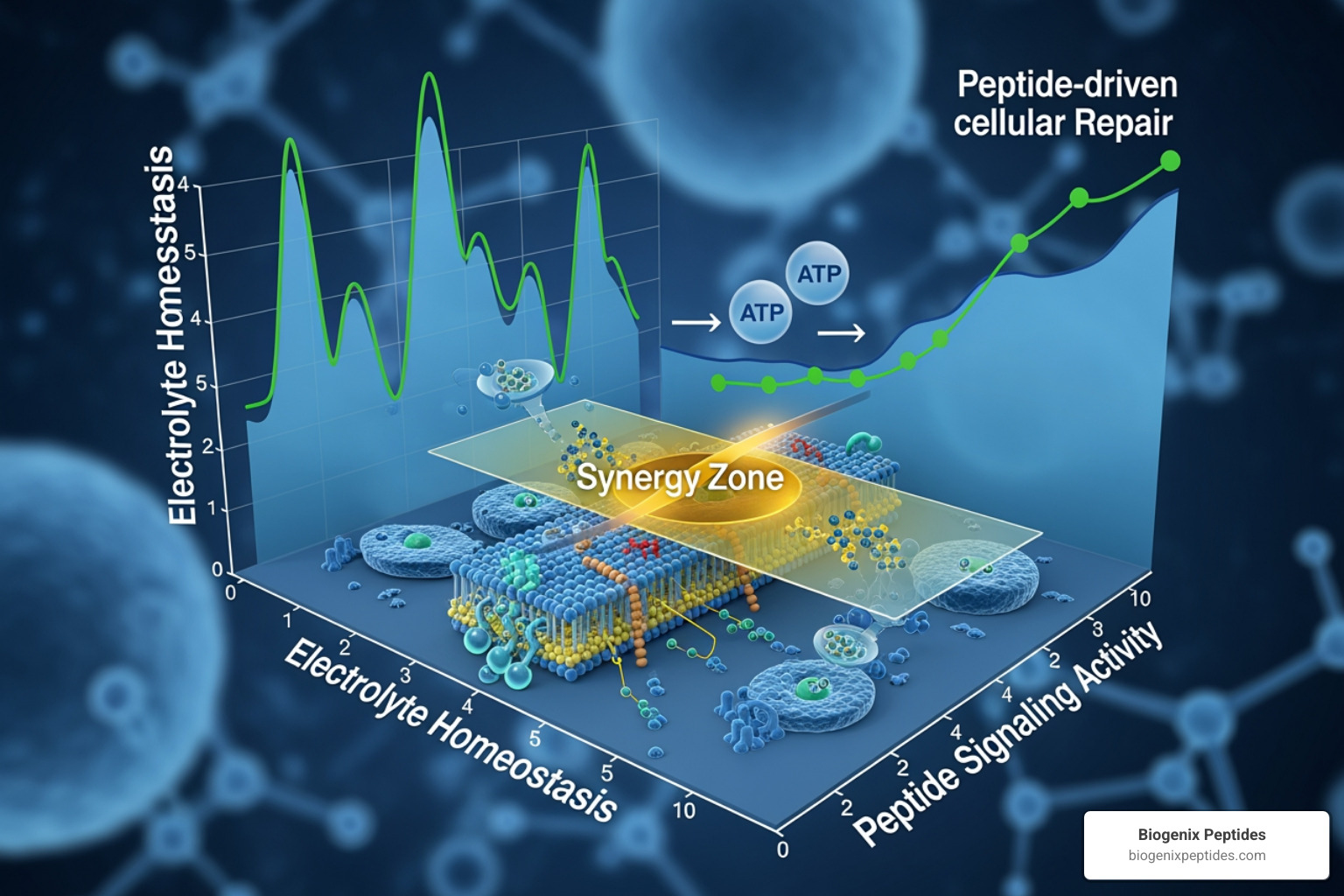
Peptides don’t work in a vacuum. Their effectiveness in research settings is often enhanced when combined with specific metabolic primers. For instance, D-Ribose is frequently studied for its ability to replenish ATP levels, while potassium glucarate may support the liver’s detoxification processes, which are stressed during high-altitude exposure.
Frequently Asked Questions about Altitude Recovery
What are the primary benefits of peptides in high-elevation research?
In a research context, peptides are being studied for their ability to enhance mitochondrial resilience, protect the blood-brain barrier, and modulate the inflammatory response to hypoxia. Unlike traditional stimulants, they aim to support the body’s natural adaptive mechanisms to low-oxygen environments.
How do peptide blends compare to traditional IV hydration for AMS?
While IV hydration is excellent for correcting the dehydration that often accompanies mountain travel, it does not address the underlying oxygen utilization deficit. Peptide blends altitude sickness research focuses on the “cellular” side of the equation—helping cells produce more energy (ATP) with less available oxygen.
Can peptides support cognitive function during hypoxic stress?
Yes, this is a major area of study. Hypoxia often leads to “brain fog” and cognitive decline. Researchers are looking at neuroprotective peptides that maintain blood-brain barrier integrity and reduce oxidative stress in the hippocampus, the brain’s memory center.
Conclusion
As we look toward the future of high-altitude performance and recovery, it’s clear that the conversation is shifting from simple hydration to complex cellular signaling. Whether you are an athlete preparing for a trek in the Rockies or a researcher studying human physiology in extreme environments, understanding the role of peptide blends altitude sickness is essential.
At Biogenix Peptides, we are committed to providing the highest quality compounds for researchers exploring these frontiers. By focusing on mitochondrial health, neuroprotection, and metabolic efficiency, we aim to uncover the secrets of how the human body can not only survive but thrive at the highest peaks.
Ready to advance your research? Explore Peptide Research Solutions and discover the next generation of cellular support.