Bacteriostatic Water Ingredients: pH, Preservatives, and What You Need to Know
Disclaimer: The information provided in this article is for educational and informational purposes only. It is not intended as medical advice, diagnosis, or treatment. Products and compounds referenced are for research use only and are not approved for human or veterinary consumption. Always consult a qualified professional regarding health or medical decisions.
Bacteriostatic Water Ingredients at a Glance
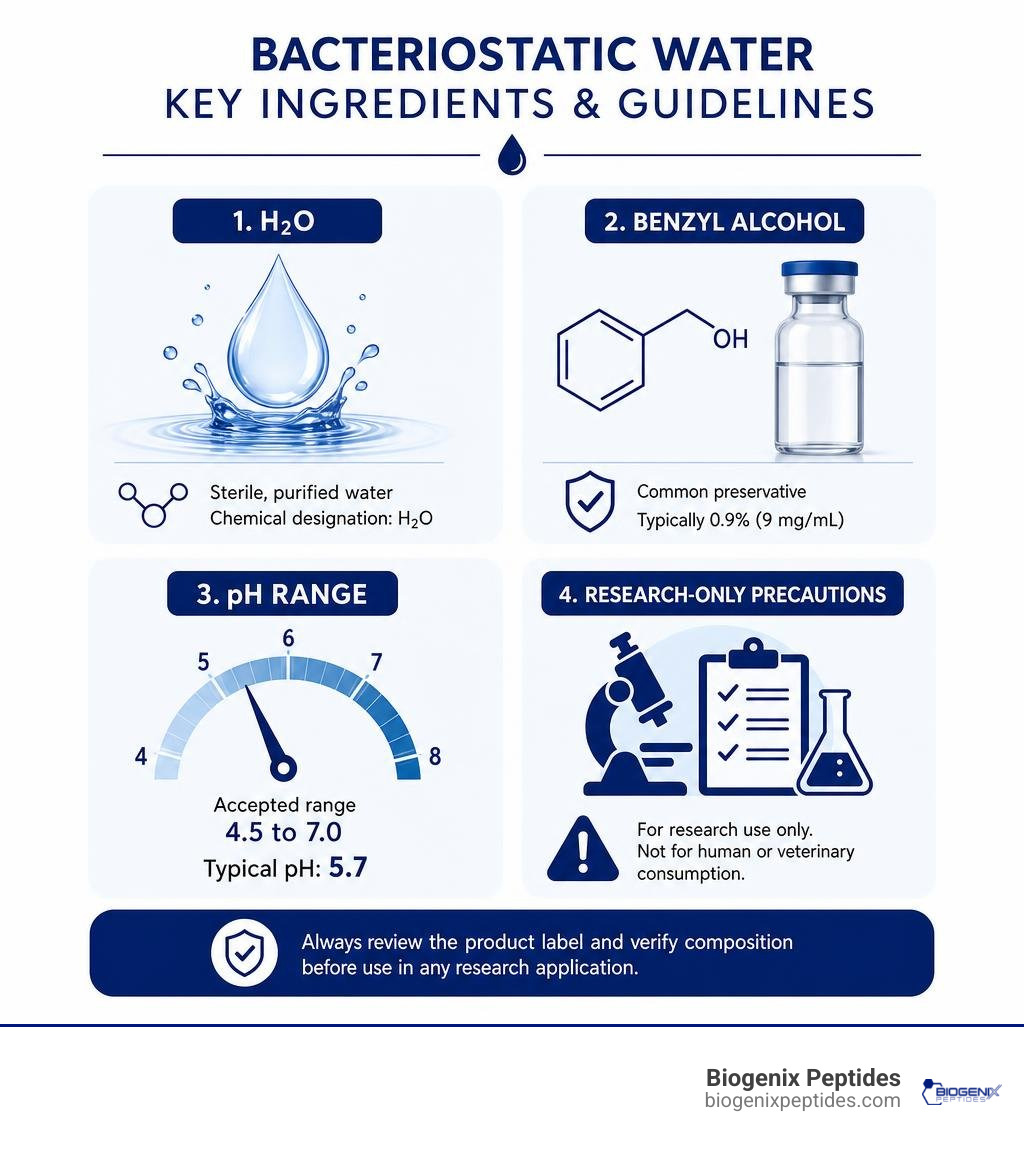
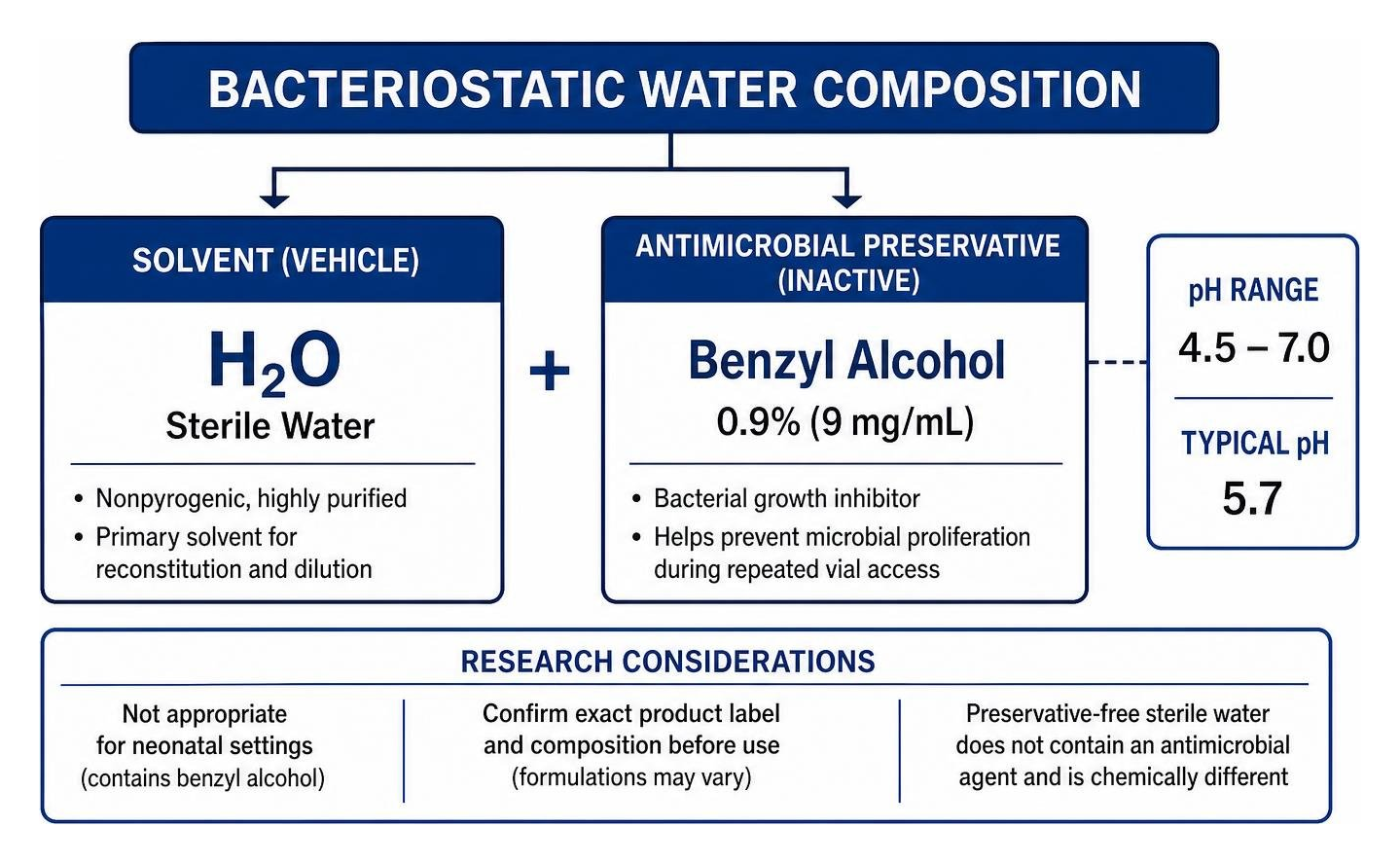
Bacteriostatic water ingredients typically include sterile water, chemically designated H2O, plus an antimicrobial preservative. In many U.S. formulations, that preservative is benzyl alcohol at 0.9% (9 mg/mL), although some products use different preservative systems or concentrations.
| Component | What it is | Key detail |
|---|---|---|
| Sterile water | The primary component | Chemical designation: H2O |
| Benzyl alcohol | Common inactive preservative | Usually 0.9% or 9 mg/mL |
| pH | Measure of acidity/alkalinity | Typically 5.7; accepted range 4.5 to 7.0 |
Benzyl alcohol helps limit bacterial growth after repeated vial access. That preservative is also why bacteriostatic water is not appropriate for neonatal settings and why researchers should confirm the exact product label before selecting a diluent. Preservative-free sterile water is chemically different because it does not include an antimicrobial agent.
I am Jay Daniel, Founder and CEO of BioGenix Peptides, with experience in peptide research, sourcing, and quality-control practices relevant to evaluating bacteriostatic water ingredients. This guide reviews the label details, preservative differences, and research considerations that matter when verifying a product’s composition.
Active and Inactive Ingredients of Bacteriostatic Water
When we examine the standard chemical formulation of bacteriostatic fluid in a research environment, we find a remarkably straightforward mixture. The primary constituent is nonpyrogenic, highly purified water with the standard chemical designation H2O. Water itself acts as the solvent, providing a neutral aqueous vehicle capable of dissolving or reconstituting various lyophilized compounds. In fact, water accounts for roughly 70% of total adult body mass, highlighting its fundamental chemical compatibility with biological systems.
However, purified water alone easily succumbs to bacterial proliferation once exposed to ambient air or repeated container access. That is where inactive preservatives enter the equation. As outlined in the official USP reference guide for BACTERIOSTATIC WATER Rx only, USP, the solvent must contain a specific antimicrobial agent to inhibit microbicidal growth. Understanding these exact details helps researchers distinguish between standard laboratory vehicles, as detailed in our guide on Sterile Water and Bacteriostatic Water Differences You Must Know.
Primary Inactive Bacteriostatic Water Ingredients and Concentration
The predominant preservative found in standard U.S. formulations is benzyl alcohol. In standard multiple-use laboratory containers, benzyl alcohol is added at a 0.9 percent concentration, which translates directly to 9 milligrams per milliliter (9 mg/mL).
Benzyl alcohol exhibits potent microbicidal and bacteriostatic properties. Instead of instantly destroying every organism on contact like a harsh chemical sterilant, it functions primarily by disrupting bacterial cell membranes and inhibiting enzymatic activity. This action stops bacteria from multiplying, effectively holding the bacterial count at zero during repeated laboratory fluid extractions.
Alternative Preservative Formulations for Bacteriostatic Water Ingredients
While 0.9% benzyl alcohol is the standard formulation across North American laboratories, alternative preservative systems exist in international or specialized formulations. For instance, certain pharmacopeial monographs document preservative systems utilizing parabens, specifically 0.12% methylparaben combined with 0.012% propylparaben.
In other specialized laboratory products, benzyl alcohol concentrations may vary slightly depending on the container volume and substrate. Some 20 mL glass container configurations utilize an 1.1% benzyl alcohol concentration (11 mg/mL). Official regulatory records, such as the Bacteriostatic Water (WATER) DailyMed Drug Label – FDA.report, highlight how these specific preservative variations maintain fluid integrity across different packaging substrates.
The Chemistry of Bacteriostatic Water: pH, Osmolality, and Packaging
Beyond simple ingredient lists, the physical chemistry of bacteriostatic water plays a critical role in bench research stability and chemical solubility.

Understanding the pH Range of Bacteriostatic Water
According to official United States Pharmacopeia standards outlined in the USP-NF Bacteriostatic Water 2025 specification monograph, the designated pH range for bacteriostatic water spans from 4.5 to 7.0, with a target nominal pH of approximately 5.7.
This slightly acidic pH is maintained during production through chemical buffering or fine adjustments using hydrochloric acid or sodium hydroxide. Maintaining this specific pH window prevents chemical hydrolysis of fragile reconstituted proteins while preserving the antimicrobial efficacy of benzyl alcohol. For optimal bench shelf-life, researchers must observe proper climate parameters as discussed in our research on Bacteriostatic Water Storage.
Osmolality and Direct Handling Risks in Research
A vital physical property of pure bacteriostatic water is its extreme hypotonicity. Lacking dissolved electrolytes or salts, pure water has an osmolality close to zero mOsm/kg.
In biological or cellular research models, exposing red blood cells or sensitive cell cultures directly to a pure hypotonic diluent triggers massive osmotic water influx, leading to rapid cellular swelling and membrane rupture (hemolysis). Therefore, research protocols mandate adding proper solute admixtures or tonicity-adjusting agents before introducing fluids into cellular assays or animal models. Failing to respect osmotic balance can compromise assay validity, a topic explored in depth in Bacteriostatic Water Research Considerations.
Comparing Bacteriostatic Water to Other Reconstitution Vehicles
Selecting the correct solvent depends entirely on the experimental design, duration of testing, and solute chemical stability.
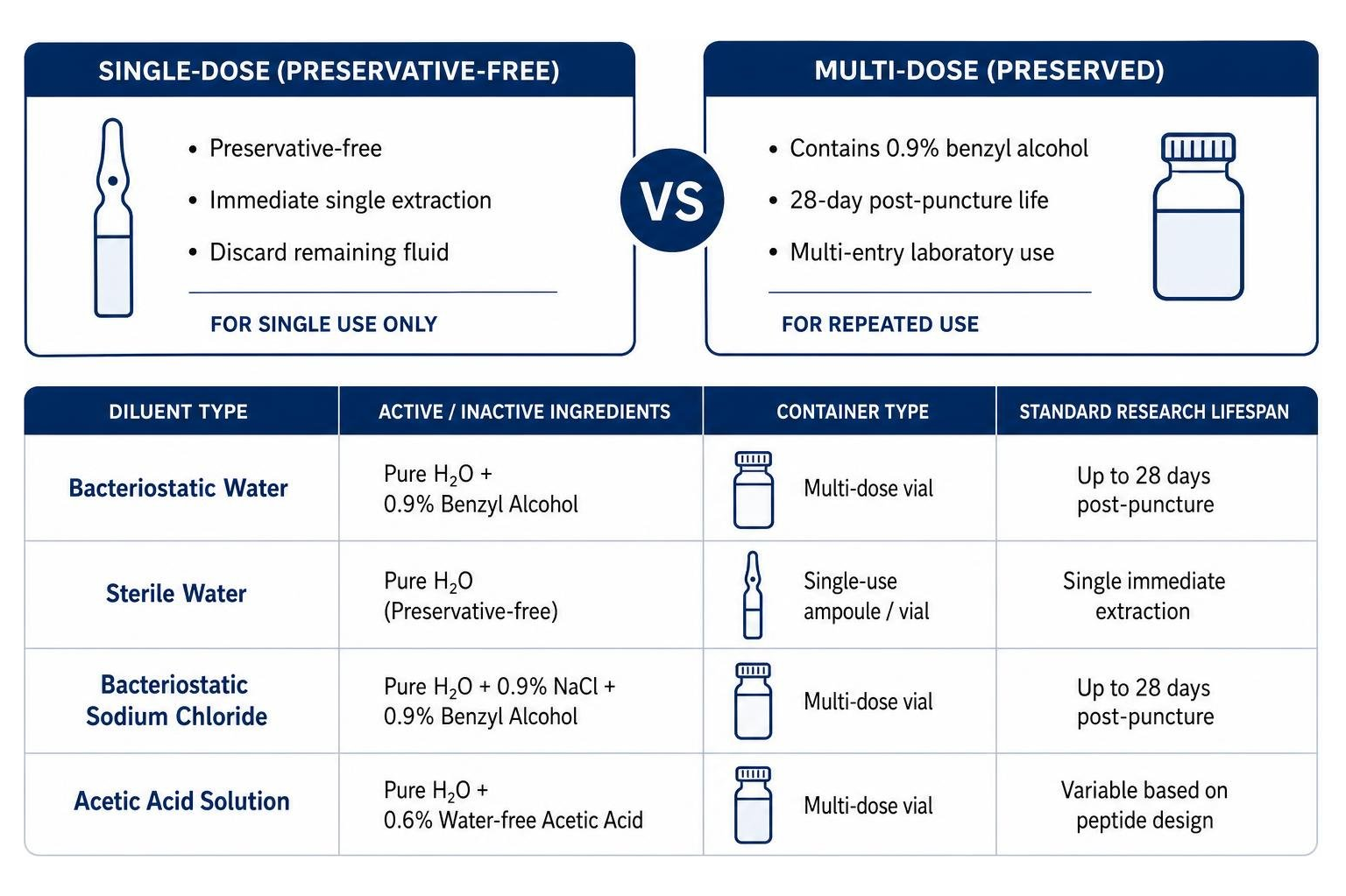
| Diluent Type | Active / Inactive Ingredients | Container Type | Standard Research Lifespan |
|---|---|---|---|
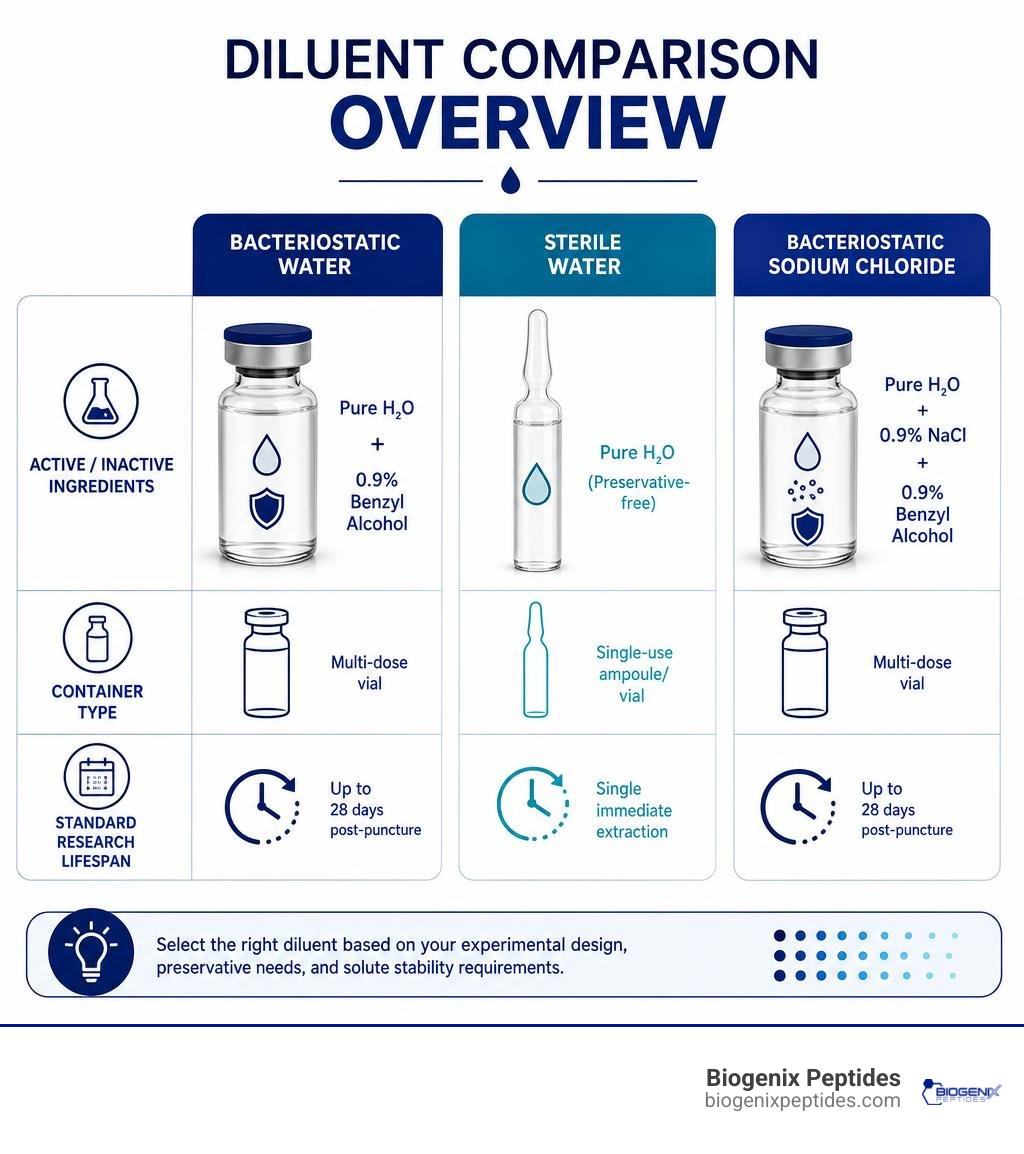
| Bacteriostatic Water | Pure H2O + 0.9% Benzyl Alcohol | Multiple-use vial | Up to 28 days post-puncture |
| Sterile Water | Pure H2O (Preservative-free) | Single-use ampoule/vial | Single immediate extraction |
| Bacteriostatic Sodium Chloride | Pure H2O + 0.9% NaCl + 0.9% Benzyl Alcohol | Multiple-use vial | Up to 28 days post-puncture |
| Acetic Acid Solution | Pure H2O + 0.6% Water-free Acetic Acid | Multiple-use vial | Variable based on peptide design |
Researchers often evaluate alternative vehicles when designing laboratory reconstitution protocols, as detailed in our guide on The Best Substitutes for Bacteriostatic Water in Medical Reconstitution.
Single-Use vs Multiple-Use Preservative Requirements
The primary boundary separating standard sterile water from bacteriostatic fluid is the presence of an antimicrobial preservative. Preservative-free sterile water comes in single-use containers. Once opened, any leftover fluid must be immediately discarded because airborne bacteria can enter and multiply rapidly.
Conversely, multiple-use laboratory containers—such as our Bacteriostatic Water Reconstitution Solution 30ml—are specifically designed for repeated needle entry over an extended 28-day window. The 0.9% benzyl alcohol preservative halts microbial growth introduced during repeated vial punctures.
Sodium Chloride and Acidic Diluent Options
In protocols where osmotic balance is critical from the start, bacteriostatic sodium chloride (containing 0.9% NaCl alongside 0.9% benzyl alcohol) provides an isotonic vehicle. For basic or highly hydrophobic proteins, researchers may turn to specialized acidic options like our Acetic Acid Reconstitution Solution 3ml, which alters solvent pH to maximize peptide solubility and prevent aggregation.
Key Safety Precautions and Research Toxicity Warnings
All commentary within this article is opinion only, strictly intended for non-clinical research applications, and does not constitute medical advice or human care directives.
Why Preservative Ingredients are Excluded from Sensitive Biological Models
The inclusion of benzyl alcohol makes bacteriostatic water completely unsuitable for neonatal biological models or delicate neural tissue preparations.
In early mammalian development, hepatic and renal metabolic pathways are under-developed. When exposed to benzyl alcohol, neonates lack sufficient glycine conjugation capacity to detoxify benzyl alcohol into hippuric acid. This leads to toxic accumulation of benzoic acid, causing severe systemic toxicity historically referred to as “gasping syndrome,” characterized by severe metabolic acidosis, central nervous system depression, and respiratory failure. Regulatory filings, including the official Bacteriostatic Water – FDA Label NDC 0409-3977, mandate prominent black-box warnings advising that preservative-containing solutions must never be introduced into neonatal systems.
Handling, Storage, and Aseptic Research Protocols
To maintain solution purity and chemical stability across laboratory experiments:
- Temperature Regulation: Store sealed and unsealed vials at controlled room temperature between 20°C to 25°C (68°F to 77°F). Avoid freezing, as ice crystal formation can alter container integrity.
- Aseptic Extraction: Wipe the rubber septum with a 70% isopropyl alcohol swab prior to every needle entry.
- Expiration Tracking: Clearly record the date of initial septum puncture on the container label. Discard any remaining fluid after 28 days.
- Molar Ratio Calculations: Account for solvent volume accurately to maintain target chemical ratios, as outlined in The Science of the Bacteriostatic Water Peptide Ratio.
Frequently Asked Questions about Bacteriostatic Water Ingredients
What are the main active and inactive bacteriostatic water ingredients?
The solvent consists of purified nonpyrogenic water (H2O) as the primary vehicle, combined with 0.9% benzyl alcohol (9 mg/mL) as an inactive antimicrobial preservative. Small amounts of hydrochloric acid or sodium hydroxide may be added to balance the pH within a range of 4.5 to 7.0.
Why is benzyl alcohol included in bacteriostatic water ingredients?
Benzyl alcohol acts as a bacteriostatic agent that prevents the growth and multiplication of bacteria. This preservative protection enables researchers to puncture the vial rubber septum multiple times over a 28-day lifespan without contaminating the remaining solution.
How do bacteriostatic water ingredients differ from sterile water?
Sterile water contains only purified H2O without any added chemical preservatives. Because it lacks antimicrobial agents, sterile water must be used immediately upon opening and discarded after a single extraction. Bacteriostatic water contains 0.9% benzyl alcohol, enabling multiple-use laboratory handling over several weeks.
Conclusion
Understanding bacteriostatic water ingredients is fundamental for maintaining rigorous laboratory controls and ensuring long-term compound stability. By combining pure, nonpyrogenic H2O with 0.9% benzyl alcohol, this diluent provides a reliable multiple-use solution that effectively suppresses bacterial growth for up to 28 days post-puncture.
When selecting laboratory supplies, researchers must carefully review container labels, account for tonicity requirements, and adhere strictly to aseptic handling guidelines. For high-purity laboratory reconstitution media, explore our complete inventory including our Bacteriostatic Water Reconstitution Solution 10ml.
Disclaimer: All products offered by BioGenix Peptides are strictly intended for laboratory research and development purposes only. They are not for human consumption, clinical application, or veterinary diagnostic use. The contents of this article reflect scientific opinion and technical documentation only.