
A Practical Guide to Peptide Research Basics
Disclaimer: The information provided in this article is for educational and informational purposes only. It is not intended as medical advice, diagnosis, or treatment. Products and compounds referenced are for research use only and are not approved for human or veterinary consumption. Always consult a qualified professional regarding health or medical decisions.
Why Peptide Research Applications Matter
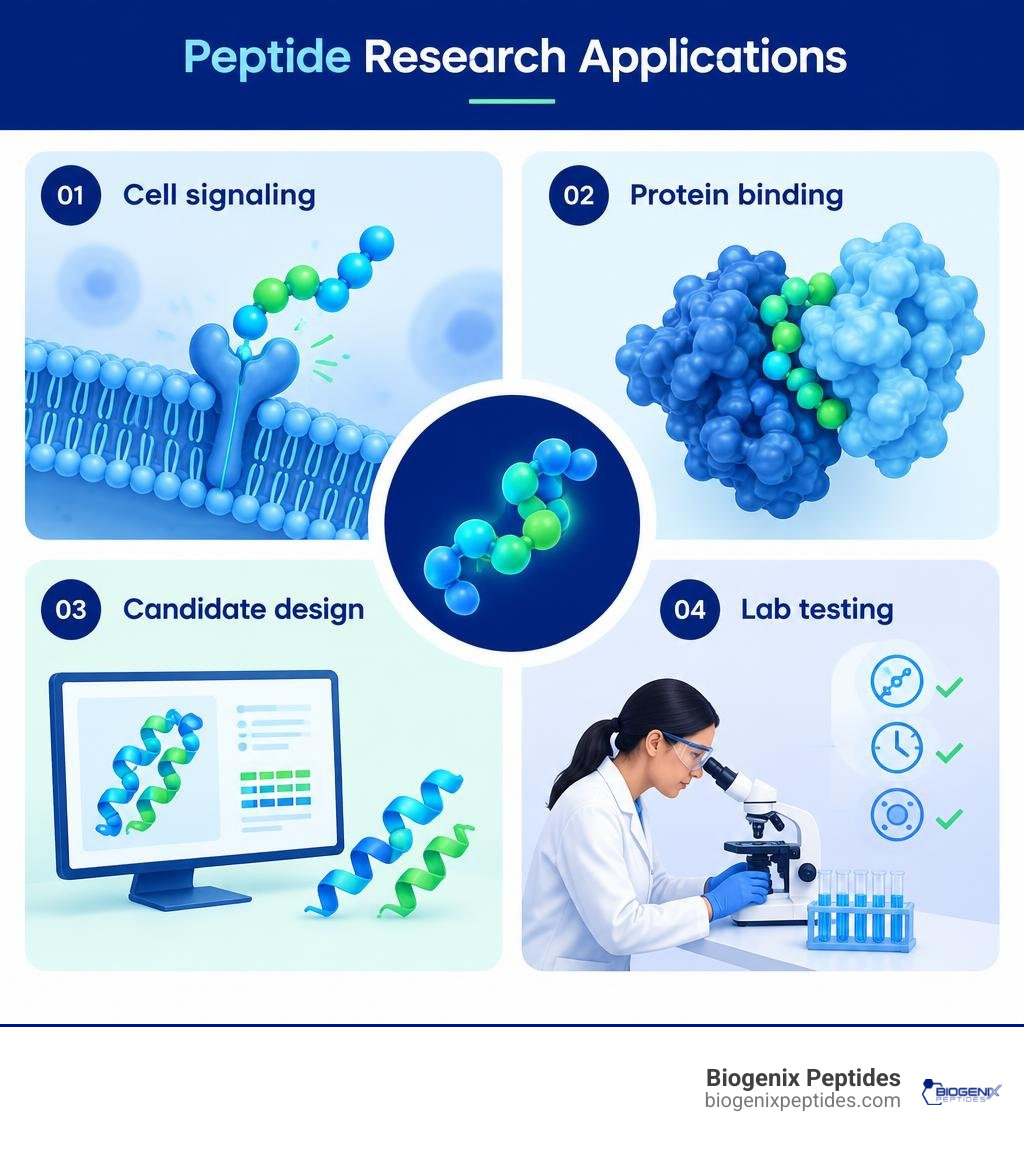
Peptide research applications include studying cell signals, finding molecules that bind hard-to-target proteins, and designing candidates for cancer, metabolic, and infectious disease research. Peptides can recognize broad protein surfaces that small molecules may miss. Researchers also use them to study how natural hormones work.
A promising binder is only a start. Peptides can break down quickly or struggle to enter cells, so labs test both binding and stability before drawing conclusions.
I’m Jay Daniel, founder of BioGenix Peptides. My experience with peptide development, sourcing, and quality control shapes this research-focused guide to peptide research applications.
Fundamentals of Targeting Protein-Protein Interactions with Peptides
Peptides occupy a unique therapeutic “middle space” between small chemical compounds and large biological proteins. In laboratory models, traditional small molecules excel at fitting into deep, hydrophobic catalytic pockets. However, they frequently struggle when confronted with protein-protein interactions (PPIs), which typically feature flat, featureless interfaces lacking well-defined binding cavities. Conversely, monoclonal antibodies offer high affinity and selectivity for these large interfaces, but their high molecular weight restricts them to extracellular targets and requires expensive mammalian expression systems.
Peptides solve this structural dilemma by offering what scientists call the “Goldilocks zone” of drug design. Peptides mimic natural binding epitopes, burying interfacial contact areas of 800 to 1,500 Ų—two to three times larger than the footprint of standard small molecules. These contact zones rely on intricate noncovalent networks composed of roughly 45% hydrophobic contacts, 35% hydrogen bonds, and 20% electrostatic interactions. Exploring the structural biology of peptides illustrates how these structural features allow synthetic fragments to effectively disrupt complex protein assemblies.
| Modality Class | Typical Molecular Weight (Da) | Target Interface Area (Ų) | Intracellular Target Accessibility | Primary Production Route |
|---|---|---|---|---|
| Small Molecules | < 500 | 300–500 | High (passive diffusion) | Chemical synthesis |
| Peptides | 500–5,000 | 800–1,500 | Intermediate (engineered) | Solid-phase peptide synthesis (SPPS) |
| Monoclonal Antibodies | ~150,000 | 1,500–3,000 | Extracellular only | Recombinant mammalian expression |
Endogenous Hormones and Natural Templates for Synthetic Design
Natural peptide hormones and signaling molecules serve as evolutionary starting points for probe design. Within eukaryotic proteomes, thousands of signaling events rely on intrinsically disordered regions (IDRs)—flexible protein segments that lack rigid tertiary structures until they encounter a binding partner. These segments frequently contain short linear motifs (SLiMs) that drive critical intracellular cascades.
By isolating these functional sequences, researchers can develop bioactive peptide fragments that modulate specific biochemical pathways without requiring the entire parent macromolecule. Exploiting IDRs allows laboratories to identify functional motifs across the proteome, turning native signaling sequences into precise synthetic biochemical tools.
Chemical Engineering Strategies for Stability and Permeability
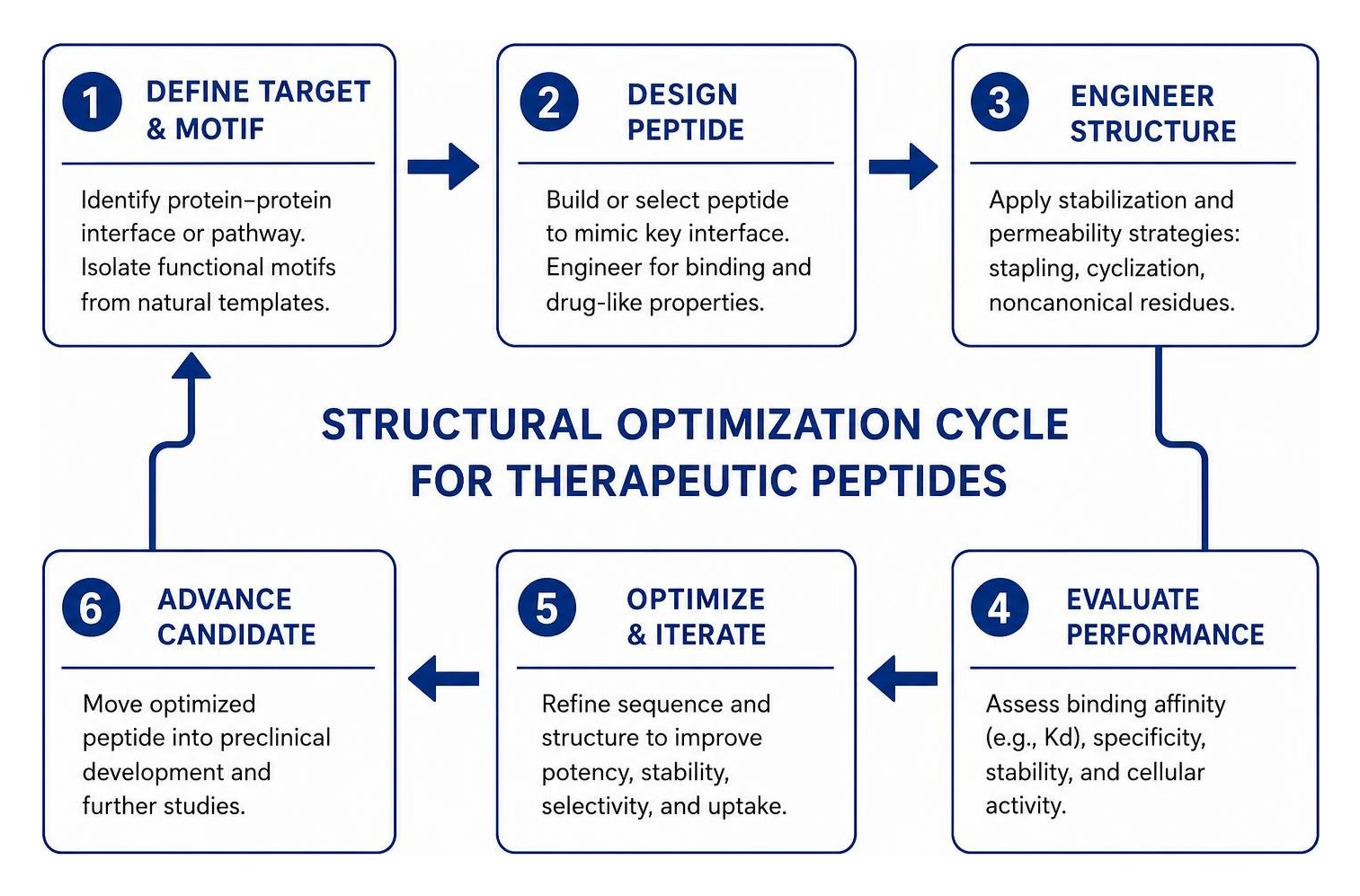
Despite their targeted binding, linear peptides assembled from canonical L-amino acids are vulnerable to rapid enzymatic degradation by circulating proteases and endopeptidases. Furthermore, their polar amide backbones impede passive translocation across lipid bilayers. Medicinal chemists employ diverse synthetic strategies to address these challenges:
- Hydrocarbon Stapling: Installing all-hydrocarbon cross-links via ring-closing metathesis locks linear sequences into rigid α-helices. This conformation shields the peptide backbone from proteolytic enzymes and enhances cellular uptake.
- Macrocyclization: Head-to-tail or side-chain cyclization reduces conformational flexibility, lowering the entropic cost of target binding while protecting terminal residues from exopeptidase cleavage.
- Noncanonical Amino Acids: Incorporating D-enantiomers, β-amino acids, and N-methylated residues eliminates native protease recognition motifs while improving lipophilicity.
Recent protocols for generating proteome-derived cyclic peptide libraries via ortho-phthalaldehyde (OPA) chemistry demonstrate that rapid, mild aqueous cyclization yields thousands of stable macrocycles directly from biological pools, significantly streamlining lead candidate optimization.
Core Peptide Research Applications in Modern Drug Discovery
As of 2026, the therapeutic relevance of peptides has expanded far beyond traditional hormone replacements. More than 80 peptide drugs are approved globally, with over 170 candidates progressing through clinical pipelines. A comprehensive analysis of 82 approved peptide drugs shows that 69.5% feature specific residue or backbone modifications, 61.0% represent peptide hormones or their structural analogs, 35.4% serve as synthetic mimetic or inhibitory sequences, and 28.0% utilize macrocyclic architecture.
Oncology and Intracellular Targets in Peptide Research Applications
Historically, intracellular oncology targets like oncogenic transcription factors and mutated GTPases were considered unreachable. Today, roughly 20% of pipeline peptides target oncogenic protein assemblies or tumor-associated receptors.
A key example in structural oncology is the MDM2-p53 interaction. The stapled α-helical candidate ALRN-6924 mimics the transactivation domain of p53, binding the hydrophobic cleft of MDM2 with an equilibrium dissociation constant (Kd) under 10 nM across an interface of 1,200 Ų. Similar design strategies target KRAS complexes, disrupting downstream oncogenic signaling in preclinical investigations.
Beyond intracellular targets, synthetic peptides excel at modulating cell-surface immune checkpoints. Peptide-57, discovered via structure-guided screening, binds the immune checkpoint PD-L1 with a Kd of roughly 150 nM, burying 950 Ų of surface area. As discussed in recent reviews of peptide-protein interactions in drug discovery, these constructs provide better tissue penetration and lower immunogenicity than bulky checkpoint antibodies. Research into these interactions frequently intersects with immune function and longevity peptides, highlighting how synthetic fragments can help model immune responses.
Metabolic and Infectious Disease Therapeutics
Metabolic research has advanced significantly through the study of glucagon-like peptide-1 (GLP-1) receptor agonists. Engineered analogs like semaglutide demonstrate how fatty-diacid acylation promotes noncovalent albumin binding, extending candidate half-lives in experimental systems. In controlled metabolic research models, these agonists lower glycated hemoglobin (HbA1c) by up to 1.8% and reduce baseline body weight by more than 12%. These findings continue to inform investigations into metabolic and weight management peptides.
Concurrently, artificial intelligence pipelines such as Deepeptide use deep learning for metabolic oligopeptide discovery, identifying functional leads directly from uncharacterized protein regions. In infectious disease research, AI-guided antimicrobial peptide (AMP) models yield novel sequences with minimum inhibitory concentrations (MICs) between 1 and 16 μM against resistant strains of Escherichia coli and Staphylococcus aureus, providing promising tools to study antimicrobial resistance.
Screening and Discovery Platforms for Bioactive Peptides
Selecting high-affinity binders from vast chemical libraries requires high-throughput screening technologies capable of evaluating millions to trillions of unique sequences simultaneously.
Phage display remains a reliable standard for canonical peptide selections. However, ribosomal display platforms like the Random Non-standard Peptides Integrated Discovery (RaPID) system incorporate flexizyme technology to integrate noncanonical and D-amino acids directly into mRNA-displayed macrocyclic libraries containing over 10¹³ variants. For example, RaPID selections identified PB1m6—a macrocyclic inhibitor of human plexin B1 (PlxnB1)—which exhibits a Kd of 3.5 nM.
High-throughput techniques also play a crucial role in cancer antigen detection via peptide libraries. Platforms like Pepyrus enable recombinant expression of over 10,000 user-defined peptides in E. coli, facilitating data-independent acquisition (DIA) mass spectrometry to detect rare tumor antigens at quantities as low as 0.1 fmol.
Single-Molecule Profiling and Nanopore Sequencing
Characterizing synthetic libraries and complex biological digests requires precise analytical tools. While liquid chromatography-tandem mass spectrometry (LC-MS/MS) remains the benchmark for peptide identification, single-molecule sensing platforms offer rapid, label-free alternatives.
Recent work on high-resolution nanopore peptide sensing using engineered MspA-NTA-Ni protein pores demonstrates single-molecule classification of canonical amino acids, post-translational modifications (PTMs), and neoantigen fragments with up to 97.4% validation accuracy. Combining sequential enzymatic hydrolysis with ionic current monitoring allows researchers to reconstruct complex sequence fragments, supporting ongoing work in tissue repair and regeneration peptides and biomarker discovery.
AI-Driven Design and Closed-Loop Optimization Workflows
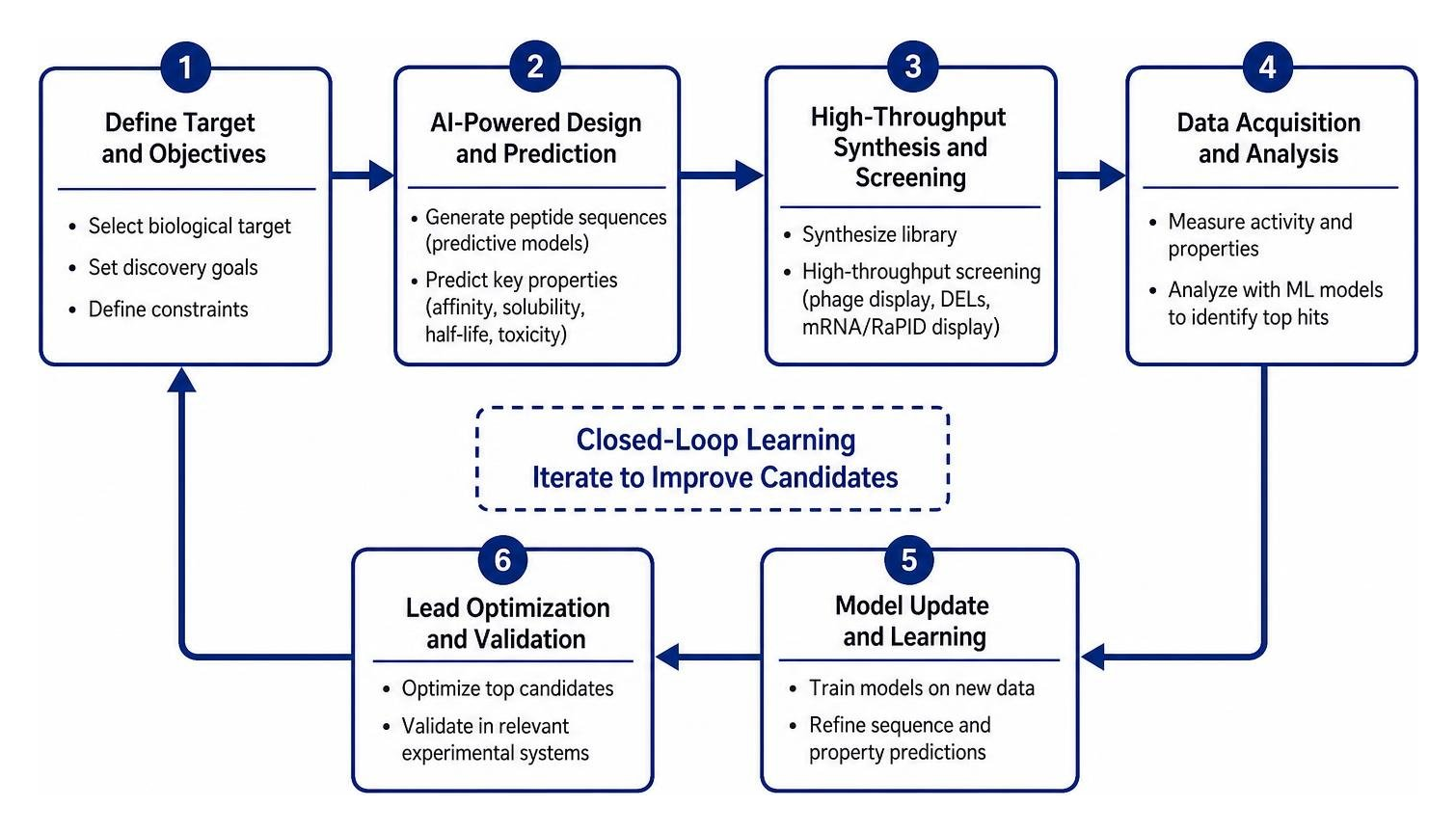
The discovery cycle is moving away from purely empirical screening toward integrated computational workflows. These platforms combine predictive algorithms, structural modeling, and automated synthesis into iterative learning loops.
Machine Learning for Property Prediction and Developability
Evaluating peptide candidates requires balancing target affinity with key developability factors like solubility, metabolic half-life, and cellular toxicity. Evaluating these properties early helps prevent downstream attrition during experimental testing.
Unified computational suites such as the PeptiVerse property prediction platform integrate protein language model embeddings (such as ESM-2) with chemical language representations (such as ChemBERTa). This multimodal approach enables accurate predictions across diverse properties:
- Hemolytic Potential: Identifies sequences likely to disrupt erythrocyte membranes.
- Membrane Permeability: Predicts passive lipid bilayer diffusion (PAMPA log P ≥ -6.0).
- Systemic Half-Life: Assesses proteolytic cleavage susceptibility in biological sera.
- Solubility and Fouling: Identifies hydrophobic patches that trigger non-specific aggregation.
These predictive models are particularly valuable when designing neuroactive probes for cognitive and neurological research peptides, where crossing the blood-brain barrier depends heavily on balancing molecular charge, hydrophobicity, and backbone stability.
De Novo Generation and Structural Modeling of Peptide Complexes
Recent breakthroughs in structural biology, including AlphaFold-Multimer and AlphaFold3, have transformed interface modeling between flexible peptides and target proteins. Concurrently, generative diffusion models like DiffPepBuilder create de novo peptide backbones directly within target binding pockets.
Structural biologists must interpret interface confidence metrics carefully. While the interface predicted TM-score (ipTM) measures structural docking geometry accurately, it often correlates poorly with true experimental binding affinity (Kd). Therefore, structural predictions must be validated using physical binding assays before drawing conclusions about candidate potency. For broader context on modern screening tools, explore our resource on peptides in scientific research.
Frequently Asked Questions about Peptide Research
What makes peptides ideal for targeting undruggable protein-protein interactions?
Peptides bridge the gap between small molecules and biological antibodies. They are flexible enough to conform to broad, shallow protein interfaces (covering 800 to 1,500 Ų) while maintaining high target specificity. Their intermediate size and chemical versatility allow for noncovalent interactions—such as hydrophobic packing and hydrogen bonding—that small molecules cannot achieve across flat structural surfaces.
How do AI models and experimental screening integrate into closed-loop discovery?
Closed-loop discovery uses an active learning cycle. First, generative algorithms design potential peptide binders in silico, and predictive models filter them for solubility, stability, and affinity. Next, the top candidates are synthesized and tested using high-throughput biophysical assays (such as surface plasmon resonance or biolayer interferometry). Finally, the resulting experimental data is fed back into the machine learning models to improve future design cycles.
What are the primary bottlenecks in developing intracellular peptide therapeutics?
The main hurdles for intracellular peptides are endosomal entrapment, rapid enzymatic degradation, and low passive membrane permeability. Because peptide backbones are polar, they often struggle to cross cell membranes. Furthermore, candidates taken up via endocytosis frequently become trapped in endosomal compartments rather than reaching their cytosolic targets. Chemical strategies like hydrocarbon stapling and cyclic masking are actively studied to address these limitations.
Conclusion
Peptide research continues to advance as high-throughput screening technologies, modern chemical engineering, and artificial intelligence converge. By combining macrocyclization, noncanonical residues, and generative diffusion models, modern laboratories can develop selective binders for complex targets that were once considered unapproachable.
As single-molecule nanopore profiling and closed-loop optimization workflows continue to mature, the development of stable, bioactive peptides will become faster and more predictable. To explore basic methodologies, analytical protocols, and quality standards for synthetic research peptides, consult the complete guide to peptides in scientific research.
Disclaimer: This article reflects research and scientific perspectives only. It does not provide medical advice or evaluate clinical treatment protocols. All referenced materials and compounds are intended strictly for in vitro and laboratory research applications.