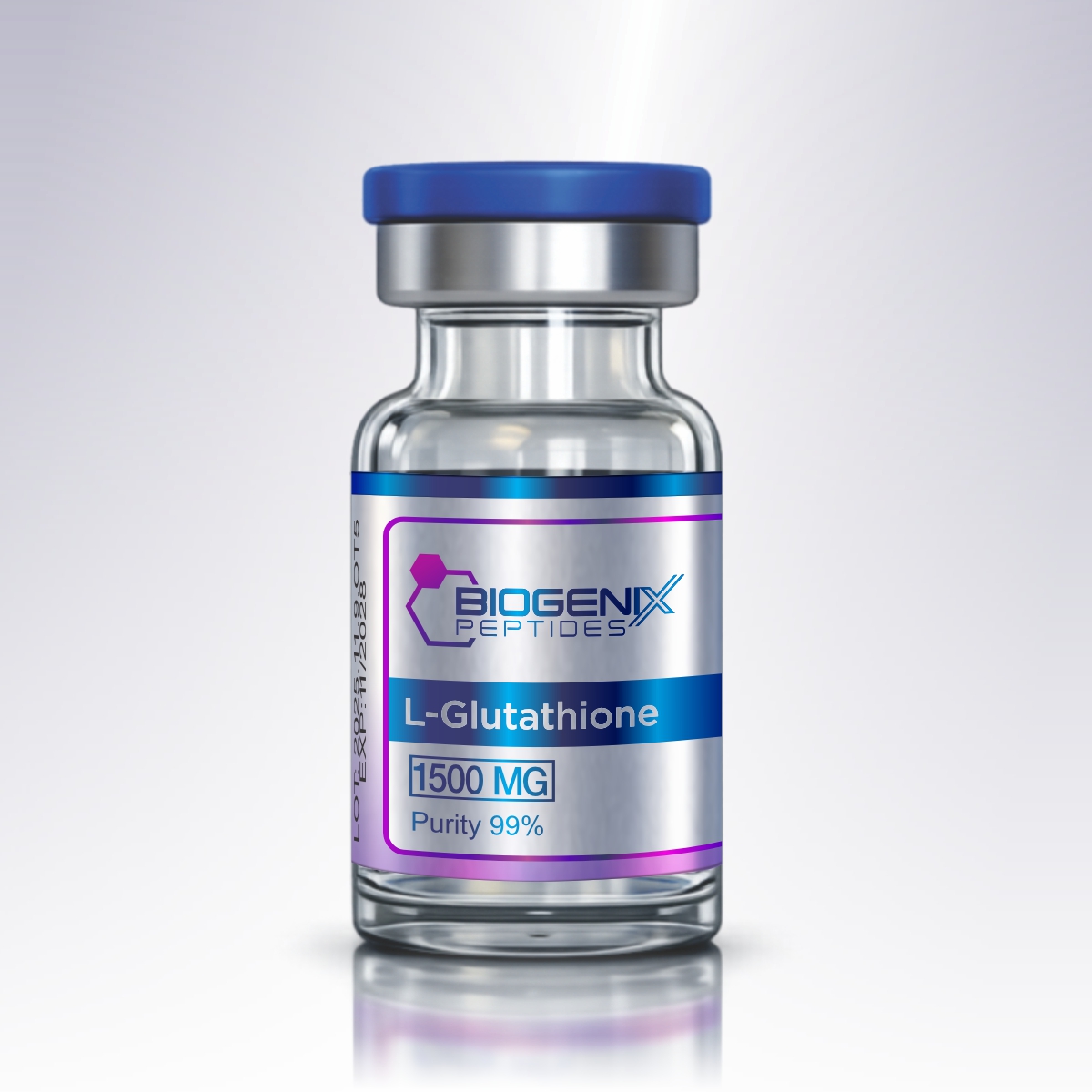
L-Glutathione 1500mg
$120.00
L-Glutathione (GSH) is a tripeptide of glutamate, cysteine, and glycine, widely regarded as a key intracellular antioxidant. It functions as a cofactor for enzymes such as glutathione peroxidase and glutathione reductase, supporting neutralization of reactive oxygen species, detoxification of xenobiotics, and overall redox balance. Endogenously, glutathione circulates in reduced (GSH) and oxidized (GSSG) states, with the GSH:GSSG ratio commonly used as an indicator of oxidative stress. Research also associates reduced glutathione with roles in cell proliferation, apoptotic signaling, immune regulation, and mitochondrial protection.
In Stock
L-Glutathione (GSH) Peptide
Description
L-Glutathione (GSH) is a tripeptide composed of glutamate, cysteine, and glycine, widely recognized as one of the body’s most important intracellular antioxidants. It serves as a cofactor for various antioxidant enzymes, including glutathione peroxidase and glutathione reductase, and is essential for neutralizing reactive oxygen species (ROS), detoxifying xenobiotics, and maintaining redox homeostasis in cells. (1)(2)Endogenous glutathione exists in both reduced (GSH) and oxidized (GSSG) forms, with the GSH:GSSG ratio serving as a biomarker of cellular oxidative stress. Research indicates that reduced glutathione may also participate in cell proliferation, apoptosis regulation, immune modulation, and mitochondrial protection. (3)
Overview
The reduced form (GSH) represents the active antioxidant state of glutathione. GSH participates in numerous biochemical pathways, including:• Detoxification of peroxides and lipid peroxides• Regeneration of other antioxidants (vitamin C and E)• Maintenance of thiol status in proteins and DNA• Chelation of heavy metals and reactive metabolites• Regulation of immune cell activity and cytokine signaling (4)(5)Low GSH levels have been associated with oxidative damage, aging, and several degenerative diseases. Supplementation or experimental administration of L-Glutathione has been studied for its potential to restore antioxidant balance and improve cellular resilience against oxidative stress.
Chemical Characteristics
| Compound | Type | Molecular Formula | Molecular Weight |
| L-Glutathione | Endogenous tripeptide antioxidant (γ-Glu-Cys-Gly) | C₁₀H₁₇N₃O₆S | 307.32 g/mol |
Synonyms: GSH, Reduced Glutathione, γ-L-Glutamyl-L-Cysteinylglycine
Research and Clinical Studies
Glutathione and Oxidative Stress
Research indicates that glutathione serves as a direct scavenger of hydroxyl radicals, hypochlorous acid, and lipid peroxides, while also regenerating other antioxidants through redox cycling. (6) A clinical study found that GSH supplementation increased plasma antioxidant capacity and decreased markers of oxidative damage in humans. (7)
Glutathione and Immune Function
Experimental studies have demonstrated that glutathione may regulate cytokine production and modulate lymphocyte proliferation. (8) In murine models, glutathione depletion was linked to suppressed immune function, while supplementation restored T-cell responsiveness and macrophage activation. (9)
Glutathione and Skin Health
Topical and systemic administration of GSH has been examined for potential skin brightening and photoprotective effects. In a randomized clinical trial, oral GSH (500 mg/day) reduced melanin index and improved skin elasticity in human participants after 12 weeks of administration. (10)
Glutathione and Liver Protection
Studies suggest that glutathione may support hepatic detoxification by conjugating reactive metabolites via glutathione-S-transferase. In rodent models, GSH administration attenuated hepatocellular injury caused by acetaminophen and ethanol exposure. (11)
L-Glutathione — References
- Forman, H. J., Zhang, H., Rinna, A. Glutathione: overview of its protective roles, measurement, and biosynthesis. Molecular Aspects of Medicine. 2009;30(1–2):1–12.https://doi.org/10.1016/j.mam.2008.08.006
- Pizzorno, J. Glutathione! Integrative Medicine (Encinitas). 2014;13(1):8–12.https://www.ncbi.nlm.nih.gov/pmc/articles/PMC4684116/
- Ballatori, N., Krance, S. M., Notenboom, S., Shi, S., Tieu, K., Hammond, C. L. Glutathione dysregulation and the etiology and progression of human diseases. Biological Chemistry. 2009;390(3):191–214.https://doi.org/10.1515/BC.2009.033
- Wu, G., Fang, Y. Z., Yang, S., Lupton, J. R., Turner, N. D. Glutathione metabolism and its implications for health. Journal of Nutrition. 2004;134(3):489–492.https://doi.org/10.1093/jn/134.3.489
- Allen, J., Bradley, R. D. Effects of oral glutathione supplementation on systemic oxidative stress biomarkers in human volunteers. Journal of Alternative and Complementary Medicine. 2011;17(9):827–833.https://doi.org/10.1089/acm.2010.0716
- Witschi, A., Reddy, S., Stofer, B., Lauterburg, B. H. The systemic availability of oral glutathione. European Journal of Clinical Pharmacology. 1992;43(6):667–669.https://doi.org/10.1007/BF02284971
- Richie, J. P., Nichenametla, S., Neidig, W., Calcagnotto, A., Haley, J. S., Schell, T. D., Muscat, J. E. Randomized controlled trial of oral glutathione supplementation on body stores of glutathione. European Journal of Nutrition. 2015;54(2):251–263.https://doi.org/10.1007/s00394-014-0706-z
- Bounous, G., Molson, J. H. Competition for glutathione precursors between the immune system and the skeletal muscle: pathogenesis of chronic fatigue syndrome. Medical Hypotheses. 1999;53(4):347–349.https://doi.org/10.1054/mehy.1998.0780
- Yoshida, K., Hirokawa, J., Tagami, S., Kawakami, Y., Urata, Y., Kondo, T. Weakened cellular scavenging activity against oxidative stress in diabetes mellitus: regulation of glutathione synthesis and efflux. Diabetologia. 1995;38(2):201–210.https://doi.org/10.1007/BF00400643
- Nakamura, H., Takada, K. Reactive oxygen species and intracellular glutathione in the control of apoptosis. Antioxidants & Redox Signaling. 2002;4(3):489–503.https://doi.org/10.1089/15230860260196223
NOTICE OF COMPLIANCE
The mission of BioGenix Peptides™ is to provide researchers with the highest-quality, Ultra-Pure Series™ compounds to help unlock the full potential of this evolving field. With precision, purity, and scientific integrity at the core of our operations, BioGenix Peptides™ is dedicated to supporting responsible exploration and discovery
Products from BioGenix Peptides™ are not intended for human consumption. They are supplied exclusively for in-vitro and pre-clinical research purposes.
By purchasing or using these products, the Customer accepts full responsibility for their handling and use, and agrees to indemnify and hold BioGenix Peptides™ harmless from any claims resulting from misuse.
Having trouble viewing? Use the buttons below to download or open the certificate.
Related products

In Stock