
Receptors Matter More Than Exposure: Downregulation, Desensitization, and Under-Stimulation
Understanding receptor downregulation, desensitization, resensitization, and under-stimulation in peptide-relevant signaling research.
Research & Educational Use Only
This content is provided for informational and educational discussion related to biochemistry and receptor signaling in a research context. It does not constitute medical advice, diagnosis, or treatment, and should not be interpreted as such. All products referenced by BioGenix Peptides LLC are intended strictly for laboratory, analytical, and research use only and are not for human or animal consumption.
Why Peptides Don’t “Stop Working” — Receptors Adapt
In many peptide-adjacent research discussions, a familiar claim appears: “It worked at first, then it stopped.” A common assumption is that the compound “failed.” In reality, cellular signaling often shifts because receptors and downstream pathways are dynamic systems built to protect cells from chronic overstimulation and to conserve resources when signals are insufficient.
Key idea: Peptides act as messages. Receptors and signaling networks decide whether that message is amplified, dampened, internalized, or ignored.
Understanding receptor regulation helps explain apparent “tolerance,” plateaus, or inconsistent outcomes across studies—especially when exposure pattern, dose intensity, or timing changes over time.
What Receptors Are (and What They Are Not)
Receptors are proteins that detect specific ligands and initiate intracellular signaling. Many peptide-relevant targets are G protein–coupled receptors (GPCRs), which can be regulated through phosphorylation, arrestin recruitment, trafficking (internalization), and resensitization cycles.
A useful way to think about this: receptor biology is less like an on/off switch and more like an adaptive volume knob.
For a broad, authoritative overview of seven-transmembrane receptors (GPCRs), see Pierce, Premont & Lefkowitz (2002). PubMed
Receptor Downregulation: Too Much Stimulation
What downregulation means
Downregulation typically refers to a reduced number of functional receptors available for activation. This can occur via receptor internalization followed by degradation, reduced receptor synthesis, or altered trafficking that keeps receptors off the membrane.
Why cells do it
Persistent or high-intensity ligand exposure can signal to the cell that the environment is “too loud.” Downregulation can function as a protective adaptation—reducing sensitivity and stabilizing cellular output.
GPCR research has extensively documented the roles of GRKs, beta-arrestins, and endocytosis in patterns of desensitization and resensitization. Ferguson (2001) — PubMed
Practical research takeaway: If downregulation is present, increasing ligand concentration may not restore signaling and can sometimes intensify adaptive dampening.
Desensitization vs. Downregulation

These terms are often used interchangeably, but they are not the same.
- Desensitization: the receptor is still present, but signaling response is blunted (often via phosphorylation/arrestin-mediated mechanisms).
- Downregulation: receptor availability is reduced (fewer functional receptors at the surface), often taking longer to reverse.
Classic receptor desensitization mechanisms were described in foundational work on beta-adrenergic receptor function. Hausdorff, Caron & Lefkowitz (1990) — PubMed
Beta-arrestins can both inhibit upstream G-protein signaling and scaffold alternate downstream pathways, contributing to complex “shifted” signaling states. Lefkowitz & Shenoy (2005) — PubMed
Under-Stimulation: The Overlooked Failure Mode

Not all receptor issues come from “too much.” In some experimental contexts, outcomes appear weak because the receptor system is not being stimulated enough to reliably cross activation thresholds or initiate a full signaling cascade.
Common causes of under-stimulation
- Exposure is too infrequent to establish a measurable signaling pattern
- Concentration never reaches effective receptor occupancy in the model
- Timing conflicts with circadian or metabolic context (signal “arrives” when the system is least responsive)
- Baseline cellular state (stress/inflammation/energy status) dampens downstream response
Key idea: A high-purity compound can still yield weak data if the signaling pattern is too sparse or poorly timed for the target pathway.
For a research overview of pulsatile secretion and why patterns can carry unique biological information, see Veldhuis (2008). PubMed
Why “More mg” is a Misleading Metric in Research
Receptor systems are not linear. Many pathways demonstrate:
- Saturation: once receptors are occupied, more ligand does not produce proportionally more signaling
- Amplification: small receptor activation can trigger large downstream effects
- Diminishing returns: escalating exposure can plateau or even worsen signal quality via adaptation
The concept of “spare receptors” and non-linear receptor response is central to why low-dose signals can still produce strong outcomes. Stephenson (1956) — PubMed | Free full text (PMC)
For broader receptor-theory framing that helps interpret dose–response behavior in experimental systems, see Kenakin (Receptor theory). PubMed
Resensitization and Recovery Windows
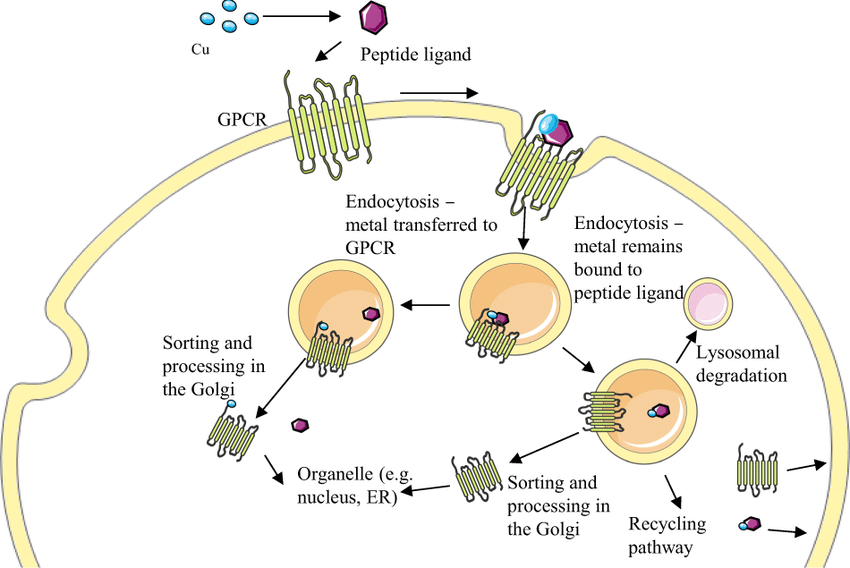
Many receptor systems can recover responsiveness when stimulation intensity decreases or when sufficient time passes for receptor recycling, re-expression, and downstream pathway reset. This is a major reason why, in research design, investigators often consider:
- Intermittent exposure vs. continuous exposure
- Washout periods
- Recovery windows that allow receptor trafficking to normalize
GPCR signal “turn-off” and “turn-on” behavior is deeply tied to arrestin-mediated processes and receptor trafficking cycles. For an accessible scientific overview of beta-arrestin signaling roles, see: Lefkowitz & Shenoy (2005) — PubMed and Shenoy & Lefkowitz (2011) — PubMed.
The Receptor-First Research Model
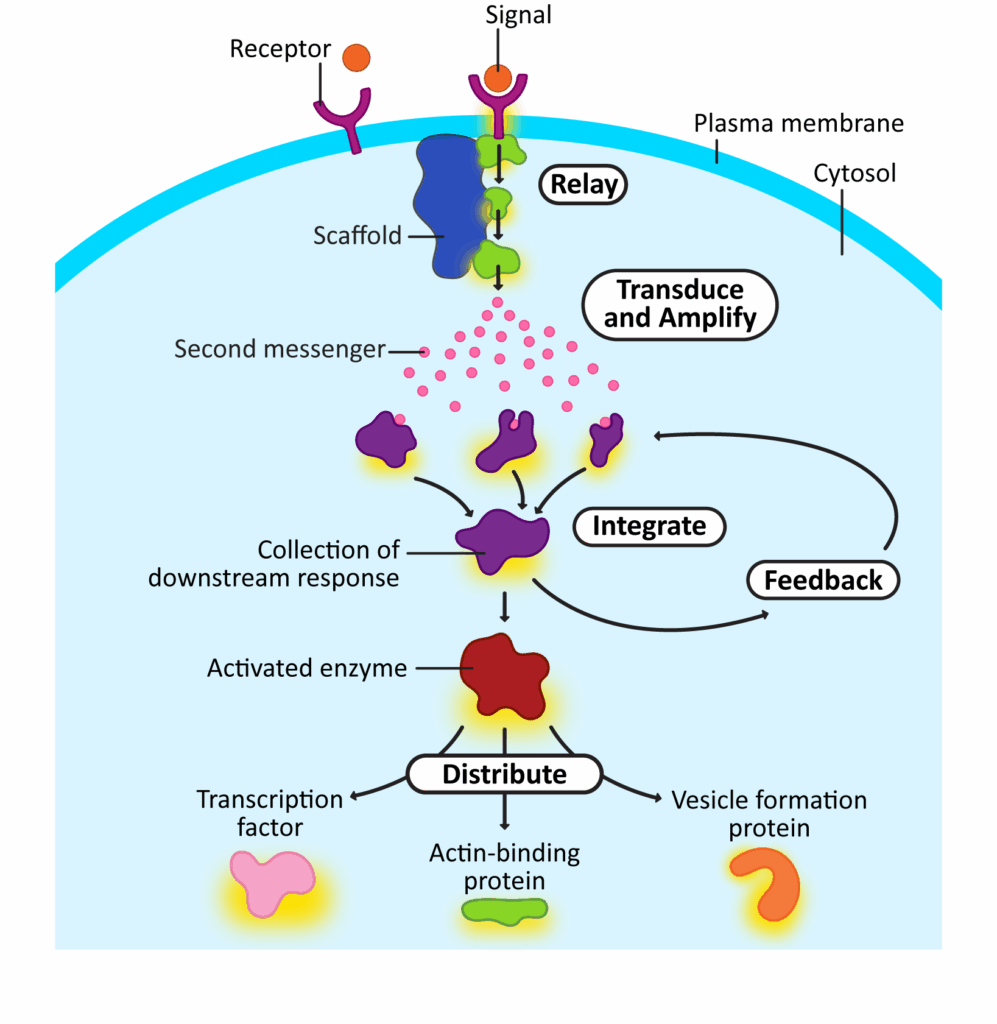
A receptor-first framework shifts the core question from:
“How much compound is needed?”
to
“What stimulation pattern preserves sensitivity without triggering adaptation?”
This perspective often improves the interpretation of inconsistent results and helps explain why two studies using the “same peptide” can produce different outcomes when frequency, timing, or exposure duration differs.
Related reads:
Why Peptide Bioavailability Isn’t What You Think,
Why Some Peptides Work Better During Sleep.
Metabolic signaling systems also demonstrate adaptive changes in sensitivity and downstream response in chronic states. For a high-authority review in this area, see: Kahn, Hull & Utzschneider (2006) — PubMed.
FAQ
What is receptor downregulation?
Receptor downregulation generally refers to reduced availability of functional receptors (often at the cell surface) after repeated or persistent stimulation. This can involve internalization, altered trafficking, reduced synthesis, and/or degradation. Is desensitization the same as downregulation?
Not exactly. Desensitization often means the receptor is still present but signaling is temporarily blunted. Downregulation typically means fewer functional receptors are available and recovery may take longer. Can lack of results be caused by under-stimulation?
Yes. If exposure is too infrequent, too low, or poorly timed for the model, receptor activation thresholds may not be reached consistently, and downstream cascades may not fully engage. Why doesn’t increasing dose always increase effect?
Receptors can saturate, and signaling pathways can amplify small inputs. Past a point, additional ligand may create diminishing returns or trigger adaptation (e.g., desensitization/downregulation), which can blunt responsiveness.
Peer-Reviewed References
References are provided for scientific context only and do not imply approved use, safety, or efficacy of any compound. All BioGenix products are intended strictly for research use.
- Ferguson SS. (2001). Evolving concepts in G protein-coupled receptor endocytosis: the role in receptor desensitization and signaling. PubMed
- Hausdorff WP, Caron MG, Lefkowitz RJ. (1990). Turning off the signal: desensitization of beta-adrenergic receptor function. PubMed
- Lefkowitz RJ, Shenoy SK. (2005). Transduction of receptor signals by beta-arrestins. PubMed
- Pierce KL, Premont RT, Lefkowitz RJ. (2002). Seven-transmembrane receptors. PubMed
- Stephenson RP. (1956). A modification of receptor theory. PubMed | PMC full text
- Veldhuis JD. (2008). Motivations and methods for analyzing pulsatile hormone secretion. PubMed
- Kahn SE, Hull RL, Utzschneider KM. (2006). Mechanisms linking obesity to insulin resistance and type 2 diabetes. PubMed
- Kenakin T. (2008). Receptor theory. PubMed
- Shenoy SK, Lefkowitz RJ. (2011). β-Arrestin-mediated receptor trafficking and signal transduction. PubMed