

Peptides & Sexual Function: The Research Behind Libido, Blood Flow & Performance
Introduction
Sexual function is a multidimensional process driven by hormones, neurotransmitters, vascular health, and psychological factors. Researchers have become increasingly interested in peptides for their ability to influence these systems at the signaling level—upstream of traditional pharmaceuticals. Below is a scientific yet accessible overview written for educational and research discussion only.
Why Researchers Study Peptides for Sexual Function
Peptides are short chains of amino acids that act as messengers inside the body. Many regulate hormonal pathways (such as GnRH, LH/FSH, or kisspeptin), while others modulate blood flow, repair tissues, or influence neurological responses tied to arousal and desire.
Peptides attract scientific attention in sexual-function models because they interact with foundational biology:
- Hormone production — testosterone, estradiol, LH, FSH
- Vascular integrity — nitric oxide, endothelial function, smooth-muscle relaxation
- Neurological regulation — libido, mood, stress response, central arousal circuits
- Tissue remodeling — pelvic microvasculature, connective tissue health
Instead of acting acutely like a traditional ED medication, peptides often target deeper regulatory systems.
1. Gonadotropin-Releasing Peptide Research (Gonadorelin & Related Molecules)
Peptides such as Gonadorelin are researched for their ability to stimulate LH and FSH release from the pituitary gland—key regulators of testosterone in men and reproductive hormones in women.
Research interest includes:
- Supporting endogenous testosterone output
- Restoring hormonal rhythm after suppression
- Improving reproductive balance and vitality
Because testosterone and estradiol strongly influence libido, energy, and sexual responsiveness, these peptides are explored as upstream regulators rather than short-term performance agents.
2. Kisspeptin-10
Kisspeptin-10 is widely studied for its potent activation of GnRH neurons and its downstream influence on LH pulsatility. Emerging research also suggests potential effects on brain regions associated with attraction, mood, and emotional bonding.
Research themes include:
- Activation of the hypothalamic–pituitary–gonadal axis
- Increased gonadotropin signaling
- Possible central effects on libido and desire
Kisspeptin’s combination of hormonal and neurological action makes it a compelling area of study for sexual-function models.
3. PT-141 (Bremelanotide): A Central Arousal Pathway Peptide
PT-141 stands out because it acts on melanocortin receptors in the central nervous system, not the vascular pathways targeted by PDE5 inhibitors. It has been explored for its potential ability to enhance desire and arousal directly at the neurological level.
Investigational interest includes:
- Increased sexual desire
- Enhanced arousal independent of vascular status
- Potential utility in both male and female dysfunction models
Its mechanism is fundamentally different from traditional ED medications, making it a unique research tool.
4. Vascular & Tissue-Support Peptides (BPC-157, TB-500, GHK-Cu)
Though not sexual-function peptides specifically, these compounds are studied for their effects on healing, circulation, and endothelial health—factors closely linked to sexual performance and sensation.
Key research observations:
- BPC-157: angiogenesis, nitric-oxide support, endothelial repair
- TB-500: cell migration, vascular remodeling
- GHK-Cu: microvascular integrity, anti-inflammatory activity
These peptides are often examined as supportive tools for improving overall vascular quality and pelvic tissue health.
5. Oxytocin Peptide Analogues
Oxytocin-related peptides are researched for their potential influence on bonding, stress reduction, and emotional closeness—factors that contribute significantly to sexual satisfaction.
Research themes include:
- Enhanced emotional connection
- Reduced stress or performance anxiety
- Improved intimacy and relational resonance
Although indirect, psychological pathways matter greatly in sexual function, and these peptides explore that domain.
6. Metabolic Peptides (GLP-1 Analogues: Semaglutide, Tirzepatide, Retatrutide)
These peptides are not sexual-function agents, but their metabolic improvements—fat loss, reduced inflammation, improved blood flow—can have meaningful downstream effects on libido, ease of arousal, and confidence.
Indirect connections include:
- Better endothelial performance
- Lower systemic inflammation
- Enhanced energy, mood, and hormonal environment
Metabolic health and sexual health are closely linked, and research in one area often influences the other.
Do Peptides Replace Traditional ED Medications?
Peptides represent a completely different approach from traditional ED medications. Instead of targeting symptoms at the moment of need—like PDE5 inhibitors do—peptides studied for sexual health focus on the underlying biological systems: hormonal balance, neurological arousal, metabolic function, and vascular integrity.
While they aren’t direct substitutes for prescription drugs, many researchers view peptides as a promising alternative pathway—one aimed at supporting the body’s natural signaling networks rather than providing short-term, surface-level effects.
Final Thoughts
Peptides offer a broad and expanding field of research into sexual function. Their ability to influence hormones, arousal pathways, vascular health, emotional bonding, and metabolic balance makes them uniquely positioned as upstream modulators rather than quick fixes.
As interest grows, peptides continue to be explored for models involving libido, erectile function, intimacy, vitality, and reproductive hormone regulation.
For educational and research discussion only. Not for human use.
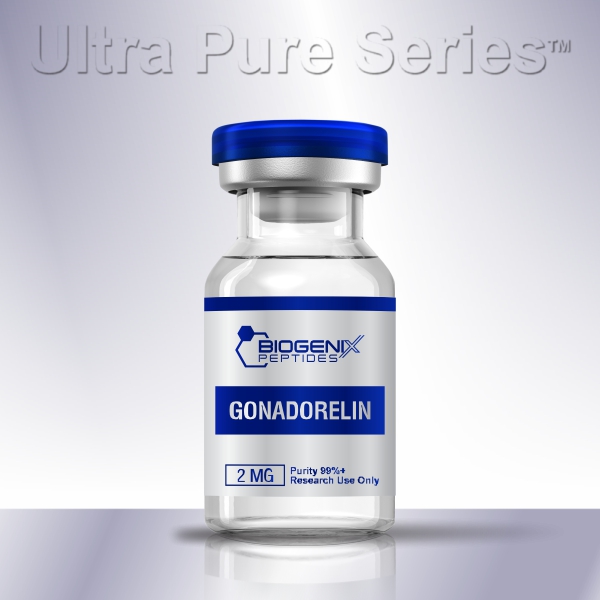
GONADORELIN 2mg
Gonadorelin is a synthetic decapeptide that mimics the natural gonadotropin-releasing hormone (GnRH) secreted by the hypothalamus. This peptide is composed of ten amino acids and has been widely studied for its potential role in regulating reproductive hormone secretion. Specifically, Gonadorelin acts on the pituitary gland to stimulate the release of luteinizing hormone (LH) and follicle-stimulating hormone (FSH).
Out of stock

KISSPEPTIN-10 10mg
Kisspeptin-10 (KP-10) is a 10-amino-acid peptide fragment produced from the KISS1 gene, which was first identified for its role in metastasis suppression. The full KISS1 precursor protein is cleaved into several active fragments—including Kisspeptin-54, -14, -13, and -10. KP-10, also known as Metastin 45–54, is the smallest naturally occurring sequence that can effectively activate the KISS1R (GPR54) receptor.
In Stock
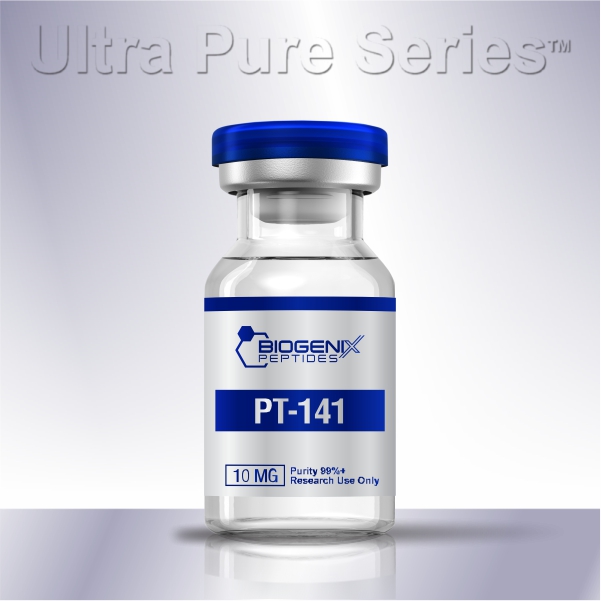
PT-141 10mg
PT-141, also known as Bremelanotide, is a synthetic peptide analog of the melanocortin receptor agonist Melanotan II. Unlike other agents studied for sexual function that primarily act via vascular mechanisms, PT-141 is proposed to act directly on the central nervous system by stimulating melanocortin receptors (MC3R and MC4R) in the hypothalamus. These receptors are believed to play key roles in regulating sexual arousal, energy balance, and appetite. As such, PT-141 has been widely investigated in research focusing on sexual function, neuroendocrine modulation, and the melanocortin system.
In Stock
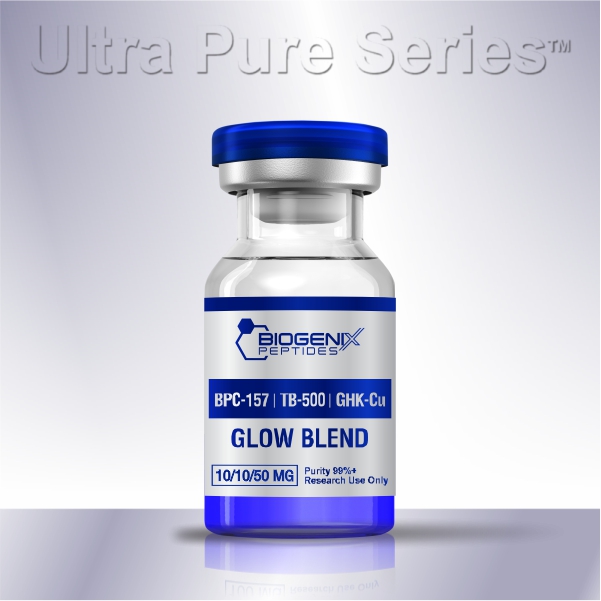
GLOW 10/10/50mg Blend
This multi-peptide preparation unites three widely researched regenerative peptides into a single vial for investigations that probe complementary pathways of tissue repair and remodeling.- GHK-Cu is best known for up-regulating wound-healing genes and driving collagen, elastin, and angiogenic growth-factor expression.- BPC-157 exhibits gastro-protective, tendon-/ligament-healing, and anti-inflammatory actions through modulation of nitric-oxide signaling, growth-factor receptors, and cytokine balance.- TB-500 enhances cell migration and angiogenesis primarily via actin‐sequestering and integrin-linked pathways.When combined, researchers can examine potential synergy across copper-mediated extracellular-matrix activation (GHK-Cu), cytoprotective/anti-inflammatory signaling (BPC-157), and actin-dependent cell-motility mechanisms (TB-500).This preparation is provided as a 70 mg lyophilized blend containing 50 mg GHK-Cu, 10 mg BPC-157, and 10 mg TB-500 per vial.
In Stock
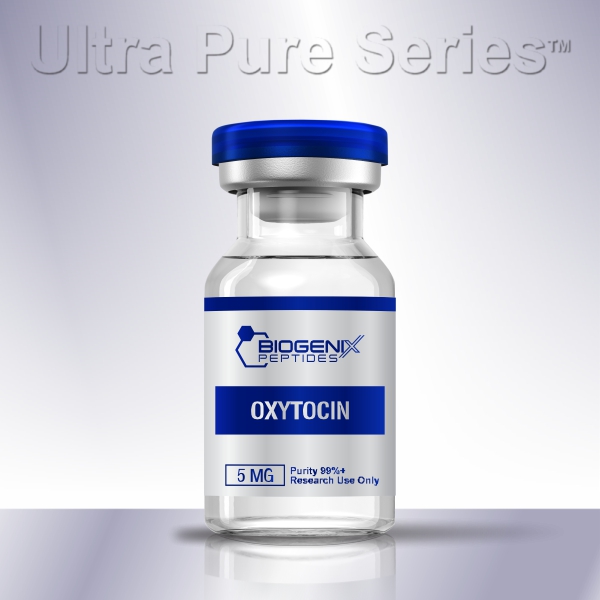
OXYTOCIN 5mg
Oxytocin is a naturally occurring neuropeptide hormone composed of nine amino acids (nonapeptide). It is synthesized primarily in the hypothalamus and released from the posterior pituitary gland into the bloodstream. Oxytocin acts both as a hormone and as a neuromodulator in the central nervous system, where it influences a range of physiological and behavioral processes, including uterine contraction, lactation, social bonding, emotional regulation, and stress modulation.
In Stock