
Peptides for Emotional Stability—not Just Mood
The Emerging Field of “Emotional Regulation Peptides”
Most discussions around emotional well-being revolve around anxiolytics, neurotransmitter modifiers, or traditional mood-focused compounds. But a new research category is rising in visibility—peptides that support emotional regulation and resilience rather than simply altering mood. These compounds interact with neural circuitry, neurotrophic factors, and stress-modulation pathways in ways that differ from conventional approaches.
In emerging literature, two peptides stand out: Selank and Semax. While they are classically associated with cognition and anxiolytic-type activity in studies, their deeper value may lie in how they influence emotional stability, executive control, and stress response adaptation.
What Makes Emotional Regulation Different Than “Mood”?
Emotional regulation isn’t about making someone feel happy or relaxed. Instead, research describes it as:
- Maintaining stable internal states during stress or pressure
- Recovering faster from emotional volatility or reactive thinking
- Strengthening prefrontal cortex control over impulsive or limbic responses
- Supporting cognitive clarity when emotions run high
Peptides offer a unique research avenue here because they can influence neuropeptides, neurotrophic factors, and regulatory signaling upstream—rather than trying to force neurotransmitters up or down.
Selank: Neuropeptide Signaling & Calm Stability
Selank is a synthetic peptide analog derived from tuftsin, known for its effects on GABAergic modulation, serotonin balance, and stress-response pathways. In preclinical data, Selank appears to influence:
- Emotional steadiness rather than sedation
- Reduced reactivity to environmental stressors
- Mood stabilization via indirect serotonin modulation
- Cognitive calmness without dampening alertness
Selank’s mechanism makes it interesting for researchers studying how neuropeptide-based signaling affects emotional resilience. The focus is less on “relaxation” and more on stable, controlled emotional states under pressure.
Semax: BDNF, Executive Function & Cognitive-Emotional Integration
Semax, another heptapeptide analog, is primarily associated with BDNF (brain-derived neurotrophic factor) upregulation in animal models. But researchers are now examining how this might influence emotional regulation, not just cognition.
Findings suggest Semax may support:
- Improved top-down control over emotional responses
- Cognitive flexibility under stress
- Enhanced neuroplasticity in regulatory circuits
- Reduced mental fatigue that worsens emotional instability
This positions Semax as a unique peptide for studies focused on the intersection of cognition + emotion—where emotional stability relies heavily on a strong, adaptable prefrontal cortex.
The Synergy: Why Selank and Semax Are Often Studied Together
Although they act on different pathways, Selank and Semax complement each other in models of emotional-regulatory function:
- Selank: Balances neurochemical response + decreases emotional volatility
- Semax: Enhances cognitive oversight + increases stress-adaptive learning
When combined, researchers speculate a potential dual-layer emotional regulation effect: one peptide stabilizing emotional inputs, the other strengthening the brain’s ability to interpret and manage those inputs.
Why This Field Is Growing Fast
The renewed interest in “emotional stability peptides” is driven by several factors:
- High workplace stress and cognitive overload
- Improvements in peptide delivery and stability research
- A shift from mood-altering compounds to performance-oriented emotional control
- Growing demand for resilience research among cognitive scientists
These peptides are being explored not as emotional “boosters,” but as tools to study how humans maintain clarity, confidence, and composure during high-stakes or high-stress conditions.
Final Thoughts: A New Branch of Peptide Science
As more studies move beyond simple anxiolytic models, peptides like Selank and Semax represent a new frontier: compounds that may help researchers better understand emotional adaptability, stress-resilient performance, and cognitive-emotional integration.
This isn’t about changing mood—it’s about exploring what keeps emotions steady, flexible, and manageable across real-world challenges.
For research purposes only. Not for human consumption.
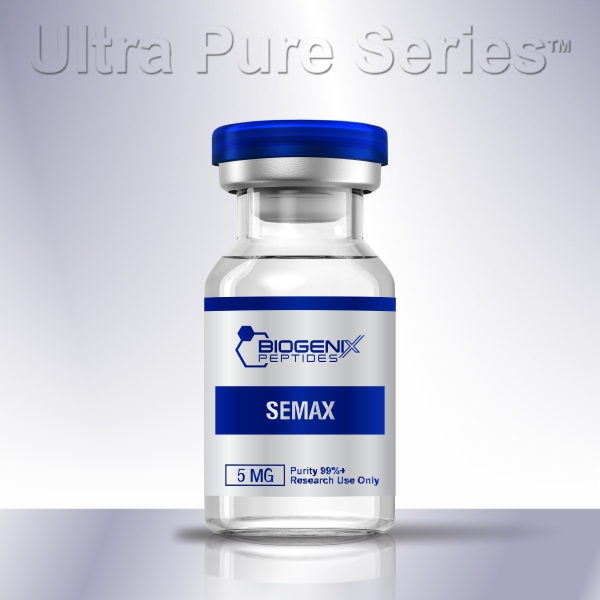
SEMAX 5mg
Semax is a synthetic polypeptide derived from the ACTH(4–7) fragment, designed to retain central nervous system–related properties without the classical corticotropic effects of native ACTH. Research efforts have examined its potential influence on neuroadaptive processes, cognitive endpoints, and stress-response pathways. Semax incorporates the core Met-Glu-His-Phe (ACTH4–7) sequence extended with a C-terminal Pro-Gly-Pro (PGP) motif and is commonly produced in an acetylated form. The PGP addition is proposed to modify physicochemical behavior and may support passage across select biological barriers—such as the blood–brain barrier—through passive or carrier-assisted mechanisms, while acetylation may enhance resistance to proteolytic degradation.
In Stock
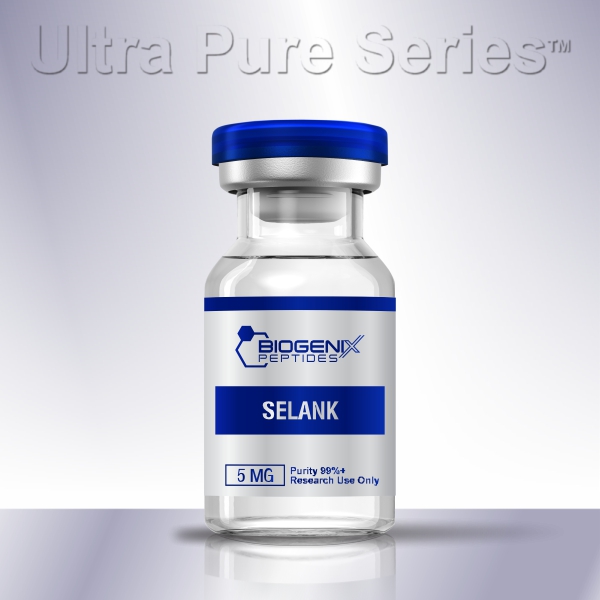
SELANK 5mg
Selank is a synthetic heptapeptide modeled after tuftsin, an IgG-derived fragment associated with immune modulation and behavioral regulation. In research settings, it has been examined for potential influences on stress response pathways, mood-related behaviors, and select immune parameters. Structurally, Selank contains tuftsin at the N-terminus linked to a Pro-Gly-Pro (PGP) tripeptide at the C-terminus. The added PGP motif is proposed to alter physicochemical stability and may support transport across certain biological barriers—including the blood–brain barrier—through receptor-mediated or carrier-assisted mechanisms, while also potentially affecting peptide conformation and receptor interactions.
In Stock