
Peptides & Arthritis Research:
Exploring Regeneration, Inflammation Control, and Joint Repair
Arthritis isn’t just about joint discomfort — it’s about mobility, tissue breakdown, inflammation, and changes in how the body repairs itself. As scientific interest grows, peptides have entered the conversation not as symptom-masking agents, but as research tools that may influence biological repair pathways, inflammation signaling, cellular resilience, and structural regeneration at deeper levels.
This emerging field has researchers asking a fascinating question: Can the right biological signals support joint health at the structural, immune, and cellular level?
Why Peptides Are Being Studied for Arthritis
Traditional approaches often focus on pain management and inflammation control. Peptides stand apart because research is exploring their influence on:
- Joint and cartilage tissue repair
- Immune system regulation
- Remodeling of tendons, ligaments, and connective structures
- Collagen and extracellular matrix support
- Improved blood flow and cellular signaling
- Regeneration rather than symptom suppression
Instead of working downstream on symptoms, peptides under study may operate upstream — affecting the environment that influences joint function and recovery.
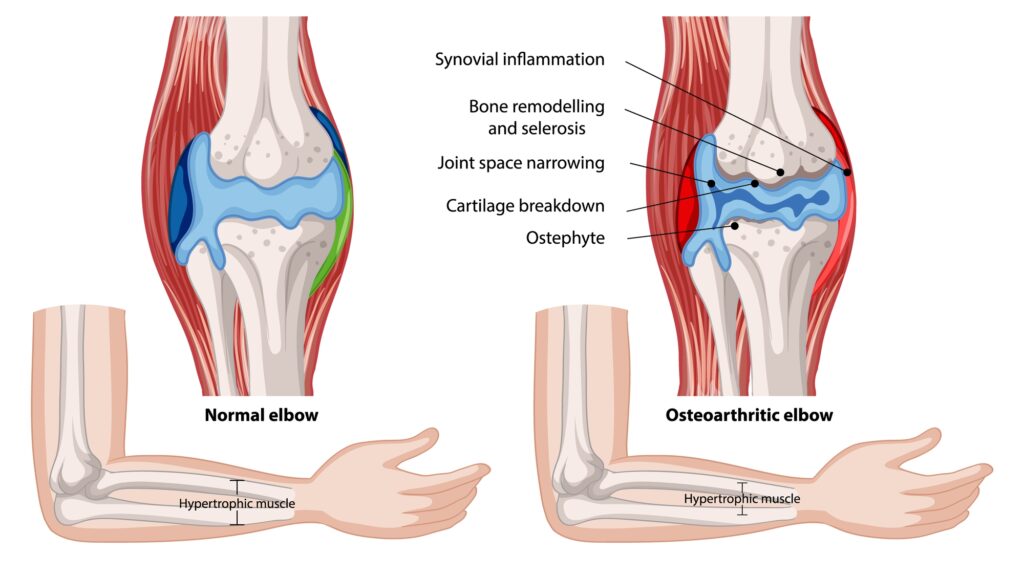
Inflammation-Modulating Peptides
Chronic inflammation is a major feature in many forms of arthritis, especially autoimmune-based types. The following peptides are being studied for their potential role in immune balance and cytokine signaling.
Thymosin Alpha-1
Thymosin Alpha-1 is being researched as an immune regulatory peptide. In arthritis-related models, it has shown potential in:
- Regulating overactive immune signaling
- Supporting T-cell modulation and balance
- Reducing inflammatory cytokines linked to joint breakdown
Because rheumatoid and autoimmune arthritis share immune dysregulation features, Thymosin Alpha-1 remains a notable peptide in current research discussions.
KPV
KPV is a naturally occurring fragment of the α-MSH peptide and is being studied for its anti-inflammatory profile. Research suggests it may:
- Downregulate inflammatory pathways such as NF-κB
- Reduce local inflammatory responses without suppressing immunity
- Support tissue stability under inflammatory stress
Its targeted inflammation-modulating potential makes it a unique research candidate for joint biology.
Tissue Repair & Regenerative Peptides
These peptides are being studied for their potential influence on connective tissue healing, tendon and ligament remodeling, and cellular repair mechanisms.
BPC-157
BPC-157 is frequently studied for its regenerative potential, with research exploring:
- Tendon, ligament, and soft tissue repair
- Preservation of cartilage under stress conditions
- Blood vessel formation (angiogenesis) for healing
- Reduced tissue inflammation and damage
Because joint degeneration often involves compromised soft-tissue structures, BPC-157 is widely referenced in connective tissue research.
TB-500 (Thymosin Beta-4 Fragment)
TB-500 is being explored due to its relationship with actin — a protein crucial for cell movement and structural repair. Research suggests potential benefits including:
- Enhanced cell migration to damaged tissues
- Support for tissue remodeling
- Reduced fibrosis and excessive scar formation
- Complementary pathways when studied alongside BPC-157
This peptide is often discussed in cases involving long-term connective tissue breakdown.
LL-37
Beyond its antimicrobial research applications, LL-37 has also been studied for:
- Tissue repair and wound healing signaling
- Immune system regulation
- Effects on inflammatory cascades within synovial and connective environments
Its dual immune-modulating and regenerative interest makes it relevant in chronic inflammatory tissue research.
Joint Structure, Cartilage & Bone-Support Peptides
Cartilage has a limited capacity to regenerate, making peptides that influence matrix biology particularly compelling in arthritis research.
IGF-1 LR3
IGF-1 plays a central role in musculoskeletal repair and cartilage biology. Research areas include:
- Collagen type II support
- Chondrocyte (cartilage cell) activity
- Cartilage matrix synthesis and resilience
Because cartilage degradation is central to arthritis progression, IGF-1 LR3 is often discussed in regenerative research.
GHK-Cu
GHK-Cu is being researched for its cellular repair signaling and potential genetic regulatory effects. Studies suggest it may:
- Stimulate collagen and extracellular matrix rebuilding
- Support antioxidant and anti-inflammatory responses
- Influence gene expression involved in tissue restoration
Its research applications extend beyond joints into systemic aging and cellular repair biology.
Bioregulator Peptide: Gene-Level Repair Signaling
Cartalax
Cartalax stands out because it belongs to the bioregulator peptide category, meaning its research focus is on cellular communication and genetic regulation rather than purely mechanical tissue repair.
Current research explores whether Cartalax may:
- Support chondrocyte health and function
- Influence gene expression related to cartilage rebuilding
- Reduce oxidative and inflammatory stress in joint tissues
- Assist long-term structural resilience rather than fast, acute effects
Its mechanism complements the repair-oriented peptides by working at the genomic programming level.
Neurological Support & Pain-Signal Modulation Peptides
Arthritis affects both tissue and the nervous system. These peptides are studied primarily for neurological effects, but research suggests indirect relevance to chronic joint stress.
Semax / Selank
These neuroactive peptides are being studied for their roles in:
- Modulating neurological inflammation pathways
- Stabilizing stress responses associated with chronic discomfort
- Supporting neurochemical balance in long-term inflammatory conditions
While not repair-focused, they may be relevant in the research of chronic joint pain response and perception.
Important Research-Only Notice
While peptide research for arthritis is growing rapidly, it’s important to note:
- These compounds are not FDA-approved treatments
- They are not intended to diagnose, treat, or cure disease
- All peptides discussed are for research use only
- Research outcomes vary and data is still expanding
Still, this category represents one of the most exciting frontiers in tissue repair, immune regulation, and regenerative biology.

For laboratory research use only. Not for human consumption. No medical, veterinary, or cosmetic claims are made or implied.
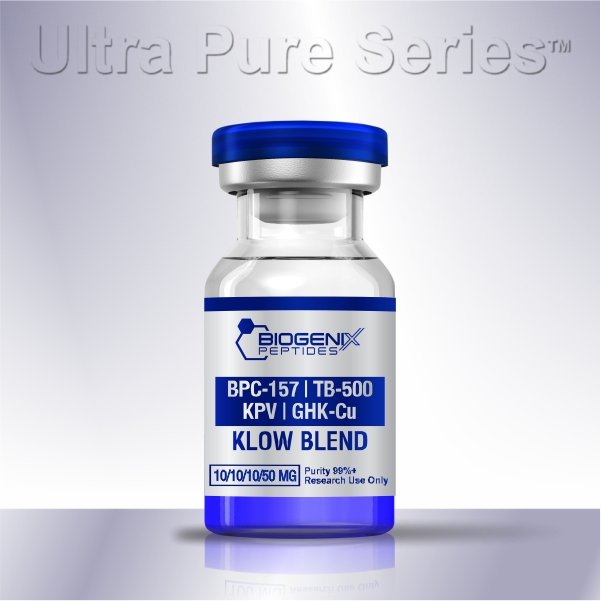
KLOW 10/10/10/50mg Blend
The KLOW blend pairs four research peptides with complementary roles in tissue protection and repair. BPC-157 supports soft-tissue healing, angiogenesis, and cytoprotection. TB-500 promotes cell migration and vascular growth through actin-related pathways. GHK-Cu enhances collagen and ECM remodeling while modulating repair-associated genes. KPV provides anti-inflammatory activity via NF-κB/MAPK suppression. Together, they allow researchers to examine coordinated effects on healing, remodeling, and inflammation control in soft-tissue or mucosal-injury models.
In Stock
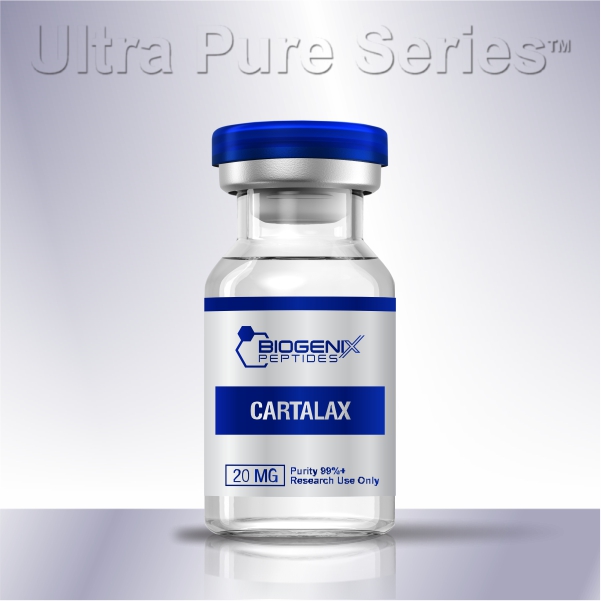
CARTALAX 20mg
Cartalax is a synthetic regulatory tetrapeptide composed of the amino-acid sequence Ala–Glu–Asp–Gly (AEDG). It belongs to a class of short peptides studied for their potential roles in cellular regulation, gene-expression normalization, and tissue-specific recovery processes.
Unlike classical receptor agonists, Cartalax is investigated for epigenetic-like modulation, acting at the level of transcriptional control rather than direct membrane signaling. This has led to research interest in cartilage homeostasis, joint integrity, inflammation pathways, and age-related degenerative conditions.
Studies describe Cartalax as a bioregulatory peptide, capable of influencing cellular responses to stress, injury, and metabolic challenge across multiple tissue types, with the strongest data centered on connective tissues.
Out of stock