Peptide Storage Containers That Won’t Let You Down
Why Peptide Storage Containers Matter for Research Integrity
Disclaimer: The information provided in this article is for educational and informational purposes only. It is not intended as medical advice, diagnosis, or treatment. Products and compounds referenced are for research use only and are not approved for human or veterinary consumption. Always consult a qualified professional regarding health or medical decisions.
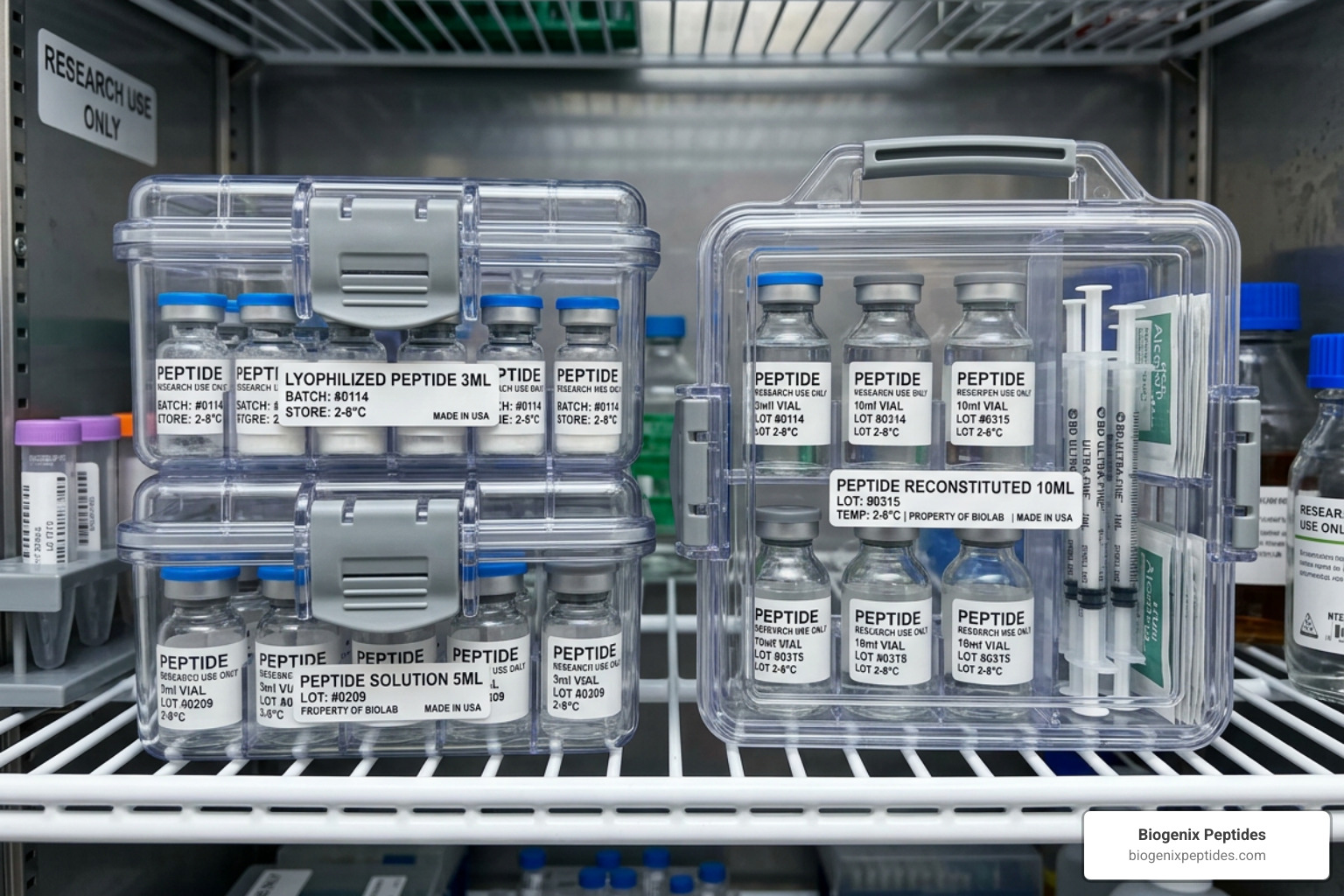
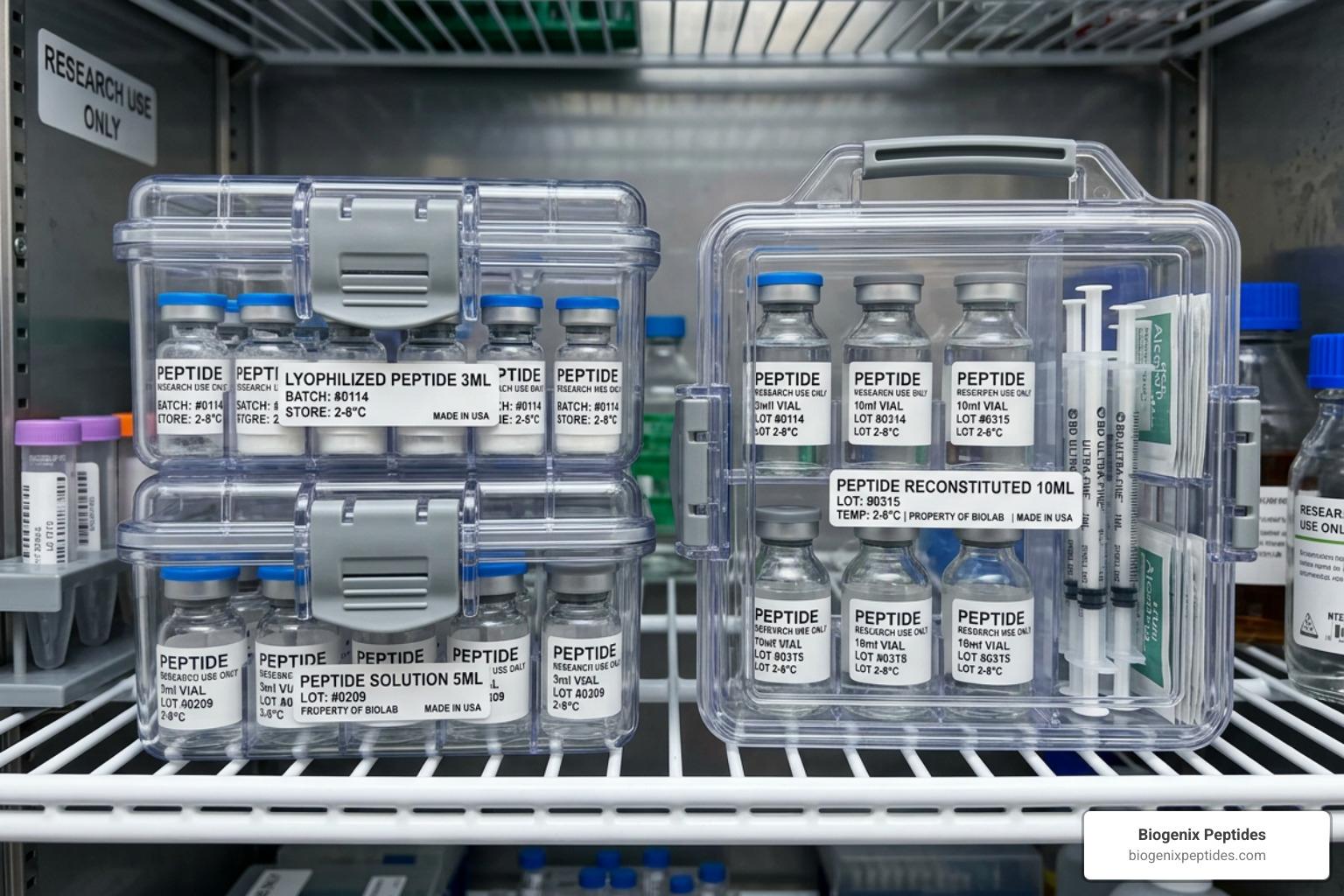
Peptide storage containers are specialized cases designed to protect temperature-sensitive vials from light, heat, and physical damage during lab work, refrigeration, or transport. Here are the most important things to know before buying:
- Best material for cold storage: PETG plastic — fridge and freezer safe, BPA-free, and FDA-certified
- Common vial sizes supported: 3ml, 5ml, and 10ml
- Key features to look for: secure locking clips, stackable design, compartments for syringes and supplies
- Best for travel: hardshell EVA cases with insulated liners
- Best for lab/fridge: modular trays holding 50–100 vials
- Price range: $0.09–$3.00 per unit depending on material and quantity
- Where to buy: eBay, Etsy, specialized sites, and wholesale suppliers
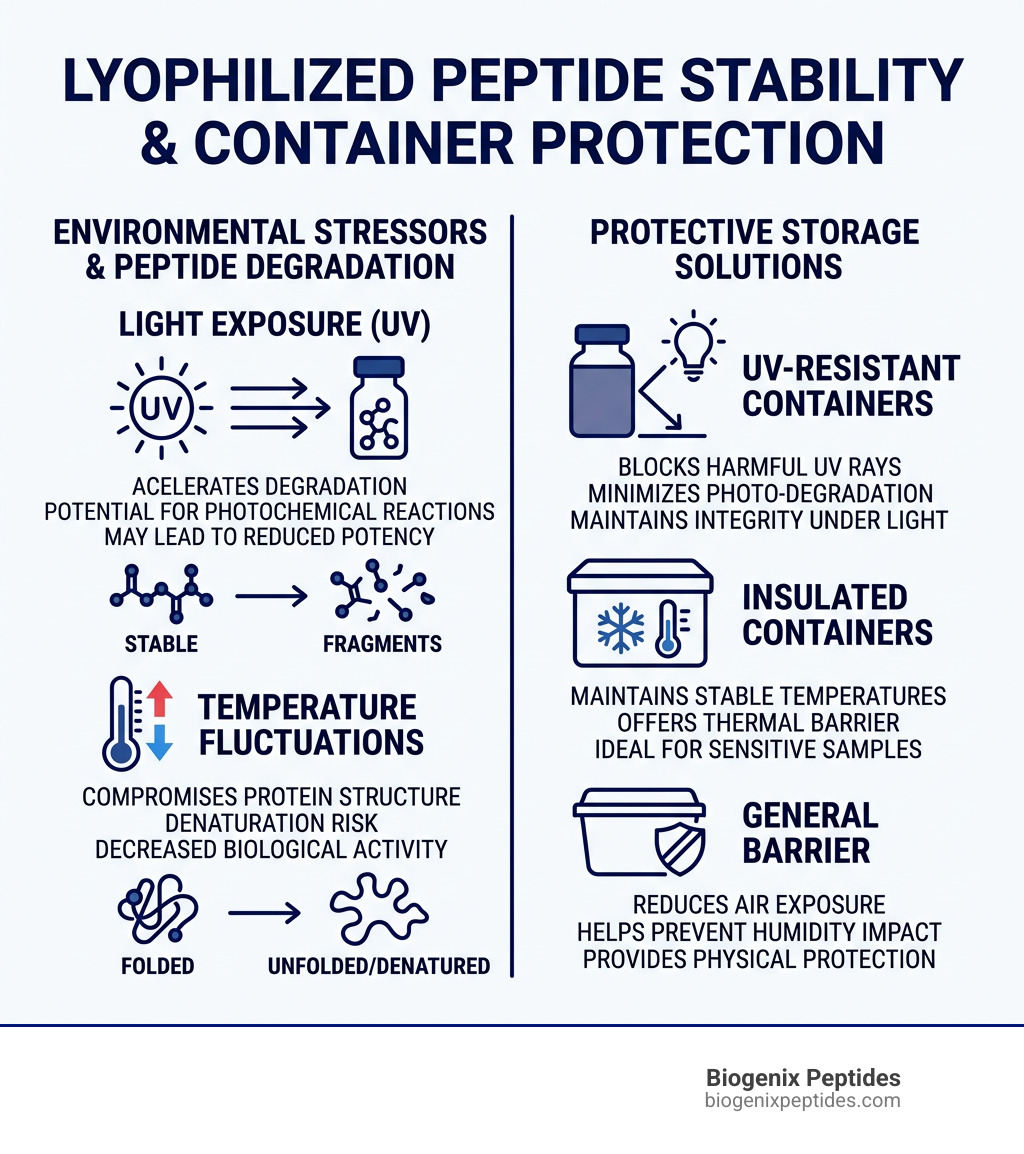
Peptides are fragile. Lyophilized peptides in particular degrade quickly when exposed to the wrong temperature, humidity, or light — even brief mishandling can compromise sample integrity and throw off research results. Yet many researchers still store vials loosely in plastic bags or cardboard boxes that offer little real protection.
The right storage solution is not just about organization. It is about protecting your research investment from the moment a vial arrives to the moment it is used.
I’m Jay Daniel, Founder and CEO of BioGenix Peptides, and with years of hands-on experience sourcing, handling, and evaluating peptide storage containers across research and distribution settings, I’ve seen how the right case can make or break sample quality. Read on for a practical breakdown of every option worth considering.
Essential Features of High-Quality Peptide Storage Containers
When we look for the ideal peptide storage containers, we aren’t just looking for a box; we are looking for a protective barrier. A high-quality case must account for the physical dimensions of standard research vials while providing a environment that shields against environmental stressors.
Vial Compatibility and Precision Fit
Most research peptides are distributed in standard 3ml vials, but many labs also utilize 5ml and 10ml variants for larger studies. A superior container should offer precision-cut slots that prevent vials from rattling. When vials clink together, there is a risk of micro-fractures in the glass, which can lead to contamination or loss of vacuum seal.
Key Features to Prioritize:
- Secure Closures: Look for snap-latch mechanisms or locking clips. These ensure the lid won’t pop open if the case is dropped or shifted in a crowded refrigerator.
- Stackability: In a lab setting, space is at a premium. Containers designed with recessed lids and feet allow you to stack multiple units safely, maximizing vertical space in cold storage.
- Dust and Light Resistance: Opaque or UV-resistant materials help protect light-sensitive compounds from degradation. Sealed edges are also vital to keep out dust and moisture.
- Durability: The case should withstand repeated opening and closing without the hinges weakening.
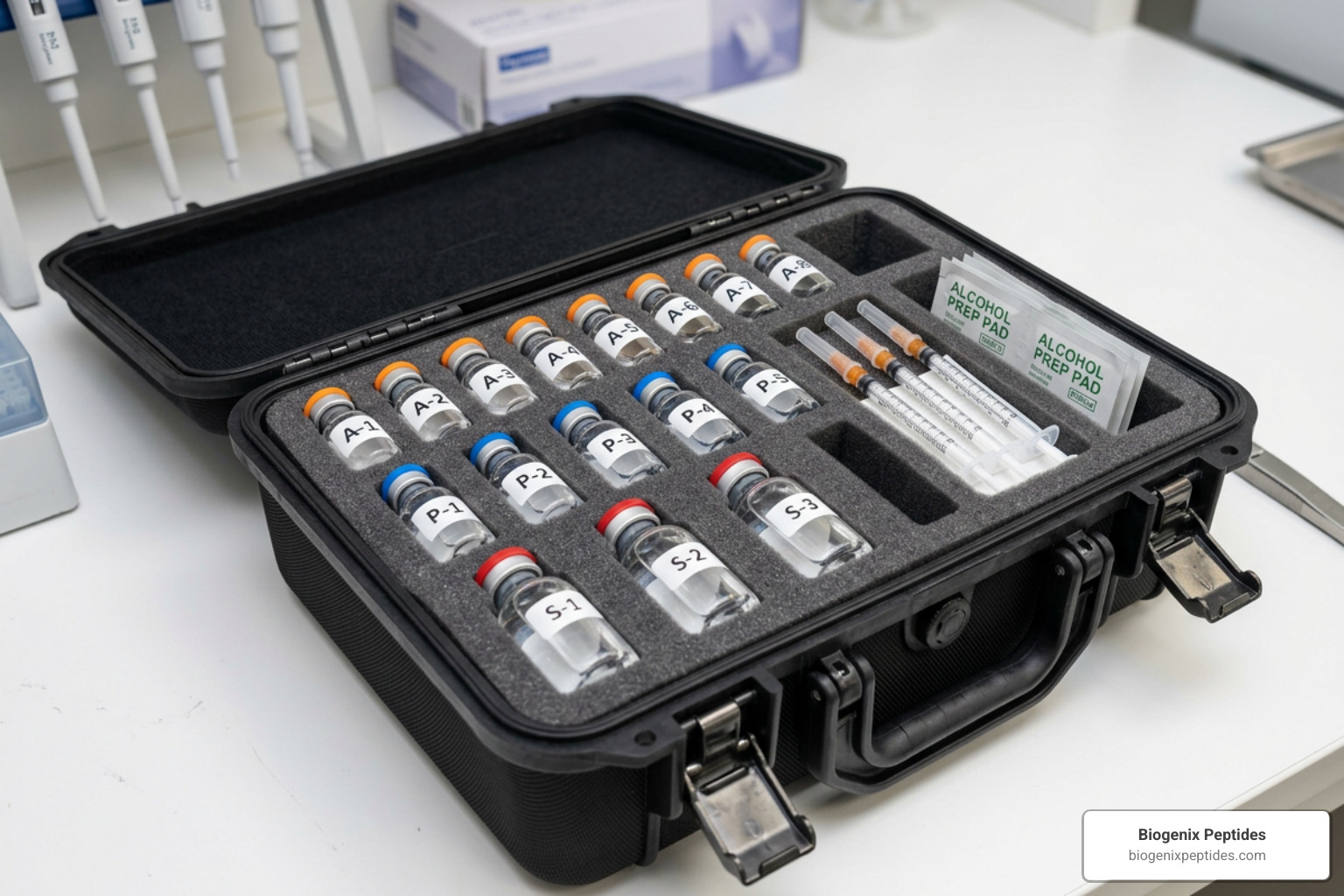
For a deeper dive into how to manage these supplies, check out our guide on Best Practices for Peptide Storage & Handling.
Comparison of Standard Container Capacities
| Case Type | Vial Size Compatibility | Typical Capacity | Best Use Case |
|---|---|---|---|
| Compact Travel | 3ml | 2–5 Vials | Field Research |
| Standard Lab Case | 3ml / 5ml | 10–15 Vials | Daily Lab Bench Work |
| Modular Tray | 3ml | 50–100 Vials | Bulk Inventory |
| Large Vault | Mixed (3ml, 5ml, 10ml) | 20+ Vials + Supplies | Long-term Organization |
Material Science: PETG vs. PLA for Cold Storage
The material used in your peptide storage containers is perhaps the most overlooked factor in research success. While many 3D-printed cases are available on the market, the type of plastic used determines whether the case will survive the refrigerator or become a brittle mess.
Why PETG Wins for Refrigeration
PETG (Polyethylene Terephthalate Glycol) is a premium, FDA-certified, food-grade plastic. In our experience, it is the gold standard for peptide storage.
- Temperature Resilience: PETG maintains its structural integrity across a wide range of temperatures. It can go from the freezer to a room-temperature lab bench—and even through a dishwasher cycle—without warping or cracking.
- Chemical Resistance: It is highly resistant to many chemicals used in lab environments.
- Safety: It is BPA-free, making it a safe choice for storing sensitive medical compounds.
The Problem with PLA
PLA (Polylactic Acid) is a popular, plant-based plastic often used in budget 3D-printed cases. While eco-friendly, it has a significant flaw: it becomes extremely brittle in cold environments. If you store a PLA case in a refrigerator (2–8°C), it is prone to snapping or cracking over time. For long-term sample integrity, we always recommend PETG over PLA.
Maintaining a consistent environment is critical for research. You can learn more about these requirements in our Peptide Storage & Stability Guidelines. Furthermore, Scientific research on lab best practices for maintaining sample integrity emphasizes that proper vial organization is a cornerstone of reproducible study results.
Specialized Solutions for Lab and Field Research
Different research environments require different tools. A case that works perfectly on a stationary lab shelf might fail miserably during a cross-country transport.
Organizing Your Lab with Peptide Storage Containers
In the lab, visibility and accessibility are key. We recommend using color-coded peptide storage containers to distinguish between different peptide sequences or study phases at a glance.
- Modular Trays: These are excellent for high-volume storage. Some modular systems allow you to expand from 50 to 100 slots by simply adding another tray.
- Fridge Vaults: These often include dedicated space for labels. This is crucial because you never want to be in a position where you have to guess the contents of an unlabeled vial.
- Visibility: White or light-colored interiors make it easier to see the lyophilized powder or liquid levels in the vials against the background.
Choosing the Right Peptide Storage Containers for Travel
If your research requires moving samples between facilities, a hardshell EVA (Ethylene Vinyl Acetate) case is the superior choice.
- Shock Absorption: EVA is a dense, foam-like material that excels at absorbing impacts. If the case is dropped, the vials inside remain cushioned.
- Integrated Storage: High-quality travel cases often feature mesh pockets or custom-cut foam inserts to hold syringes, BAC water, and alcohol wipes.
- Security: Many travel-specific containers feature secure locking clips or even small luggage-style locks to prevent accidental opening by unauthorized personnel or curious hands.
Procurement and Wholesale Considerations for Research Facilities
For larger research institutions or high-volume labs, procurement involves balancing cost with quality. The global market for peptide storage is massive, with over 46,000 products available from thousands of suppliers.
Understanding MOQs and Pricing
- Small Scale: Individual high-quality PETG cases typically range from $15.00 to $40.00 depending on complexity and features.
- Wholesale Plastic Boxes: For basic organization, simple plastic vial boxes can be sourced with Minimum Order Quantities (MOQs) as low as 5 pieces, often priced between $0.09 and $0.33 per unit.
- Premium EVA Cases: Bulk orders for high-protection EVA cases usually have higher MOQs (300–500 units) with prices falling between $1.50 and $3.00.
Compliance and Customization
When ordering for professional lab use, ensure the materials meet USP Class VI or ISO standards for medical-grade storage. Many suppliers also offer customization, allowing you to choose specific slot configurations (e.g., 9-slot vs. 15-slot) or add custom branding to keep your lab’s inventory distinct.
Frequently Asked Questions
What is the best material for refrigerated peptide storage?
PETG plastic is the most reliable material for refrigerated storage. Unlike standard plastics or PLA, PETG does not become brittle at 2–8°C. It is durable, BPA-free, and can withstand the temperature fluctuations common in laboratory settings.
How many vials do standard storage cases accommodate?
Capacities vary widely to suit different needs. Portable “starter” cases usually hold 5–10 vials. Standard laboratory organizers often hold 15–20 vials, while high-capacity modular trays can hold 50 to 100 vials per unit.
Are there eco-friendly options for peptide vial organization?
Yes. Many labs are moving toward recyclable LDPE (Low-Density Polyethylene) cases. Additionally, while PLA is less durable in the cold, it is a plant-based, biodegradable option for short-term, room-temperature organization. Reusable, high-quality hardshell cases are also more sustainable than single-use cardboard or plastic bags.
Conclusion
Protecting your research means more than just following a protocol; it means using the right equipment to ensure that your samples remain stable and uncontaminated. High-quality peptide storage containers provide the physical security and environmental stability that standard household or office storage simply cannot match.
By choosing the right materials—like PETG for cold storage or EVA for travel—you ensure that every vial in your inventory is ready for the next phase of your study. Don’t let a cracked vial or a degraded sample set your research back weeks.
Explore professional research supplies at Biogenix Peptides to find the storage solutions that meet the rigorous demands of your laboratory.