

MOTS-c: The Mitochondrial Peptide Turning Heads in Metabolic Research
Introduction
In the world of cutting-edge peptide science, few molecules have generated as much interest as MOTS-C. Though discovered only in the last decade, this short peptide has become one of the most researched mitochondrial-derived factors due to its potential role in metabolism, cellular energy regulation, and performance-related pathways.
Unlike many peptides that originate from nuclear DNA, MOTS-C is encoded within the mitochondrial genome—the same intracellular structures responsible for producing cellular energy (ATP). That origin is part of what makes it so fascinating: MOTS-C appears to function like a cellular signaler, helping regulate how the body responds to energy availability, metabolic stress, and exercise.
What Is MOTS-C?
MOTS-C (short for “Mitochondrial Open Reading Frame of the 12S rRNA type-C”) is a 16-amino-acid bioactive peptide. Researchers classify it as a mitochondrial-derived peptide (MDP)—a small group of signaling molecules discovered relatively recently and studied for their relationship to cellular resilience and metabolic function.
Scientific interest has grown rapidly because MOTS-C has been shown in preclinical research to interact with pathways such as:
- AMPK (AMP-activated protein kinase)
- Glucose metabolism signaling
- Mitochondrial stress response pathways
These same networks are often explored in research on exercise adaptation, metabolic flexibility, and cellular energy balance.

Diagram: PubChem
Why Is MOTS-C Getting So Much Attention?
As metabolic science evolves, researchers are looking beyond standard hormonal pathways and focusing more on cellular energy sensors—systems that help cells adapt to stress, exercise, and diet.
MOTS-C has gained attention because research models suggest it may:
- Support improved glucose utilization in cellular studies
- Influence exercise-adaptation signaling pathways
- Help cells respond more efficiently to metabolic stress
- Play a potential role in mitochondrial communication and resilience
In animal models, researchers have also observed potential effects related to body-composition responses, suggesting interesting avenues for further exploration—especially in the context of metabolic efficiency and performance physiology.
Product Link → MOTS-c
MOTS-C and Exercise: An Emerging Research Area
One reason MOTS-C is frequently discussed in performance environments is because of its connection to exercise-related adaptation pathways.
In early laboratory studies, MOTS-C activated AMPK, a key metabolic sensor also triggered by:
- High-intensity exercise
- Fasting
- Energy stress
AMPK is sometimes described as the “metabolic switch,” because it encourages cells to shift toward efficient fuel use and energy production.
Some research models suggest MOTS-C may:
- Support physical endurance responses
- Influence recovery-related molecular pathways
- Increase exercise tolerance in animal studies
While findings are preliminary, the potential connection between MOTS-C and athletic metabolic adaptation is an active and growing research area.
How Is MOTS-C Being Studied?
Current studies are exploring several key domains:
| Research Focus | Description |
|---|---|
| Metabolic Regulation | Effects on cellular glucose handling, insulin pathways, and metabolic flexibility in lab settings |
| Mitochondrial Function | Potential role in stress resistance and mitochondrial signaling |
| Exercise Physiology | How MOTS-C may influence endurance adaptations and training response |
| Healthy Aging & Longevity Science | Interest in MDPs as possible regulators of cellular resilience and homeostasis |
As with most peptides in research use, human-level outcomes remain limited, and scientific exploration is ongoing.
The Mitochondrial Advantage: Why Origin Matters
Most peptides are created based on nuclear DNA, but MOTS-C comes directly from mitochondrial DNA (mtDNA)—a separate genetic system inherited maternally.
This unique origin offers intriguing implications in research:
- Mitochondria are central to energy production
- They help regulate cellular survival and oxidative balance
- They respond dynamically to stress, exercise, and fuel availability
MOTS-C represents a potential messenger system between mitochondrial activity and whole-cell metabolic responses.
Product Link → MOTS-c
Final Thoughts
MOTS-C sits at the crossroads of peptide science, mitochondrial research, and metabolic biology. Although research is still developing, there’s growing interest in how mitochondrial-derived peptides may influence metabolic health, performance pathways, and cellular resilience.
As peptide science evolves, MOTS-C continues to stand out as one of the most intriguing molecules being investigated today.

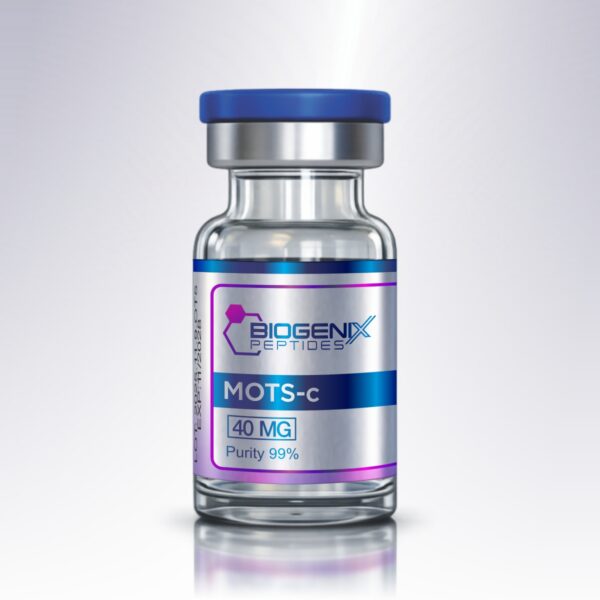
MOTS-c 40mg
MOTS-c (Mitochondrial Open Reading Frame of the 12S rRNA-c) is a 16–amino-acid peptide encoded within the mitochondrial 12S rRNA gene region. It belongs to the family of mitochondrial-derived peptides (MDPs) that function as retrograde signals, coordinating communication between mitochondria and the nucleus to influence metabolic and stress-response pathways. Under metabolic stress—such as glucose restriction or elevated oxidative load—MOTS-c has been observed to translocate to the nucleus, where it can modulate gene expression and support adaptive metabolic regulation.
In Stock
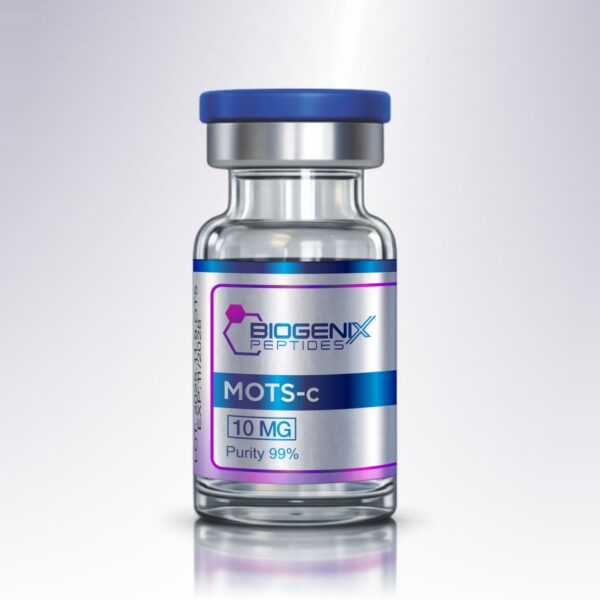
MOTS-c 10mg
MOTS-c (Mitochondrial Open Reading Frame of the 12S rRNA-c) is a 16–amino-acid peptide encoded within the mitochondrial 12S rRNA gene region. It belongs to the family of mitochondrial-derived peptides (MDPs) that function as retrograde signals, coordinating communication between mitochondria and the nucleus to influence metabolic and stress-response pathways. Under metabolic stress—such as glucose restriction or elevated oxidative load—MOTS-c has been observed to translocate to the nucleus, where it can modulate gene expression and support adaptive metabolic regulation.
In Stock