
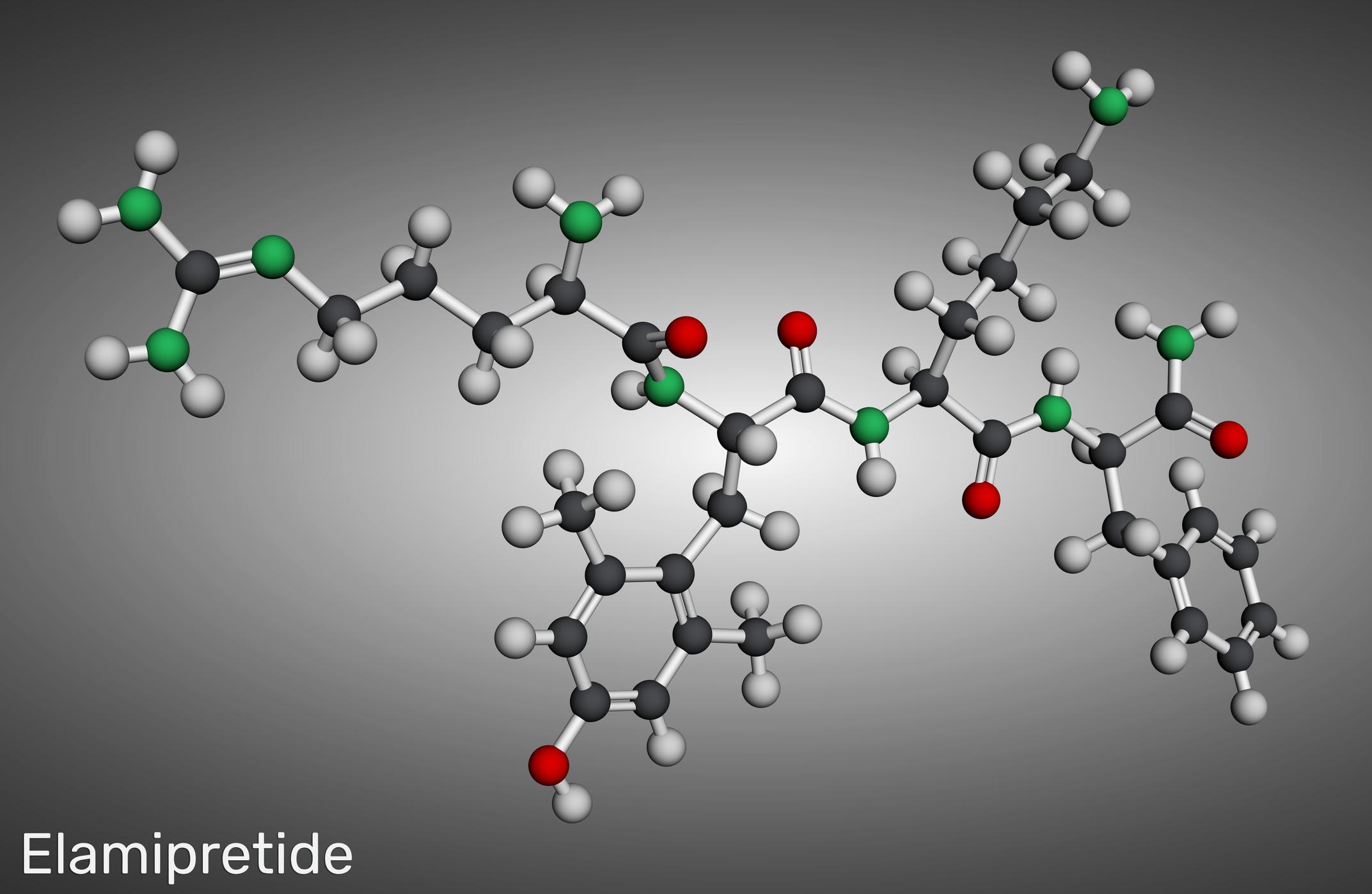
MOTS-c and SS-31: A Symbiotic Relationship Inside the Mitochondria
Disclaimer:
This article is intended strictly for educational and research purposes only. Compounds discussed are for laboratory research use only and are not approved for human consumption. This content is not medical advice and does not diagnose, treat, cure, or prevent any disease.
The mitochondria are often called the “powerhouses” of the cell, but that description barely scratches the surface. These tiny organelles do far more than produce energy. They regulate oxidative stress, influence inflammation, control metabolic flexibility, and help determine how well tissues recover from stress, aging, and damage.
As mitochondrial function declines, so does the body’s ability to efficiently produce ATP, maintain metabolic balance, and repair itself. Researchers have increasingly focused on compounds that may support mitochondrial performance, and two of the most discussed are MOTS-c and SS-31.
At first glance, these peptides may appear to do similar things. Both are studied for their potential roles in mitochondrial health, energy production, exercise performance, recovery, and healthy aging. However, their true value may lie in how differently they work.
Rather than overlapping, MOTS-c and SS-31 may function more like partners. One appears to optimize mitochondrial signaling and adaptation, while the other may help preserve mitochondrial structure and efficiency.
What is MOTS-c?
MOTS-c is a naturally occurring mitochondrial-derived peptide encoded within mitochondrial DNA. Unlike many peptides that originate from the nucleus, MOTS-c is produced from the mitochondria themselves.
Researchers have become interested in MOTS-c because it appears to act like a metabolic regulator. Under conditions of stress, MOTS-c may move from the mitochondria into the nucleus, where it can influence the expression of genes related to metabolism, energy utilization, stress resistance, and cellular adaptation.
Peer-reviewed source: https://pmc.ncbi.nlm.nih.gov/articles/PMC9854231/
In various preclinical models, MOTS-c has been associated with:
- Improved insulin sensitivity
- Better glucose handling
- Enhanced fat utilization
- Greater exercise capacity
- Increased metabolic flexibility
- Reduced inflammatory signaling
- Support for healthy aging pathways
MOTS-c appears to activate AMPK, sometimes referred to as the body’s “metabolic master switch.” AMPK helps cells sense when energy is low and shifts metabolism toward producing and conserving energy more efficiently.
Peer-reviewed source: https://pmc.ncbi.nlm.nih.gov/articles/PMC9905433/
This is one reason MOTS-c is sometimes described as an “exercise mimetic.” It may help trigger some of the same mitochondrial and metabolic pathways normally activated during exercise, fasting, or caloric restriction.
Peer-reviewed source: https://www.nature.com/articles/s41467-020-20790-0
Additional source on exercise, mitohormesis, and AMPK signaling: https://pmc.ncbi.nlm.nih.gov/articles/PMC9171157/
What is SS-31?
SS-31, also known as Elamipretide, is a synthetic mitochondria-targeted peptide designed to protect mitochondrial membranes.
Its primary target is cardiolipin, a unique phospholipid found within the inner mitochondrial membrane. Cardiolipin plays a major role in maintaining the structure of the electron transport chain, which is responsible for producing ATP.
When cardiolipin becomes damaged through oxidative stress, mitochondrial efficiency can decline significantly. ATP production drops, reactive oxygen species increase, and cells become less resilient.
SS-31 appears to bind to cardiolipin and stabilize the inner mitochondrial membrane. This may help preserve mitochondrial structure, reduce electron leakage, limit oxidative stress, and improve ATP production.
Peer-reviewed source: https://pmc.ncbi.nlm.nih.gov/articles/PMC7334473/
Additional cardiolipin and mitochondrial protection source: https://pmc.ncbi.nlm.nih.gov/articles/PMC3736700/
Researchers have studied SS-31 in areas such as:
- Age-related mitochondrial decline
- Cardiac function
- Muscle fatigue
- Neurodegeneration
- Exercise tolerance
- Recovery from oxidative stress
- Mitochondrial disease models
In aged animal models, improving mitochondrial function with SS-31 has been associated with reduced oxidative stress and improved exercise tolerance.
Peer-reviewed source: https://www.frontiersin.org/journals/cardiovascular-medicine/articles/10.3389/fcvm.2019.00167/full
Why They May Work So Well Together
The relationship between MOTS-c and SS-31 may be best understood by thinking about mitochondria as both a structure and a signaling system.
SS-31 helps protect the “hardware.”
It supports the physical integrity of the mitochondria by stabilizing membranes, preserving cardiolipin, and improving the efficiency of ATP production.
MOTS-c helps optimize the “software.”
It influences how cells respond to stress, regulate energy metabolism, activate protective pathways, and adapt to changing metabolic demands.
One peptide may help preserve the engine. The other may help tune it.
This distinction is important because mitochondrial dysfunction is rarely caused by just one problem. In many cases, both the physical structure of the mitochondria and the signaling pathways surrounding them become impaired.
Researchers have suggested that while MOTS-c enhances energy pathways, metabolic signaling, and mitochondrial biogenesis, SS-31 may protect existing mitochondria from oxidative damage and membrane instability.
Supporting source: https://pmc.ncbi.nlm.nih.gov/articles/PMC9854231/
Together, they may represent a more complete approach to mitochondrial support:
- MOTS-c may encourage the creation of healthier, more adaptive mitochondria
- SS-31 may help protect the mitochondria already present
- MOTS-c may improve metabolic flexibility and nutrient utilization
- SS-31 may improve ATP efficiency and reduce oxidative wear-and-tear
- MOTS-c may help drive long-term adaptation
- SS-31 may help preserve short-term function during periods of stress
A Simple Analogy
Imagine mitochondria as a fleet of race cars.
MOTS-c acts like the pit crew manager. It helps the team communicate better, improves fuel strategy, optimizes performance, and decides when the cars need upgrades.
SS-31 acts like the mechanic. It strengthens the engine, protects the fuel lines, reduces wear on critical parts, and keeps the cars running efficiently under stress.
Having only one may help. Having both may create a stronger overall system.
Potential Areas of Research Interest
Because of their complementary mechanisms, MOTS-c and SS-31 are often discussed together in research involving:
- Aging and longevity
- Exercise performance
- Recovery from intense training
- Fatigue and low energy states
- Metabolic dysfunction
- Mitochondrial decline
- Cardiovascular performance
- Brain health and neuroprotection
- Recovery after oxidative stress
- Cellular resilience during aging
MOTS-c levels appear to decline with age, and some research suggests that aging can reduce endogenous MOTS-c levels dramatically in tissues such as pancreatic beta cells.
Peer-reviewed source: https://pmc.ncbi.nlm.nih.gov/articles/PMC9854231/
Meanwhile, SS-31 has been studied extensively for its ability to restore mitochondrial efficiency in aged tissues and improve energy production under stress.
Peer-reviewed source: https://pmc.ncbi.nlm.nih.gov/articles/PMC7334473/
Final Thoughts
MOTS-c and SS-31 are often grouped together because they both relate to mitochondrial function, but they are not interchangeable.
MOTS-c appears to act more like a mitochondrial signaling peptide that helps cells adapt to stress and improve metabolic flexibility. SS-31 appears to function more like a mitochondrial stabilizer that protects membrane integrity and supports efficient ATP production.
Their relationship is not competitive. It is symbiotic.
One helps mitochondria communicate, adapt, and evolve. The other helps mitochondria survive, function, and endure.
As mitochondrial research continues to grow, this pairing may become one of the most compelling examples of how different peptides can work together to support multiple layers of cellular energy and resilience.
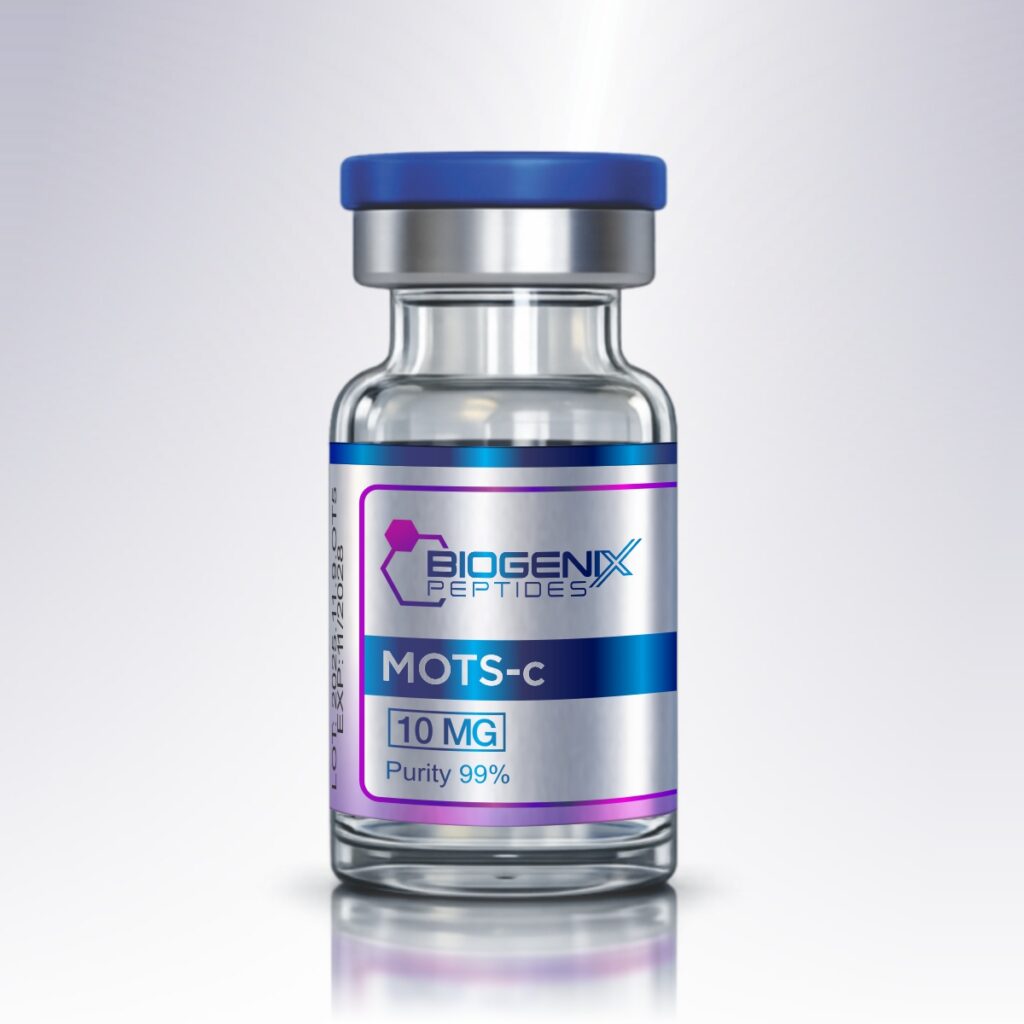
MOTS-c 10mg
MOTS-c (Mitochondrial Open Reading Frame of the 12S rRNA-c) is a 16–amino-acid peptide encoded within the mitochondrial 12S rRNA gene region. It belongs to the family of mitochondrial-derived peptides (MDPs) that function as retrograde signals, coordinating communication between mitochondria and the nucleus to influence metabolic and stress-response pathways. Under metabolic stress—such as glucose restriction or elevated oxidative load—MOTS-c has been observed to translocate to the nucleus, where it can modulate gene expression and support adaptive metabolic regulation.
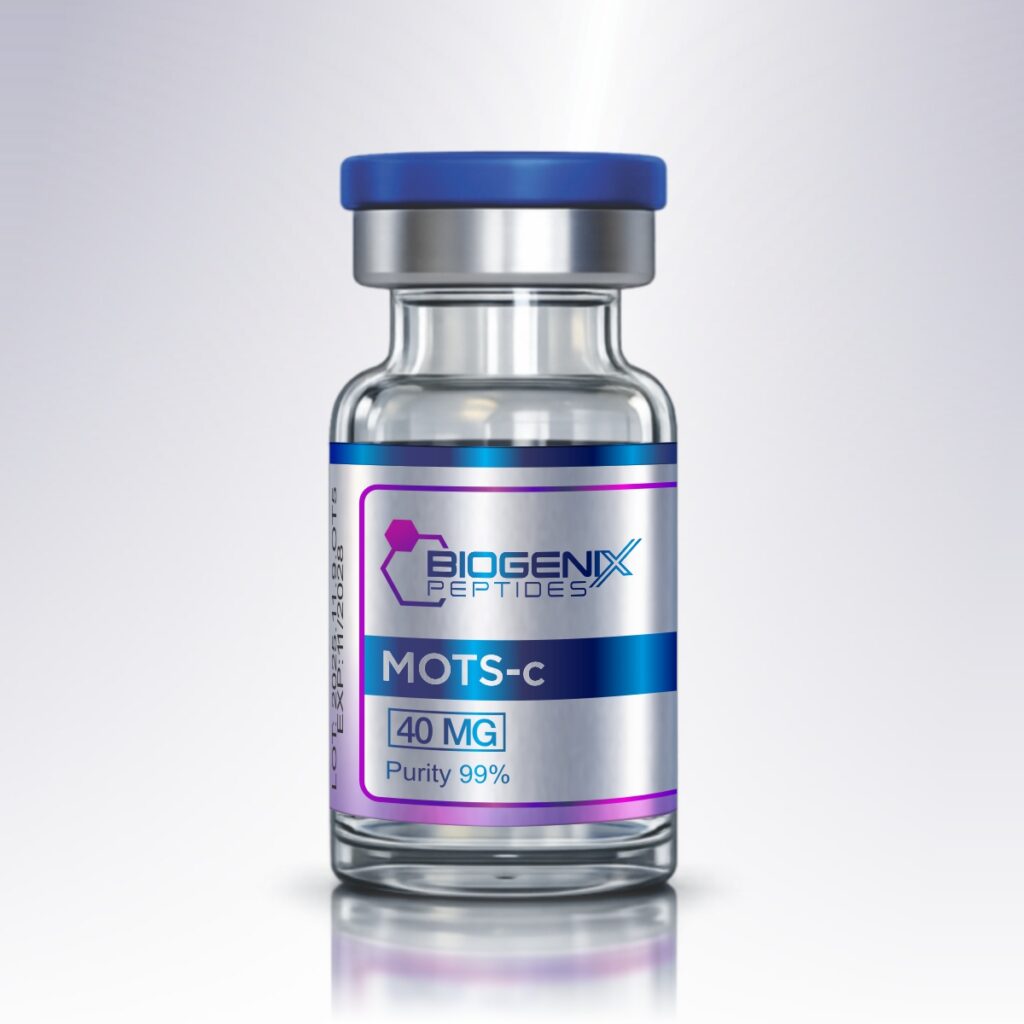
MOTS-c 40mg
MOTS-c (Mitochondrial Open Reading Frame of the 12S rRNA-c) is a 16–amino-acid peptide encoded within the mitochondrial 12S rRNA gene region. It belongs to the family of mitochondrial-derived peptides (MDPs) that function as retrograde signals, coordinating communication between mitochondria and the nucleus to influence metabolic and stress-response pathways. Under metabolic stress—such as glucose restriction or elevated oxidative load—MOTS-c has been observed to translocate to the nucleus, where it can modulate gene expression and support adaptive metabolic regulation.
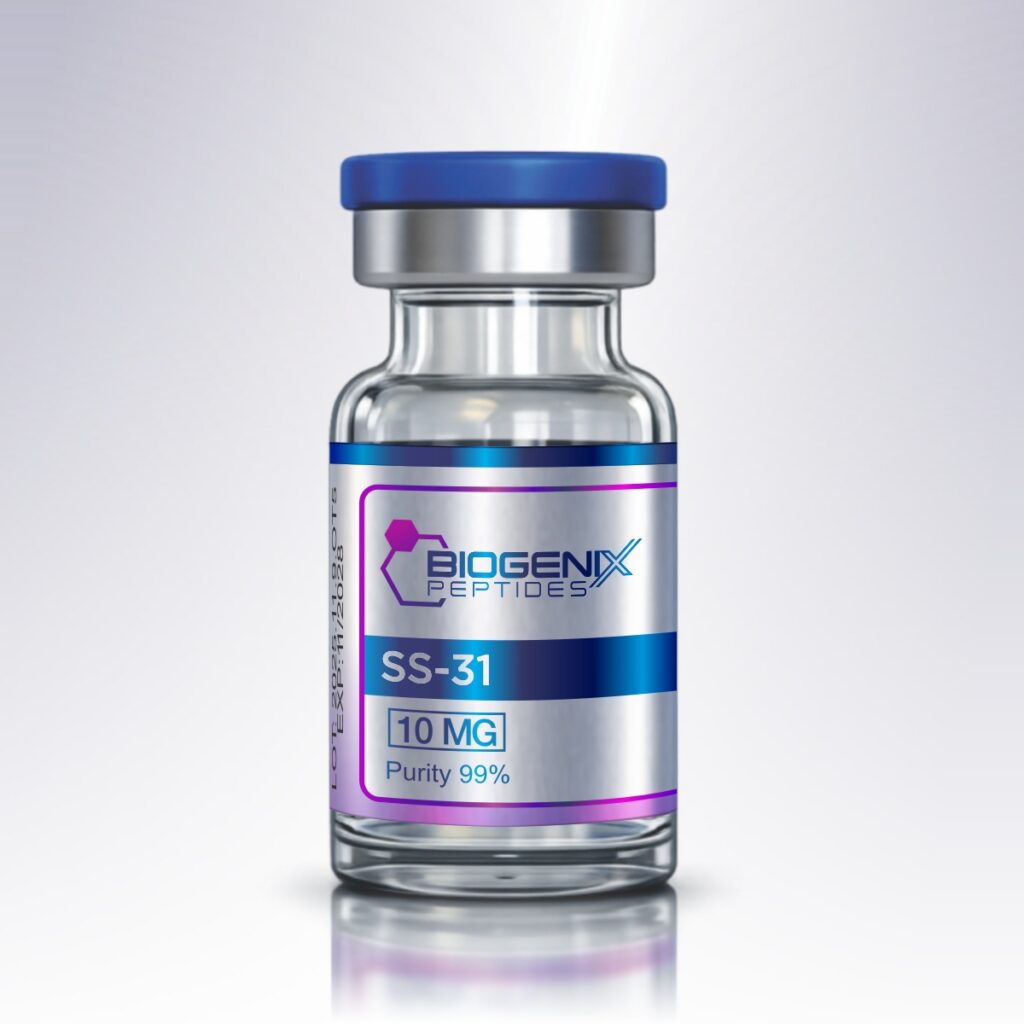
SS-31 10mg
SS-31 (Elamipretide) is a small synthetic peptide designed to target and protect the mitochondria—the “energy centers” of the cell. It binds to a mitochondrial lipid called cardiolipin, helping support healthier energy production, reduce oxidative stress, and maintain mitochondrial stability, especially in high-demand or aging tissues.Because SS-31 works inside the mitochondria rather than on surface receptors, it stands out from most traditional peptides. Research has explored its potential in areas such as energy metabolism, cardiovascular function, neuroprotection, and muscle performance, where…
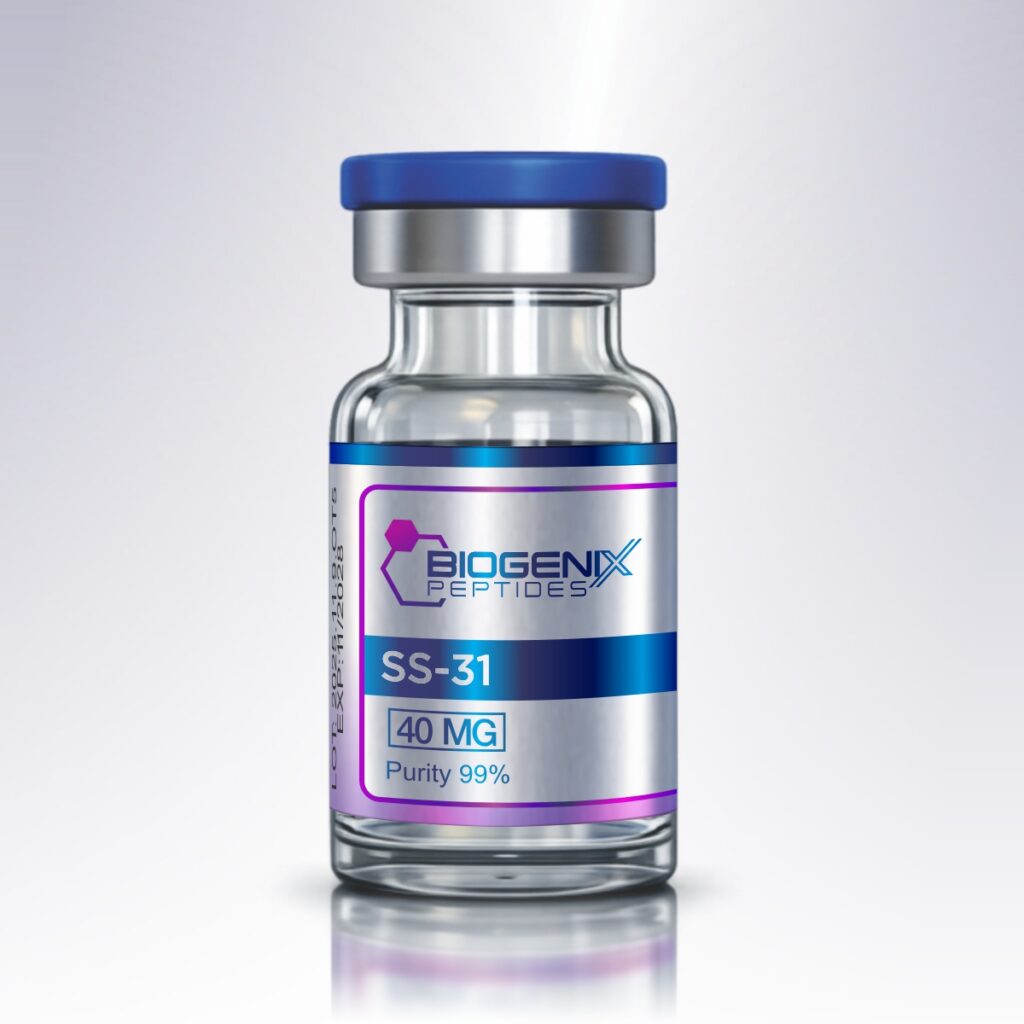
SS-31 40mg
SS-31 (Elamipretide) is a small synthetic peptide designed to target and protect the mitochondria—the “energy centers” of the cell. It binds to a mitochondrial lipid called cardiolipin, helping support healthier energy production, reduce oxidative stress, and maintain mitochondrial stability, especially in high-demand or aging tissues.Because SS-31 works inside the mitochondria rather than on surface receptors, it stands out from most traditional peptides. Research has explored its potential in areas such as energy metabolism, cardiovascular function, neuroprotection, and muscle performance, where…