HGH Secretagogues: The Most Misunderstood Pathway to Growth Hormone Optimization
Introduction
When people think about growth hormone, they jump immediately to exogenous HGH or IGF-1 analogs. But an entire category of compounds exists that works with the body instead of overriding it: HGH secretagogues.
These compounds stimulate the body’s own pituitary gland to release growth hormone in rhythmic, physiologic pulses — the same way the body is designed to operate.
For researchers studying metabolism, cellular repair, fat loss, recovery, and healthy aging, these secretagogues often create outcomes that may resemble exogenous HGH in key pathways… without completely bypassing the body’s feedback mechanisms.
This article breaks down the science, the categories, and the key peptides — including Tesamorelin and Hexamorelin — that define this powerful class.
What Are HGH Secretagogues?
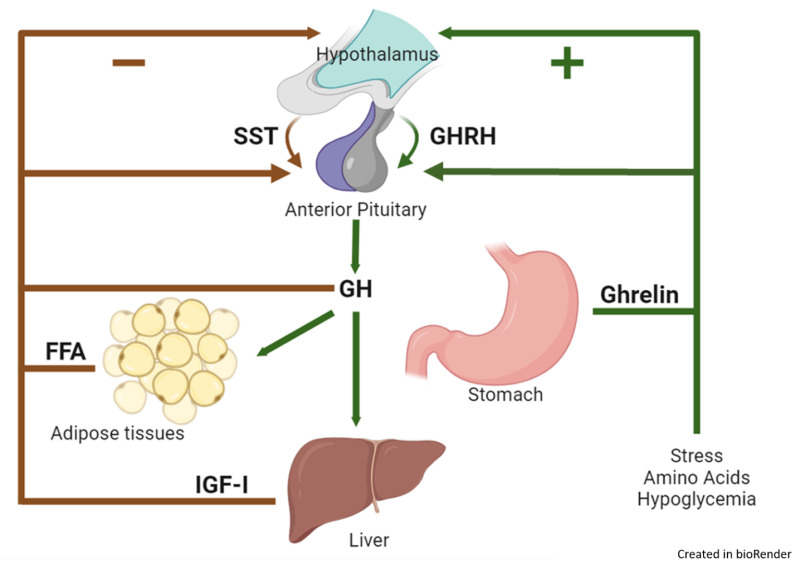
HGH secretagogues are peptides or small molecules that activate receptors involved in the natural release of growth hormone. They primarily target one or both of the following signaling pathways:
1. GHRH Receptor Pathway (Growth Hormone–Releasing Hormone)
Stimulating this receptor boosts the amplitude of GH pulses by mimicking or enhancing the effects of endogenous GHRH.
2. GHSR/Ghrelin Receptor Pathway (Growth Hormone Secretagogue Receptor)
Activating this receptor “unlocks” the pituitary to release GH, often producing sharper and more robust pulses. This is also known as the ghrelin receptor pathway.
Some secretagogues influence both pathways indirectly, creating a multiplicative GH release effect rather than a simple additive response.
Why Researchers Study HGH Secretagogues
Pulsatile GH Release (The Natural Pattern)
Unlike exogenous HGH, which tends to create a relatively steady hormone level, secretagogues trigger wave-like pulses of GH. This rhythm is closely tied to sleep, recovery, and youthful hormonal balance.
Reduced Negative Feedback
Pulsed secretion helps maintain receptor sensitivity and can reduce the likelihood of receptor downregulation that may occur with continuously elevated GH levels.
Synergistic Potential
GHRH analogs and GHRP/ghrelin-mimetic peptides can be combined. When both major pathways are activated together, the resulting GH pulse is often stronger than either compound can achieve alone.
Multi-System Effects
Depending on the compound and model, researchers have explored potential roles for secretagogues in:
- Sleep architecture and nighttime hormone dynamics
- Fat metabolism and body composition
- Immune and inflammatory signaling
- Tissue repair and recovery
- Appetite and glucose balance
The Three Major Classes of HGH Secretagogues
1. GHRH Analogs (Growth Hormone–Releasing Hormone Secretagogues)
GHRH analogs directly stimulate the GHRH receptor on pituitary somatotrophs and increase the amplitude of GH pulses. They require a functional pituitary to exert their effects.
Common examples include:
- Tesamorelin
- CJC-1295 (with and without DAC)
- Modified GRF (1-29)
- Sermorelin
Tesamorelin: A Standout GHRH Analog
Tesamorelin is a stabilized, high-potency GHRH analog engineered for extended half-life and resistance to enzymatic breakdown. In research settings it has been shown to:
- Produce strong, physiologic GH pulses
- Significantly elevate IGF-1 levels
- Support rhythmic nighttime GH release patterns
- Modulate metabolic parameters relevant to body composition
Tesamorelin is one of the most clinically characterized GHRH-related peptides, making it a central reference point in the GHRH secretagogue category.
2. GHRP Class (Ghrelin-Mimetic Secretagogues)
Growth Hormone–Releasing Peptides (GHRPs) primarily activate the GHSR (ghrelin receptor). By doing so, they “unlock” the pituitary for GH release and can act independently of GHRH. When combined with GHRH analogs, they often produce strong synergistic GH responses.
Key examples include:
Hexamorelin: High-Potency GHSR Activation
Hexamorelin is a high-potency growth hormone secretagogue that targets the same receptor family as classical GHRPs:
- Strong GH pulse response via GHSR activation
- High receptor affinity compared to milder GHRPs
- Can provide robust GH output in appropriately designed research models
- Shows pronounced synergy when paired with GHRH analogs such as Tesamorelin or CJC-1295
With Hexamorelin available alongside Ipamorelin, GHRP-2, and GHRP-6, researchers have access to a spectrum of GH secretagogue intensity ranging from mild to high-output.
3. Small-Molecule Secretagogues
Small-molecule secretagogues are not peptides, but they can still activate the GHSR receptor and elevate GH and IGF-1. Their distinguishing features are oral bioavailability and typically more sustained elevation of GH, rather than tightly pulsed peaks.
Commonly referenced examples include:
- MK-677 (Ibutamoren)
- Other investigational GHSR agonists
Because the GH and IGF-1 increase from small-molecule secretagogues is more continuous, the hormonal feedback profile differs from that seen with short-acting peptides.
Why Secretagogues Are Often Combined
The most powerful GH release is typically observed when both major pathways are activated simultaneously:
GHRH Analog + GHRP Analog = Multiplicative GH Response
- GHRH analogs increase GH pulse size.
- GHRPs increase GH pulse frequency and “unlock” pituitary responsiveness.
This is why combinations such as:
- Tesamorelin + Ipamorelin
- CJC-1295 + GHRP-2
- CJC-1295 + Hexamorelin
- Modified GRF (1-29) + Ipamorelin
are frequently explored in research related to performance, metabolic health, repair, and age-associated changes in GH secretion.
HGH Secretagogues vs Exogenous HGH
HGH secretagogues are not identical to exogenous recombinant HGH, but they offer distinct advantages in many experimental contexts.
Secretagogues
- Support natural, pulsatile GH rhythms
- Help maintain receptor sensitivity and feedback loops
- Stimulate endogenous GH and IGF-1 production
- Often produce a signaling pattern closer to youthful physiology
Exogenous HGH
- Provides direct GH elevation independent of pituitary function
- Tends to flatten the GH curve instead of accentuating pulses
- Can suppress natural GH production when used at sufficient dose and duration
- Requires careful management of dose, timing, and monitoring
In models where the goal is to restore native signaling patterns rather than override them, secretagogues are often favored as a primary or foundational tool.
Top HGH Secretagogues Commonly Used in Research
GHRH Secretagogues
- Tesamorelin
- CJC-1295 (no-DAC)
- CJC-1295 (with DAC)
- CJC-1295 + Ipamorelin (dual-pathway blend)
GHSR Secretagogues (GHRPs)
Small-Molecule Secretagogue
- MK-677 (Ibutamoren)
Conclusion
HGH secretagogues represent a powerful, physiologically aligned approach to stimulating growth hormone pathways. Researchers value them for their ability to:
- Restore or support youthful GH signaling patterns
- Enhance recovery and tissue repair dynamics
- Influence fat metabolism and body composition markers
- Support sleep-linked hormonal rhythms
- Maintain healthier receptor and feedback relationships
Where exogenous HGH tends to replace the system, HGH secretagogues work to reactivate it — making them a central focus in modern peptide and hormone-related research.
HGH Secretagogues: The Most Misunderstood Pathway to Growth Hormone Optimization
Research Use Only: This content is provided for informational and educational purposes only and reflects theoretical research discussions related to peptides, endocrinology, and biochemical signaling. It is not medical advice. Products discussed are intended strictly for research, laboratory, and analytical use only and are not for human or animal consumption.
HGH Secretagogues: The Most Misunderstood Pathway to Growth Hormone Optimization
When most people think about growth hormone, they jump straight to exogenous HGH. But a powerful (and often misunderstood) category exists that works upstream: HGH secretagogues—agents that stimulate endogenous growth hormone (GH) release through the body’s native control systems.1,2
In many research models, secretagogues are valued because they can increase GH output in a pulsatile (physiology-aligned) pattern rather than creating a continuously elevated GH curve.2
What Are HGH Secretagogues?
“Secretagogue” broadly refers to a substance that stimulates secretion. In the GH context, secretagogues drive GH release primarily via two upstream signaling routes:
1) GHRH receptor pathway (Growth Hormone–Releasing Hormone)
GHRH analogs bind the GHRH receptor at the pituitary, increasing GH pulse amplitude and downstream IGF-1 signaling in appropriately designed models.3,4
2) GHSR pathway (Growth Hormone Secretagogue Receptor / ghrelin receptor)
A second major route involves the ghrelin receptor (GHSR). Ghrelin receptor agonism is a foundational mechanism behind classic GHRP peptides and several orally active small molecules.5,6
Why Researchers Study HGH Secretagogues
Pulsatile GH release (the natural pattern)
GH secretion is naturally pulsatile. Secretagogues are often studied as tools to enhance pulse amplitude and/or frequency rather than flattening the hormonal curve.2
Synergy: why combinations can be stronger than single agents
One commonly discussed concept in the literature is that dual-pathway activation (GHRH + GHSR) can produce larger GH responses than either pathway alone, supporting the rationale for “paired” secretagogue designs in research.2,7
Clinical validation exists for select compounds
Some secretagogues—especially certain GHRH analogs—have extensive clinical characterization, which provides unusually strong reference points for mechanistic research discussions.3,4
The Three Major Classes of HGH Secretagogues
Class 1: GHRH Analogs (Growth Hormone–Releasing Hormone Secretagogues)
GHRH analogs stimulate the pituitary via the GHRH receptor. Commonly referenced examples include Tesamorelin, CJC-1295 (with and without DAC technology), Modified GRF (1-29), and Sermorelin.3,4,8
Tesamorelin (GHRH analog): why it stands out
Tesamorelin is a stabilized GHRH analog with substantial human clinical research—most notably in studies evaluating visceral adiposity and metabolic endpoints. In a large randomized trial, tesamorelin decreased visceral fat and improved lipid profiles in HIV-infected patients with excess abdominal fat.3 A pooled analysis of phase 3 studies further characterized efficacy and safety across a longer treatment period.4
CJC-1295 (long-acting GHRH analog)
CJC-1295 has been studied in healthy adults and showed sustained, dose-dependent increases in GH and IGF-1 after administration in controlled trials, supporting its role as a long-acting GHRH-pathway secretagogue.8
Class 2: GHRPs / Ghrelin-Mimetic Secretagogues (GHSR agonists)
Growth hormone–releasing peptides (GHRPs) are ghrelin receptor (GHSR) agonists. This class includes widely cited compounds like Ipamorelin, GHRP-2, GHRP-6, and hexapeptide secretagogues evaluated in humans.6,7,9
Ipamorelin: “selective” GH secretagogue characterization
Ipamorelin was described in the peer-reviewed literature as a selective growth hormone secretagogue with strong GH releasing potency and pharmacologic characterization across models.7
Hexamorelin (BioGenix SKU): where it fits
Hexamorelin is positioned in research discussions as a high-potency member of the GHSR-agonist secretagogue family. While published literature most commonly references closely related hexapeptide agents (e.g., hexarelin) as clinical comparators, human studies demonstrate that this peptide family can produce robust GH release across multiple routes of administration.9
Class 3: Small-Molecule Secretagogues (Oral GHSR agonists)
Some non-peptide compounds stimulate GH secretion through the same ghrelin receptor pathway. The best-known example is MK-677 (ibutamoren), studied for its ability to increase GH and IGF-1 and influence body composition endpoints in controlled trials.2,10,11
Secretagogues vs Exogenous HGH (Conceptual Comparison)
In many research narratives, the distinction is framed as:
- Secretagogues: stimulate endogenous GH release via upstream receptors; often described as supporting pulsatile patterns.2
- Exogenous HGH: supplies GH directly and can alter endogenous feedback depending on dose and context (research-dependent concept).
BioGenix: Secretagogues Commonly Discussed in Research
GHRH-pathway secretagogues
- Tesamorelin
- CJC-1295 (no-DAC)
- CJC-1295 (with DAC)
- CJC-1295 + Ipamorelin (dual-pathway blend concept)
GHSR / GHRP-pathway secretagogues
- Ipamorelin
- GHRP-2
- GHRP-6
- Hexamorelin
Small-molecule secretagogues
- MK-677 (Ibutamoren)
Conclusion
HGH secretagogues are best understood as receptor-driven tools used to explore GH/IGF-1 axis biology through the body’s upstream control nodes—GHRH signaling and ghrelin receptor (GHSR) signaling.2,5,6 With clinically characterized reference compounds like tesamorelin, mechanistic GH/IGF-1 studies gain an evidence-backed framework for discussing pulsatility, pathway synergy, and downstream metabolic signaling.3,4
Peer Reviewed References
- Kojima M, Kangawa K. Ghrelin: structure and function. Physiol Rev. 2005;85(2):495-522. Link.
- Smith RG. Growth hormone secretagogues: prospects and potential pitfalls. Best Pract Res Clin Endocrinol Metab. 2004;18(3):333-347. Link.
- Falutz J, Allas S, Blot K, et al. Metabolic effects of a growth hormone–releasing factor in patients with HIV. N Engl J Med. 2007;357:2359-2370. Link.
- Falutz J, Mamputu JC, Potvin D, et al. A pooled analysis of two multicenter, double-blind placebo-controlled phase 3 studies of tesamorelin in ART-treated HIV patients with excess abdominal fat. J Clin Endocrinol Metab. 2010;95(9):4291-4304. Link.
- Yin Y, Li Y, Zhang W. The growth hormone secretagogue receptor: its intracellular signaling and regulation. Int J Mol Sci. 2014;15(10):16911-16934. Link.
- Müller TD, Nogueiras R, Andermann ML, et al. Ghrelin. Mol Metab. 2015;4(6):437-460. Link.
- Raun K, Hansen BS, Johansen NL, et al. Ipamorelin, the first selective growth hormone secretagogue. Eur J Endocrinol. 1998;139(5):552-561. Link.
- Teichman SL, Neale A, Lawrence B, et al. Prolonged stimulation of growth hormone (GH) and insulin-like growth factor I secretion by CJC-1295, a long-acting analog of GH-releasing hormone, in healthy adults. J Clin Endocrinol Metab. 2006;91(3):799-805. Link.
- Ghigo E, Arvat E, Gianotti L, et al. Growth hormone-releasing activity of hexarelin, a new synthetic hexapeptide, after intravenous, subcutaneous, intranasal, and oral administration in man. J Clin Endocrinol Metab. 1994;78(3):693-698. Link.
- Nass R, Pezzoli SS, Oliveri MC, et al. Effects of an oral ghrelin mimetic on body composition and clinical outcomes in healthy older adults: a randomized trial. Ann Intern Med. 2008;149(9):601-611. Link.
- Murphy MG, Plunkett LM, Gertz BJ, et al. MK-677, an orally active growth hormone secretagogue, reverses diet-induced catabolism. J Clin Endocrinol Metab. 1998;83(2):320-325. Link.