A Tale of Two Tans: Comparing Melanotan 1 and 2
A Tale of Two Tans: Comparing Melanotan 1 and 2
Research Use Only Disclaimer
The compounds mentioned in this article are intended for laboratory research use only. They are not approved for human consumption, medical use, or veterinary use. This content is provided for educational and informational purposes only and is not medical advice.
Melanotan 1 vs 2 Peptides: What You Need to Know Before You Choose
Melanotan 1 vs 2 peptides are both synthetic analogs of alpha-melanocyte-stimulating hormone (α-MSH) that stimulate melanin production — but they are not interchangeable.
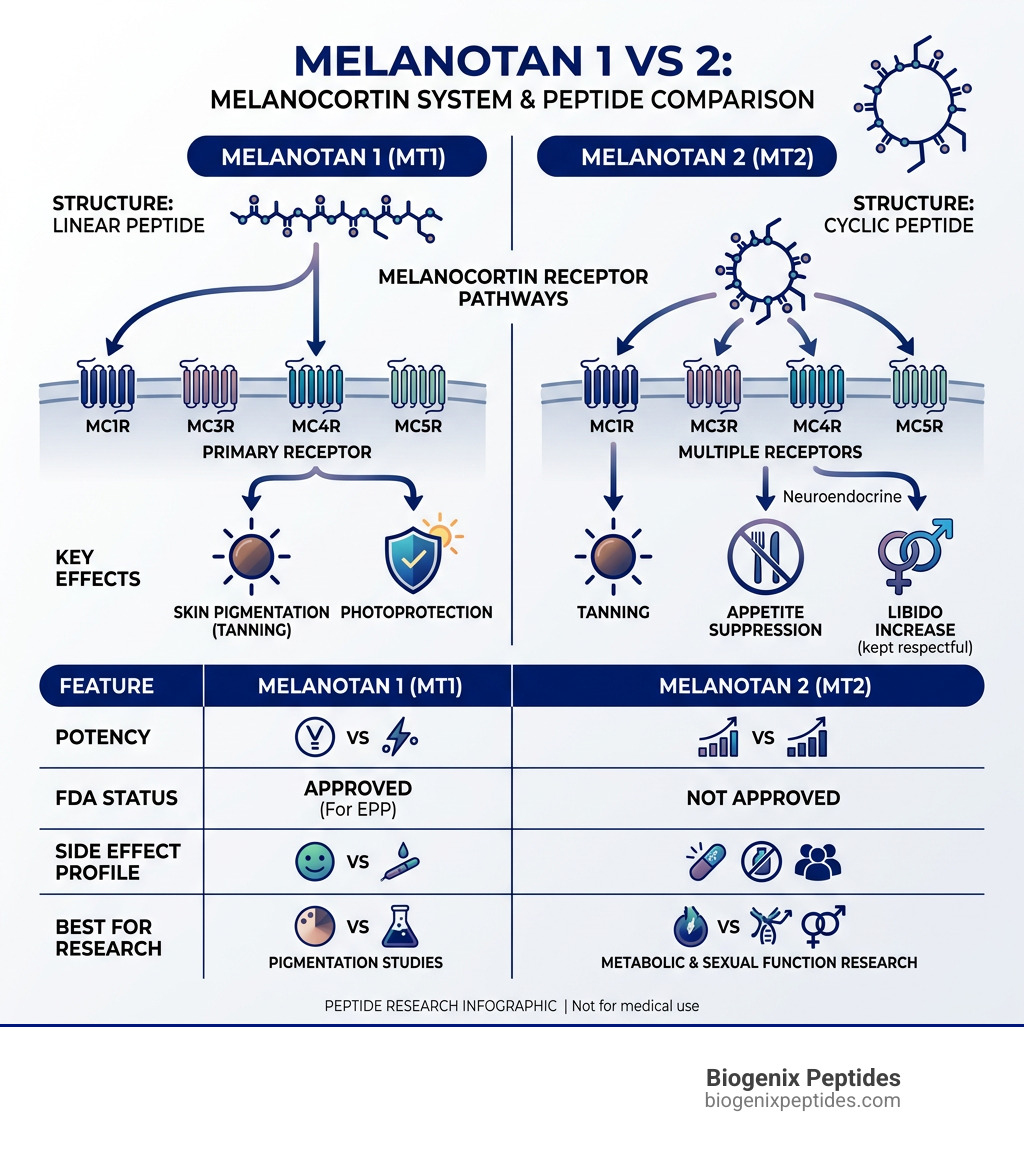
Here’s a quick comparison to answer the most common questions:
| Feature | Melanotan 1 (MT1) | Melanotan 2 (MT2) |
|---|---|---|
| Structure | Linear peptide | Cyclic peptide |
| Primary receptor | MC1R | MC1R, MC3R, MC4R, MC5R |
| Main effect | Skin pigmentation, photoprotection | Tanning + appetite suppression + libido |
| Potency | Standard | Up to 10-100x more potent than natural α-MSH |
| FDA status | Approved (Scenesse, for EPP) | Not approved |
| Side effect profile | Mild (nausea, flushing) | Broader (nausea, erections, appetite loss) |
| Best for research | UV protection, pigmentation studies | Metabolic, sexual function, neuroendocrine studies |
The key takeaway: MT1 is a specialist — precise and selective. MT2 is a generalist — broader effects, more complexity, more trade-offs.
I’m Adrian Wells, Senior Scientific Advisor at BioGenix Peptides and a peptide research specialist who has spent years studying synthetic melanocortin analogs, including the full spectrum of melanotan 1 vs 2 peptides across structural, functional, and regulatory dimensions. That hands-on research experience shapes everything you’ll read in this guide.
Understanding the Science: Melanotan 1 vs 2 Peptides
To understand these compounds, we first have to look at the master conductor of skin color: alpha-melanocyte-stimulating hormone (α-MSH). In the human body, α-MSH is a natural peptide hormone that binds to melanocortin receptors to trigger the production of melanin. However, natural α-MSH has a very short half-life—lasting only minutes—which makes it impractical for therapeutic use.
In the 1980s, researchers at the University of Arizona set out to create more stable, potent versions of this hormone. Their goal was to develop a “sunless tanning” agent that could protect fair-skinned individuals from skin cancer by increasing protective melanin without requiring dangerous UV exposure. This research led to the birth of Melanotan 1 (MT1) and its later successor, Melanotan 2.
Both of these are synthetic analogs, meaning they “mimic” the natural hormone but are engineered to be much tougher and more effective. While they share a common ancestor, their paths diverged during peptide synthesis. MT1 was designed to be highly selective, primarily targeting the MC1R receptor located on melanocytes (pigment-producing cells). MT2, however, was developed as a shorter, more stable version that ended up interacting with a wider range of receptors, including MC3R, MC4R, and MC5R. This “lack of selectivity” is exactly why MT2 produces its famous—and sometimes surprising—side effects.
Key Differences in Structure and Receptor Binding
If we look at melanotan 1 vs 2 peptides under a molecular microscope, the structural differences explain why they behave so differently in the body.
Linear vs. Cyclic Structure
Melanotan 1 is a linear peptide. Think of it like a long, straight piece of string made of 13 amino acids. Its structure is very similar to the natural α-MSH, which allows it to fit neatly into the MC1R receptor. Because it is linear, it is slightly more susceptible to being broken down by enzymes, though it still lasts much longer than the natural hormone.
Melanotan 2 is a cyclic peptide. During synthesis, the chain is “looped” and bonded to itself, creating a circular shape. This circular structure is a game-changer. It makes the molecule much smaller and more rigid, which protects it from enzymatic degradation. This is why MT2 is significantly more potent and has a longer biological half-life than MT1.
Receptor Affinity: The Specialist vs. The Generalist
The way these peptides bind to receptors determines their physiological impact:
- MC1R (Skin): Both peptides bind here to stimulate melanogenesis (tanning).
- MC3R & MC4R (CNS/Metabolism): MT2 has a high affinity for these receptors, which are located in the central nervous system. Activation here leads to appetite suppression and sexual arousal. MT1 largely bypasses these.
- MC5R (Exocrine/Fat): MT1 has some affinity here, potentially influencing fat metabolism, whereas MT2’s interaction is broader.
| Property | Melanotan 1 (MT1) | Melanotan 2 (MT2) |
|---|---|---|
| Molecular Formula | C78H111N21O19 | C50H69N15O9 |
| Molecular Weight | 1646.8 g/mol | 1024.2 g/mol |
| Shape | Linear | Cyclic |
| Receptor Selectivity | High (MC1R) | Low (Multi-receptor) |
| Stability | Moderate | High |
Comparing Effects: Tanning, Libido, and Metabolism

When researchers compare the real-world effects of melanotan 1 vs 2 peptides, the choice usually comes down to whether they want a “clean” tan or a broader metabolic shift.
Tanning and Photoprotection
Both peptides are powerhouses for skin darkening. They promote “eumelanogenesis,” which is the production of the dark brown/black pigment (eumelanin) that is naturally photoprotective.
Research shows that Melanotan 1 can boost pigmentation by as much as 75% and decrease the risk of sunburn by up to 47%. It provides a predictable, stable tan that mimics a natural summer glow. Because it is so selective for the skin, researchers often prefer MT1 when studying photobiology or dermatology without wanting to interfere with the subject’s appetite or hormones.
Libido and Sexual Function
This is where Melanotan 2 takes center stage. Because MT2 crosses the blood-brain barrier and activates MC4R, it has a profound effect on sexual arousal. In fact, a metabolite of MT2 called Bremelanotide was eventually developed into an FDA-approved treatment for female sexual dysfunction. For many research models, the “spontaneous erections” and increased libido associated with MT2 are the primary focus of the study, rather than just the tan.
Appetite and Weight Loss
If your research involves metabolic health, MT2 is the clear choice. It has been shown in murine models to be 10-100x more potent than endogenous hormones at suppressing appetite. It interacts with the “hunger centers” of the brain, leading to decreased food intake and potential weight loss. MT1, by contrast, has negligible effects on hunger.
Safety, Side Effects, and Regulatory Status
We cannot talk about melanotan 1 vs 2 peptides without addressing the safety profile. Because these compounds are so powerful, they must be handled with respect and medical supervision.
Common Side Effects
Both peptides can cause:
- Nausea (often more intense with MT2)
- Facial flushing
- Increased number or darkening of moles and freckles
However, MT2 carries additional side effects due to its systemic nature, including spontaneous erections (which can be prolonged and painful if the dose is too high) and significant appetite suppression.
Regulatory and FDA Status
There is a massive divide here. Melanotan 1 has successfully navigated the rigorous path to clinical approval. Under the generic name Afamelanotide (brand name Scenesse), it was FDA-approved in 2019 for the treatment of erythropoietic protoporphyria (EPP), a rare disorder that causes extreme light sensitivity. Its approval followed 15 clinical trials involving over 900 patients and more than 200 journal articles.
Melanotan 2, on the other hand, is not FDA-approved for any human use. While it is widely used in research settings, it remains classified as a “research peptide.” This distinction is vital; while MT1 has a standardized, pharmaceutical-grade application, MT2 is strictly for laboratory and research purposes.
Risks and Precautions
One of the biggest risks with any tanning agent is the potential to mask or change the appearance of skin cancer. Anyone using these peptides should undergo regular mole mapping and skin checks. Furthermore, because tanning salons increase melanoma risk by 75% after just one session before age 35, the appeal of a “sunless” option is high—but it should never replace standard sun safety practices like wearing SPF.
Frequently Asked Questions about Melanotan 1 vs 2 Peptides
Which is better for research: Melanotan 1 vs 2 peptides?
The answer depends entirely on your research goals. If you are studying photoprotection, UV sensitivity, or isolated skin pigmentation, Melanotan 1 is the superior choice because its receptor selectivity ensures you aren’t introducing confounding variables like changes in heart rate, appetite, or sexual arousal.
However, if your research is focused on metabolic pathways, obesity, or sexual dysfunction, Melanotan 2 is the necessary tool. It allows you to observe the complex interplay of the melanocortin system across the central nervous system and peripheral tissues.
What are the side effects of Melanotan 1 vs 2 peptides?
While both can cause nausea and flushing, Melanotan 2 typically has a more “systemic” side effect profile. Researchers frequently report that MT2 causes a more significant drop in appetite and a higher likelihood of gastrointestinal distress. There is also the risk of increased blood pressure with MT2. Melanotan 1 is generally considered to have a milder, more “skin-focused” side effect profile, making it easier for subjects to tolerate over long-term studies.
Is Melanotan 2 more potent than Melanotan 1?
Yes, in terms of raw “per-milligram” strength, Melanotan 2 is significantly more potent. Because of its cyclic structure and resistance to being broken down, you need a much smaller dose of MT2 to achieve the same level of pigmentation as MT1. Some studies suggest MT2 is 10-100x more potent than our body’s natural hormones. While a 10mg vial of MT1 might provide 20-40 doses, a 10mg vial of MT2 could provide up to 40 doses even at higher-strength concentrations.
Conclusion
At Biogenix Peptides, we understand that the integrity of your research depends on the purity of your compounds. Whether you are exploring the photoprotective specialist that is Melanotan 1 or the metabolic generalist Melanotan 2, quality is non-negotiable.
Impurities in synthetic peptides can trigger unforeseen biological cascades, especially with a molecule as systemic as MT2. That’s why we prioritize strict quality control and third-party testing to ensure our research community has access to the highest-grade materials available.
Ready to take the next step in your melanocortin research?
- Shop Melanotan II 10mg
- Visit the shop to explore our full range of research-grade peptides.

Author Disclaimer:
The content published under this author’s byline is provided for informational and educational purposes only and reflects theoretical research discussions related to peptides, biochemistry, and related scientific topics.
Any credentials or academic titles referenced are academic in nature only and do not imply medical licensure, clinical authority, or the practice of medicine.
This content does not constitute medical advice, diagnosis, or treatment, and should not be interpreted as such. The author is not providing clinical guidance and is not acting as a healthcare provider.
All products discussed by BioGenix Peptides LLC are intended strictly for research, laboratory, and analytical use only and are not for human or animal consumption.
BioGenix Peptides LLC makes no claims regarding the safety, efficacy, or approved use of any compounds discussed.
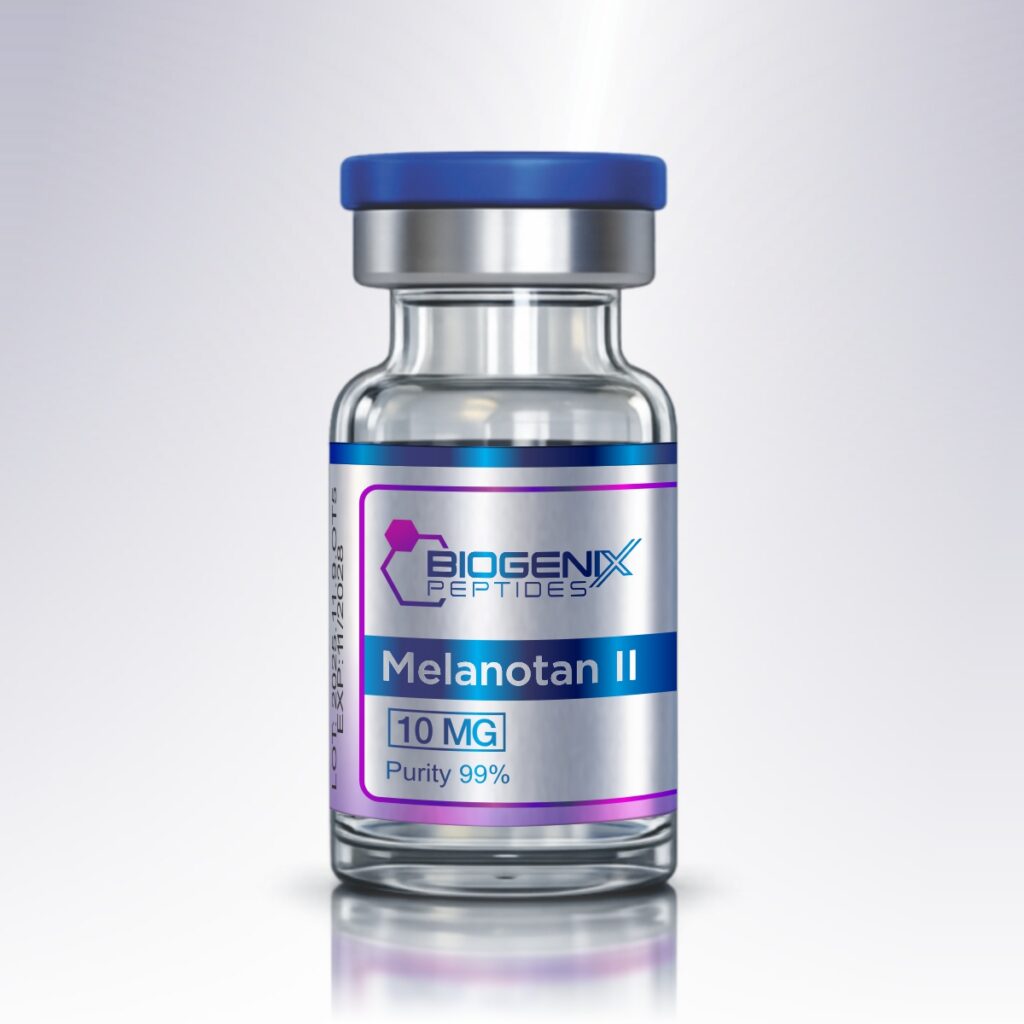
Melanotan II 10mg
Melanotan II (MT-II) is a synthetic analog of the endogenous melanocortin peptide α-MSH, developed to investigate melanocortin receptor–mediated effects on pigmentation, metabolism, and sexual function. It shows activity at multiple receptor subtypes, including MC1R, MC3R, MC4R, and MC5R, where it may influence melanin production, inflammatory pathways, and energy balance. MT-II is a cyclic heptapeptide engineered to mimic α-MSH while offering improved molecular stability and resistance to enzymatic breakdown. Research has examined its ability to stimulate melanogenesis and modulate hypothalamic signaling…