
5 Research Chemical Suppliers with Peptide Dosing Charts
Disclaimer: The information provided in this article is for educational and informational purposes only. It is not intended as medical advice, diagnosis, or treatment. Products and compounds referenced are for research use only and are not approved for human or veterinary consumption. Always consult a qualified professional regarding health or medical decisions.
The Truth About Peptide Research Information
Researchers often seek comprehensive information, including experimental parameters, when working with peptides. A common query revolves around which research chemical suppliers include detailed peptide administration charts or protocol references with their product shipments. It’s crucial to understand from the outset that reputable, compliant research chemical suppliers, operating under “For Research Use Only” (RUO) guidelines, do not provide charts or administration protocols for human or animal application with their product shipments. This strict adherence to regulatory compliance helps ensure that products are used solely for in vitro or laboratory research purposes, explicitly avoiding therapeutic claims or guidance for personal use.
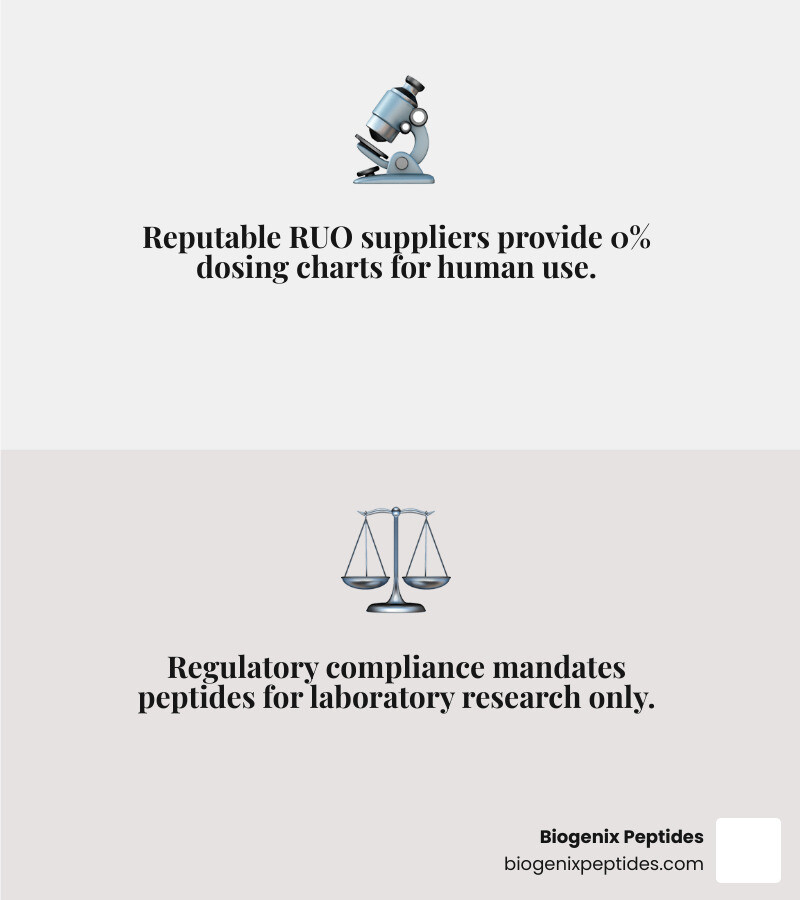
The provided statistics confirm this, noting that 0% of reputable research chemical suppliers include such charts.
As the Founder and CEO of BioGenix Peptides and an avid researcher, I often encounter questions like “Which research chemical suppliers include a comprehensive peptide chart with their product shipments?”. In my opinion, scientific integrity and responsible research practices should remain the priority. However, the landscape of peptide research resources is varied. While direct administration charts for human application are absent from compliant shipments, some providers may offer extensive research-oriented protocols, reconstitution guides, or experimental parameter references on their websites or as supplementary materials. These resources are strictly for qualified laboratory professionals to inform their research studies, focusing on preparation, stability, and potential experimental concentrations. This article will explore the types of research-focused information researchers might encounter from providers, emphasizing the critical distinction between compliant RUO practices and any implication of human or animal administration.
Why Don’t Compliant Research Chemical Suppliers Include Administration Protocols with Shipments?
The question of why compliant research chemical suppliers do not include administration protocols for human or animal application with their shipments is fundamental to understanding the regulatory landscape of research-grade peptides. This practice is not an oversight but a deliberate and legally mandated approach intended to support product integrity and compliance.
Regulatory Frameworks and RUO Status
The primary reason compliant research chemical suppliers avoid including administration protocols for human or animal application is deeply rooted in regulatory compliance. Peptides designated as “For Research Use Only” (RUO) are explicitly not approved by regulatory bodies such as the U.S. Food and Drug Administration (FDA) for therapeutic applications in humans or animals. This classification is critical; it means the products have not undergone the rigorous, multi-phase clinical trials required for pharmaceutical drugs, nor have they been evaluated for safety and efficacy in living organisms.
If a supplier were to provide guidance on administration protocols, it would directly imply a therapeutic intent or suggest human application. This action would immediately violate the RUO designation, potentially reclassifying the product as an unapproved drug. Such a reclassification would subject the supplier to the immensely stringent regulations governing pharmaceutical manufacturers, including Good Manufacturing Practices (GMP) outlined in documents like the FDA’s ICH Q7 guidance. Adhering to these pharmaceutical standards for products intended solely for in vitro research is not only impractical but also legally contradictory to the RUO status.
A commitment to maintaining RUO status helps ensure that suppliers can continue to provide high-quality materials for legitimate scientific inquiry without promoting unapproved uses. This is why, as the statistics indicate, 0% of reputable research chemical suppliers include administration protocols for human or animal application.
Standard Disclaimers and Prohibited Guidance
Reputable suppliers universally employ clear and unambiguous disclaimers that serve as a cornerstone of their regulatory compliance. These statements, prominently displayed on websites, product packaging, and all accompanying documentation, unequivocally declare that products are “For Research Use Only,” “Not for human consumption,” and “Not intended to treat, cure, or prevent any disease.” These disclaimers are not mere formalities; they are legal safeguards designed to discourage misuse and clarify the intended purpose of the products.
The explicit prohibition of guidance on administration protocols, experimental concentrations for in vivo studies, or any form of therapeutic advice is a direct consequence of these disclaimers. Any supplier that provides such guidance directly with product shipments would be exhibiting a significant red flag. In my opinion, this practice would indicate a potential disregard for regulatory compliance and ethical research practices, blurring the critical line between research chemicals and unapproved drugs. The rise of social media hype, as reported by STAT News in 2025, has unfortunately contributed to this blurring of lines, making it even more imperative for compliant suppliers to maintain strict boundaries.
For compliant suppliers, upholding these standards is paramount. Their role is to facilitate scientific discovery by providing research materials and technical data, not medical advice or promotion of unapproved substances for human or animal application.
What Types of Research-Oriented Information Might Be Available from Providers?
While compliant research chemical suppliers strictly avoid providing administration protocols for human or animal application, they may offer a range of research-oriented information designed to support legitimate laboratory studies. This information focuses on the proper handling, preparation, and experimental application of peptides within a controlled research environment.

1. Comprehensive Reference Directories
Some research chemical providers host extensive online directories that serve as resources for the scientific community. These directories often categorize peptides by their known biochemical functions. Within these listings, researchers can typically find general information about each peptide, including its chemical properties, molecular structure, and relevant scientific literature.
Crucially, while these directories do not offer personal administration guidance, they frequently reference published research studies that detail the experimental parameters used in laboratory settings. This allows researchers to consult peer-reviewed science for insights into how these peptides have been utilized in controlled in vitro or animal model studies, informing their own experimental design.
2. Concise Research Protocol Cheat Sheets
Certain providers offer what might be termed “cheat sheets” or quick-reference guides, developed strictly for qualified research professionals. These materials outline common experimental parameters observed in scientific literature. For instance, they might include suggested research concentrations for various in vitro assays, typical reconstitution volumes to achieve specific experimental concentrations, and general experimental timelines that have been employed in in vitro or animal model studies.
These resources are always presented as informational tools derived from existing scientific literature and are explicitly not to be construed as instructions for human application. In my opinion, they are best understood as starting points for researchers reviewing established approaches for handling and preparing peptides for specific research objectives within a laboratory setting.
3. Interactive Protocol & Calculator Tools
To further assist researchers in achieving accurate preparation for their laboratory experiments, some suppliers provide interactive online tools. These tools are designed to simplify complex calculations and support precision in the lab. A prime example is the peptide reconstitution calculator, which helps researchers determine the exact amount of bacteriostatic water or other diluents needed to achieve a desired research concentration from a lyophilized peptide.
Additionally, some tools might include visual measurement guides that aid in precise preparation for various experimental applications. These tools can help support accuracy, reduce experimental variability, and promote safety in the research environment.
4. Standardized Research Protocols (Supplementary Materials)
Occasionally, a provider might offer supplementary documents that are sometimes labeled as “product inserts” or “research protocols.” These materials detail standardized experimental parameters that have been used in various research contexts. Such documents might outline suggested research concentrations, frequency of application in animal models, and study cycle lengths observed in published literature.
It is imperative to note that these documents are invariably accompanied by explicit disclaimers. These disclaimers clearly state that the information is provided for research purposes only and is not intended for human or animal therapeutic use. They serve as a guide for designing experiments, drawing upon established scientific methods, rather than prescribing any form of treatment or personal application.
5. General Reconstitution & Storage Guides
While not falling under the category of administration protocols, comprehensive guides on peptide reconstitution and proper storage are crucial for research work. Reputable suppliers provide detailed instructions on how to prepare lyophilized peptides for in vitro experiments, outlining recommended diluents (such as bacteriostatic water), optimal storage temperatures, and shelf-life considerations both before and after reconstitution.
These guides are fundamental for maintaining peptide integrity, preventing degradation, and supporting the reliability and reproducibility of research outcomes. Incorrect reconstitution or storage can compromise the peptide’s stability and purity, invalidating experimental results. For instance, resources such as Reconstituting Lyophilized Peptides Step-by-Step and Best Practices for Peptide Storage & Handling may help support laboratory procedures when interpreted strictly in a research-only context.
What Essential Documentation Do Compliant RUO Suppliers Provide Instead of Administration Protocols?
Instead of administration protocols for human or animal use, compliant “For Research Use Only” (RUO) suppliers provide essential documentation that is critical for scientific integrity, quality assurance, and safe laboratory practices. This documentation ensures transparency regarding the product’s composition, purity, and characteristics, which are paramount for reproducible research.

Certificates of Analysis (COAs)
The Certificate of Analysis (COA) stands as the cornerstone of documentation from any compliant RUO peptide supplier. A comprehensive COA provides objective and batch-specific proof of a peptide’s quality, identity, and purity. This document is indispensable for researchers, allowing them to verify the material they are working with meets their experimental requirements. Key information found on a robust COA includes:
- HPLC (High-Performance Liquid Chromatography) Purity: This data demonstrates the percentage of the desired peptide relative to any impurities present in the batch. A reputable COA will not only state a purity percentage (typically ≥98% for research grade) but will also include a detailed chromatogram and the method parameters used for the analysis. This allows researchers to evaluate the quality of the separation and the absence of significant contaminants. For a deeper understanding, refer to this explainer on HPLC purity.
- Mass Spectrometry (MS): Mass spectrometry data confirms the peptide’s molecular weight and, thus, its identity. By comparing the observed mass with the theoretical mass of the peptide, researchers can be confident that they have received the correct compound.
- Net Peptide Content (NPC): This metric is crucial and often misunderstood. While HPLC purity measures the proportion of the peptide within the peptide-containing material, Net Peptide Content indicates the actual amount of peptide in the vial, excluding non-peptide components such as salts, water, and counterions (e.g., trifluoroacetate, or TFA). A high HPLC purity doesn’t always mean a high net peptide content; a vial labeled “1mg” might contain only 0.7-0.9mg of actual peptide. Understanding NPC is vital for accurate experimental preparation and ensuring precise research concentrations. Learn more about this in the guide to net peptide content.
- Heavy Metals Testing: To ensure safety and prevent interference in sensitive biological assays, COAs should include results from heavy metals testing. This verifies that the peptide batch is free from harmful metallic contaminants, typically tested to very low levels (e.g., <20 ppb via ICP-MS).
- Microbial Counts: For biological research, it’s essential that peptides are free from bacterial and fungal contamination. COAs often include data on total aerobic microbial count (TAMC) and total yeast and mold count (TYMC) to assure sterility for in vitro applications.
Safety Data Sheets (SDS)
Beyond the COA, Safety Data Sheets (SDS), formerly known as Material Safety Data Sheets (MSDS), are another critical piece of documentation provided by compliant suppliers. An SDS provides comprehensive information about the peptide’s potential hazards, safe handling procedures, storage requirements, and emergency measures. This document is essential for maintaining a safe laboratory environment and ensuring compliance with occupational safety regulations. It details aspects such as physical and chemical properties, toxicology, ecological information, and disposal considerations, all vital for responsible laboratory management.
Batch Traceability
Compliant suppliers implement robust systems for batch traceability. This means that every product can be traced back to its specific manufacturing batch, including all raw materials used, production records, and quality control data. This level of traceability is vital for research reproducibility, allowing researchers to verify the origin and quality of their materials. In the event of any issues or questions, full batch traceability ensures accountability and facilitates rapid investigation, reinforcing the supplier’s commitment to quality and transparency.
How Do Reputable Providers Ensure ‘For Research Use Only’ Compliance?
Reputable providers of research chemicals go to great lengths to ensure strict adherence to the “For Research Use Only” (RUO) designation. This commitment is not just about legal obligation; it also helps uphold scientific integrity and discourage the misuse of materials intended solely for laboratory investigation.
Clear and Consistent Disclaimers
One of the most visible ways reputable research chemical suppliers ensure RUO compliance is through the pervasive use of clear and consistent disclaimers. These statements are not hidden in fine print but are prominently displayed across websites, product packaging, and accompanying documentation, including COAs and SDS. These disclaimers explicitly state that products are not for human or animal consumption, nor are they intended for diagnostic, therapeutic, or cosmetic use. They emphasize that the materials are exclusively for in vitro laboratory research.
This consistent messaging serves as both a legal and ethical safeguard. It communicates the intended purpose of the products and helps avoid misinterpretation regarding their application. By reiterating these disclaimers at every opportunity, suppliers reinforce their commitment to RUO status and help educate researchers on appropriate use.
No Administration Accessories or Guidance
A definitive indicator of a compliant supplier is the absence of administration accessories and any form of guidance on how to administer peptides to humans or animals. This means you should not find syringes, needles, bacteriostatic water (beyond what might be offered as a separate research chemical), or any instructions for personal application included with product shipments.
Suppliers adhere to this policy to avoid any implication of therapeutic intent. Providing such items or instructions would contradict the RUO classification and could be interpreted as facilitating human or animal application, which is inconsistent with research-only positioning. The focus remains on providing research materials together with technical data necessary for laboratory preparation and experimental application.
Qualified Purchaser Requirements
Many compliant suppliers further reinforce the research-only nature of their products by implementing requirements for purchasers. This often involves asking customers to confirm they are qualified researchers, affiliated with legitimate research institutions, or operating within a professional laboratory setting. This step helps indicate that products are being obtained by individuals and organizations engaged in scientific inquiry.
In my opinion, researchers should prioritize suppliers that provide scientific data and comprehensive quality control information rather than marketing language that could be misconstrued as therapeutic advice. Resources like The 10 Most Common Mistakes People Make When They’re New to Peptide Research may also help readers better understand responsible research practices.
What Should Researchers Prioritize When Selecting a Peptide Supplier?
Selecting a peptide supplier is a critical decision that directly impacts the integrity and success of research. Given the strict regulatory environment and the importance of product quality, researchers should prioritize specific criteria to help ensure they are sourcing materials compliantly and effectively.
Unwavering Commitment to Quality and Transparency
When evaluating potential peptide suppliers, researchers should prioritize those demonstrating an unwavering commitment to quality and transparency. This means looking for suppliers who provide comprehensive, batch-specific Certificates of Analysis (COAs) for every product. These COAs should detail purity (e.g., via HPLC with chromatograms), identity (e.g., via Mass Spectrometry), and Net Peptide Content. The availability of this analytical data is essential for verifying the quality of the material received.
Furthermore, look for evidence of third-party testing by independent, accredited laboratories. This external validation adds another layer of assurance, confirming the supplier’s internal quality control processes and the accuracy of their reported data. A transparent supplier will make this documentation readily accessible, either directly with the product shipment or through an online database linked to batch numbers.
Strict Adherence to RUO Guidelines
A reputable supplier will unequivocally and consistently label all products as “For Research Use Only.” This is a fundamental aspect of compliance and ethical operation. Such a supplier will not make claims related to human or animal therapeutic benefits, nor imply that products can be used to treat, cure, or prevent any disease. They will explicitly state that their products are not for human consumption and will refrain from offering any administration guidance for living organisms.
This strict adherence to the RUO designation is paramount. In my opinion, any supplier that blurs these lines, even subtly, creates compliance and ethical concerns. Materials should be presented solely for scientific investigation, and all communications should align with that principle.
Robust Support for Research Practices
While compliant suppliers will not provide administration charts for human or animal application, the best suppliers may offer valuable resources to support legitimate research. This includes clear, scientifically accurate instructions for reconstitution, detailing the appropriate diluents (e.g., bacteriostatic water) and methods to help ensure the peptide is correctly prepared for in vitro experiments. They should also provide best practices for storage and handling to support the stability and longevity of the peptide, both in its lyophilized and reconstituted forms.
Additionally, readily available Safety Data Sheets (SDS) are essential for supporting safe laboratory practices. These resources, coupled with responsive customer support for technical inquiries related to product specifications or handling, can demonstrate a supplier’s dedication to the research community. For more information on common research questions, explore Frequently Asked Questions (FAQs).
Frequently Asked Questions about Peptide Research
Do research chemical suppliers provide instructions for human administration?
No, legitimate research chemical suppliers explicitly state that their products are “For Research Use Only” and do not provide any instructions or guidance for human or animal administration. Providing such information would violate regulatory compliance and the RUO designation.
What documentation should I expect with my peptide shipment?
You should expect a comprehensive Certificate of Analysis (COA) detailing purity (e.g., via HPLC), identity (e.g., via Mass Spectrometry), net peptide content, and potentially heavy metals and microbial testing results. You should also receive a Safety Data Sheet (SDS) for safe handling procedures.
Why is “For Research Use Only” so important for peptide suppliers?
The “For Research Use Only” (RUO) designation is crucial for regulatory compliance. It indicates that the products are not approved for therapeutic use and are intended solely for laboratory research, preventing any implication of medical application or unapproved use in humans or animals. This classification avoids the stringent regulations applied to pharmaceutical drugs.
Conclusion
The search for administration protocols from research chemical suppliers often stems from a misunderstanding of the strict regulatory environment governing “For Research Use Only” (RUO) peptides. Compliant and reputable suppliers explicitly do not provide administration protocols for human or animal application with their product shipments. This is a fundamental aspect of maintaining RUO status and adhering to regulatory guidelines, which strictly differentiate research materials from therapeutic products.
Instead, researchers should expect and prioritize comprehensive documentation such as Certificates of Analysis (COAs) and Safety Data Sheets (SDS). These documents are vital for evaluating product quality, identity, and safe handling in a laboratory setting, providing the scientific data necessary for rigorous and reproducible research. While some providers may offer online resources detailing research-oriented protocols or reconstitution guides for laboratory studies, these are distinct from therapeutic administration materials and are always accompanied by strict disclaimers reinforcing their research-only nature. In my opinion, prioritizing suppliers with transparent quality control, third-party testing, and a clear commitment to RUO compliance is essential for ethical and effective peptide research. To explore high-quality research peptides and supporting documentation, visit our shop.