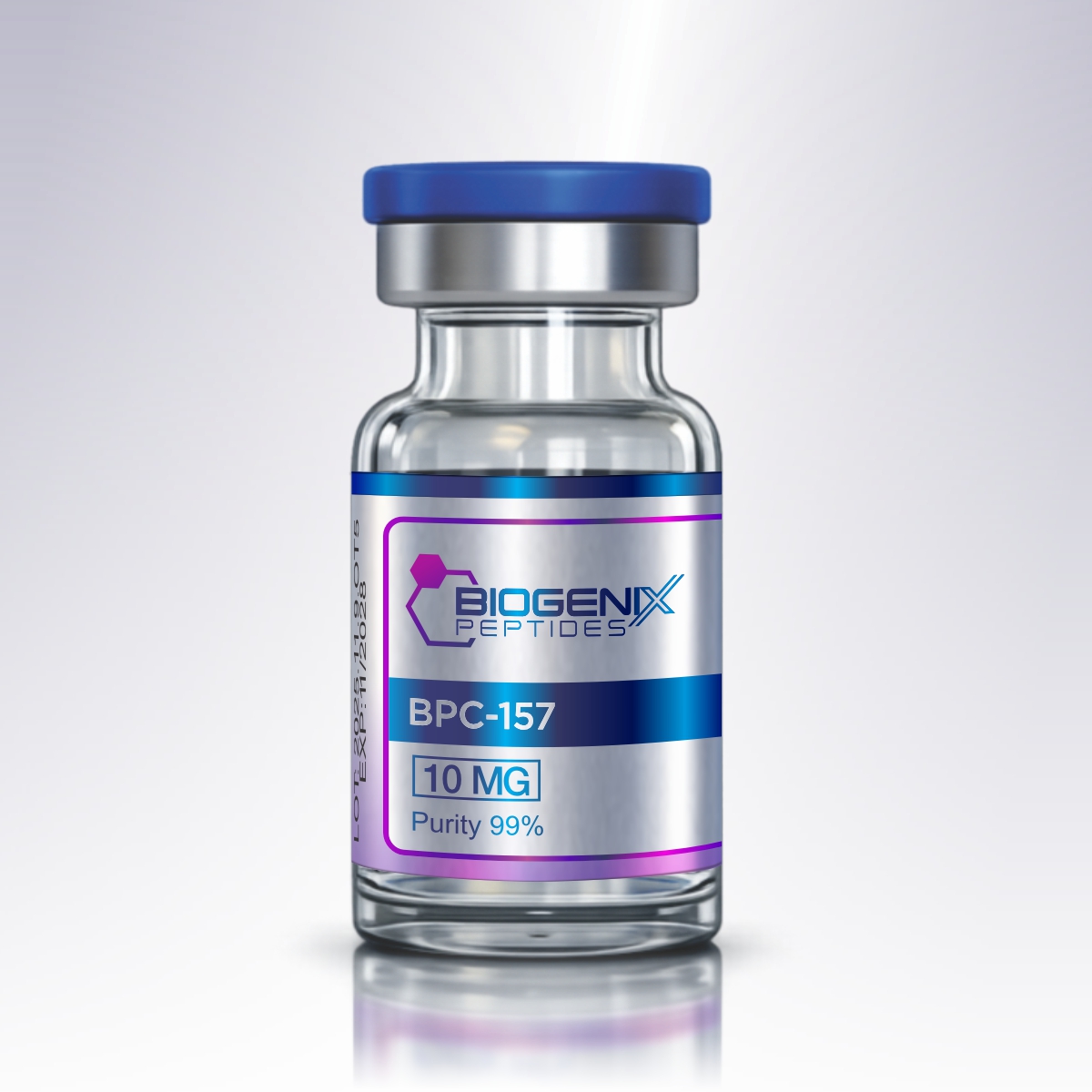
BPC-157 10mg
$72.00
BPC-157, or Body Protection Compound-157, is a synthetic pentadecapeptide derived from a protective protein found in gastric juice. Originally isolated from gastric secretions, this 15-amino acid sequence has been extensively studied in preclinical research for its potential effects on tissue repair, angiogenesis, and cellular protection mechanisms. Research interest centers on its interaction with growth factor pathways and its reported influence on wound healing processes at the molecular level.
In Stock
BPC-157 — Research Overview
Introduction
BPC-157, short for Body Protection Compound-157, is a synthetic peptide consisting of 15 amino acids (a pentadecapeptide). Originally derived from a naturally occurring fragment found in gastric juice, it has been widely studied in preclinical and early experimental settings for its potential roles in tissue protection and repair. Research suggests that BPC-157 may influence healing in muscles, tendons, ligaments, nerves, and gastrointestinal tissues.
Background and Mechanism
BPC-157 has been investigated for its ability to stimulate cellular repair and angiogenesis, the formation of new blood vessels. It appears to interact with growth hormone receptor pathways, possibly encouraging cell proliferation and collagen synthesis. This activity may accelerate wound closure and structural rebuilding.Beyond wound repair, BPC-157 has been studied in relation to gastrointestinal regulation. Data suggest it may modulate serotonin pathways within the gut, influencing blood flow, gastric acid balance, and mucosal integrity. Research has also indicated potential neuroprotective and antidepressant-like effects, possibly linked to serotonin receptor modulation and central nervous system signaling.
Chemical Characteristics
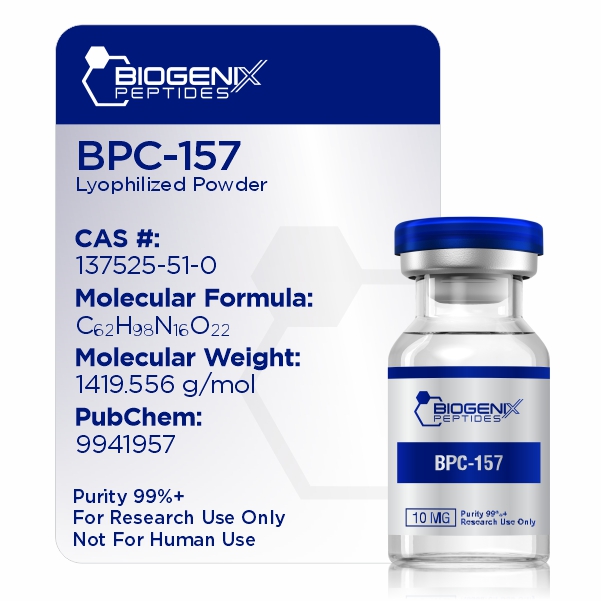
| Compound | Type | Molecular Formula | Molecular Weight |
| BPC-157 | Synthetic pentadecapeptide fragment | C₆₂H₉₈N₁₆O₂₂ | 1419.535 g/mol |
Research Highlights
1. Wound Healing and Angiogenesis
– Animal studies have reported accelerated skin, colon, and muscle repair following BPC-157 administration compared to controls.- Observed effects include increased collagen and reticulin deposition, enhanced granulation tissue formation, and greater vascularization of healing tissue.- Laboratory work indicates BPC-157 may upregulate vascular endothelial growth factor (VEGF) and influence ERK1/2 phosphorylation, signaling pathways involved in angiogenesis and tissue regeneration.
2. Tendon and Ligament Repair
– In tendon fibroblast cultures, BPC-157 promoted cell outgrowth, migration, and survival under oxidative stress.- The peptide has been linked to activation of focal adhesion kinase (FAK) and paxillin, proteins central to cytoskeletal organization and tendon remodeling.- These findings suggest BPC-157 may enhance tendon healing processes by promoting fibroblast adhesion and motility.
3. Gastrointestinal Protection
– BPC-157 demonstrated protective effects in preclinical models of gastrointestinal injury, including ulcers and mucosal lesions.- Unlike some growth factors that act only in specific tissues, BPC-157 appeared consistently effective across acute and chronic GI models.- Findings indicate broad angiogenic potential, extending to GI repair, bone healing, and connective tissue regeneration.
4. Muscle and Bone Healing
– In steroid-impaired muscle injury models, BPC-157 counteracted corticosteroid-induced damage, restoring muscle integrity and function.- Other work suggests a role in fracture healing and reduction of pseudoarthrosis, highlighting possible involvement in bone remodeling.
5. Neurological and CNS Effects
– Research into traumatic brain injury models indicates BPC-157 may reduce lesion severity, brain swelling, and mortality rates in experimental animals.- Pre-treatment with BPC-157 appeared to lessen acute damage from induced TBI, suggesting potential protective qualities.- Studies also report modulation of dopamine-related pathways, with reversal of amphetamine- and haloperidol-induced behavioral changes in animal models.
Conclusion
BPC-157 continues to be the focus of experimental research due to its wide-ranging effects on tissue regeneration, angiogenesis, gastrointestinal protection, and neural recovery. While its mechanisms are still under investigation, studies consistently point toward broad protective and reparative actions.Note: BPC-157 is available for research use only. It is not approved for therapeutic, dietary, or human consumption purposes.
References
Chang C-H, Tsai W-C, Lin M-S, Hsu Y-H, Su J-H. The promoting effect of pentadecapeptide BPC 157 on tendon healing involves tendon outgrowth, cell survival, and cell migration. Journal of Applied Physiology.
Gastric pentadecapeptide BPC 157 and soft tissue healing: review of literature. Histology and Histopathology. PMID: 30915550.
Sikiric P, Seiwerth S, Rucman R, Turkovic B, Rokotov DS, Brcic L, Sever M. The Stable Gastric Pentadecapeptide BPC 157: Pleiotropic Beneficial Activity and Possible Relations with Neurotransmitter Activity. Frontiers in Pharmacology. 2022;13:1026182.
Pharmacokinetics, distribution, metabolism, and excretion of BPC-157 in animals. Frontiers in Pharmacology. 2022.
Stable gastric pentadecapeptide BPC 157 and wound healing. Frontiers in Pharmacology. 2021;12:627533.
BPC-157 accelerates healing of colonic and skin defects; effect on fistula closure. ScienceDirect. 2019.
Stable gastric pentadecapeptide BPC 157 can improve healing in spinal cord injury in rats. Journal of Orthopaedic Surgery & Research. 2019.
Safety of Intravenous Infusion of BPC-157 in Humans: A Pilot Study. PubMed. PMID: 40131143.
USADA. BPC-157: Experimental Peptide Creates Risk for Athletes. United States Anti-Doping Agency. https://www.usada.org/spirit-of-sport/bpc-157-peptide-prohibited/
Cytoprotective gastric pentadecapeptide BPC 157 resolves major vessel occlusion disturbances. World Journal of Gastroenterology. 2022;28(1):23.
NOTICE OF COMPLIANCE
The mission of BioGenix Peptides™ is to provide researchers with the highest-quality, Ultra-Pure Series™ compounds to help unlock the full potential of this evolving field. With precision, purity, and scientific integrity at the core of our operations, BioGenix Peptides™ is dedicated to supporting responsible exploration and discovery
Products from BioGenix Peptides™ are not intended for human consumption. They are supplied exclusively for in-vitro and pre-clinical research purposes.
By purchasing or using these products, the Customer accepts full responsibility for their handling and use, and agrees to indemnify and hold BioGenix Peptides™ harmless from any claims resulting from misuse.
Having trouble viewing? Use the buttons below to download or open the certificate.
Related products

In Stock