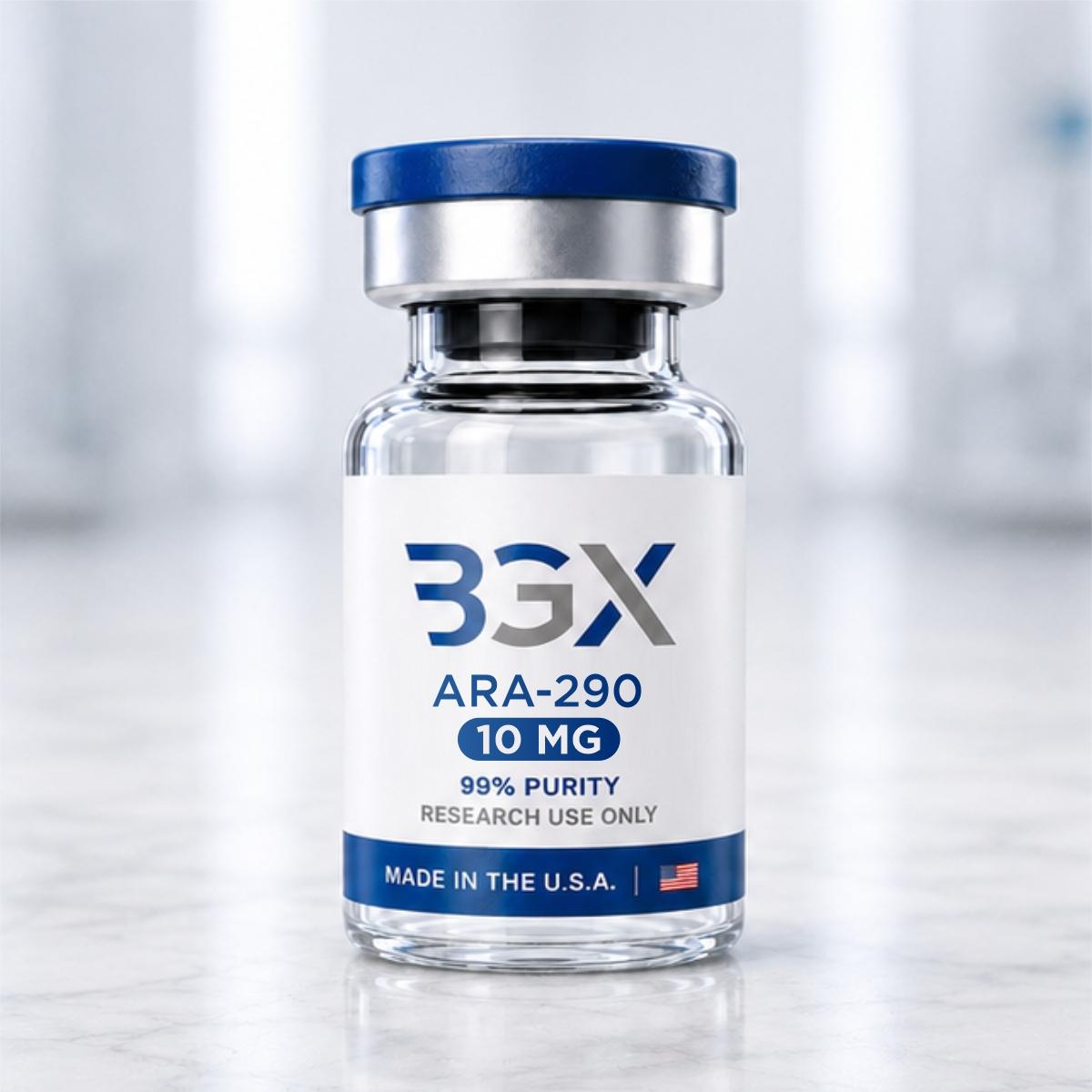
ARA-290 10mg
$52.00
anti-inflammatory pathways. It is based on a small portion of the erythropoietin (EPO) molecule but engineered
to avoid the blood-building effects associated with full EPO. Instead, ARA-290 activates a specific “repair receptor”
involved in calming inflammation and protecting tissues.Because of this targeted action, ARA-290 is widely studied for its potential roles in inflammation control,
nerve protection, microvascular repair, and immune system balance—all without
increasing red-blood-cell levels or affecting hematocrit.
In Stock
ARA-290 (Cibinetide) — Research Overview
Introduction
ARA-290 (also known as Cibinetide) is a synthetic, non-erythropoietic peptide derived from the helix-B surface of erythropoietin (EPO). Unlike full-length EPO, ARA-290 is engineered to activate only the EPOR-CD131 Innate Repair Receptor while avoiding the erythropoiesis-stimulating activity associated with classical EPO signaling.
This selective action makes ARA-290 a major research peptide in studies focused on inflammation control, neuropathic pathways, tissue protection, and microvascular repair. Researchers are particularly interested in its ability to modulate immune responses without elevating hematocrit or red-blood-cell mass.
Chemical Characteristics
CAS #: 1208243-50-8
Molecular Formula: C51H54N16O21
Molecular Weight: 1257.3 g/mol
Mechanisms of Action
1. Activation of the Innate Repair Receptor (EPOR-CD131 Complex)
ARA-290 (also known as Cibinetide) is designed to engage a specialized tissue-protective receptor known as the Innate Repair Receptor (IRR), which is formed by the pairing of the erythropoietin receptor (EPOR) with the β common receptor (CD131). Unlike the classical homodimeric EPOR that drives red-blood-cell formation, this heteromeric complex activates a completely different signaling profile focused on cell survival, inflammation control, and tissue recovery rather than erythropoiesis.
When ARA-290 binds to the EPOR–CD131 complex, it initiates intracellular pathways such as JAK2/STAT3, PI3K/Akt, and MAPK/ERK, which help stabilize stressed or damaged cells. These pathways reduce apoptotic signaling, promote cellular resilience, and enhance mitochondrial and metabolic stability in vulnerable tissues. At the same time, IRR activation has been shown to suppress NF-κB–mediated inflammatory signaling, resulting in lowered expression of pro-inflammatory cytokines and a shift toward a more regulated immune environment.
This targeted receptor selectivity is key: classical EPO activates red-cell production, increases hematocrit, and carries cardiovascular risk when overstimulated. ARA-290, however, is engineered to retain the cytoprotective and neuroprotective actions associated with EPO signaling while avoiding stimulation of erythropoiesis, since it does not appreciably activate the traditional EPOR homodimer.
Functionally, activation of the IRR has been associated with:
• protection of endothelial and epithelial barriers
• reduced tissue edema and oxidative injury
• improved microvascular perfusion
• modulation of immune cell polarization toward a reparative phenotype
• potential benefits in neuropathic symptoms and small-fiber nerve dysfunction observed in several clinical studies
2. Anti-Inflammatory Modulation
Beyond its role in tissue repair, ARA-290 (Cibinetide) is increasingly recognized for its ability to reshape inflammatory signaling in a way that protects tissue rather than simply suppressing immune activity. Activation of the EPOR–CD131 Innate Repair Receptor initiates a coordinated anti-inflammatory program that influences multiple cytokine pathways, immune cell behavior, and intracellular stress responses.
Preclinical and translational research suggests that ARA-290 may down-regulate key pro-inflammatory cytokines such as TNF-α, IL-1β, and IL-6, all of which are central drivers of chronic inflammation, neuropathic pain sensitivity, endothelial injury, and autoimmune flare processes. At the same time, signaling through this pathway appears to promote anti-inflammatory mediators, including increases in IL-10, a cytokine strongly associated with immune resolution, tissue stabilization, and the prevention of excessive immune damage.
Mechanistically, these effects are closely tied to inhibition of NF-κB, one of the body’s master “inflammation switches.” By dampening NF-κB activation, ARA-290 can reduce downstream cytokine cascades, oxidative stress, and inflammatory gene transcription. This contributes to a cellular environment that is less hostile, more stable, and better able to repair itself.
Another important component of its activity is its impact on macrophages—the immune cells that can either perpetuate inflammation or assist in healing depending on their polarization state. Evidence suggests that ARA-290 encourages a shift toward a restorative, pro-repair macrophage phenotype, which supports tissue regeneration, vascular stability, and metabolic calm rather than persistent inflammatory aggression.
Taken together, these combined actions place ARA-290 as a compound of significant interest in research involving:
• chronic inflammatory signaling
• neuropathic injury and small-fiber nerve dysfunction
• autoimmune conditions
• metabolic-inflammation interplay
• vascular and endothelial stress environments
3. Neuroprotective Actions
ARA-290 (Cibinetide) has generated substantial scientific interest for its potential role in protecting the nervous system and supporting neural recovery, particularly in conditions characterized by neuroinflammation, small-fiber injury, and microvascular stress. Much of this interest centers around the peptide’s ability to activate the EPOR–CD131 Innate Repair Receptor within neural and glial tissues, triggering protective signaling without stimulating erythropoiesis.
A key focus of current research involves ARA-290’s influence on microglial activation. Microglia are the brain and spinal cord’s resident immune cells, and when chronically over-activated, they can drive neuropathic pain signaling, neuronal stress, and progressive neural damage. Studies suggest that ARA-290 may help tamp down excessive microglial reactivity, leading to reductions in neuroinflammatory mediators and a calmer neural environment.
At the cellular level, EPOR–CD131 signaling is linked to enhanced neuronal survival pathways, including activation of JAK2/STAT3 and PI3K/Akt, improved mitochondrial stability, reduced oxidative injury, and decreased apoptosis in vulnerable neural cells. This may help stabilize peripheral and central nervous system structures under metabolic, inflammatory, or traumatic stress conditions.
One of the most discussed research areas is small-fiber neuropathy (SFN)—a condition involving damage or dysfunction of small unmyelinated and thinly myelinated nerve fibers responsible for pain perception and autonomic function. ARA-290 has been extensively explored in SFN models and clinical investigations, with findings suggesting potential benefits on small-fiber nerve density, symptom burden, and neural function parameters in select study populations. These effects are thought to arise from combined anti-inflammatory, microvascular, and direct neuroprotective mechanisms.
Additional neuro-protective areas of interest include:
• modulation of neuroinflammatory signaling networks
• stabilization of endothelial–neural interfaces and microcirculation
• support of neural regeneration and structural maintenance
• potential influence on neuropathic pain processes via central and peripheral pathways
Collectively, ARA-290 is being explored not merely as an anti-inflammatory compound, but as a neuroprotective and neuro-stabilizing signaling modulator, with particular relevance in research on neuroinflammation, small-fiber neuropathy, and nervous-system repair biology.
4. Microvascular Repair & Endothelial Support
ARA-290 (Cibinetide) is also of significant interest for its potential effects on the microvascular and endothelial systems, where inflammation, hypoxia, and cellular stress commonly drive progressive tissue injury. Through activation of the EPOR–CD131 Innate Repair Receptor on endothelial and vascular-supporting cells, ARA-290 appears to initiate protective signaling programs that help stabilize blood vessel function and maintain tissue oxygenation under stress.
A key aspect of this activity involves supporting endothelial barrier integrity. The endothelium serves as a selective protective lining within blood vessels, and when it becomes dysfunctional or “leaky,” tissues are more vulnerable to edema, oxidative damage, immune cell infiltration, and impaired nutrient delivery. Research models indicate that ARA-290 may help reinforce tight-junction stability, reduce endothelial permeability, and maintain healthier vascular tone.
By calming inflammatory signaling and improving vascular responsiveness, ARA-290 has also been linked to enhanced microvascular perfusion—the efficient movement of blood through the smallest capillaries where oxygen exchange occurs. Improved perfusion contributes to reductions in tissue hypoxia, better nutrient delivery, cleaner metabolic waste removal, and overall improved tissue resilience in stressed environments.
Additionally, ARA-290’s signaling has shown potential to reduce ischemia-related tissue injury, likely through its combined anti-inflammatory, anti-apoptotic, and mitochondrial-stabilizing effects. These mechanisms may help protect tissues during episodes of reduced blood flow and support recovery afterward, an area of ongoing scientific interest.
Collectively, these findings contribute to growing exploration of ARA-290 in contexts involving:
• endothelial dysfunction
• microcirculatory impairment
• ischemia–reperfusion stress
• cardiometabolic inflammation
• tissue oxygenation and vascular repair biology
In summary, ARA-290’s effects extend beyond neural and immune modulation into the vascular repair arena, where it is being investigated for its potential to stabilize endothelial health, improve microvascular flow, and protect tissues from oxygen-deprivation injury.
Research Applications
1. Neuropathic Pain & Nerve Repair
ARA-290 (Cibinetide) has become one of the more closely observed peptides in neuropathic and neurorepair research, particularly in studies involving small-fiber neuropathy (SFN) and inflammatory nerve injury. Because it activates the EPOR–CD131 Innate Repair Receptor present on neural and glial tissues, ARA-290 has been associated with signaling pathways that may help promote small-fiber nerve regeneration, support neuronal survival, and dampen neuroinflammatory stress.
Several investigations suggest potential influence on nerve-fiber density restoration, stabilization of sensory nerve function, and improvements in neuropathic symptom burden in select study populations. By calming microglial activation and reducing inflammatory cytokine signaling, ARA-290 is being explored as a unique tool in research aimed at protecting nerves, re-establishing neural structure, and breaking chronic pain–inflammation cycles.
Areas of continued interest include:
• small-fiber nerve regeneration
• neuroinflammatory modulation
• microglial overactivation
• neuropathic pain signaling resilience
2. Autoimmune & Inflammatory Research
Because of its selective anti-inflammatory, immune-balancing properties, ARA-290 is frequently studied in the context of autoimmune and chronic inflammatory biology. Unlike broad immune suppressants, the EPOR–CD131 signaling pathway associated with ARA-290 appears to modulate immune tone, reducing excessive inflammatory cytokine activity (such as TNF-α, IL-6, and IL-1β) while encouraging regulatory cytokines and reparative immune behaviors.
This has led to research interest in conditions marked by immune dysregulation, granulomatous inflammation, and chronic inflammatory signaling, including sarcoidosis-related small fiber neuropathy and systemic inflammatory processes. The peptide’s ability to dampen NF-κB signaling and promote anti-inflammatory macrophage polarization makes it an intriguing candidate in the study of controlled immune restoration rather than blunt immune suppression.
Research areas include:
• autoimmune inflammation
• sarcoidosis-associated nerve injury
• chronic inflammatory cytokine environments
• immune-resolution pathways
3. Microvascular & Endothelial Biology
ARA-290’s role in activating vascular repair signaling has drawn substantial attention in vascular and endothelial research. Endothelial cells express the EPOR–CD131 receptor complex, and studies suggest ARA-290 may help stabilize endothelial lining integrity, reduce vascular permeability, and support microcirculatory function under oxidative, inflammatory, or ischemic stress.
Improved microvascular perfusion is a key research theme, with findings suggesting potential influence on reducing tissue hypoxia, enhancing capillary oxygen delivery, protecting against ischemia-reperfusion injury, and maintaining microvascular resilience in stressed tissues. Because endothelial dysfunction plays a major role in cardiometabolic decline, vascular inflammation, and organ damage, ARA-290 has become increasingly relevant in vascular-repair and perfusion biology research.
Key areas being explored include:
• endothelial stability and barrier support
• ischemia-related tissue injury
• microcirculatory oxygen exchange
• vascular-inflammation control
4. Metabolic & Systemic Energy Research
Beyond neural and vascular effects, ARA-290 has gained interest in the broader realm of metabolic resilience and systemic repair physiology. Chronic inflammation, mitochondrial stress, and poor microvascular perfusion are central drivers of metabolic dysfunction. By reducing inflammatory load, supporting oxygen delivery, and improving cellular survival signaling, ARA-290 may contribute to optimized tissue energy balance and recovery capacity.
Studies have explored its potential influence on oxidative stress reduction, mitochondrial stability, improved oxygen utilization, and restoration of damaged cellular environments. This positions ARA-290 within a growing field examining peptides that do not simply suppress inflammation but instead help restore balanced cellular function and systemic repair networks.
Research themes include:
• oxidative stress and redox stability
• mitochondrial support signals
• metabolic-inflammation interplay
• systemic repair and resilience biology
Practical Considerations in Research Models
- Non-erythropoietic: does not stimulate red-blood-cell production
- Effects typically observed in inflammation- or nerve-injury-based models
- Often evaluated in multi-week research protocols
- Common endpoints: nerve-fiber density, inflammatory markers, microvascular function
Conclusion
ARA-290 (Cibinetide) represents one of the more sophisticated developments in modern peptide research due to its uniquely selective engagement of the EPOR–CD131 Innate Repair Receptor, a pathway designed by biology to control inflammation while protecting vulnerable tissues. Unlike classic erythropoietin signaling, which can stimulate red-blood-cell production and carry hematologic risks when overactivated, ARA-290 is engineered to retain the protective, anti-inflammatory, and cytoregulatory benefits of EPO signaling without triggering erythropoiesis.
Across emerging preclinical and clinical study environments, ARA-290 continues to be explored for its potential to:
• calm damaging inflammatory cascades
• reduce neuroinflammatory stress and support neural stability
• enhance small-fiber nerve resilience and repair biology
• reinforce endothelial integrity and microvascular perfusion
• mitigate hypoxic and ischemic tissue injury
• promote balanced immune modulation rather than blunt immune suppression
This combination of immune regulation, neuroprotection, vascular stabilization, and cellular survival support positions ARA-290 as a compelling research molecule in fields ranging from neuropathic pain and autoimmune inflammation to endothelial dysfunction and systemic tissue-repair science. While research is ongoing and many findings remain exploratory, the consistency of its protective signaling profile has established ARA-290 as a leading subject of investigation in next-generation tissue protection, inflammatory control, and microvascular repair biology.
Having trouble viewing? Use the buttons below to download or open the certificate.
Related products

In Stock