VIP 10mg - BioGenix Peptides™
Save 25% Off Use Code: Welcome25

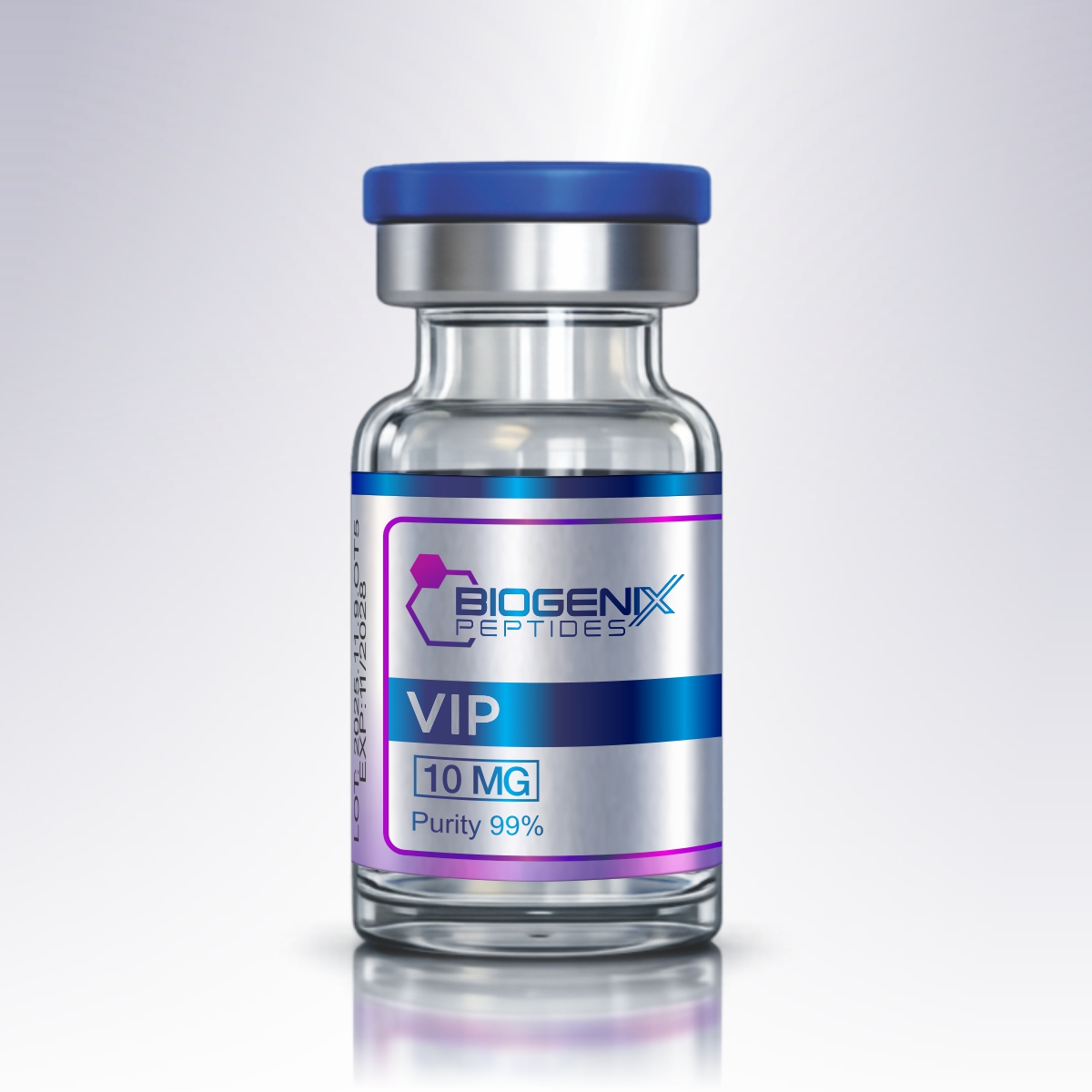
VIP 10mg

$72.00

Vasoactive Intestinal Peptide (VIP) is a naturally occurring 28–amino-acid neuropeptide studied for its roles in immune function, lung health, nervous-system support, and smooth-muscle relaxation. VIP works through two receptors—VPAC1 and VPAC2—which are found throughout the brain, immune system, and respiratory and cardiovascular tissues.Because it affects multiple pathways, VIP is considered a broad-acting regulatory peptide. Research suggests it may help balance inflammation, support healthy blood-flow regulation, influence immune signaling, and promote relaxation of airway and smooth-muscle tissues.

In Stock

-
+

VIP (Vasoactive Intestinal Peptide) — Research Overview

Educational / research information only. This content is provided for general scientific education. Not medical advice. Not intended to diagnose, treat, cure, or prevent any disease.


Introduction

Vasoactive Intestinal Peptide (VIP) is a 28–amino-acid endogenous neuropeptide studied for its roles in neuroimmune communication, pulmonary physiology, neuroprotection, and smooth-muscle regulation. VIP belongs to the secretin/glucagon peptide superfamily and is broadly distributed across the central and peripheral nervous systems, as well as in immune tissues, airways, gastrointestinal (GI) tract, endocrine organs, and the cardiovascular system.

VIP is often characterized as a pleiotropic regulatory peptide, meaning a single signaling molecule can influence multiple physiological domains. In research models, VIP has been associated with regulation of inflammatory tone, vasodilation, bronchodilation, cytokine balance, epithelial and endothelial barrier integrity, and neuronal excitability and plasticity.

The majority of VIP’s known signaling is mediated through two class B G-protein–coupled receptors (GPCRs): VPAC1 and VPAC2, which are expressed in diverse tissues and cell types (including immune cells, airway tissues, vascular endothelium, and neurons), supporting broad systemic effects across experimental contexts.

Chemical Characteristics

  • CAS #: 37221-79-7
  • Molecular Formula: C147H237N43S
  • Molecular Weight: 3326.8 g/mol
  • PubChem CID: 16132318

VIP is a linear peptide that adopts an α-helical conformation important for receptor binding and activation. Like many bioactive peptides, its biological effects are highly context-dependent (cell type, receptor density, signaling bias, exposure time, and inflammatory microenvironment).

Mechanisms of Action

1) VPAC1 & VPAC2 Receptor Activation (GPCR Signaling)

VIP binds with high affinity to VPAC1 and VPAC2, which predominantly couple to Gs proteins. Upon receptor engagement, signaling commonly proceeds through the classic: adenylate cyclase → cAMP → PKA cascade.

In mechanistic terms, receptor activation can elevate intracellular cAMP, activating protein kinase A (PKA) and downstream phosphorylation targets. This can rapidly alter cellular function (seconds to minutes) and can also drive longer-term effects through transcriptional programs (hours to days), including CREB-linked gene regulation.

Associated functional outcomes in research models include:

  • Relaxation of smooth muscle tissues: cAMP/PKA signaling can reduce contractile tone via inhibition of contractility-related pathways (e.g., MLCK activity), supporting vasodilation and bronchodilation in experimental systems.
  • Inhibition of pro-inflammatory cytokine production: VIP signaling has been associated with reduced expression of inflammatory mediators, frequently discussed in the context of dampening NF-κB-linked transcriptional responses.
  • Enhancement of anti-inflammatory cytokines (e.g., IL-10): VIP may bias immune signaling toward regulatory mediators that support resolution of inflammation and immune homeostasis.
  • Stabilization of epithelial and endothelial barrier function: VIP-associated signaling has been linked to preservation of tight-junction architecture and reduced permeability in barrier-stress models.
  • Modulation of neurotransmitter release: As a neuropeptide, VIP can influence neuronal signaling by modulating excitability, synaptic transmission, and neuroimmune cross-talk depending on region and receptor expression.
2) Immunomodulation

VIP is widely studied as a neuroimmune mediator capable of shaping both innate and adaptive immune responses. In experimental models, VIP has been associated with changes in immune activation state rather than broad, nonspecific immunosuppression.

Reported immunology-related effects include:

  • Suppression of pro-inflammatory cytokines (commonly discussed: TNF-α, IL-6, IL-12, IFN-γ in model systems)
  • Promotion of regulatory T-cell (Treg) differentiation and tolerance-associated signaling
  • Decreased antigen-presenting cell activation, including reduced maturation/activation signatures in dendritic cell models
  • Reduced inflammatory-pathway gene expression, often linked to NF-κB inhibition and cAMP-dependent regulation
  • Macrophage phenotype modulation, including shifts toward tissue-repair-associated profiles in some contexts

These properties make VIP relevant in research exploring inflammatory resolution, immune balance, and tissue-protective signaling.

3) Pulmonary and Respiratory Actions

VIP was originally identified in lung tissue and has long been studied in airway and pulmonary vascular research. VPAC receptors are expressed in airway smooth muscle, epithelium, and pulmonary vasculature, enabling coordinated effects on airflow and inflammatory tone.

Areas of investigation include:

  • Bronchodilation through relaxation of airway smooth muscle in experimental settings
  • Reduction of airway hyperresponsiveness in models of airway reactivity
  • Modulation of mucosal immunity and inflammatory mediator profiles within airway tissues
  • Support of pulmonary vascular tone via smooth-muscle and endothelial signaling pathways

4) Neuroprotective & CNS Effects

In the central nervous system, VIP acts as both a neuropeptide and neuromodulator. Research links VIP signaling to neuronal survival pathways, inflammatory regulation within the brain, and circadian biology.

Commonly described CNS-associated effects include:

  • Neuronal survival signaling, often discussed through cAMP/PKA and CREB-related transcriptional programs
  • Protection against oxidative stress and cellular stress signaling in experimental models
  • Modulation of circadian rhythms, including hypothalamic signaling pathways involved in biological timing
  • Enhancement of synaptic plasticity and learning-related signaling pathways in research contexts
  • Reduction of neuroinflammatory markers, including microglial activation signatures in some model systems

5) Gastrointestinal and Endocrine Effects

VIP is a key signaling molecule within the enteric nervous system and is studied for its role in coordinating GI motility, secretion, and barrier integrity. VIP also intersects with endocrine signaling pathways, reflecting widespread receptor expression.

GI/endocrine-associated research themes include:

  • Regulation of gastric acid secretion and secretory balance
  • Relaxation of GI smooth muscle supporting motility coordination in experimental models
  • Increased pancreatic bicarbonate secretion and digestive secretory regulation
  • Support of gut barrier function under inflammatory, ischemic, or metabolic stress conditions

Research Applications

1) Immunology & Inflammation

VIP is frequently used as a reference signal in studies of immune balance and inflammatory resolution. Across experimental systems, research commonly explores VIP’s influence on cytokine profiles, immune-cell differentiation, and inflammation-linked transcription.

  • Cytokine balance: decreases in TNF-α, IL-1β and increases in IL-10 (context-dependent)
  • T-cell differentiation: bias toward regulatory programs (Treg-associated signaling)
  • Macrophage modulation: phenotype shifts toward repair-associated states in some models
  • Transcriptional effects: reduced inflammatory gene expression via NF-κB-linked pathways

2) Pulmonary & Airway Research

VIP’s airway smooth-muscle relaxation and immunoregulatory signaling have supported research interest in bronchodilation, airway reactivity, and pulmonary vascular tone.

  • Airway smooth-muscle relaxation and bronchodilation
  • Reduced airway hyperreactivity in experimental models
  • Support of pulmonary vascular dynamics
  • Reduced chemokine-driven airway inflammation in some contexts

3) Neuroprotective & Cognitive Research

VIP signaling is investigated in models involving oxidative stress, excitotoxicity, neuroinflammation, and circadian dysregulation. Studies often focus on survival signaling, synaptic modulation, and microglial inflammatory tone.

  • Neuronal resilience under oxidative or excitotoxic stress
  • Synaptic plasticity and learning-related signaling pathways
  • Reduced microglial inflammatory signaling in select models
  • Circadian-regulatory pathway stabilization in relevant systems

4) Gastrointestinal Research

VIP serves as a research target for GI motility, secretion, mucosal immunity, and epithelial barrier integrity—especially in stress and inflammation models.

  • Smooth-muscle relaxation and motility coordination
  • Regulation of gastric and intestinal secretion
  • Support of mucosal immune balance
  • Protection of epithelial barrier integrity

5) Vascular and Smooth-Muscle Regulation

VIP’s vasodilatory effects are studied in systemic and pulmonary vascular contexts. Mechanistic emphasis is commonly placed on cAMP-dependent smooth-muscle relaxation and endothelial signaling under inflammatory or ischemic stress.

  • Arteries and microvasculature
  • Pulmonary vessels
  • Endothelial permeability and barrier-stability models

Compliance Note: This material is presented for scientific education and discussion of published research concepts. It is not medical guidance and should not be interpreted as instructions for human or veterinary use.

No certificate available for this product.

VIP 10mg $72.00

In Stock

-
+
Master File | | | BioGenix Peptides™
introductory special

25% Off

  • Use Code: WELCOME25