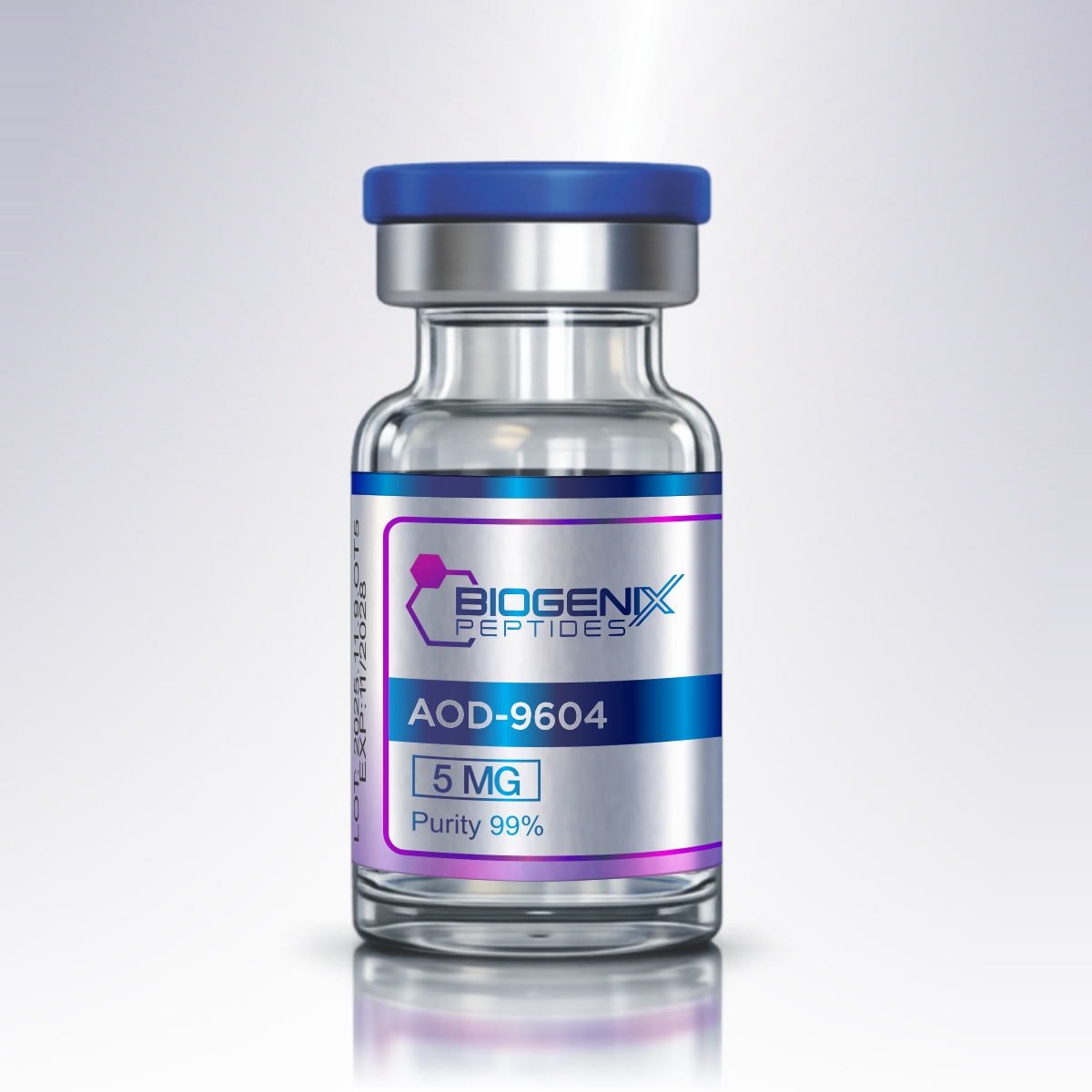
AOD-9604 5mg
$60.00
AOD 9604 is a laboratory-synthesized peptide derived from human growth hormone (hGH) and designed for research into fat metabolism and obesity management. This compound is based on a small section of the hGH molecule: the final 16 amino acids (residues 176–191), often referred to as “GH Fragment 176-191.” In AOD 9604, the first amino acid at the N-terminus is replaced by a tyrosine residue, a modification thought to improve molecular stability during testing.
Because of its structural makeup, AOD 9604 is often considered the “fat-burning fragment” of growth hormone. Different regions of the full hGH chain appear to drive different biological effects. For example, the N-terminal region of hGH has been linked with insulin activity, whereas amino acids 108–129 have been associated with cell growth responses. In contrast, the 176–191 region (AOD 9604) has been investigated mainly for its lipolytic, or fat-reducing, potential.
In Stock
Description
AOD 9604 is a laboratory-synthesized peptide derived from human growth hormone (hGH) and designed for research into fat metabolism and obesity management. This compound is based on a small section of the hGH molecule: the final 16 amino acids (residues 176–191), often referred to as “GH Fragment 176-191.” In AOD 9604, the first amino acid at the N-terminus is replaced by a tyrosine residue, a modification thought to improve molecular stability during testing.
Because of its structural makeup, AOD 9604 is often considered the “fat-burning fragment” of growth hormone. Different regions of the full hGH chain appear to drive different biological effects. For example, the N-terminal region of hGH has been linked with insulin activity, whereas amino acids 108–129 have been associated with cell growth responses. In contrast, the 176–191 region (AOD 9604) has been investigated mainly for its lipolytic, or fat-reducing, potential.
Background and Mechanism
The peptide was first developed in the 1990s as researchers sought alternatives to hGH that might promote fat loss without some of the hormone’s other systemic effects. Scientific studies since then have focused largely on whether AOD 9604 influences the breakdown of stored fat (lipolysis).
Lipolysis is the biochemical process through which triglycerides stored in fat cells are broken down into glycerol and free fatty acids, which can then be used as energy. AOD 9604 has been studied in relation to this process, with particular interest in its interaction with beta-3 adrenergic receptors (β3-AR)—key regulators of lipolysis in adipose tissue. Evidence suggests the peptide may increase the expression of these receptors, thereby enhancing fat cells’ responsiveness to lipolytic signals, though it may not directly activate them.
Importantly, AOD 9604 appears to mimic fat-burning actions of growth hormone without significantly stimulating the production of Insulin-like Growth Factor 1 (IGF-1), a pathway often implicated in tissue growth.
Chemical Characteristics
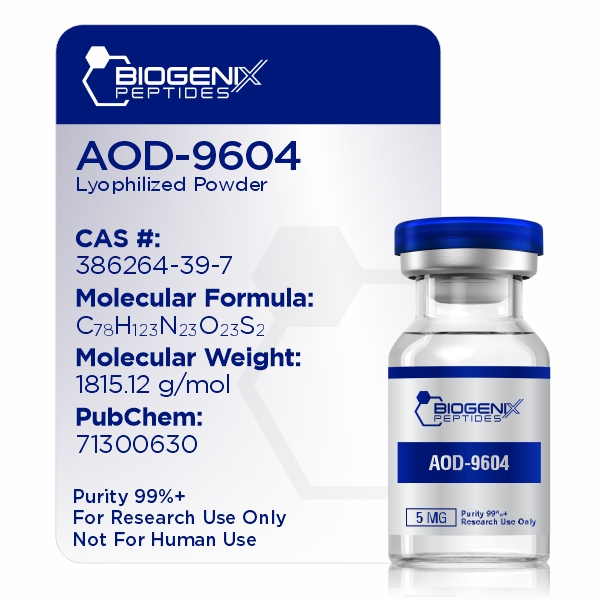
| Compound | Type | Molecular Formula | Molecular Weight |
| AOD-9604 | Modified human growth hormone fragment | C₇₈H₁₂₃N₂₃O₂₃S₂ | 1815.08 g/mol |
Research Highlights
1. Lipolytic Activity in Animal Models
– Early studies on obese mice showed that 14 days of AOD 9604 administration correlated with reduced body weight and fat levels. These effects were linked to increased activity of lipolytic receptors in fat tissue.
– Additional experiments in receptor knock-out mice suggested that while β3-AR expression was important, AOD 9604’s fat-reducing action also involved higher energy expenditure and enhanced fat oxidation.
– In obese Zucker rats, 19 days of treatment reportedly reduced weight by over 50% compared to placebo groups, with no negative impact on insulin sensitivity.
2. Human Clinical Research
– In a 2004 trial involving 300 obese participants, subjects received AOD 9604 for 12 weeks. Results showed steady weight reduction over the study period, alongside modest improvements in cholesterol and glucose tolerance.
3. Cartilage and Tissue Regeneration
– In a rabbit osteoarthritis model (2015), animals receiving AOD 9604—particularly in combination with hyaluronic acid—demonstrated reduced cartilage degeneration.
– In vitro work suggests the peptide may support stem cell differentiation into bone tissue and stimulate chondrocytes (cartilage cells) to produce collagen and proteoglycans, both important for joint repair.
– Additional findings indicate a potential role in promoting muscle precursor cell development.
4. Cancer Research Applications
– Recent studies propose that AOD 9604 might be able to enhance targeted drug delivery in cancer research. For example, when combined with doxorubicin in nanoparticle formulations, the peptide appeared to increase drug binding to breast cancer cell proteins and improved anti-proliferative activity against MCF-7 cells.
Conclusion
Collectively, research suggests AOD 9604 may influence fat metabolism, support tissue regeneration, and even play a role in cancer cell research. Its primary focus remains on its potential to stimulate fat breakdown without significantly activating growth-promoting pathways like IGF-1.
Note: AOD 9604 is intended strictly for laboratory and research use. It is not approved for human consumption or therapeutic use.
References
1. Heffernan M, Summers RJ, Thorburn A, Ogru E, Gianello R. The effects of human GH and its lipolytic fragment (AOD9604) on lipid metabolism following chronic treatment in obese mice and β3‑adrenergic receptor knockout mice. Endocrinology. 2001. PMID: 11146367.
2. Safety and Tolerability of the Hexadecapeptide AOD9604 in Humans. Journal of Endocrinology & Metabolism. Reports safety data from six human randomized, double‑blind, placebo‑controlled trials. https://jofem.org/index.php/jofem/article/view/157
3. Metabolic studies of a synthetic lipolytic domain (AOD9604). Preclinical metabolic actions in obese Zucker rat models. PMID: 11146367.
4. Obesity Pharmacotherapy: Current Perspectives and Future Directions. Review describing 12‑week randomized clinical trial in humans (1 mg/day AOD‑9604). PMC3584306.
5. Safety and Metabolism of AOD9604, a Novel Nutraceutical. Journal of Endocrinology & Metabolism. Reports multiple human trials including IV and oral dosing pilot studies. https://jofem.org/index.php/jofem/article/view/213/278
6. Effect of Intra‑articular Injection of AOD9604 with or without other factors on cartilage protection in a rabbit osteoarthritis model. Annals of Clinical & Laboratory Science. 2015;45(4):426–432.
NOTICE OF COMPLIANCE
The mission of BioGenix Peptides™ is to provide researchers with the highest-quality, Ultra-Pure Series™ compounds to help unlock the full potential of this evolving field. With precision, purity, and scientific integrity at the core of our operations, BioGenix Peptides™ is dedicated to supporting responsible exploration and discovery
Products from BioGenix Peptides™ are not intended for human consumption. They are supplied exclusively for in-vitro and pre-clinical research purposes.
By purchasing or using these products, the Customer accepts full responsibility for their handling and use, and agrees to indemnify and hold BioGenix Peptides™ harmless from any claims resulting from misuse.
Having trouble viewing? Use the buttons below to download or open the certificate.
Related products

In Stock