

Semax vs Selank
Two Peptides, Two Philosophies of Neural Signaling
Important Research Use Notice
The compounds discussed on this page are offered strictly for laboratory research and analytical purposes only.
These products are not approved by the FDA for human or veterinary use. They are not intended for diagnosis, treatment, cure, or prevention of any disease.
All information presented is for educational and scientific discussion purposes only and reflects published research literature. No statements on this website should be interpreted as medical advice or health claims.
By accessing this page, you acknowledge that you are a qualified researcher and understand that these materials are sold strictly for research use.
Introduction
The brain is not a battery that needs charging. It is a signaling network — billions of neurons coordinating timing, intensity, and balance.
Two short synthetic peptides — Semax and Selank — have been studied in neuroscience research for decades, particularly in Eastern European literature. Though often grouped together, they represent two distinct strategies of neural modulation:
- Semax: commonly discussed in the context of signal amplification and neurotrophic expression
- Selank: commonly discussed in the context of inhibitory tone and stress-adaptive stability
Rather than asking “Which is stronger?”, a more interesting question is: what kind of neural conversation does each peptide appear to encourage?
Contents
- Origins & Structural Design
- Semax: Neurotrophic Signaling & Synaptic Plasticity
- Selank: Inhibitory Tone & Emotional Signaling
- Comparative Framework: Amplification vs Stabilization
- Why This Matters in Systems Neuroscience
- The Larger Idea: Peptides as Biological Language
- Conclusion
- Research Use Disclaimer
- Selected Peer-Reviewed References
Origins & Structural Design
Semax
Semax is a synthetic heptapeptide derived from a fragment of adrenocorticotropic hormone (ACTH 4-10), modified to eliminate hormonal activity while preserving neuromodulatory effects in research contexts.
Sequence: Met-Glu-His-Phe-Pro-Gly-Pro
It was developed in Russia as part of research into regulatory peptides influencing cognition and cerebral circulation. 1
Selank
Selank is a synthetic analog of tuftsin (Thr-Lys-Pro-Arg), an endogenous immunomodulatory tetrapeptide.
Sequence: Thr-Lys-Pro-Arg-Pro-Gly-Pro
It was studied for anxiolytic and stress-adaptive properties without classical sedative effects in research literature. 4
Semax: Neurotrophic Signaling & Synaptic Plasticity
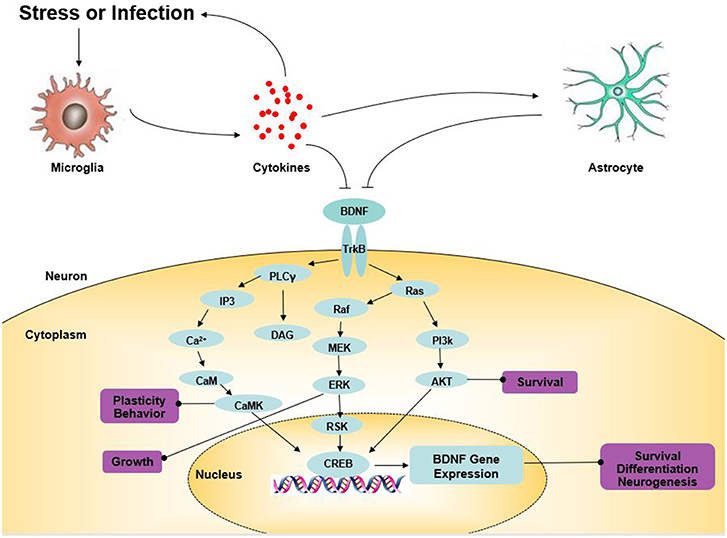
Research on Semax has focused heavily on neurotrophin expression, particularly brain-derived neurotrophic factor (BDNF) and related signaling cascades. 2
Mechanistic Themes Observed in Literature
- Upregulation of BDNF gene expression in animal models 2
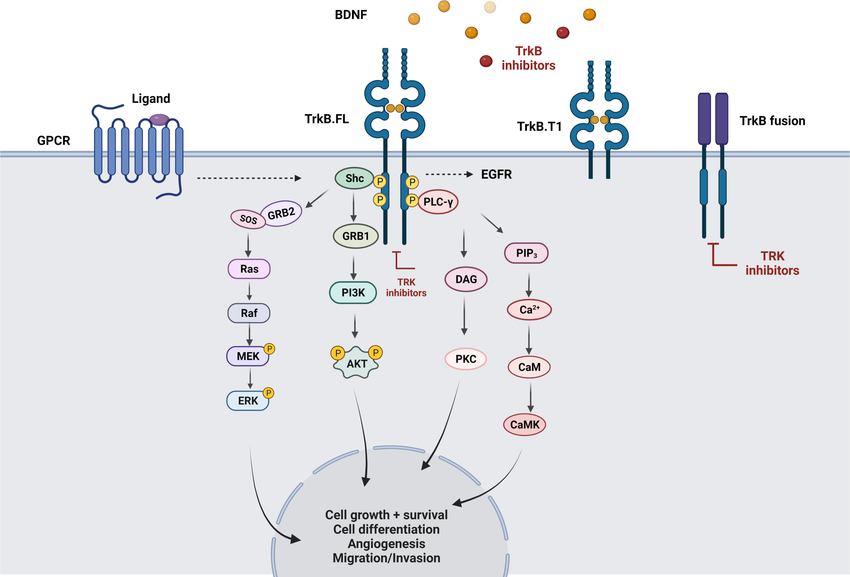
- Modulation of neurotrophic signaling pathways (including TrkB-related signaling) 2
- Influence on transcriptional regulation associated with neuronal adaptation 3
- Reported effects on monoaminergic systems in experimental models 1
- Gene-expression changes described in ischemia-related models 3
Conceptual Interpretation
Semax is often framed as acting upstream at the level of signal propagation and neurotrophic tone. Rather than acting as a stimulant, it has been studied for its role in strengthening synaptic communication and supporting adaptive plasticity in experimental systems.
Simple analogy: Semax may resemble a “bandwidth upgrade” — the message doesn’t change, but the fidelity of transmission improves.
Semax, in Simple Terms
- Think: clarity, signal strength, and adaptive plasticity
- Not “stimulation” — more like coordination
- Not force — more like amplification
Selank: Inhibitory Tone & Emotional Signaling
Selank research is frequently discussed in relation to GABAergic modulation and stress-response regulation. 4
Mechanistic Themes Observed in Literature
- Modulation of GABA-related signaling in research discussions 4
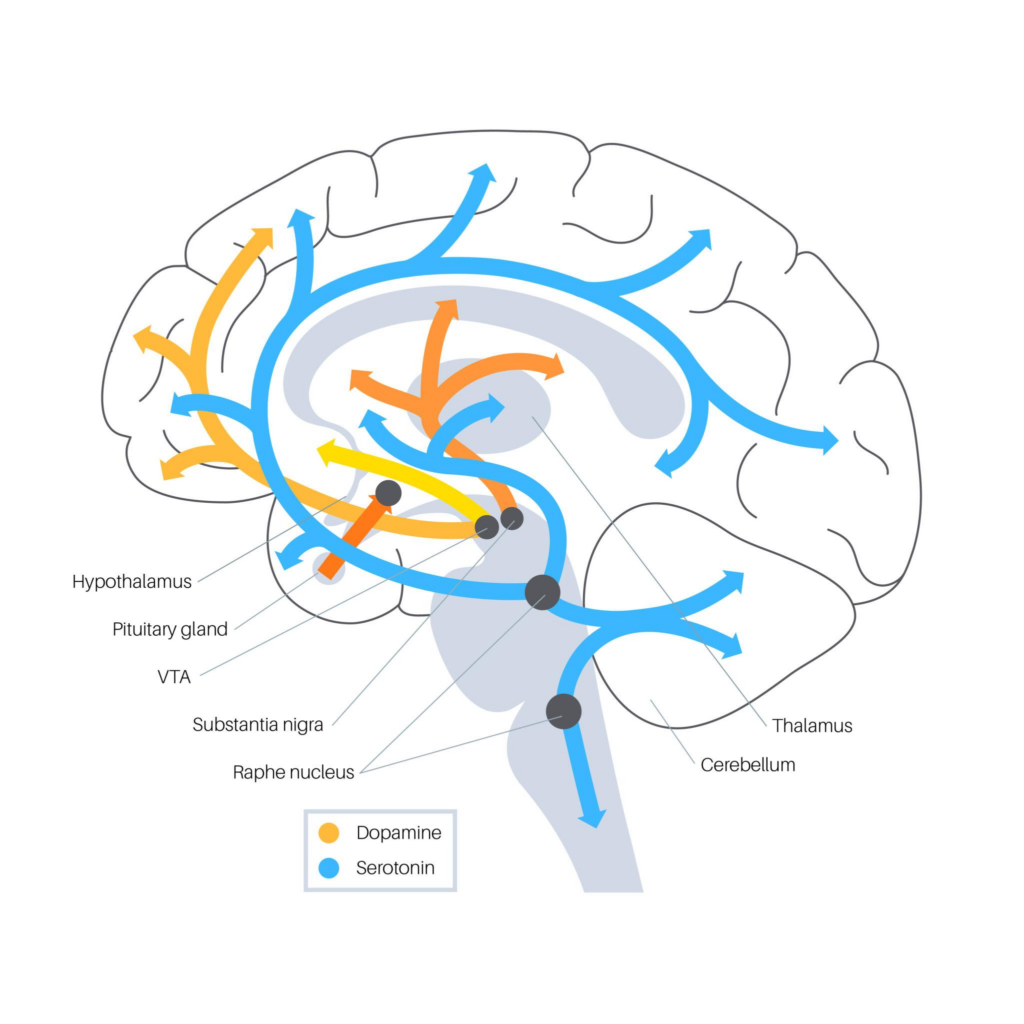
- Influence on serotonin and dopamine turnover described in experimental work 4
- Gene-expression effects reported for pathways tied to immune and neurotransmitter systems 5
- Stress-adaptive signaling themes in regulatory peptide research 6
Conceptual Interpretation
Selank is often framed as improving the signal-to-noise ratio in neural networks — reducing excessive background “chatter” rather than amplifying activity. Unlike classical benzodiazepines, research discussions often emphasize different or indirect mechanisms rather than direct benzodiazepine-site binding. 4
Simple analogy: Selank may resemble acoustic treatment in a room — nothing gets louder, but everything becomes easier to hear.
Selank, in Simple Terms
- Think: calm, balance, and neural smoothness
- Not “sedation” — more like regulation
- Not suppression — more like stability
Comparative Framework: Amplification vs Stabilization
| Feature | Semax | Selank |
|---|---|---|
| Structural origin | ACTH fragment analog | Tuftsin analog |
| Primary research focus | Neurotrophins & plasticity | GABAergic modulation |
| Gene expression themes | BDNF / plasticity-related pathways | Immune + inhibitory signaling pathways |
| Conceptual role | Signal clarity & adaptation | Emotional stability & balance |
| Modulatory style | Amplification | Noise reduction |
These are not opposites. They address different constraints within neural communication systems: one emphasizes plasticity and signal strength, the other emphasizes stability and inhibitory control.
Why This Matters in Systems Neuroscience
Cognitive function depends on three variables:
- Signal intensity
- Signal timing
- Background noise
Too little signal and cognition blurs. Too much noise and cognition fragments. Semax and Selank are compelling in research contexts because they appear to operate upstream in signaling architecture — not as brute-force neurotransmitter replacements, but as regulatory peptides explored for how they influence communication patterns. 6
The Larger Idea: Peptides as Biological Language
A systems view of neuroscience increasingly frames health in terms of network coordination, not isolated chemicals. Short peptides like Semax and Selank illustrate this principle: they do not “override” systems; they appear to influence how systems communicate.
Biology doesn’t shout. It coordinates.
Conclusion
Semax and Selank represent two complementary research strategies in neurobiology:
- Semax explores how neural signals may become clearer and more plastic
- Selank explores how circuits may become more stable and less reactive
Different pathways. Different emphasis. Shared theme: regulatory signaling.
Research Use Disclaimer
This article is provided for educational and informational purposes only. Semax and Selank are research compounds and are not approved by the FDA for human or veterinary use. Any discussion reflects published research (preclinical and/or clinical) and does not constitute medical advice, medical claims, diagnosis, or treatment guidance.
Selected Peer-Reviewed References
- Ashmarin IP, Nezavibatko VN, Myasoedov NF, et al. ACTH 4-10 analog Semax: neurochemical and behavioral effects. Neurosci Behav Physiol. 1997;27(5):574-579.
View on PubMed - Inozemtsev AN, Grigor’ev VV, Dolotov OV, et al. Effects of Semax on BDNF expression in rat brain. Bull Exp Biol Med. 2006;141(3):323-326.
View on PubMed - Dolotov OV, Andreeva LA, Myasoedov NF. Semax regulates gene expression in rat brain following ischemia. Peptides. 2008;29(6):1053-1065.
View on PubMed - Neznamov GG, Teleshova ES. Selank and its anxiolytic effects in comparison with benzodiazepines. Bull Exp Biol Med. 2009;147(3):395-398.
View on PubMed - Zozulya AA, Neznamov GG, et al. Selank modulates expression of genes involved in immune and neurotransmitter systems. Bull Exp Biol Med. 2008;145(6):703-706.
View on PubMed - Myasoedov NF, Grigor’ev VV. Regulatory peptides in adaptation and stress response. Neurosci Behav Physiol. 2013;43(7):818-824.
View on PubMed

SEMAX 5mg
Semax is a synthetic polypeptide derived from the ACTH(4–7) fragment, designed to retain central nervous system–related properties without the classical corticotropic effects of native ACTH. Research efforts have examined its potential influence on neuroadaptive processes, cognitive endpoints, and stress-response pathways. Semax incorporates the core Met-Glu-His-Phe (ACTH4–7) sequence extended with a C-terminal Pro-Gly-Pro (PGP) motif and is commonly produced in an acetylated form. The PGP addition is proposed to modify physicochemical behavior and may support passage across select biological barriers—such as…
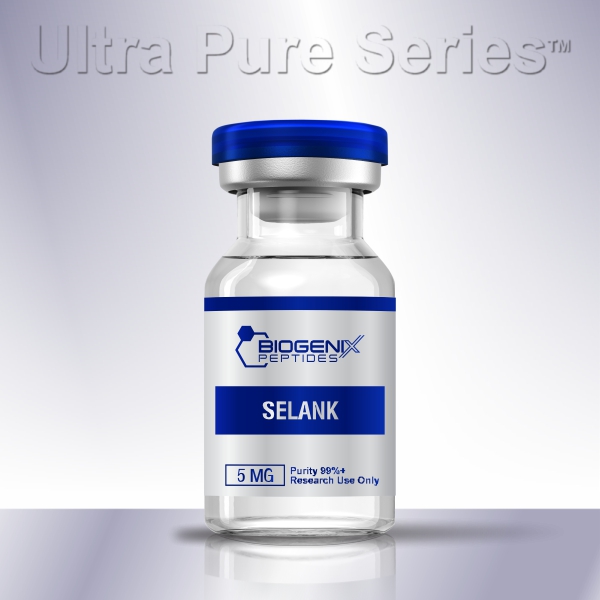
SELANK 5mg
Selank is a synthetic heptapeptide modeled after tuftsin, an IgG-derived fragment associated with immune modulation and behavioral regulation. In research settings, it has been examined for potential influences on stress response pathways, mood-related behaviors, and select immune parameters. Structurally, Selank contains tuftsin at the N-terminus linked to a Pro-Gly-Pro (PGP) tripeptide at the C-terminus. The added PGP motif is proposed to alter physicochemical stability and may support transport across certain biological barriers—including the blood–brain barrier—through receptor-mediated or carrier-assisted mechanisms, while…